
Reviewed · LITTLE AFRICA WALKS
Little Africa Unveiled: Vibrant Afro-Brazilian Heritage in Rio
Little Africa Unveiled makes Rio’s past feel real, fast. This 3 hours 30 minutes walk links Afro-Brazilian heritage to places tied to slavery, faith, and samba culture, with museum and institute stops along the way. Two things I really like are the bilingual guide approach and the way the route moves from heavy history to everyday street life. One thing to consider: you will be on your feet outdoors for most of the tour, so pick a day with good weather.
You also get smart, human explanations. I’ve seen guides like Joyce and Carolina use clear storytelling and even connect the experience to the US in a way that helps you understand what history means today. If you want a photo-only tour, this is not that. It’s a “listen and look” kind of outing.
In This Review
- Key highlights you should know
- Why Rio’s Little Africa trail starts at Windsor Guanabara Hotel
- Santa Rita Church and the first cemetery for enslaved people
- MUHCAB: museum storytelling of Afro-Brazilian culture
- IPN and Pretos Novos memory: research with real consequences
- Cais do Valongo: the port where the transatlantic trade left marks
- Hanging Garden of Valongo: Belle Époque meets painful ground
- Largo de São Francisco da Prainha: samba energy in the middle of history
- Beco João Inácio and the Mosaico Hilário Jovino wall
- Pedra do Sal: the birthplace of samba and a community meeting spot
- Price, timing, and what $89 really buys
- Who this tour suits best, and who might want a different plan
- Should you book Little Africa Unveiled?
- FAQ
- What is the duration of Little Africa Unveiled?
- Where does the tour start?
- What time does the tour begin?
- How much does it cost?
- Is lunch included?
- Are tickets included for the museum and institute stops?
- What group size should I expect?
- Is the tour near public transportation?
- What happens if the weather is bad?
- What is the cancellation policy?
Key highlights you should know
- A focused route on Rio’s Little Africa sites, from Santa Rita to Pedra do Sal
- MUHCAB plus IPN visits, mixing museum presentation with research on memory and burial history
- Cais do Valongo and Valongo’s port history, including the scale of the transatlantic trade
- Belle Époque urban change at the Hanging Garden of Valongo, right next to slavery-linked ground
- Samba-era street energy at Largo de São Francisco da Prainha and Lapa’s stone lanes
- Small group size (max 15), which helps questions and pacing
More walks through Little Africa:
- Discover Rio Little Africa: A Cultural and Historical Journey
★ 5.0 · 238 reviews - Rio de Janeiro: Little Africa Heritage Walking Tour
★ 4.9 · 177 reviews - Explore Little Africa : Unveiling Afro Heritage in Rio de Janeiro
★ 5.0 · 97 reviews - 2 in 1: Private Favela & Little Africa- The Full African History!
★ 5.0 · 21 reviews
Why Rio’s Little Africa trail starts at Windsor Guanabara Hotel
The meeting point is the Windsor Guanabara Hotel in Centro, near Av. Pres. Vargas. The benefit of starting here is simple: it’s a logical launch pad for walking through central Rio without turning your afternoon into a transit project.
This tour runs at 2:00 pm and finishes back at the same meeting point. That loop is convenient. You won’t end up stranded across town, and it makes it easier to plan dinner afterward. The group stays small, up to 15 people, so the guide can keep the pace human and answer questions without turning it into a lecture hall.
At $89 per person, you’re not paying for a long bus ride. You’re paying for guided interpretation, plus entry where it applies. And the stops are chosen to help you understand a theme, not just collect landmarks.
Santa Rita Church and the first cemetery for enslaved people
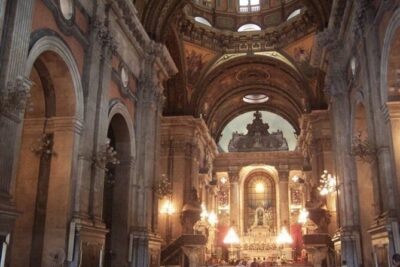
The first stop is the Santa Rita Church, located near Largo de Santa Rita. What matters here is the site itself. The church was built on the grounds of the first cemetery for enslaved people, and that fact changes how you read the building.
You’ll see colonial and baroque elements, with intricate religious artwork and ornamentation. The art isn’t just decorative. It reflects how religion, power, and community memory intersected in colonial Rio.
The part I like most is that the tour does not rush past the moral weight of the location. Even if your brain is tired from the city, the guide’s framing helps you slow down. You get 30 minutes, and it’s enough time to look closely, then listen for context.
Practical note: churches are usually photogenic but also active. Dress respectfully, keep your phone quiet when asked, and treat this stop as a place of meaning, not a background for selfies.
MUHCAB: museum storytelling of Afro-Brazilian culture
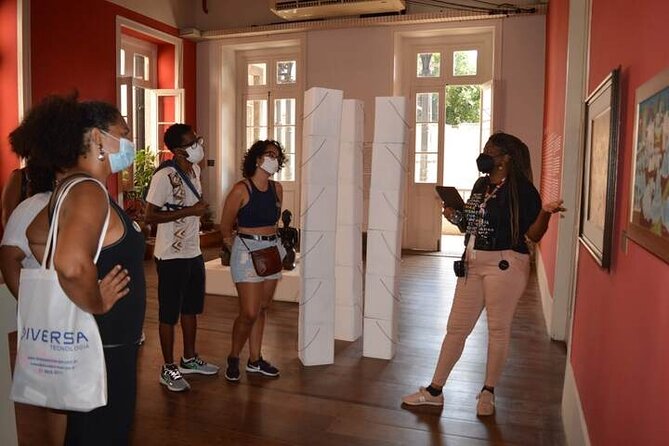
Next comes MUHCAB, the Museu da História e da Cultura Afro-Brasileira. This stop is designed to preserve and promote Afro-Brazilian heritage through artifacts, artwork, and documents.
A key detail here is that the museum is presented as a dedicated space for history and culture. So instead of only focusing on one event, you get a broader view of how Afro-Brazilian communities lived, contributed, and carried cultural knowledge forward.
You have about 40 minutes. That’s a sweet spot for museum visiting on a walking tour. Long enough to absorb the main themes, short enough that you can still enjoy the rest of the afternoon without zoning out.
If you’re someone who learns best by seeing objects and reading labels, you’ll appreciate this stop. If you usually skip museums, don’t. This one helps the later “streets and stones” stops make emotional sense.
IPN and Pretos Novos memory: research with real consequences
The tour then moves to the Instituto de Pesquisa e Memoria Pretos Novos, known as IPN. This institute focuses on research and preservation tied to the Pretos Novos Cemetery, a major burial ground for enslaved Africans and their descendants during the colonial era.
What you’ll take away from this stop is not only information, but an idea of method. The institute is about studying history and protecting memory. That matters because it shows how cultural understanding survives, even when painful parts of the past were ignored or erased.
You get another 40 minutes, and that time is used for meaning, not just wandering. It pairs well with MUHCAB. One stop leans toward culture and expression, and the other leans toward memory, documentation, and research.
Possible consideration: If you’re sensitive to heavy historical topics, plan your mindset for this phase. It’s not graphic in the way some people fear, but it is emotionally serious. In my view, that seriousness is the point.
Cais do Valongo: the port where the transatlantic trade left marks
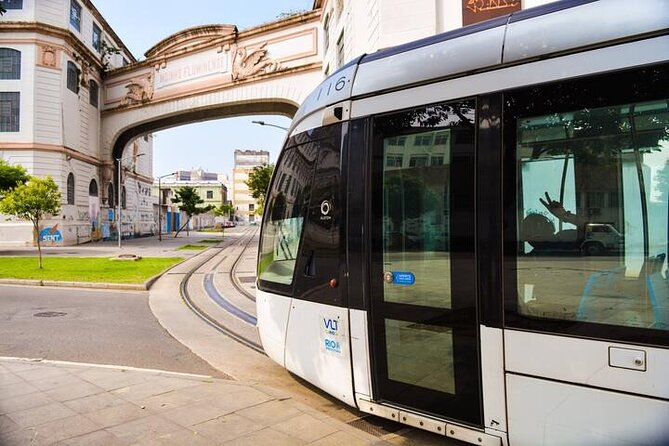
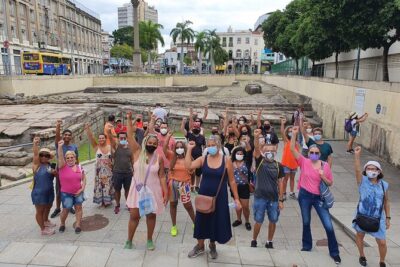
Now the tour turns from institutions to a major historical site: Cais do Valongo. This was the largest port for African slaves during the transatlantic slavery trade, operating from the late 18th to the early 19th century. The estimated scale is enormous, with around one million people passing through.
That number is hard to hold. A good guide helps you handle it by tying it to human experiences, not just statistics. Standing near the port location, you start to understand why the area matters to Afro-Brazilian memory today.
You only have about 20 minutes here, which might sound short. But for a site tied to large-scale trauma, short can be respectful. You’ll look, you’ll listen, and you’ll move on with a clearer picture than when you arrived.
If you want maximum value, keep your questions simple and direct. Ask what the guide thinks people often misunderstand about the Valongo era. You’ll usually get a clearer takeaway than if you ask for a full timeline.
More of Rio's older story on foot:
- Rio de Janeiro Historical Center Walking Tour★ 4.5 · 336 reviews
- Private Walking and Cultural Tour Rocinha-Rio de Janeiro★ 5.0 · 239 reviews
- Rio de Janeiro: Historic Rio and Santa Teresa Half-Day Tour★ 4.4 · 228 reviews
- Rio Gastronomy: Culture & History Through The Art Of Food – Walking Group Tour★ 5.0 · 164 reviews
- Adventure & History at Tijuca Forest (small group or private)★ 5.0 · 161 reviews
Hanging Garden of Valongo: Belle Époque meets painful ground
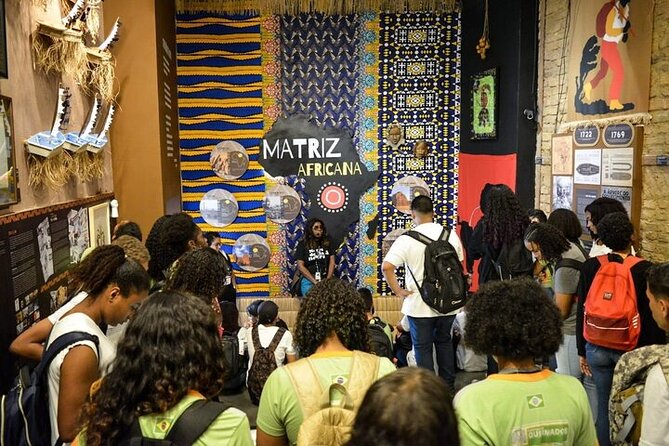
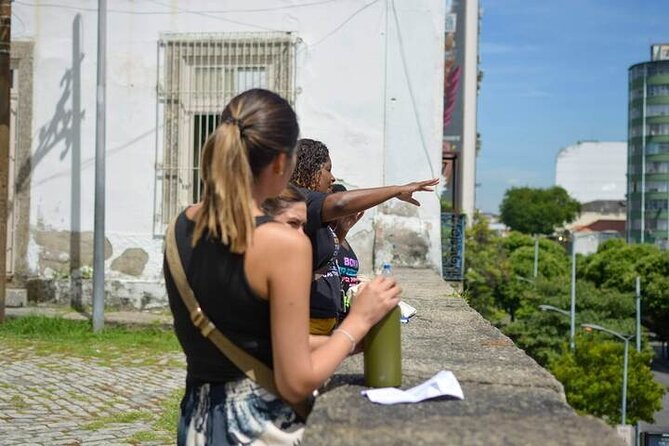
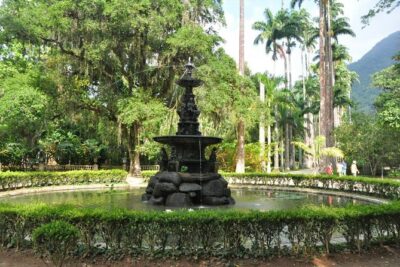
Right after Cais do Valongo, you’ll visit the Suspended Garden of Valongo, also called the Hanging Garden of Valongo. This is one of the most interesting “contrast” stops on the whole route.
In the early 20th century, during the Pereira Passos administration, Rio went through big city beautification efforts. This period is often linked to the Belle Époque. The garden is presented as a remarkable creation from that era, a dream-like urban improvement.
Here’s why this stop works on a cultural heritage tour: it forces you to notice how cities change while earlier layers remain underneath. You see a beautiful public space, then you remember the slavery-linked site nearby. That push and pull is uncomfortable, but it’s also honest.
You have about 20 minutes. Use it to do two things: enjoy the garden’s design, then let the guide connect it back to the surrounding historical context.
Largo de São Francisco da Prainha: samba energy in the middle of history
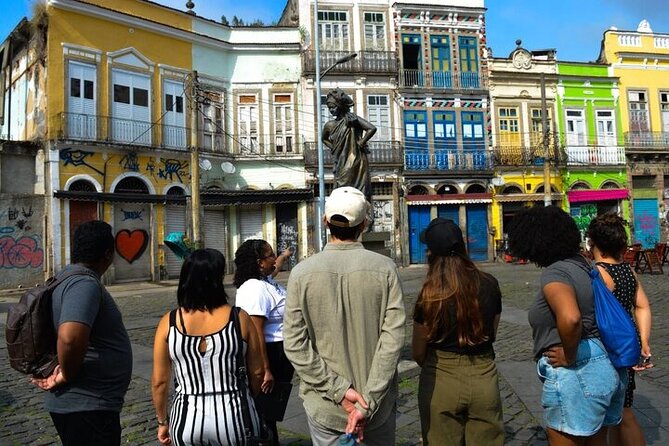
The tour continues to Largo de São Francisco da Prainha, a lively gathering place for people who enjoy samba and ice-cold beer. It’s known for an energetic atmosphere, and it has been described as one of the coolest spots in the world by Times Out.
This stop might feel like a reset, but it is actually another layer of the theme. Samba is not only a music style. It’s a result of survival, cultural continuity, and community life.
You’ll get about 20 minutes here. It’s enough time to soak in the vibe, take a few photos, and listen as the guide frames the connection between African-Brazilian heritage and modern street culture.
Practical tip: If you plan to buy a drink or snack, do it quickly so you don’t slow the group. The tour pace is timed, and you’ll want to stay on schedule for the remaining stops.
Beco João Inácio and the Mosaico Hilário Jovino wall
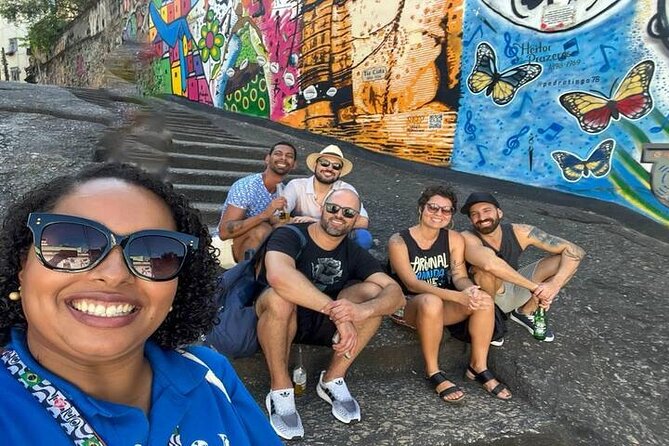
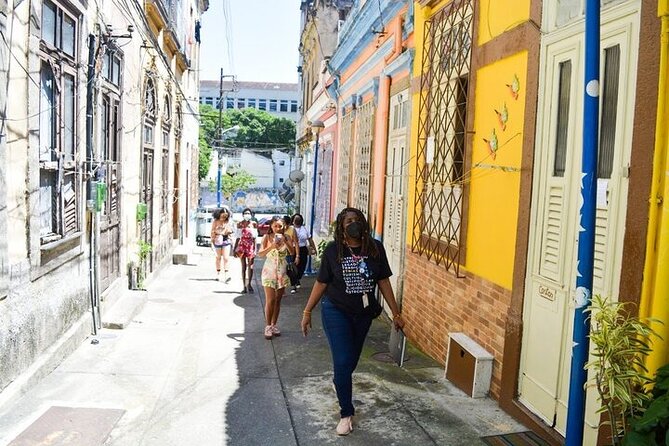
Next, you head into Lapa for Beco João Inácio, a small historic narrow street with steep hills and stone pavement. The street is picturesque, with old houses that date back over a century, which helps the neighborhood feel like a living museum without the ticket line.
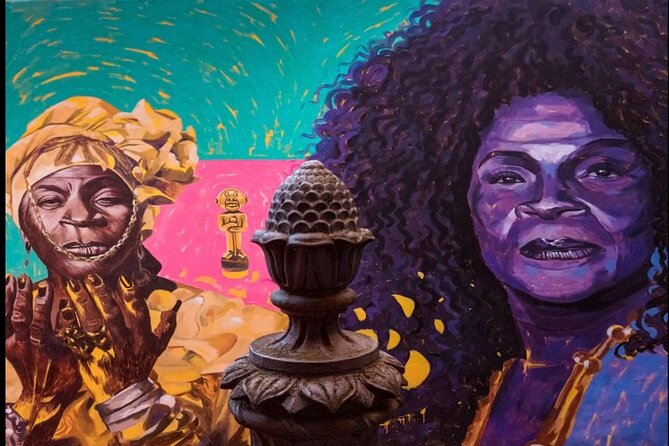
Right near that area you’ll see Mosaico Hilário Jovino, an urban art mosaic made of tiles covering a long wall. The mosaic is a visual reminder that African-Brazilian cultural presence is not only in archives. It shows up in public art, too.
You have about 20 minutes for this section. It’s a good moment to put down your phone for a minute and just watch how the street feels. Listen to the rhythm of people moving on stone, the way the hill affects pace, and how old structures hold daily life.
Possible consideration: The street is described as steep, and the pavement is stone. Wear shoes with grip, not thin soles.
Pedra do Sal: the birthplace of samba and a community meeting spot
The final major stop is Pedra do Sal, also called Pedra do Sol. This site is culturally significant as a gathering place for African-Brazilian communities. It’s considered the birthplace of samba music.
You’ll feel the difference between this stop and the earlier port and cemetery sites. Pedra do Sal is about community continuity. It’s the same story theme, but with a more grounded, everyday meaning.
You get about 20 minutes, and you should use it to connect dots. The tour has moved from sites of death, to sites of memory and research, to a port of forced migration, to urban transformation, and then to music and meeting.
That arc helps you understand why samba matters. It’s not entertainment floating above history. It’s part of how people carried identity forward.
Admission here is listed as free, so it’s also good value. You’re paying for a guide and a curated route, not just expensive entrances.
Price, timing, and what $89 really buys
Let’s talk money in plain terms. At $89 per person for about 3 hours 30 minutes, this is a mid-range walking tour price for Rio. The key value is that you get a bilingual tour guide, plus scheduled time at a museum and an institute where tickets are included.
Some stops are free admissions, like Santa Rita Church, Cais do Valongo, the Hanging Garden of Valongo, Largo de São Francisco da Prainha, Beco João Inácio, and Pedra do Sal. That means your money is not only going to pay for access. It’s going to pay for interpretation and timing, and for getting you to the right places in the right order.
It’s also booked fairly ahead of time on average. That usually means limited availability, and it’s wise to lock it in early if your dates are firm.
If you’re comparing options, consider what you want. If you just want photos, you can DIY some of these neighborhoods. But if you want meaning and context, this tour saves you the guesswork. And if you care about Afro-Brazilian heritage beyond the headline facts, the museum and institute stops make a big difference.
What’s not included is lunch, meals, and beverages. Plan a snack buffer for later, especially since you’ll be out during the afternoon.
Who this tour suits best, and who might want a different plan
This tour fits best if you like guided history with a human scale. You’ll enjoy it if you want to connect architecture, memorial sites, and street culture into one coherent story.
It also suits travelers who appreciate structure. With eight stops and a clear flow from Centro to Lapa and back, you get momentum. The guide keeps the pacing, so you do not have to map everything yourself.
Who might prefer something else? If you dislike walking, if you need long museum free time, or if you want a lighter, entertainment-focused afternoon, this may feel too serious. The history is central. You can still enjoy the samba-linked moments, but the tone stays reflective.
Should you book Little Africa Unveiled?
Yes, if your goal is to understand Rio’s Afro-Brazilian heritage through places that shaped memory and identity. The strongest reasons to book are the bilingual guide experience, the mix of museum and research stops, and the way the route bridges slavery-era history with samba culture you can actually feel in the streets.
I’d book it rather than DIY it if you care about context and want fewer wrong turns. I’d also choose it if you want a tour that uses small-group pacing, not a big crowd method.
Skip it or think twice if your day includes tight mobility limits or if weather looks iffy, because this tour needs good weather and you’re outdoors for most of the experience.
FAQ
What is the duration of Little Africa Unveiled?
It runs for about 3 hours 30 minutes.
Where does the tour start?
The tour starts at Windsor Guanabara Hotel, Av. Pres. Vargas, 392 – Centro, Rio de Janeiro – RJ, 20071-000, Brazil.
What time does the tour begin?
The start time is 2:00 pm.
How much does it cost?
The price is $89.00 per person.
Is lunch included?
No. Lunch, meals, and beverages are not included.
Are tickets included for the museum and institute stops?
Yes. MUHCAB and the Instituto de Pesquisa e Memoria Pretos Novos (IPN) include admission tickets. Other stops listed in the route have free admission.
What group size should I expect?
The tour has a maximum of 15 travelers.
Is the tour near public transportation?
Yes, it is near public transportation.
What happens if the weather is bad?
This experience requires good weather. If it’s canceled due to poor weather, you will be offered a different date or a full refund.
What is the cancellation policy?
You can cancel for a full refund up to 24 hours before the experience start time. If you cancel less than 24 hours before, the amount paid is not refunded.
Recently added around Rio




Little Africa Walks, compared.
Discover Rio Little Africa: A Cultural and Historical Journey
Read our review →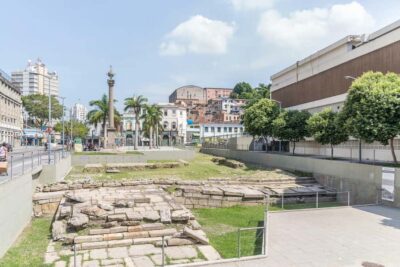
Explore Little Africa : Unveiling Afro Heritage in Rio de Janeiro
Read our review →
2 in 1: Private Favela & Little Africa- The Full African History!
Read our review →
Little Africa – Walking tour from the passed to the future
Read our review →
Little Africa: Historical & Heritage Tour of Rio de Janeiro
Read our review →
More of this kind of Rio day