
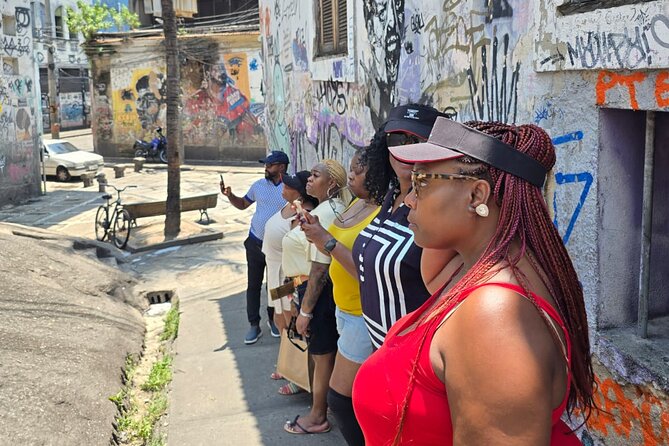
Reviewed · LITTLE AFRICA WALKS
Little Africa: Historical & Heritage Tour of Rio de Janeiro
Rio tells its slave-story in plain sight. This Little Africa walking tour links major places tied to enslaved Africans, burial sites, and cultural roots, as you move from Centro toward Cais do Valongo. You get short stops with free admission tickets, plus one optional paid museum if you want to go further.
I love how the route is built around specific locations, not vague “history talk.” Two of my favorite parts are the Cais do Valongo docks moment and the pause at Pedra do Sal, where you can connect African religious and Carnaval beginnings to what you see today.
One drawback to consider is pacing. It’s 2 to 4 hours of walking and standing, and most stops are brief, with the deeper museum layer coming only through the optional IPN visit.
In This Review
- Key points to know before you go
- Walking Rio’s Little Africa Route, from Praça Quinze de Novembro to Cais do Valongo
- How the tour works: free stops, short visits, and one optional museum
- Stop by stop: Osorio statue, Olympic Boulevard, and colonial port clues
- Santa Rita burial place and Pedra do Sal: faith, memory, and Carnaval roots
- Mauá Square and Largo de São Francisco da Prainha: port views to a buried beach
- Cais do Valongo: the docks tied to African arrivals in the 1800s
- Pretos Novos at IPN: worth the extra time if you want the burial-ground layer
- Guides, pace, and how to get the most out of the walk
- Price and value: what $75.46 buys you, and when it feels worth it
- Who should book Little Africa, and who might want a different plan
- Should you book this Little Africa tour?
- FAQ
- How long is the Little Africa historical and heritage tour?
- How much does it cost?
- Is the tour private?
- What language is the tour offered in?
- Where does the tour start and end?
- Are there admission tickets included?
- Is free cancellation available?
Key points to know before you go
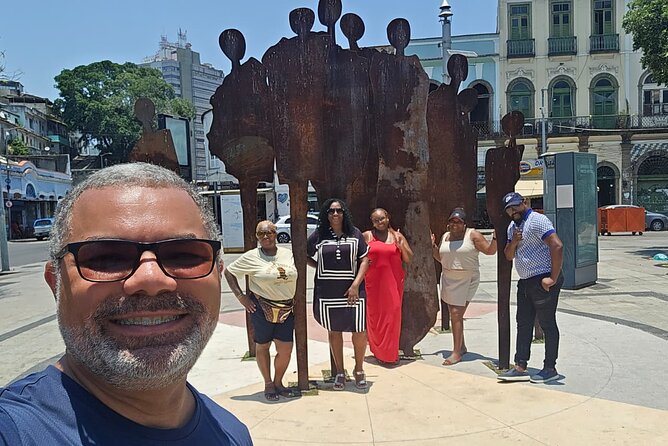
- Cais do Valongo shows the docks tied to African arrivals in the 1800s
- Two burial-ground stops: Santa Rita and the optional IPN (Pretos Novos)
- Pedra do Sal connects African religions and Carnaval roots in a very physical, street-level way
- Free admission at each stop except the optional IPN museum visit
- Private group feel with English offered and a mobile ticket
- You’ll cover a lot of ground in a short time, so wear shoes you can stand in
More walks through Little Africa:
- Discover Rio Little Africa: A Cultural and Historical Journey
★ 5.0 · 238 reviews - Rio de Janeiro: Little Africa Heritage Walking Tour
★ 4.9 · 177 reviews - Explore Little Africa : Unveiling Afro Heritage in Rio de Janeiro
★ 5.0 · 97 reviews - 2 in 1: Private Favela & Little Africa- The Full African History!
★ 5.0 · 21 reviews
Walking Rio’s Little Africa Route, from Praça Quinze de Novembro to Cais do Valongo
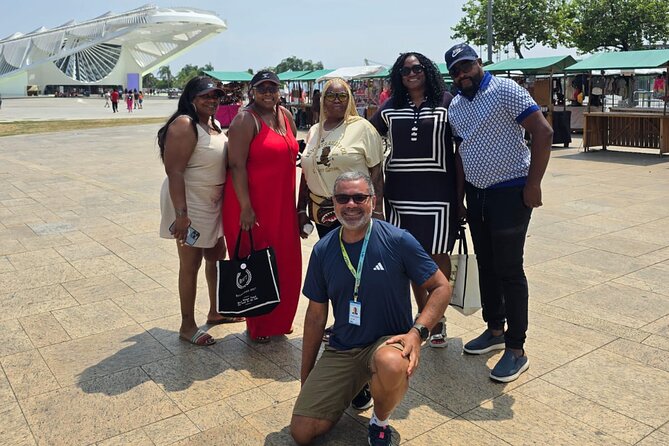
You start at Praça Quinze de Novembro, in Centro. The tour ends at Cais do Valongo in Saúde, so you get that “moving across the city” feeling instead of coming back the same way.
It runs about 2 to 4 hours and is set up as a private tour for your group only. You’ll also get a mobile ticket, and the experience is offered in English. Since it’s near public transportation, you can usually get there without needing a complicated plan.
I like that the meeting and ending points are in meaningful areas, not random landmarks. It makes the story feel anchored to geography, especially around the old port and the sites linked to African arrivals and memory.
How the tour works: free stops, short visits, and one optional museum
Most stops come with admission ticket free, and each one is timed for a quick, focused moment. The overall structure is simple: you meet, walk, listen, then move on, with the entire experience designed to fit into a half-day window.
The big “maybe” is Instituto de Pesquisa e Memoria Pretos Novos (IPN). That stop is listed as optional and the admission is not included, so you’ll decide on the spot (or ahead of time) if you want the extra museum layer.
Here’s the practical takeaway: this is not a long museum day. If you want several hours indoors, you might feel a bit rushed. If you want to walk the streets and understand what they mean, it’s a good fit.
Stop by stop: Osorio statue, Olympic Boulevard, and colonial port clues
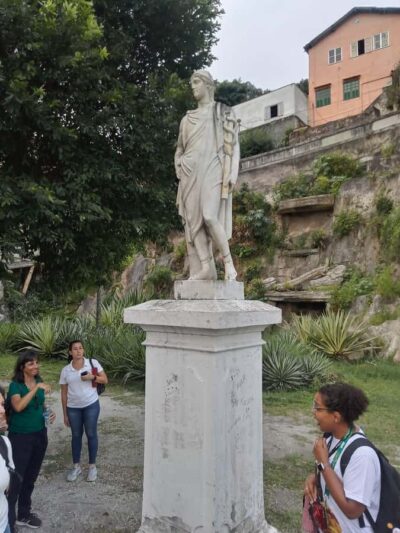
The first stop is the Statue of General Osorio, with a short 10-minute stop and free admission. Even though a statue can sound like a small start, it works as a “setting the stage” moment, nudging you to pay attention to how public memory gets placed in the city.
Next you head to the Boulevard Olimpico, described as a corridor built for the Olympics where the old port area used to be in colonial times. The time you spend here is brief, but it matters because it puts Rio’s modern layers over older ones, without asking you to ignore what came before.
This section is also where I’d adjust my expectations. You’re not spending time digging through one place. You’re learning how the shoreline and the port area evolved, and that makes the later slave-trade sites hit harder.
Santa Rita burial place and Pedra do Sal: faith, memory, and Carnaval roots
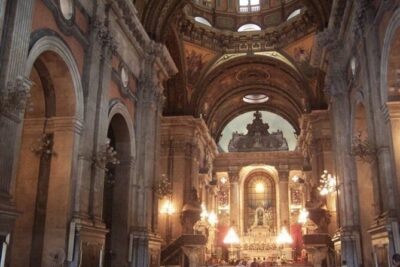
At Matriz da Paroquia de Santa Rita, you’ll get a 10-minute stop tied to the former burial place of formerly enslaved people. This is one of the emotional anchors of the tour because burial ground sites are never just “an object to look at.” They change your pace. You tend to slow down without being told to.
Then comes Pedra do Sal, a historic site where you can hear the connection between African religions and the spread of Carnaval roots. It’s only a 5-minute stop on the schedule, but the impact can be outsized if your guide keeps tying the place to the living culture around you.
This pairing is smart. You move from a place tied to burial and loss to a place tied to community, celebration, and religious practice. Even though the visits are short, the contrast helps you understand why Rio’s African heritage is both painful and ongoing.
Mauá Square and Largo de São Francisco da Prainha: port views to a buried beach
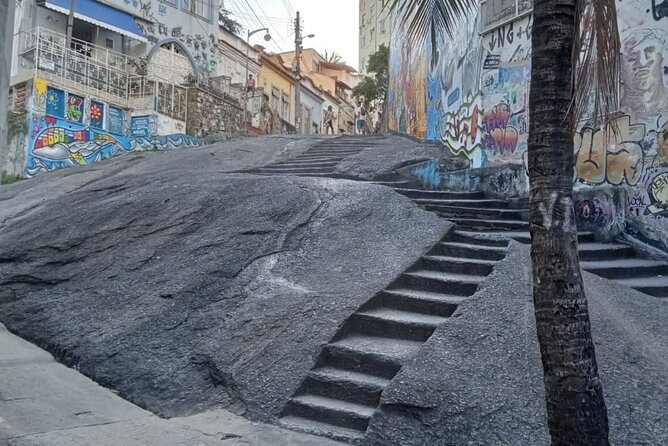
At Mauá Square, you’re by the port area, near the Museum of Tomorrow and the Rio Art Museum, with a 10-minute stop. The timing is short, so think of this as a viewpoint-and-context moment rather than a full museum break.
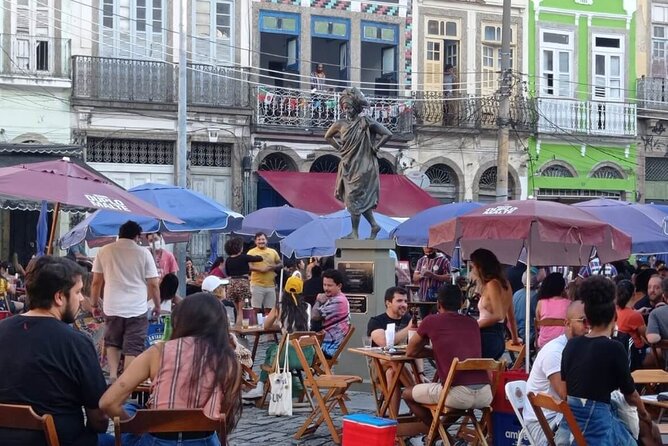
Then you go to Largo de São Francisco da Prainha, described as an area of a former beach that was buried, now known for local bars. The 15-minute stop here is the tour’s more “street atmosphere” moment, where you can feel how the city uses space differently across time.
I like having at least one stop that isn’t only about tragedy or trade. It keeps the story from becoming one-note, and it also helps you picture everyday life layered over the past.
More of Rio's older story on foot:
- Rio de Janeiro Historical Center Walking Tour★ 4.5 · 336 reviews
- Private Walking and Cultural Tour Rocinha-Rio de Janeiro★ 5.0 · 239 reviews
- Rio de Janeiro: Historic Rio and Santa Teresa Half-Day Tour★ 4.4 · 228 reviews
- Rio Gastronomy: Culture & History Through The Art Of Food – Walking Group Tour★ 5.0 · 164 reviews
- Adventure & History at Tijuca Forest (small group or private)★ 5.0 · 161 reviews
Cais do Valongo: the docks tied to African arrivals in the 1800s
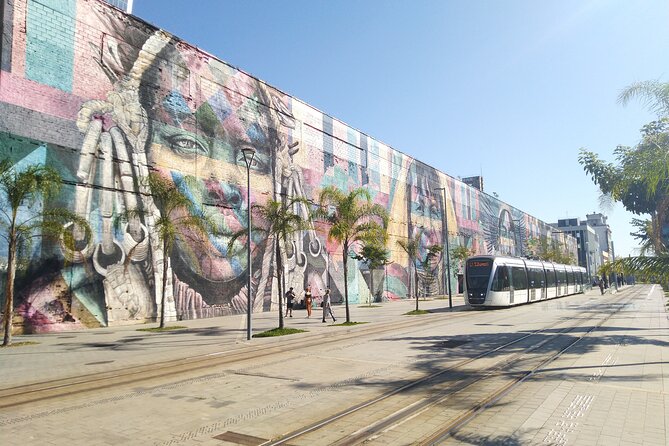
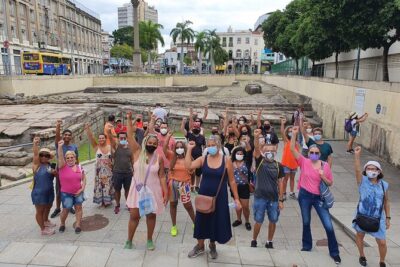
This is the stop you should mentally prepare for. Cais do Valongo is where African slaves arrived in the 1800s, and the tour sets 20 minutes aside for it. You’re not just seeing a waterfront. You’re standing on a point of forced migration history that shaped Rio and Brazil.
If you’re the type who needs a moment to process, this is where you’ll want it. Even with a guided explanation, the setting does part of the work for you. The city around it may look ordinary, but the meaning isn’t.
As a practical note, you’ll likely want to keep your eyes up as well as listening. Pay attention to how the port area looks now, then let the guide connect it back to what was happening in the 1800s.
Pretos Novos at IPN: worth the extra time if you want the burial-ground layer

The IPN stop, Instituto de Pesquisa e Memoria Pretos Novos, is where slaves who died before arriving in Brazil were buried, and the site now functions as a museum. It’s listed as optional, lasts about 30 minutes, and is not included in the base price.
Should you add it? If you want one more layer of detail on the story of loss and memory, it’s the logical choice. If you’re traveling with limited energy for walking, or you’d rather keep the tour strictly within the scheduled time window, you can skip it and still leave with a strong route.
Either way, the IPN option gives you control. You decide how far into the memorial space you want to go.
Guides, pace, and how to get the most out of the walk
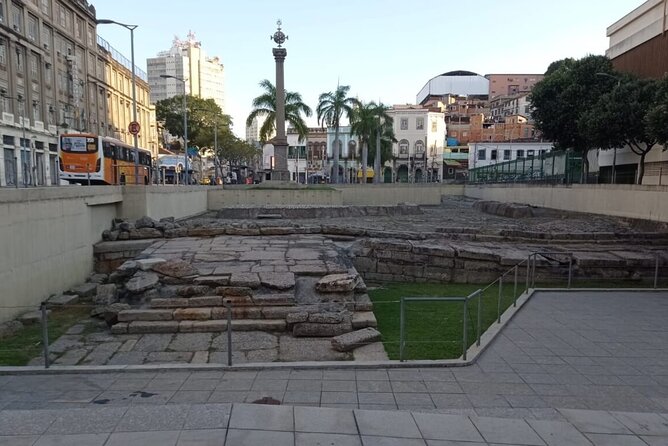
The quality of a walking tour often comes down to the guide’s tone. In this case, different guides have helped different people feel like they understood the material and the context fast.
I’ve seen examples of guides who were friendly and helpful in real time, like Rafael, who helped manage a logistics hiccup when a taxi dropped people at the wrong place due to a misunderstanding and language barrier. I’ve also seen guides like Anna Maria described as kind and deeply insightful, with the tour feeling like a full circle of history, art, and conversation. And Nathaly has been credited with making the tour feel like walking around with a friend, answering questions in a relaxed way.
What does that mean for you? It means you’ll get more out of the tour if you treat it like a conversation. Ask about what you’re seeing, not just what happened. If you want restaurant or nightlife advice afterward, it can happen naturally too, since some guides connect the historical stops to today’s city rhythm.
One pace note from the real world: there’s a lot of walking and standing. If you’re with an elderly parent or anyone who tires quickly, consider building in extra time for breaks on your side of the schedule.
Price and value: what $75.46 buys you, and when it feels worth it
At $75.46 per person, this tour sits in the “you’re paying for guided context and access to meaning” category. The key value driver is that most stops have free admission tickets, so the money goes into interpretation, route planning, and the time a guide spends with your group.
Duration matters too. With 2 to 4 hours, you get enough time for a connected story that spans multiple key sites, without it turning into a full-day excursion. If you’re comparing it to paying separately for multiple paid entries, the free-access structure makes the price easier to swallow.
But here’s the honest consideration: because stops are timed and mostly outdoor, you’re not buying long museum time for that money. If you were hoping for lots of indoor viewing at multiple museums, your value will depend on whether you add IPN.
If you want a guided walk that connects slave-trade arrival history to cultural memory sites you can actually stand on, the pricing can feel fair. If you want a slower pace with heavy museum time, you may prefer another format.
Who should book Little Africa, and who might want a different plan
This tour fits best if you like walking tours and you want culture and history tied to street-level places. It’s also a strong choice if you’re traveling solo and want to feel like you’re not just wandering alone, since the tour is private for your group and the guide is there the whole time.
It may be tougher if mobility is a big concern. The tour is “most travelers can participate,” but the experience still involves a lot of walking and standing with relatively short stops and limited downtime.
It also helps if you’re comfortable with a story that moves quickly. The route covers multiple sites, and that can be a benefit for learning fast. If you’d rather linger in fewer places, you might want to pair this with longer independent time afterward in one area that grabs you most.
Should you book this Little Africa tour?
I’d book it if you want an organized, meaningful walk that takes you from Rio’s port history to places tied to burial, arrival, and cultural roots like Pedra do Sal and Cais do Valongo. The mix of free admission stops and the option to add IPN lets you tune the depth to your energy and interests.
Skip it or adjust expectations if you need lots of seated time, or you’re expecting long museum visits throughout. This is a walking-and-story tour first, and the extra museum layer is optional.
If you book, wear solid shoes, bring water, and go in ready to ask questions. The best results come when you treat the walk like a guided conversation across real locations, not a checklist you rush through.
FAQ
How long is the Little Africa historical and heritage tour?
It runs about 2 to 4 hours, depending on the pace of the group and time spent at the stops.
How much does it cost?
The price is $75.46 per person.
Is the tour private?
Yes. It is a private tour/activity, meaning only your group will participate.
What language is the tour offered in?
The tour is offered in English.
Where does the tour start and end?
It starts at Praça Quinze de Novembro, Centro (Rio de Janeiro) and ends at Cais do Valongo, Av. Barão de Tefé, Saúde (Rio de Janeiro).
Are there admission tickets included?
Admission tickets are free for the listed stops, but the IPN museum visit is optional and not included in the tour.
Is free cancellation available?
Yes. You can cancel up to 24 hours in advance for a full refund.
Recently added around Rio



Little Africa Walks, compared.
Discover Rio Little Africa: A Cultural and Historical Journey
Read our review →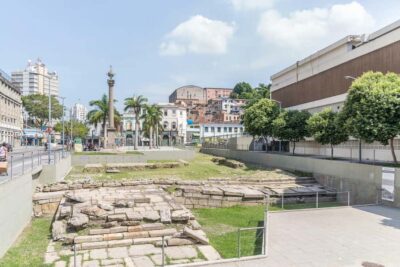
Explore Little Africa : Unveiling Afro Heritage in Rio de Janeiro
Read our review →
2 in 1: Private Favela & Little Africa- The Full African History!
Read our review →
Little Africa Unveiled: Vibrant Afro-Brazilian Heritage in Rio
Read our review →
Little Africa – Walking tour from the passed to the future
Read our review →
More of this kind of Rio day