
Reviewed · LITTLE AFRICA WALKS
Explore Little Africa : Unveiling Afro Heritage in Rio de Janeiro
Rio hides a powerful Afro heritage route.
This 3 hour 30 minute walk in Rio de Janeiro follows the story of Little Africa through major Black heritage sites, port history, and culturally rooted memory. I especially like how the tour uses a decolonial narrative tone, then anchors it in real places you can actually stand in front of.
I also love the way the tour moves you from site to site without feeling like a school lecture. Guides such as Raphael, Carolina, Rafael, Malu, and Val are repeatedly praised for making hard history understandable, while still keeping the pace humane, even when someone needs a slower walk.
One consideration: the route involves walking and outdoor stops, so it is not recommended for people with disabilities, and you will want comfortable shoes.
In This Review
- Key highlights to look for
- Why Little Africa in Rio Still Matters
- Price and Time: What $82.53 Buys You
- Meeting at Santa Rita and Ending at Largo da Prainha
- Stop 1: Matriz da Paroquia de Santa Rita and the Decolonial Frame
- Stop 2: IPN, the Pretos Novos Institute of Research and Memory
- Stop 3: MUHCAB in Gamboa for Afro-Brazilian Culture on the Ground
- Stop 4: Cais do Valongo, Rio’s Port District Memory
- Stop 5: Pedra do Sal, Faith and Historical Memory in Saúde
- Stop 6: Largo São Francisco da Prainha, Symbolic Little Africa Today
- Guides and Pacing: Why the Story Feels Human
- What to Bring, What to Ask, and When to Start
- Who This Tour Fits Best
- Should You Book This Little Africa Tour?
- FAQ
- How long is the Little Africa tour in Rio?
- What does the tour cost?
- What is included in the price?
- Is lunch included?
- Where does the tour start and end?
- How many people are in the group?
- Are service animals allowed?
- Is the New Black Institute open on Sundays?
- When are museums closed?
- What if weather is bad or I need to cancel?
Key highlights to look for
- Decolonial storytelling that frames Afro-Brazilian history in the places where it happened
- Major Rio landmarks tied to the African diaspora, including Cais do Valongo
- Small groups up to 20 people, which helps questions and pacing
- A mix of external visits and museum time, including the Institute for Research and Memory of Pretos Novos
- VLT public transport included for a short, practical transit moment
More walks through Little Africa:
- Discover Rio Little Africa: A Cultural and Historical Journey
★ 5.0 · 238 reviews - Rio de Janeiro: Little Africa Heritage Walking Tour
★ 4.9 · 177 reviews - 2 in 1: Private Favela & Little Africa- The Full African History!
★ 5.0 · 21 reviews - Little Africa Unveiled: Vibrant Afro-Brazilian Heritage in Rio
★ 5.0 · 12 reviews
Why Little Africa in Rio Still Matters
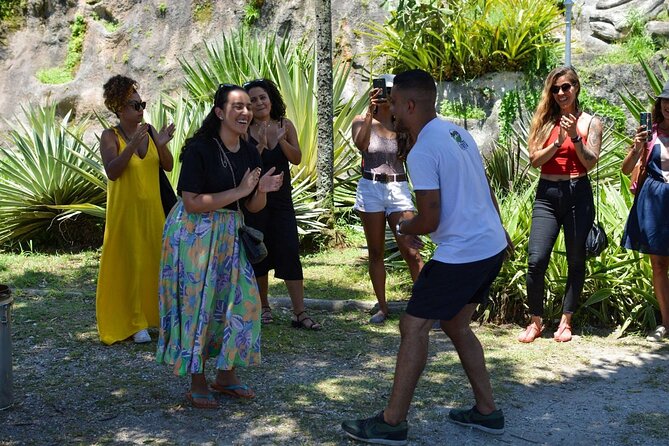
If you only do the big Rio headline attractions, you miss a whole spine of the city. This tour takes you to the areas where Afro-Brazilian history is not an abstract topic, but part of the physical geography of Rio.
You start with places tied to faith and community memory, then you move toward the port district and religious landmarks linked to Black presence. The tour keeps repeating one big idea in different forms: the past was violent and intentional, and its effects still show up in culture, neighborhoods, and inequality today.
That matters for you because it changes how you read Rio while you’re there. After this, you are not just looking at buildings. You are noticing meaning.
Price and Time: What $82.53 Buys You
At $82.53 per person for about 3 hours 30 minutes, this is priced like a serious guided experience, not a casual stroll. The value comes from two places.
First, the tour includes all fees and taxes plus your ticket for The New Black Institute. Second, many stops are outside and free to view, so you are not paying again and again for admissions while walking between meaningful locations.
Also, the tour includes a short ride on the VLT public transport, which makes the movement more efficient than doing everything on foot. It is a small thing, but it helps you spend energy on the history instead of constant transit hassle.
Lunch and tips are not included, so plan to eat before or after. I would also bring a small snack mindset, because you are going to be thinking, walking, and listening.
Meeting at Santa Rita and Ending at Largo da Prainha
The meeting point is Santuário de Santa Rita, Largo de Santa Rita, s/n, Centro, Rio de Janeiro. The tour ends at R. São Francisco da Prainha, 7, in Saúde, finishing at Largo da Prainha.
This start and end pair is practical. You start in Centro, then you move through the port district region and down toward Saúde. Ending at Largo da Prainha is a strong closer because it is tied to the symbolic footprint of Little Africa.
One more practical detail: the tour is near public transportation. That is helpful if you need to adjust your day around it.
The group size is capped at 20 travelers, which is a big deal in a tour like this. Smaller groups mean you get more time for questions, and the guide can keep everyone together without rushing the most sensitive moments.
Stop 1: Matriz da Paroquia de Santa Rita and the Decolonial Frame
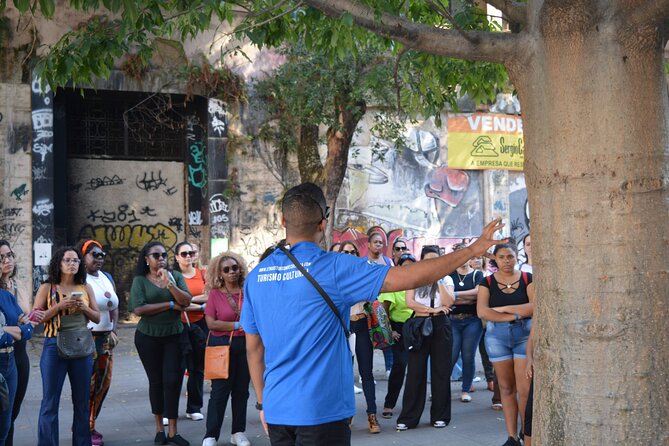
Your first stop is Matriz da Paroquia de Santa Rita. It is an external visit, about 20 minutes, and it comes with cultural and heritage-based context plus a decolonial narrative.
This is a smart opening. Before you hit the heavy port story, you get introduced to how community, faith, and history intersect in Rio. You are being set up to understand that the story is not only about ships and ports, but also about how people organized their lives, beliefs, and memory.
Potential drawback: since this portion is external and shorter, it can feel like a quick setup. If you are the type who likes background first, arrive a little early so your brain is ready to listen.
Stop 2: IPN, the Pretos Novos Institute of Research and Memory
Next is Instituto de Pesquisa e Memoria Pretos Novos (IPN). This is where the tour turns more archaeological and memory focused.
You get around 40 minutes here, and the admission ticket is included. The IPN is described as an archaeological institution, and that shapes the tone. This is not only storytelling on a sidewalk. It is a place meant to preserve and research memory tied to the Pretos Novos.
I like this stop because it shifts the experience from general history to specific memory work. You start to understand how institutions in Brazil treat the record of slavery, resistance, and the people who were forced into the system.
More of Rio's older story on foot:
- Rio de Janeiro Historical Center Walking Tour★ 4.5 · 336 reviews
- Private Walking and Cultural Tour Rocinha-Rio de Janeiro★ 5.0 · 239 reviews
- Rio de Janeiro: Historic Rio and Santa Teresa Half-Day Tour★ 4.4 · 228 reviews
- Rio Gastronomy: Culture & History Through The Art Of Food – Walking Group Tour★ 5.0 · 164 reviews
- Adventure & History at Tijuca Forest (small group or private)★ 5.0 · 161 reviews
Stop 3: MUHCAB in Gamboa for Afro-Brazilian Culture on the Ground
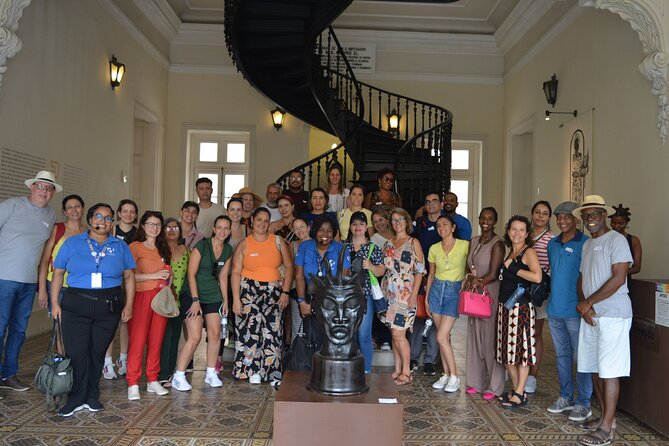
After IPN, you head to MUHCAB, the Museu da História e da Cultura Afro-Brasileira, in the Gamboa region. Expect about 40 minutes.
This is a territory museum focused on Afro-Brazilian history and culture. The museum framing matters because it is not only about oppression. You also see how Black culture shaped neighborhoods, traditions, and identity in Rio.
Admission is listed as free for this stop, so you are getting time inside without added ticket costs beyond what the tour already covers.
Here is a practical note: museum time can vary depending on group pace and any temporary closures. Plan to move with the group and do not expect long wandering time.
Stop 4: Cais do Valongo, Rio’s Port District Memory
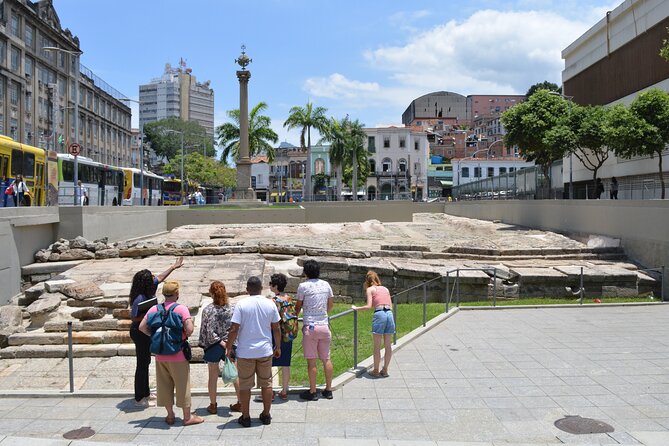
Then comes one of the biggest, most historically loaded stops: Cais do Valongo.
It is an external visit, about 30 minutes, and it is free. This is the former wharf in Rio’s port district, located between present day Coelho and Castro and Sacadura Cabral streets.
If you care about African diaspora history, this is the stop you will remember. It connects the global forced migration story to a specific physical place. You are standing where the port infrastructure once helped power a system of human transport and exploitation.
What makes this stop valuable for you is the way it changes your understanding of Rio’s geography. After this, you will see the city not just as scenery, but as infrastructure built around major economic and human movement.
Stop 5: Pedra do Sal, Faith and Historical Memory in Saúde
Next you visit Pedra do Sal, again an external visit, around 25 minutes, and free.
Pedra do Sal is described as both a historical and religious landmark in the Saúde neighborhood, near Largo da Prainha. That combo matters. Religious meaning is not an add-on here. It is part of the way Black history survived and stayed present in daily life.
Because this stop is exterior, you will likely get better photo opportunities, but also expect more sun and changing light. If you are sensitive to heat or glare, you might want to pace yourself and take breaks when the guide signals them.
Stop 6: Largo São Francisco da Prainha, Symbolic Little Africa Today
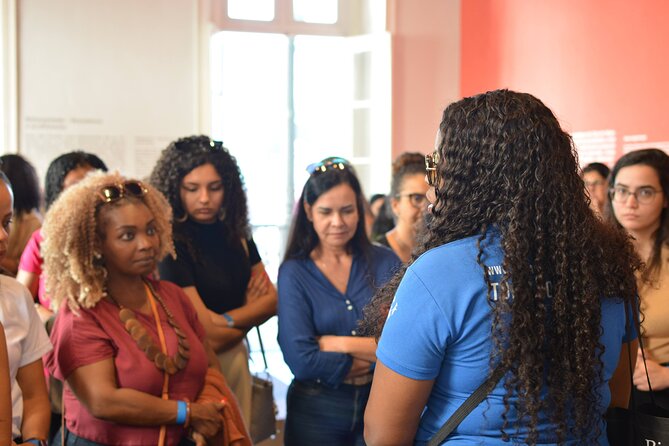
Your final stop is Largo São Francisco da Prainha. It is an external visit, about 20 minutes, and free.
This is where the tour ties the story to the present. The square was formerly a symbolic territory of Little Africa, marked by Black presence and the zungus. Today, it is considered one of the coolest places by Time Out.
That last part gives you a useful perspective: history is not trapped in the past. It lives in public space, community memory, and how people keep using these places.
The tour ends right here at Largo da Prainha, so it works well as a natural pivot point into the rest of your afternoon or evening.
Guides and Pacing: Why the Story Feels Human
Here is the real reason this tour earns strong ratings. The guides are repeatedly praised by name, and the pattern is consistent: they explain clearly, they handle sensitive material professionally, and they keep the group moving in a way that respects people’s limits.
You will also feel the compassion in the way the tour adjusts for individuals. One review highlights how a guide thoughtfully changed the tour so a family member who could not manage all the walking could still experience it. That kind of flexibility matters on this route, because the history is heavy and your body needs to keep up.
Safety also comes up. The tour topic is polarizing for some people, but the way it is presented is described as professional and truth-focused, without sanding down the reality of slavery.
If you like asking questions, this format is built for it. With a maximum group size of 20, you are less likely to get cut off when something strikes you.
What to Bring, What to Ask, and When to Start
This is a walking heavy experience, plus some museum time. Even if the tour is well-paced, you should assume your legs will feel it.
Bring comfortable shoes. Do not plan on doing this in flip-flops. It is also smart to carry a light layer, because Rio weather can shift fast even when the day looks stable.
Questions to ask your guide:
- How does this site connect to Afro-Brazilian identity in Rio today?
- What is the difference between what people remember publicly, versus what institutions preserve?
- What should I notice as I walk, not just inside museums?
One more practical tip based on how the route plays with time: if your schedule makes you start late, the light at the end can get worse for photos. You can still do it, but plan your camera use earlier in the day so you are not hunting for flattering light at the final stops.
Who This Tour Fits Best
This tour is a strong match if you want more than sightseeing. It fits you if you care about Afro-Brazilian culture, the African diaspora, and how history is preserved in institutions and public spaces.
It is also a good fit for people who like context. The stops are not random. The sequence helps you build a storyline, starting with decolonial framing and faith memory, then moving into archaeological remembrance and port history.
If you are traveling with older relatives, the pace adjustments you hear about from guides are encouraging. Still, remember the tour is explicitly not recommended for disabled people, so think carefully if mobility is limited.
Should You Book This Little Africa Tour?
If your goal is to experience Rio beyond the usual postcards, I think you should book this. The price is fair for what you get, especially because you are covered for admissions tied to The New Black Institute and you get a mix of outside landmarks and museum time in just 3 hours 30 minutes.
I would only hesitate if:
- Walking distance and outdoor stops are a dealbreaker for you.
- You want a relaxed, low-thinking tour with minimal history talk.
Otherwise, this is exactly the kind of guided route that helps you see Rio with better eyes, especially the sites around Cais do Valongo, Pedra do Sal, and Largo São Francisco da Prainha.
FAQ
How long is the Little Africa tour in Rio?
The tour lasts about 3 hours 30 minutes.
What does the tour cost?
The price is $82.53 per person.
What is included in the price?
The price includes all fees and taxes, ticket for The New Black Institute, and a short ride on the VLT public transport.
Is lunch included?
No, lunch is not included. Tips are also not included.
Where does the tour start and end?
It starts at Santuário de Santa Rita, Largo de Santa Rita, s/n, Centro, Rio de Janeiro. It ends at R. São Francisco da Prainha, 7, in Saúde, finishing at Largo da Prainha.
How many people are in the group?
The tour has a maximum of 20 travelers.
Are service animals allowed?
Yes, service animals are allowed.
Is the New Black Institute open on Sundays?
No. On Sundays, The New Black Institute is closed.
When are museums closed?
From 16 December to 5 January, and during Carnival season, all the museums will be closed.
What if weather is bad or I need to cancel?
The experience requires good weather. If it is canceled due to poor weather, you are offered a different date or a full refund. You can cancel for a full refund up to 24 hours before the start time.
Recently added around Rio



Little Africa Walks, compared.
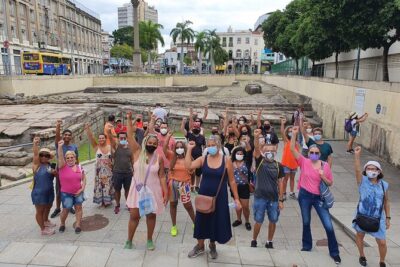
Discover Rio Little Africa: A Cultural and Historical Journey
Read our review →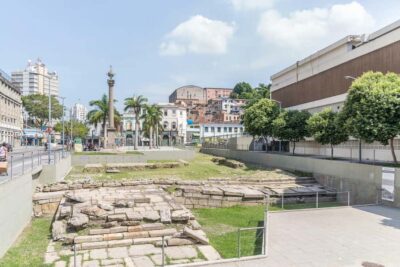
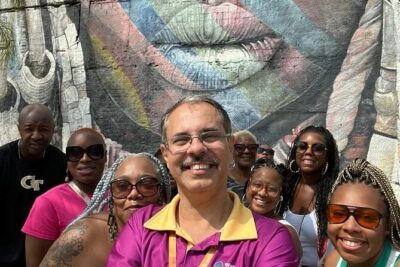
2 in 1: Private Favela & Little Africa- The Full African History!
Read our review →
Little Africa Unveiled: Vibrant Afro-Brazilian Heritage in Rio
Read our review →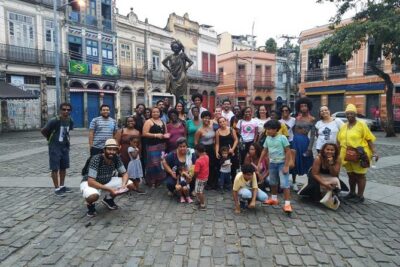
Little Africa – Walking tour from the passed to the future
Read our review →
Little Africa: Historical & Heritage Tour of Rio de Janeiro
Read our review →
More of this kind of Rio day