
Reviewed · LITTLE AFRICA WALKS
Discover Rio Little Africa: A Cultural and Historical Journey
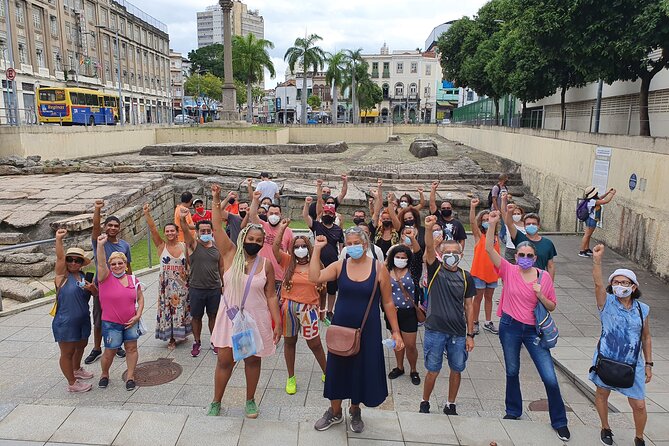
Rio keeps receipts in its streets. This Rio Little Africa walk turns a handful of real-world stops into a clear story about Valongo Wharf and the broader African diaspora in Brazil, with museum time and guided context. Two things I really like about it are the small-group feel and how the route connects music and everyday life to the hard parts of history, not just monuments.
One heads-up: this tour is respectful and heavy in places. You will walk, you may climb stairs, and the operator says it depends on good weather, so plan for heat or steady rain depending on the season.
In This Review
- Quick hits
- Why Rio Little Africa matters in Saúde
- Meeting at Museu de Arte do Rio, then getting moving
- Stop 1 to 2: Prainha’s statue to Pedra do Sal’s samba origins
- Stop 3: Cais do Valongo and the scale of the slave trade
- Stop 4: The Boulevard Olímpico Ethnicities mural as a modern marker
- Stop 5: IPN Pretos Novos, memory you can walk into
- Stop 6: MUHCAB, from arrival story to modern Brazil
- Price, pace, and what to bring for this 3.5-hour route
- Who this tour is best for
- Should you book Rio Little Africa
- FAQ
- How much does the Rio Little Africa tour cost?
- How long is the tour?
- Where is the meeting point?
- What does the tour include?
- What is not included in the price?
- Which major stops are part of the route?
- Is admission included for museums and heritage sites?
- How big is the group?
- Does the tour run in bad weather?
- What is the cancellation policy window?
Quick hits
- Valongo Wharf (Cais do Valongo): a UNESCO World Heritage wharf tied to the scale of the transatlantic slave trade, with layered archaeological evidence.
- Pedra do Sal: the salt unloading story behind Rio’s early samba and carnival traditions, plus ties to figures like Pixinguinha.
- Pretos Novos (IPN): a museum and archaeological site focused on memory, built into the New Blacks Cemetery location.
- MUHCAB: museum storytelling that links the arrival story to Afro-Brazilian culture and today’s issues.
- Ethnicities mural at Boulevard Olímpico: a huge 2016 Olympic-era mural made with specific artists materials and a set of named tribal groups.
- Guides with personal storytelling: names that come up often include Damiana, Scarlet (also known as Ana Escarlate), Larissa, Ana Julia, Carolina, Natalia, and Gabo.
More walks through Little Africa:
- Rio de Janeiro: Little Africa Heritage Walking Tour
★ 4.9 · 177 reviews - Explore Little Africa : Unveiling Afro Heritage in Rio de Janeiro
★ 5.0 · 97 reviews - 2 in 1: Private Favela & Little Africa- The Full African History!
★ 5.0 · 21 reviews - Little Africa Unveiled: Vibrant Afro-Brazilian Heritage in Rio
★ 5.0 · 12 reviews
Why Rio Little Africa matters in Saúde
Rio is famous for beaches and big energy, but it also has a second storyline written into its port streets. This is what Rio Little Africa gives you: context for why Afro-Brazilian culture in Rio is not just music and style, it is memory, survival, and creative power shaped by forced migration.
I like that the tour teaches you to look at places instead of just seeing them. Pedra do Sal is not only a scenic corner. Cais do Valongo is not only a historic name. The museums do the crucial work of connecting those sites to lives, and to ongoing realities.
Also, the guide factor is huge. In the reviews, you see the same theme again and again: guides like Damiana, Scarlet, Larissa, and Ana Julia are praised for storytelling that stays organized and human, while still answering tough questions. If you want a first-time Rio experience that goes beyond surface sightseeing, this is one of the best ways to get there.
Meeting at Museu de Arte do Rio, then getting moving
You meet at the Museum de Arte do Rio, MAR, at Praça Mauá, 5, Centro. It is a no hotel pick-up setup, so you’ll want to get yourself there using public transit or a ride share.
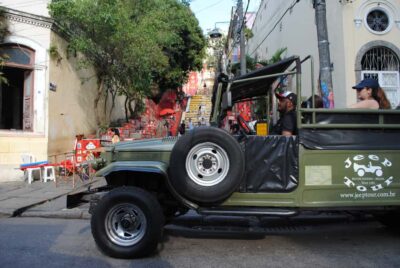
This matters for two reasons. First, it keeps the group together from the start, which helps with timing and makes it easier to ask questions. Second, the tour includes an air-conditioned vehicle, which is practical in Rio. You still get a walking experience, but you are not doing everything on foot in the heat.
Group size is another practical detail. The highlights say a guaranteed small group of no more than nine travelers. The activity info also lists a maximum of 15 travelers. Either way, it is not a giant crowd, and that tends to make the tour feel more like a local guided walk than a bus excursion.
Stop 1 to 2: Prainha’s statue to Pedra do Sal’s samba origins
The route starts at Igreja de Sao Francisco da Prainha in the Largo da Prainha area. Here you learn about the Mercedes Baptista Statue, honoring Mercedes Baptista, described as the first African-Brazilian ballet dancer to enroll in the Municipal Theater of Rio de Janeiro’s ballet group in the late 1940s. It’s a quick stop, but the point lands fast. Culture in Brazil is not one timeline. It is many entries at once, and this one is about breaking into classical spaces too.
Then you move to Pedra do Sal. The story behind the name is directly tied to Portuguese salt imports. Enslaved Africans unloaded salt, and the account also points to them carving the steps that characterize the area. That detail matters because it turns the site from a photo stop into a physical record of labor.
Pedra do Sal is also presented as a stage for community life. After work, sambistas and longshoremen gathered in the homes of Bahian Aunts. From there, the narrative connects to early ranchos carnival groups, afoxés processions, and sacred spaces forming in the late 1800s. You even get a specific music connection to Pixinguinha, named as a regular attendee.
What to watch for here: this is where the tour balances joy and gravity. The area carries strong street music associations, so it helps you understand how celebration can be linked to community survival and identity.
Stop 3: Cais do Valongo and the scale of the slave trade
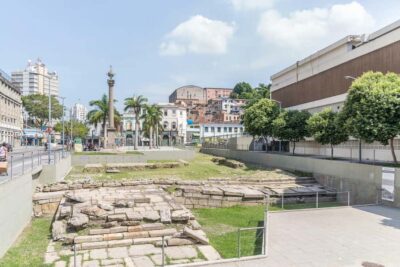
Cais do Valongo is one of those places where you cannot stay on the surface. The tour describes it as an old stone wharf built in 1811 to land enslaved Africans, and it notes an estimated figure of around 900,000 Africans arriving in South America via Valongo.
This stop is also tied to the idea of layers, which makes it different from a typical “look at the plaque” moment. The wharf site includes multiple archaeological layers, and the tour frames it as the most significant physical evidence of African arrivals in the Americas.
If you get uncomfortable, that’s normal. This is not a soft-history stop. But you will also see why guides emphasize it: knowing the port story changes how you read everything that comes after, including the music history of Rio and the social realities faced by black Brazilians.
Timing is efficient here too. You spend about 20 minutes, and the guide uses that short window to give you orientation so you can actually process what you are seeing.
Stop 4: The Boulevard Olímpico Ethnicities mural as a modern marker
After the wharf, the tour pivots to a contemporary visual landmark: the Ethnicities mural on Boulevard Olímpico, in Zona Portuária within Saúde.
It is huge: about 3,000 square meters. The tour also says it was created for the 2016 Olympics and features five representatives from different tribes, one from each continent. The names listed are Huli, Mursi, Kayin, Supi, and Tapajós.
What I like about including this mural is that it gives you a contrast point. You’ve been dealing with forced arrival and survival. Now you are looking at a modern attempt to represent human diversity at a large public scale. The route does not claim the mural equals history, but it helps you notice how public art can shape what people think about identity.
The detail is pretty specific, too. The mural reportedly took two months, with 12-hour shifts, using over 3,000 spray cans, 700 liters of colored paint, and 1,800 liters of white paint for the background. That kind of fact turns it from “wow, a mural” into “wow, this was built with intention.”
More of Rio's older story on foot:
- Rio de Janeiro Historical Center Walking Tour★ 4.5 · 336 reviews
- Private Walking and Cultural Tour Rocinha-Rio de Janeiro★ 5.0 · 239 reviews
- Rio de Janeiro: Historic Rio and Santa Teresa Half-Day Tour★ 4.4 · 228 reviews
- Rio Gastronomy: Culture & History Through The Art Of Food – Walking Group Tour★ 5.0 · 164 reviews
- Adventure & History at Tijuca Forest (small group or private)★ 5.0 · 161 reviews
Stop 5: IPN Pretos Novos, memory you can walk into
Next is the Instituto de Pesquisa e Memoria Pretos Novos, IPN. The tour frames it as both a museum and an archaeological site honoring Africans brought to Rio as slaves, and it specifies its location on the site of the New Blacks Cemetery.
This stop is about memory with real physical roots. It is not only a display of artifacts. It is a space connected to an actual burial location, which changes the emotional weight of the visit.
The tour also notes that since 2005 the site has offered cultural activities and workshops on history and culture of people of African descent. It adds recognition as a Cultural Space since 2009.
This is usually where I tell people to slow down. The content here can hit harder than you expect, but the guide can help you place what you are seeing into a broader story, including what Afro-Brazilian communities have worked to recover and protect.
You also get about an hour here, with admission included, so you have time to read, ask questions, and not feel rushed.
Stop 6: MUHCAB, from arrival story to modern Brazil
The final museum stop is MUHCAB, Museu da História e da Cultura Afro-Brasileira. The tour links MUHCAB directly to the Valongo Wharf area and uses it to tell the story of the region’s largest arrival of enslaved Africans.
From there, the tour describes four linked themes:
- milestones of black affirmation in Brazil
- development of Afro-Brazilian culture
- and contemporary issues faced by black people in Brazil
That last point is important. Many tours stop at “then and there.” This one is built to help you connect the historical mechanics to present-day life and identity in Brazil.
It typically takes about 1 hour 10 minutes at MUHCAB, with admission included. Reviews also mention that guides sometimes connect the tour to local community experiences after the museum visit. One person even highlighted an angu moment at the square where the tour ends. Even if you skip the food recommendation, it is nice to know the guides often point you toward what to do next nearby.
Price, pace, and what to bring for this 3.5-hour route
The price is $86 per person for an approximately 3 hours 30 minutes tour. For Rio, that is not the cheapest option, but it is not random pricing either.
Here’s why the value can make sense:
- You get a guide for the full experience.
- You have an air-conditioned vehicle included, which can matter a lot in heat.
- Admission is included for Cais do Valongo, IPN, and MUHCAB.
- Several other stops are free, so your money is focused on the sites that require tickets.
The pacing is also something to take seriously. The itinerary calls for short 20 minute stops at several points, then longer museum time at IPN and MUHCAB. So yes, you will walk, and you might climb stairs. Reviews mention that the pace is comfortable, but still active.
What you should bring:
- comfortable shoes
- a bottle of water
- sunscreen, because this is a walking route through the city
- some patience for questions, because guides appear to create room to talk and clarify
One more practical note from a review: a Saturday outing may have some places with limited hours. The tour does require good weather, and when rain or schedule shifts happen, the guide usually adjusts. Still, on any weekend day, you’ll feel smarter if you plan your other activities with extra flexibility.
Who this tour is best for
This is a strong match if you are coming to Rio for the first time and you want a deeper framework. It is also a great choice for anyone who cares about the African diaspora story beyond the usual one-liner facts.
It tends to work well for:
- first-time visitors who want meaningful context fast
- families who want guided, age-appropriate storytelling (and guides who handle questions well, as shown in multiple reviews)
- solo travelers who appreciate a route that stays organized, with a guide to help you navigate
- couples and small groups who want an experience that is emotional, educational, and not just photo stops
If you dislike walking or you cannot handle heavier topics, consider carefully. This tour is built around slavery history and memorial spaces, so it is not the best pick if you only want light entertainment.
Should you book Rio Little Africa
I think it is a smart booking if you want your Rio to make sense beyond postcards. The combination of Valongo Wharf, Pedra do Sal, IPN, and MUHCAB is a focused route that connects music origins, forced arrival history, and cultural legacy in a way that most standard sightseeing misses.
Book it if:
- you want a guided walk with museum time
- you like when guides connect facts to meaning
- you want to understand Afro-Brazilian culture as something living, shaped by history and carried forward
Skip it if:
- you want only relaxed beach-style sightseeing
- you cannot do walking and stairs
- you are going during a period where weather is often poor, since the experience requires good weather
FAQ
How much does the Rio Little Africa tour cost?
The price is $86.00 per person.
How long is the tour?
It lasts about 3 hours 30 minutes.
Where is the meeting point?
The meeting place is Museu de Arte do Rio (MAR) at Praça Mauá, 5, Centro, Rio de Janeiro. There is no hotel pick-up.
What does the tour include?
The tour includes a guide and an air-conditioned vehicle.
What is not included in the price?
Tips are not included, listed as gorgetas.
Which major stops are part of the route?
Key stops include Igreja de Sao Francisco da Prainha, Pedra do Sal, Cais do Valongo, Boulevard Olímpico (Ethnicities mural), Instituto de Pesquisa e Memoria Pretos Novos (IPN), and MUHCAB.
Is admission included for museums and heritage sites?
Admission is included for Cais do Valongo, IPN, and MUHCAB. Other stops listed have free admission tickets.
How big is the group?
The highlights describe a small group of no more than nine travelers. The activity information lists a maximum of 15 travelers.
Does the tour run in bad weather?
The experience requires good weather. If it is canceled due to poor weather, you will be offered a different date or a full refund.
What is the cancellation policy window?
You can cancel up to 24 hours in advance for a full refund. If you cancel less than 24 hours before the start time, the amount paid will not be refunded.
Recently added around Rio

Little Africa Walks, compared.
Explore Little Africa : Unveiling Afro Heritage in Rio de Janeiro
Read our review →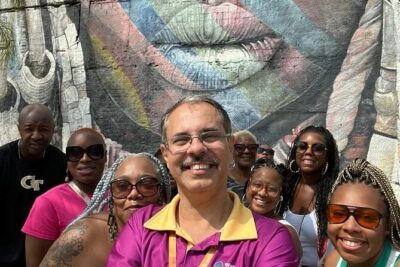
2 in 1: Private Favela & Little Africa- The Full African History!
Read our review →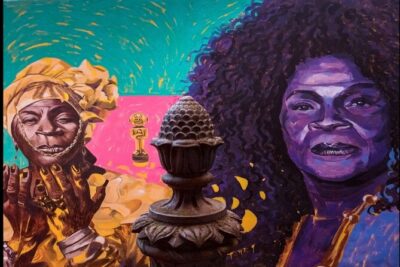
Little Africa Unveiled: Vibrant Afro-Brazilian Heritage in Rio
Read our review →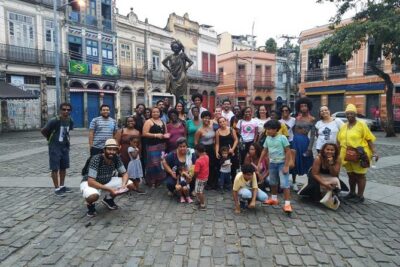
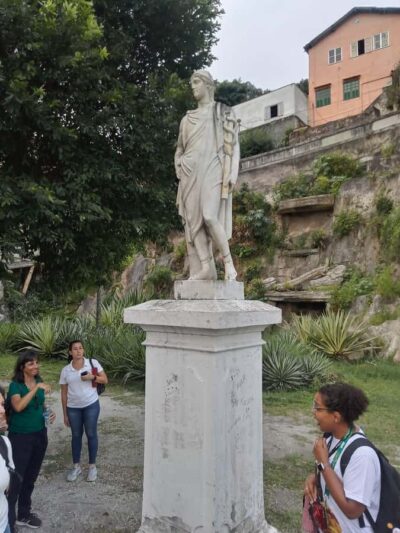
Little Africa – Walking tour from the passed to the future
Read our review →
Little Africa: Historical & Heritage Tour of Rio de Janeiro
Read our review →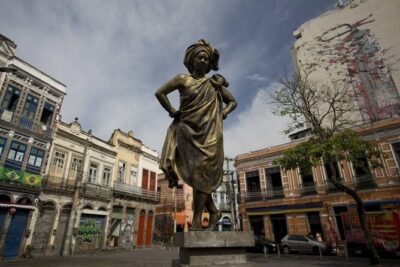
More of this kind of Rio day