

Reviewed · LITTLE AFRICA WALKS
A Self-Guided Black History Audio Tour of Rio de Janeiro’s Little Africa
A phone tour with real weight. This self-guided Little Africa route uses offline English audio to guide you through Rio’s key slave-history sites and cultural landmarks near Praça Mauá.
What I like most is that you get lifetime access through the VoiceMap app, plus offline audio and maps so you are not stuck hunting for signal. The tour also ends at the eye-catching Etnias murals by Eduardo Kobra, which feels like a satisfying final scene to wrap your walk.
One consideration: the experience can run a bit longer than the stated 40 minutes, so I’d plan a little buffer if you have dinner or nightlife later.
In This Review
- Key points before you go
- Little Africa on a phone: how the experience actually works
- Starting outside Museu de Arte do Rio near Praça Mauá
- The square stop: learning the slave-history thread as you walk
- Pedra do Sal square: why this cultural hub matters
- Old Port remains: a short stop with heavy context
- Ending at Etnias Murals by Eduardo Kobra (Estúdio Kobra)
- Price and value: what $11.99 gets you in real terms
- Timing: allow about 40 minutes to 1 hour, then add a buffer
- What to bring so you are not stuck halfway
- Who this Little Africa audio walk is best for
- Should you book this tour?
- FAQ
- How long is the audio tour?
- What language is the audio available in?
- Where does the tour start and end?
- Do I need a smartphone and headphones?
- Is the audio available offline?
- Are museum tickets or entrance fees included?
- Can I change or get a refund after booking?
Key points before you go

- Offline audio and maps through the VoiceMap app (Android or iOS)
- English-only narration, with lifetime access after purchase
- A short, walkable route with multiple brief story stops along the way
- Praça Mauá area start near Museu de Arte do Rio, easy to find and orient
- Strong ending payoff at the Etnias murals by Eduardo Kobra
More walks through Little Africa:
- Discover Rio Little Africa: A Cultural and Historical Journey
★ 5.0 · 238 reviews - Rio de Janeiro: Little Africa Heritage Walking Tour
★ 4.9 · 177 reviews - Explore Little Africa : Unveiling Afro Heritage in Rio de Janeiro
★ 5.0 · 97 reviews - 2 in 1: Private Favela & Little Africa- The Full African History!
★ 5.0 · 21 reviews
Little Africa on a phone: how the experience actually works
This is a self-guided Black History audio tour, built for you to walk at your own pace while the narration cues the next location. You do not follow a live guide, so your “schedule” is really the audio track timeline and the route points it directs you to.
The big practical win is the offline support. The package includes offline access to audio, maps, and geodata, so you can keep moving even if your phone service is spotty. That matters in Rio, where a quick change in street blocks or a crowded sidewalk can otherwise throw off your timing.
It’s also designed to be light on logistics. The stops are described as brief pauses where you learn something, then you keep going. Translation: this is not a sit-down museum day. It’s a walking history loop that fits neatly into a casual afternoon or early evening.
Starting outside Museu de Arte do Rio near Praça Mauá
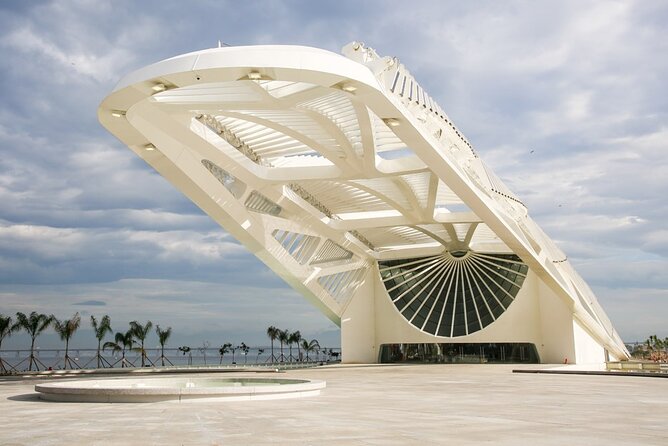
You begin at Praça Mauá, Rio de Janeiro, and the first storytelling point is outside the Museu de Arte do Rio. Before you even start the longer stretch, you get a setup segment that frames Rio’s broader background and gives context about the museum itself.
I like this kind of start because it reduces the “blank map” problem. If you show up with no context, the names and locations can blur together. Here, the narration helps you connect the dots early, so the later slave-history stops land with more meaning.
Also, starting near Praça Mauá is convenient for orientation. The area is typically easier to approach and navigate than tucked-away streets. And because this is a phone-based route, you can pause, look around, and restart the audio when you’re ready.
The square stop: learning the slave-history thread as you walk
After the museum intro, the route briefly stops in a square where you hear about the history of slaves. Then you continue on, rather than lingering for an exhibit or ticketed visit.
This format is useful if you want history without turning your trip into a checklist. A short stop like this lets you absorb a concentrated story beat and then move. In other words, you get learning moments without losing the feeling of walking the neighborhood.
The practical trick for making this part work well: give yourself a moment to stand still when the narration prompts you. Sidewalk conversations, traffic noise, and camera-ready crowds can make it easy to miss a key detail. If you wear headphones at a moderate volume, you’ll catch more and feel less rushed.
Pedra do Sal square: why this cultural hub matters
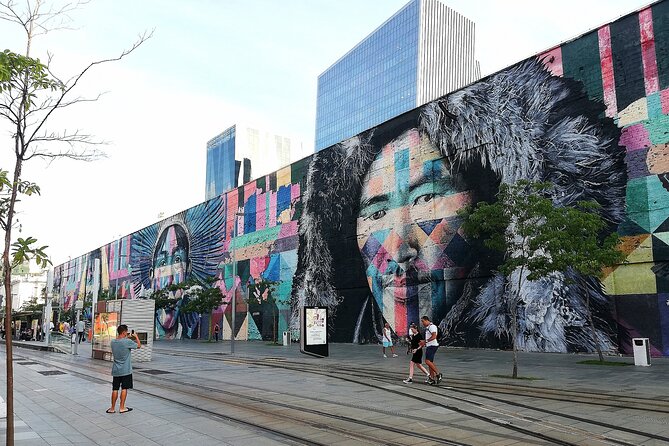
Next, you reach Pedra do Sal square, where the audio tells you about it as a cultural hub before you continue. Even without a formal museum ticket, the narration structure makes the stop feel intentional, like you are learning why this spot has a reputation and not just collecting a photo.
This is the kind of location where being present helps. You’re not inside a building where everything controls the experience for you. Instead, you’re on the street, hearing the story in the same kind of public space where community life has always played a role.
If you’re curious about how neighborhoods earn their nicknames and identities, this segment is a good payoff. The audio ties the name to place, so when you later see the surrounding streets and people moving through the area, the history feels connected to daily life rather than trapped in a page.
Old Port remains: a short stop with heavy context
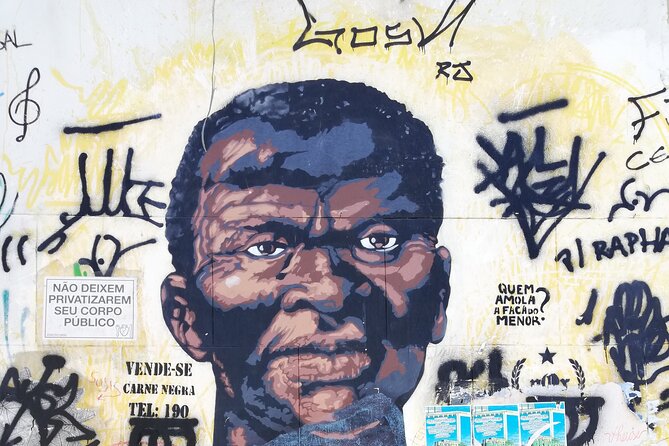
Then the tour stops briefly in front of the remains of the Old Port. This is where the narration shifts again, focusing on slave history connected to the waterfront area. After that, you keep walking.
I think the Old Port segment is valuable because it’s a real-world location. You are not reading about it in a guidebook. You are facing a physical reminder and hearing the story layered directly onto the space you’re standing in.
Because the stop is described as brief, plan for it to feel like a concentrated moment, not a long lingering meditation. If you want a slower pace, simply pause the audio playback when you need extra time, then restart when you’re ready to move on.
More of Rio's older story on foot:
- Rio de Janeiro Historical Center Walking Tour★ 4.5 · 336 reviews
- Private Walking and Cultural Tour Rocinha-Rio de Janeiro★ 5.0 · 239 reviews
- Rio de Janeiro: Historic Rio and Santa Teresa Half-Day Tour★ 4.4 · 228 reviews
- Rio Gastronomy: Culture & History Through The Art Of Food – Walking Group Tour★ 5.0 · 164 reviews
- Adventure & History at Tijuca Forest (small group or private)★ 5.0 · 161 reviews
Ending at Etnias Murals by Eduardo Kobra (Estúdio Kobra)
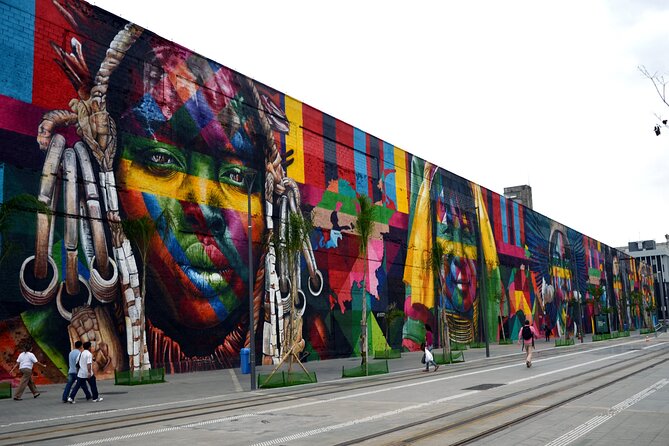
The route finishes in front of the impressive Etnias Mural de Graffiti by artist Eduardo Kobra, at Estúdio Kobra on Orla Pref. Luiz Paulo Conde. This is a strong finish for two reasons.
First, it gives you an immediate visual wrap-up. After several story stops, ending at large public artwork helps your brain file the experience as something you can point to, even after you leave the area.
Second, it’s a flexible landing spot. Once you finish the audio, you can keep walking along the waterfront, grab a meal nearby, or meet up for your next plan. The tour end point is clearly defined, so you’re not left guessing when the route is done.
If you care about photography, this ending location is likely to reward you with extra viewing time. Just remember, your phone’s battery and your headphone comfort matter, especially if you stay until you are fully satisfied.
Price and value: what $11.99 gets you in real terms
At $11.99 per person, this is a budget-friendly way to add Black history context to a Rio walk. The price is low, but the value comes from how the product is structured: lifetime access and offline support.
Here’s the practical value equation I’d use:
- You pay once, then you can replay the audio later thanks to lifetime access.
- You do not need data to keep following the route because offline audio and maps are included.
- You’re not paying for museum admissions as part of the tour.
What you do need to plan for: the tour does not include a smartphone and headphones. It also does not include transportation or food. So your real trip cost depends on your day plan, but the tour fee itself is a small chunk.
If you already travel with your own phone and headphones, this becomes even better value. If you do not, consider that you might spend extra on either borrowing, renting, or buying basic headphone access.
Timing: allow about 40 minutes to 1 hour, then add a buffer
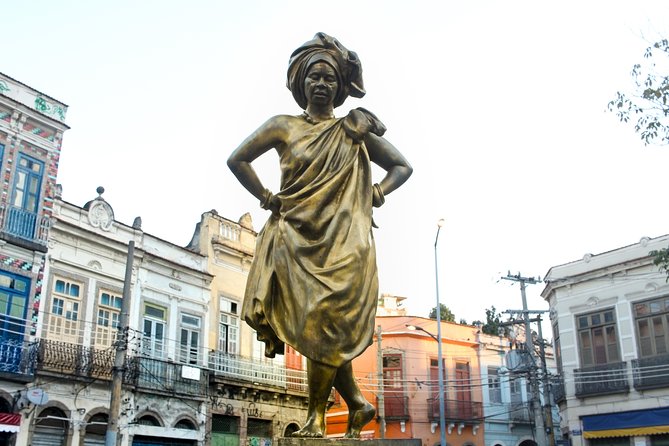
The stated duration is roughly 40 minutes to 1 hour, but the experience can take longer. I’d treat the lower end as an optimistic pace.
Why might it run long even when the route is short? With audio tours, it takes extra time to:
- find each stop carefully,
- stop and listen fully,
- adjust your route if sidewalks are crowded or you miss a cue.
My advice is simple: plan this as a “walk and learn” block, then give yourself a little breathing room before your next reservation. That way, if you pause to re-listen to a segment, you do not feel rushed.
What to bring so you are not stuck halfway
This tour is mostly about walking and listening, so your must-haves are basic. From the included information and what is not included, you should plan on:
- A smartphone compatible with the VoiceMap app (Android or iOS)
- Headphones (not included)
- Comfortable walking shoes
- Offline setup time, so your audio and maps are ready before you start
If you want smooth navigation, start with enough battery for the full route plus a little extra. Offline maps help, but your phone still uses power.
And because tickets or entrance fees are not included, do not build your schedule around museum entry along the way. The tour starts outside the Museu de Arte do Rio and uses story stops along public spaces and viewing points.
Who this Little Africa audio walk is best for
I’d point this tour at people who want history but do not want a rigid schedule. It’s a good fit if you like self-guided experiences where you can control the pace, pause for photos, and stop listening when you need a break.
It also works well if you are traveling in a small group, because it’s listed as a private tour activity for only your group. That means you’re not coordinating with strangers or trying to hear over someone else’s narration.
Since it’s English only, it’s best if that language works comfortably for you. If English narration helps you process details at street level, this format is a strong match.
Should you book this tour?
I think it’s a smart buy if you want a low-cost way to add Black history context to a Rio walk near Praça Mauá and Pedra do Sal, and you like the independence of audio-guided pacing. The combo of offline access, lifetime playback, and a clear end at the Etnias murals by Eduardo Kobra makes it easy to plan and satisfying to finish.
I would skip it or rethink it if you are short on time and need something that guarantees you a tight 40 minutes. Give yourself buffer time, bring headphones, and treat it as a walk with learning stops, not a quick sprint.
FAQ
How long is the audio tour?
The experience is listed at about 40 minutes to 1 hour.
What language is the audio available in?
The tour is offered in English.
Where does the tour start and end?
It starts at Praça Mauá, Rio de Janeiro, and it ends in front of the Etnias Mural de Graffiti (Estúdio Kobra) on Orla Pref. Luiz Paulo Conde, Centro, Rio de Janeiro.
Do I need a smartphone and headphones?
Yes. A smartphone and headphones are not included.
Is the audio available offline?
Yes. Offline access to audio, maps, and geodata is included in the package.
Are museum tickets or entrance fees included?
No. Tickets or entrance fees to any museums or other attractions on the route are not included.
Can I change or get a refund after booking?
No. The experience is non-refundable and cannot be changed for any reason.
Recently added around Rio






Little Africa Walks, compared.
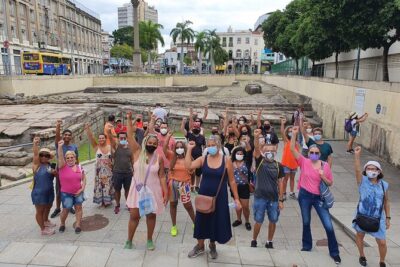
Discover Rio Little Africa: A Cultural and Historical Journey
Read our review →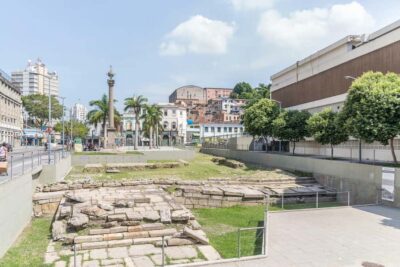
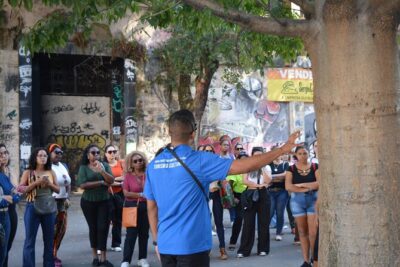
Explore Little Africa : Unveiling Afro Heritage in Rio de Janeiro
Read our review →
2 in 1: Private Favela & Little Africa- The Full African History!
Read our review →
Little Africa Unveiled: Vibrant Afro-Brazilian Heritage in Rio
Read our review →
Little Africa – Walking tour from the passed to the future
Read our review →
Little Africa: Historical & Heritage Tour of Rio de Janeiro
Read our review →More of this kind of Rio day