
Reviewed · HISTORICAL TOURS
From Graffiti to History: Exploring Rio’s Street Art and Culture
Street art can read like a street map. This 3-hour walk links Rio’s art scene to its big landmarks, so you’re not just hunting photos, you’re learning how neighborhoods explain themselves through Selarón Steps and Kobra’s Etnias mural.
I especially like the way the guide connects what you see on walls and steps to the surrounding architecture and street life, and you get a friendly, human vibe from guides like Gabriel. The other big win is ending in Pequena África, where the tour shifts from famous murals to Afro-Brazilian culture in a way that feels practical, not preachy, and even includes a tip from the guide toward a solid meal nearby.
One consideration: you get around 20 minutes per stop, so if you want to linger for long inside museums or study every detail at length, you’ll need to build extra time after the tour.
In This Review
- Key highlights you’ll actually use
- Why this Rio street art walk is a smart use of time
- Starting at the Municipal Theater, reading Cinelândia’s Belle Époque glow
- Cinelândia: the Brazilian Broadway, and why that story still matters
- Escadaria Selarón: how a staircase became Rio’s multicultural statement
- Eduardo Kobra’s Etnias mural in the port area: giant scale, clear message
- Pequena África and Bafo da Prainha: where Afro-Brazilian heritage is lived, not staged
- Praça Mauá finish: Museum of Tomorrow and MAR, plus an easy exit
- Price and logistics: what $88 really buys you
- Who should book this tour, and who might want something else
- Should you book From Graffiti to History: Exploring Rio’s Street Art and Culture?
- FAQ
- What is the meeting point for the tour?
- Where does the tour end?
- How long is the tour?
- Is the tour offered in English?
- What is the group size limit?
- Is admission included?
- How much does it cost?
- Do I need to tip?
- What happens if the weather is poor?
Key highlights you’ll actually use
- Belle Époque theater energy in Cinelândia, starting at the Municipal Theater area
- Selarón Steps explained as a multicultural mosaic story, not just a camera stop
- Eduardo Kobra’s Etnias mural, over 190 meters long, tied to Olympic-era meaning and indigenous unity
- Pequena África and Bafo da Prainha, where Afro-Brazilian heritage shows up in the street
- A small group size (max 12) that keeps the pace manageable for a 3-hour walk
- English-speaking bilingual guide, plus free listed admissions and a mobile ticket
More of Rio's older story on foot:
- Rio de Janeiro Historical Center Walking Tour
★ 4.5 · 336 reviews - Private Walking and Cultural Tour Rocinha-Rio de Janeiro
★ 5.0 · 239 reviews - Discover Rio Little Africa: A Cultural and Historical Journey
★ 5.0 · 238 reviews - Rio de Janeiro: Historic Rio and Santa Teresa Half-Day Tour
★ 4.4 · 228 reviews
Why this Rio street art walk is a smart use of time
Rio can overwhelm you fast. This is the opposite of that. You cover a clear set of stops, each one tied to a theme, and you do it on foot with a professional bilingual guide. The route is built for understanding, not for speed-running the city.
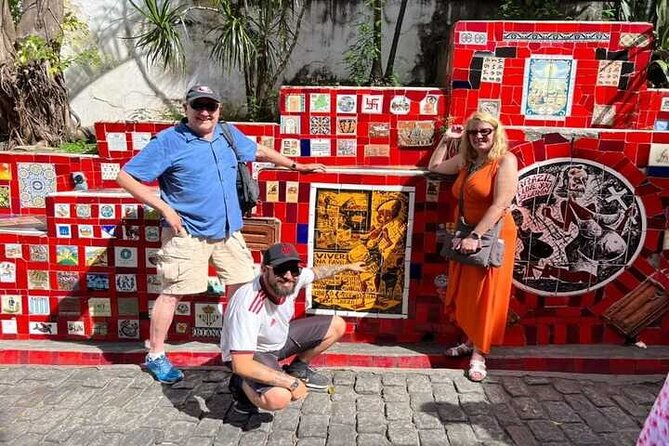
You’ll feel the logic as you go. You start in a historic theater district. Then you move into the visual language of the city, first with tile mosaics, then with a huge contemporary mural. Finally, you land in a neighborhood tied to Afro-Brazilian heritage and end near Praça Mauá, where modern culture and museums are easy to tack on if you want.
For the price point, the value comes from two things: the guidance and the way the stops connect. At $88 per person for about 3 hours, you’re paying mostly for translation, context, and route planning, since the tour lists admission tickets as free at the stops.
Starting at the Municipal Theater, reading Cinelândia’s Belle Époque glow
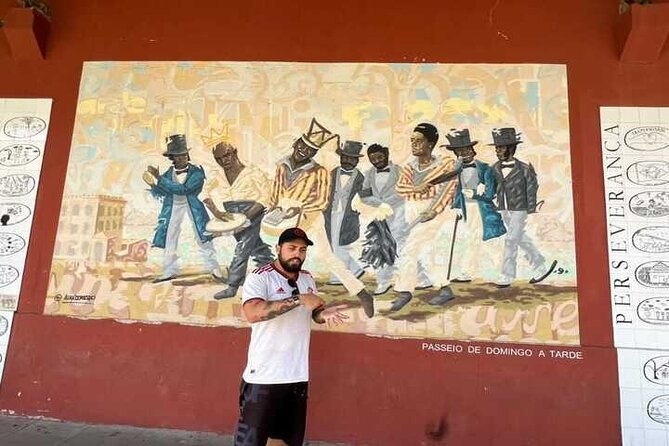
The tour meet-up is at the Municipal Theater of Rio de Janeiro, in Praça Floriano, in the Centro area. This matters more than it sounds. Cinelândia is Rio’s old-school cultural stage, and starting here gives you a reference point for how the city once marketed itself as modern, European, and grand.
Look around and you’ll notice the concentration of historic performance spaces and cultural buildings. It’s a good lesson in contrasts: Rio’s street art didn’t appear out of nowhere. The city has always had visual storytelling, whether that was done through theater façades, posters, or later, murals and public mosaics.
If you like architecture, this first stop sets the tone. If you don’t, it still helps you understand why street art can feel so “in conversation” with the city instead of random or temporary.
Practical tip: Dress for walking and bring water. Even though each stop is short, you still get a real neighborhood stroll.
Cinelândia: the Brazilian Broadway, and why that story still matters
After the theater, you’ll spend time in Cinelândia itself, often described like the Brazilian Broadway of the early 20th century. That comparison isn’t just marketing. It points to how the area functioned as a cultural magnet, full of theaters, cafés, and cinemas.
Here’s what I like about this stop: you’re not just seeing buildings. You’re learning how that kind of entertainment district shaped Rio’s bohemian identity. When you later see public art turning into a cultural landmark, you’ll have a better sense of why Rio embraced art in public spaces.
Possible drawback: if you came to Rio specifically for graffiti culture and you already know a lot of theater history, this section may feel more like context than content. Still, it’s helpful context, and it keeps the tour from becoming one long photo spree.
Escadaria Selarón: how a staircase became Rio’s multicultural statement
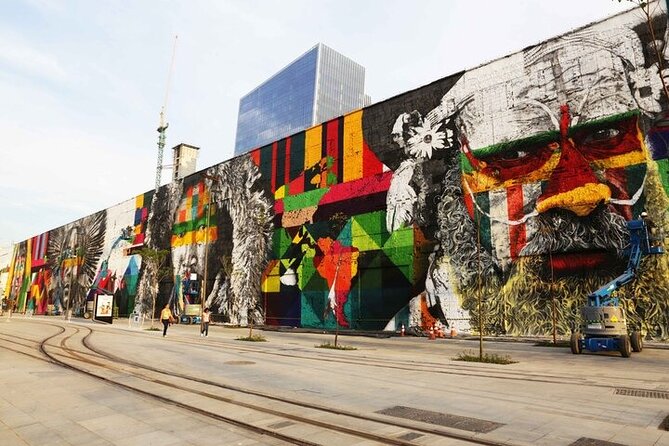
Then you walk to the world-famous Escadaria Selarón, the Selarón Steps. This is the stop that almost everyone recognizes instantly, because the colors are impossible to ignore. But the guide’s job here is to help you read the place as more than a rainbow staircase.
Each tile is part of the story, and the core idea is that the steps reflect Rio’s multicultural character. It’s public art with a narrative you can feel with your feet. You’re walking up, noticing patterns, and picking out how the surface becomes message.
Photo tip that also helps you slow down: take one wide shot first, then return for medium close-ups and texture details. That way you don’t just get the “icon” shot, you get something that looks like you actually stood there and paid attention.
Time note: this is only about 20 minutes on the tour. If it’s packed when you arrive, accept that you may not control the crowd. That’s still fine, because the guide helps you focus on what matters most to the art and its meaning.
Eduardo Kobra’s Etnias mural in the port area: giant scale, clear message
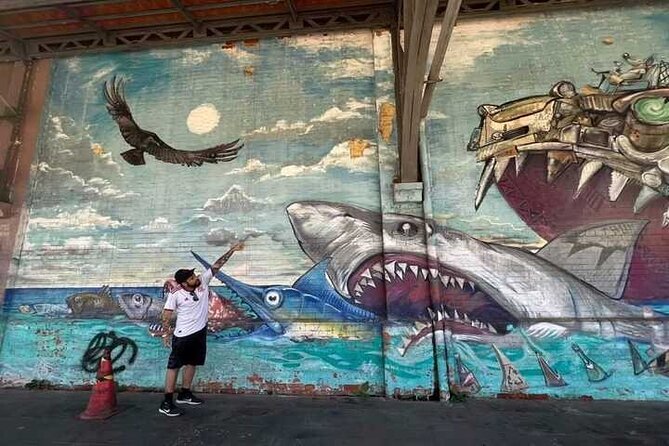
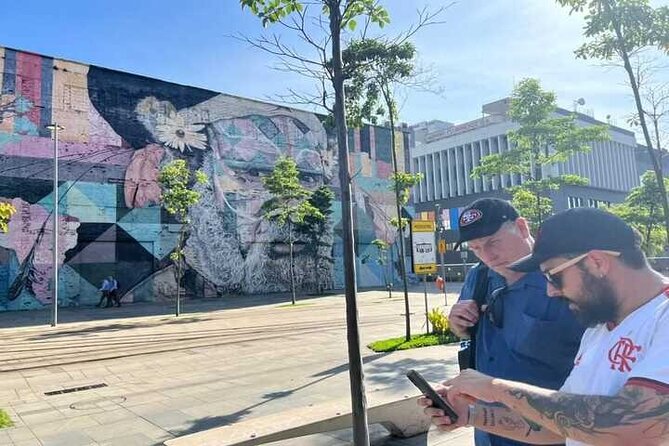
Next up is Eduardo Kobra’s monumental mural “Etnias,” created for the 2016 Olympic Games. This is located in the port area, and it’s the kind of artwork that changes how you think about street art scale. It’s over 190 meters long, so you can’t really appreciate it by scanning. You need to take in sections and let your eyes adjust.
The subject matter is also direct: the mural portrays faces of five indigenous people from different continents. The message is unity and diversity, drawn in a way that’s meant to be seen by crowds moving through a public space.
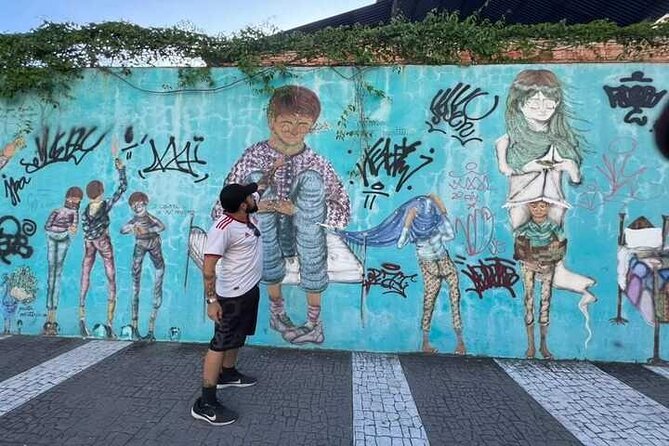
Here’s how this connects with the rest of the tour. Earlier, you dealt with Rio’s old cultural center and a staircase mosaic that reads like a shared story. Now you’re seeing contemporary art that uses massive public visibility to say something political and human at the same time.
Practical consideration: this mural is outdoors, so lighting can shift quickly. If you care about photos, aim to arrive prepared to work with what the light gives you.
A few more Rio outings to weigh up
- Rio Street Art Tour★ 5.0 · 76 reviews
- Rio Street Art Tour★ 5.0 · 39 reviews
- Private Tour of Rio de Janeiro Street Art★ 5.0 · 1 review
- Rio de Janeiro Street Art Private Walking Tour with a Guide★ 5.0 · 1 review
Pequena África and Bafo da Prainha: where Afro-Brazilian heritage is lived, not staged
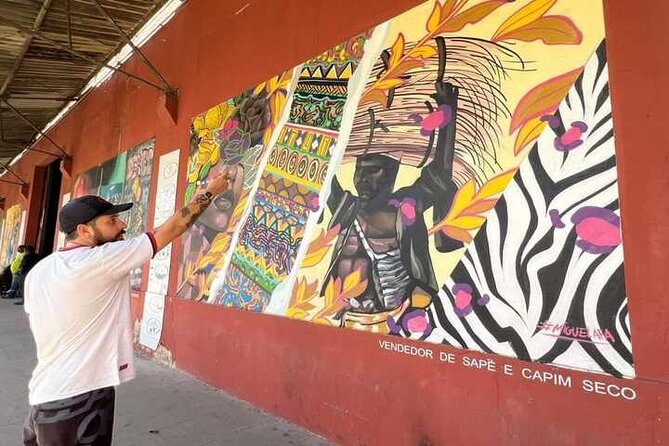
The tour then shifts from murals and famous photo stops to Pequena África, a neighborhood with deep Afro-Brazilian heritage. The tour includes a stop around Bafo da Prainha square, an area that preserves cultural and bohemian spirit tied to Rio’s African roots.
What I like here is the change in pace. Earlier stops are visual landmarks. This part feels more like a living neighborhood. You’re still learning, but the learning is grounded in everyday street presence.
From the tour experience described with a guide named Gabriel, this section also tends to come with a bonus: guidance toward a nearby restaurant in the area. That kind of local recommendation is valuable because it saves you time, and it often leads to better results than picking something random right off the main tourist flow.
A simple reality check: you’ll only spend about 20 minutes here. If you want to linger for food, music, or just walking around, use the tour ending as your landing pad, not your final destination.
Praça Mauá finish: Museum of Tomorrow and MAR, plus an easy exit
The tour finishes around Praça Mauá, where you can choose what to do next. The area includes Museum of Tomorrow and the Rio Art Museum (MAR). If you’re curious, you can stay and visit. If you’d rather head back, the guide helps you arrange an Uber or points you to the nearest subway station to return to your hotel.
This ending spot works for two types of travelers. If you want a museum add-on, you’re already in the right zone. If you want dinner and downtime, you’re in a part of the city where getting around is straightforward.
Timing note: the tour is about 3 hours total, so you’re not stuck doing an all-day thing. It’s designed to feel like a focused introduction, then you take over.
Price and logistics: what $88 really buys you
At $88 per person for roughly 3 hours, the value comes down to guidance, not just the walking. The tour includes a professional bilingual private tour guide, VAT, and taxes and handling charges. Admission tickets are listed as free at the stops on the itinerary.
It also helps that the group stays small, max 12 travelers. That matters when the route mixes outdoor murals, compact photo areas, and brief stops. A larger group tends to slow things down and turn every stop into a traffic jam.
The tour is offered in English, and you’ll get a mobile ticket. It’s also booked on average about 15 days in advance, which tells me demand is steady during peak seasons. If you’re traveling then, booking ahead is smart so you get a slot that matches your schedule.
If you’re watching costs: tips are optional, and they’re not included in the tour price. If the guide helps you with directions and adds useful local context, tipping is a fair way to say thanks.
Who should book this tour, and who might want something else
This tour is a strong fit if you want:
- a guided introduction to Rio street art and culture in a short window
- an itinerary that links art to neighborhoods instead of isolating it
- English support and a guide who can explain what you’re looking at in plain terms
It may not be ideal if you want:
- deep, long museum time for each location
- an all-day photo walk where you control every minute
- a slower pace for very detailed study of one single site
For most people, the small group size plus the mix of landmarks makes it a good “first Rio” experience, especially if you’re pairing it with beach time or other neighborhood plans later.
Should you book From Graffiti to History: Exploring Rio’s Street Art and Culture?
If you want a practical, guided sampler that turns Rio’s street art into a story you can follow, I think this is a solid booking. You get iconic stops like the Selarón Steps and a major Eduardo Kobra mural, plus a meaningful neighborhood shift into Pequena África, and you end in an area where museums and transport options are right there.
Book it if you like learning while you walk, and if you value a guide who keeps things friendly and readable. Also, if you’re the type who wants a good restaurant suggestion, this tour often includes that kind of local nudge.
Skip it only if you’re set on staying extra long at each site, or you prefer a longer, single-theme deep dive. In that case, you’ll likely feel the time limits per stop.
FAQ
What is the meeting point for the tour?
The tour starts in front of the Municipal Theater of Rio de Janeiro, Praça Floriano, S/N – Centro, Rio de Janeiro – RJ, 20031-050, Brazil.
Where does the tour end?
The tour finishes at Praça Mauá, Rio de Janeiro – RJ, Brazil.
How long is the tour?
It runs for about 3 hours.
Is the tour offered in English?
Yes. The tour is offered in English.
What is the group size limit?
The tour has a maximum of 12 travelers.
Is admission included?
Admission tickets are listed as free at each of the tour stops.
How much does it cost?
The price is $88.00 per person.
Do I need to tip?
Tips are optional and not included in the tour price.
What happens if the weather is poor?
The experience requires good weather. If it’s canceled due to poor weather, you’ll be offered a different date or a full refund.
Recently added around Rio


Historical Tours, compared.
Private Walking and Cultural Tour Rocinha-Rio de Janeiro
Read our review →
Discover Rio Little Africa: A Cultural and Historical Journey
Read our review →
Rio Gastronomy: Culture & History Through The Art Of Food – Walking Group Tour
Read our review →
Adventure & History at Tijuca Forest (small group or private)
Read our review →
From the Past to the Present: A Historical Walking Tour of Rio
Read our review →More of this kind of Rio day