

Reviewed · WALKING TOURS
From the Past to the Present: A Historical Walking Tour of Rio
Rio’s Centro reads like a living textbook. This historical walking tour strings together major landmarks and lesser-known corners into one logical route, moving from the city’s civic start to its complicated modern identity.
What I like most is that Bruno, a local guide with serious city connections, explains what you’re seeing in plain language. I also love the mix of stops with different vibes, from grand buildings in Cinelandia to public art like the Selarón Steps. One consideration: one major indoor stop, the Royal Portuguese Reading Room, can get so busy that you might only have time to see the outside.
In This Review
- Key Highlights You’ll Actually Feel During the Walk
- Why This Centro Walk Feels Like a Timeline
- Price and Small-Group Value at $49.05
- Start in Cinelandia: Theatres, Libraries, and Power Buildings
- Passeio Publico to Selarón Steps: Public Space and Art by the People
- The 1700s Aqueduct, the Cathedral, and a Reading Room With Big Lines
- São Francisco Church, São Bento Monastery, and the Graffiti Detour
- Cais do Valongo: Where Rio’s Past Still Has Weight
- Comfort, Safety, and How to Enjoy This 4 to 5 Hour Walk
- Should You Book This Historical Walking Tour of Rio?
- FAQ
- How long is the historical walking tour?
- What does the tour cost?
- Where does the tour start and end?
- What time does it start?
- How many people are in the group?
- What happens if the weather is bad?
Key Highlights You’ll Actually Feel During the Walk
- A 4 to 5 hour Centro timeline, paced to keep the story moving without feeling rushed
- Bruno’s local connections, which help the walk feel less like a script and more like real Rio
- Landmarks with free admission listed on the route, so your $49.05 goes mostly to the guide
- Selarón Steps details, a long run of art tiles that’s more impressive up close
- A water aqueduct from the 1700s, later used for the Bondinho de Santa Teresa
- Valongo Wharf’s historical weight, handled as an important pause, not a quick photo stop
More of Rio covered on foot:
- Rio de Janeiro: Rocinha Favela Walking Tour with Local Guide
★ 4.8 · 3,052 reviews - Rio De Janeiro: Half-Day Rocinha Favela Walking Tour
★ 4.7 · 2,272 reviews - 3 Hour Rocinha Favela Walking Tour with a Local Guide
★ 5.0 · 833 reviews - Favela Tour Rio de Janeiro – Vidigal Walking Tour by Russo Guide
★ 5.0 · 377 reviews
Why This Centro Walk Feels Like a Timeline
The best part of this tour is how quickly it turns streets into story. Rio’s Centro can look like just another set of blocks, but on this route you connect the dots, from early civic power and public space to art made by everyday people and, finally, the painful truth remembered at Cais do Valongo.
I like that it’s not history as trivia. Bruno uses what’s in front of you, the shapes of buildings, the purpose of public parks, and the meaning of major sites, to explain how Rio changed. In practice, that means the walking feels purposeful. You’re not just getting from Point A to Point B, you’re watching Rio’s “then and now” logic click into place.
Another practical win is the small group size limit of 10. That matters on a walking tour in Rio, where crowds can appear fast. You get enough attention to ask questions and keep the pace comfortable.
Price and Small-Group Value at $49.05
At $49.05 per person, this is priced like a “real” walking tour with a local guide, not a long checklist of paid entrances. Most of the listed stops are marked as admission free, including big external landmarks and major public sites, so your money goes toward interpretation and direction.
The timing also helps value. You get about 4 to 5 hours, starting at 8:30 am. A half-day format is ideal if you’re trying to balance neighborhoods, beach time, or other day plans without losing the whole morning.
The other value detail is the booking pattern. It’s commonly reserved around 57 days in advance, which is a hint that spots can move quickly. If you want to lock in your dates, I’d treat this as a plan to book early, not a “maybe.”
Start in Cinelandia: Theatres, Libraries, and Power Buildings
You begin in Cinelandia, at Starbucks Praça Floriano, 7 in Centro. That’s a smart meeting choice because Cinelandia is already a visual overview of what Rio once built for itself: big institutions, formal architecture, and civic presence.
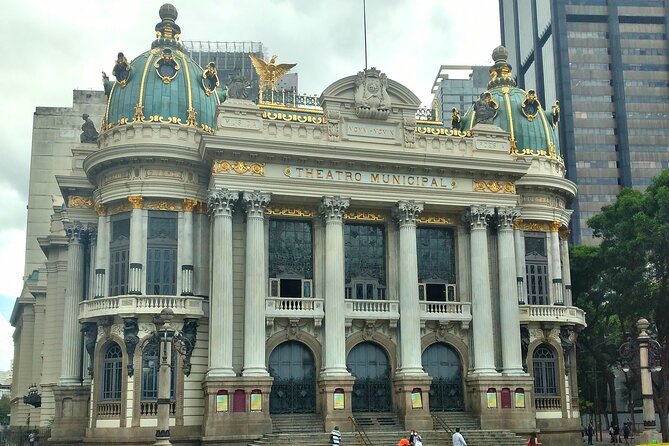
From here, the tour focuses on places like the Theatro Municipal, the Biblioteca Nacional, the Museu Nacional de Artes, and the older Supremo Tribunal Federal buildings. Even if you’re not an architecture person, this is where you start to understand why the Centro feels so “official.” These structures teach you how the city projected authority in earlier periods.
What I like is the emphasis on seeing these buildings as a set, not isolated sights. In a short urban walk, you learn to read the city: where it wanted attention, where it wanted permanence, and how it organized life around major institutions.
Passeio Publico to Selarón Steps: Public Space and Art by the People

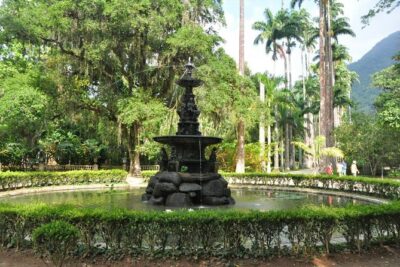
Next you move to Passeio Publico, described as the first public park in Latin America. This is the kind of stop that can be easy to skim if you’re tired, but it’s worth using it as a “reset.” A park is a message from a city. It tells you that public life is meant to happen outside, not only inside formal walls.
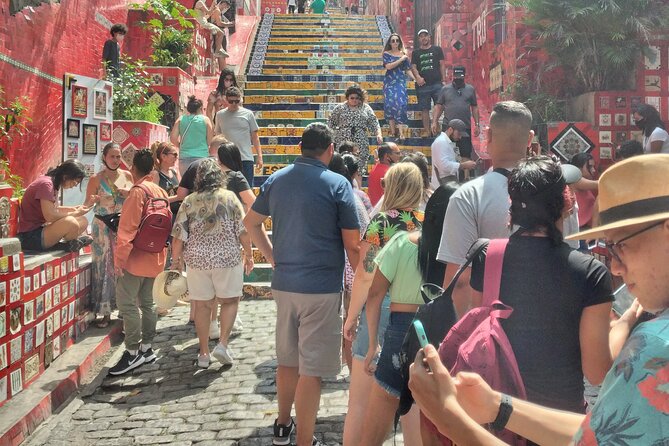
Then comes the Escadaria Selaron. This is one of the stops you really feel with your eyes. The steps stretch 125 meters long and cover with over 2,000 tiles, so from a distance it looks like color, and up close it becomes texture and variation. Even better, it’s the kind of art that makes you ask questions, because it isn’t trying to be “museum neat.”
There are two practical reasons this stop works in the middle of the walk. One, it’s outdoor and flexible if you want photos. Two, the tour’s pacing gives you around 20 minutes, which is enough time to take in the full length and still move on without burning the whole morning.
The 1700s Aqueduct, the Cathedral, and a Reading Room With Big Lines
One highlight I love in this itinerary is the shift from decoration and churches to engineering. You’ll see an aqueduct from the 1700s that originally supplied water to the city. Today, it’s used as part of the Bondinho de Santa Teresa system. That connection matters because it shows continuity through reuse, not just “old things gone.”
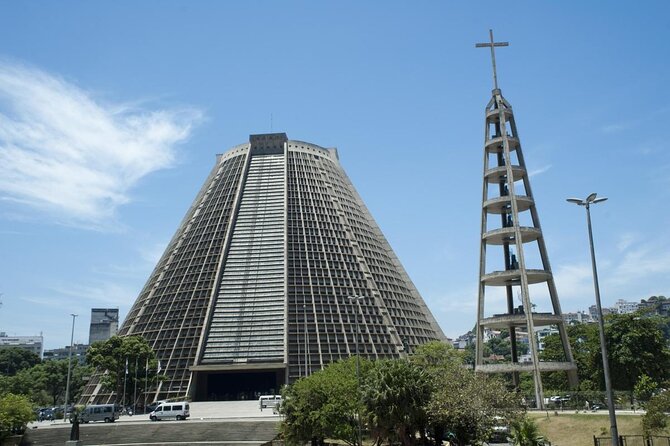
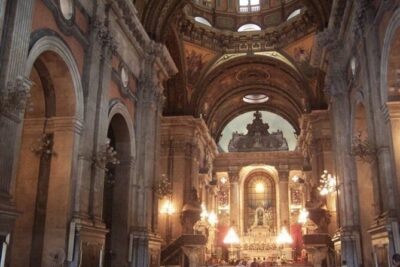
After that, you go to the Metropolitan Cathedral of Saint Sebastian, described as unique and different. Even without memorizing details, it’s an important change of mood from the formal institutions of Cinelandia. Cathedrals often signal beliefs, and this one signals something distinct in how Rio chose to build sacred space.
Then comes the Real Gabinete Portugues de Leitura, the Royal Portuguese Reading Room. It’s labeled as truly stunning, but it can be incredibly busy with long lines. The guide may only be able to show you the outside to keep the tour on schedule.
Here’s how I’d plan for this stop: treat it like a bonus if you get inside, and don’t let the line stress you if you only see the facade. Your ticket value isn’t tied to going in. The building still matters as a visual and cultural marker, especially after the cathedral.
More of Rio's older story on foot:
- Rio de Janeiro Historical Center Walking Tour★ 4.5 · 336 reviews
- Private Walking and Cultural Tour Rocinha-Rio de Janeiro★ 5.0 · 239 reviews
- Discover Rio Little Africa: A Cultural and Historical Journey★ 5.0 · 238 reviews
- Rio de Janeiro: Historic Rio and Santa Teresa Half-Day Tour★ 4.4 · 228 reviews
- Rio de Janeiro: Little Africa Heritage Walking Tour★ 4.9 · 177 reviews
São Francisco Church, São Bento Monastery, and the Graffiti Detour
The tour continues through religious and artistic Rio with Paroquia De Sao Franciscofme De E G, described as one of the most beautiful churches in the city and the second-largest temple in the city. That “second-largest” detail is a clue for what to focus on: scale. If you’re walking quickly, remind yourself to look for the size of the space and how it frames the street.
Then you head to Mosteiro De Sao Bento on Morro de São Bento in the city center. It’s described as one of the main monuments of colonial art in Rio and in Brazil, which is a big claim in a short stop. Even if you spend only 15 minutes, this place usually makes you slow down, because monasteries are designed for stillness and ritual.
On the way, you also pass Mauá Square and then head toward Kobra graffiti. The walk doesn’t ignore street art, which is smart. It connects Rio’s past to modern expression without pretending they’re the same thing.
Finally, there’s a quick stop for Painel Etnias, described as the largest graffiti in the world. It’s short, around 5 minutes, but it works as a palate cleanser after churches and monastery stone. You get a reminder that modern Rio also builds meaning on public surfaces.
Cais do Valongo: Where Rio’s Past Still Has Weight
The endpoint brings you to Cais do Valongo in the port area of Rio. This site is described as an archaeological site with immense historical and spiritual significance. It was the main landing point and trading center for enslaved Africans brought to Brazil between 1811 and 1831.
This is the stop that changes the way the whole tour lands in your mind. Earlier locations teach you how Rio was shaped, but Valongo teaches you what that shaping cost. It’s not the kind of place you rush through like a photo backdrop. Give it attention. Even if you’re only there briefly, the meaning is the point.
As you walk into this area, you also understand why the tour starts with civic power and public space. Rio’s story is not linear and not comfortable, and this ending makes that clear without needing extra drama.
Comfort, Safety, and How to Enjoy This 4 to 5 Hour Walk
A walking tour can go wrong if the pace is too aggressive or the group can’t hear the guide. Here, the format helps: a maximum of 10 travelers and an itinerary that mixes longer landmark moments with short stops.
The route also includes a practical variety: formal buildings, parks, steps, and major historic sites. That variety matters because it reduces fatigue. You’re not just climbing or just staring up at architecture for hours.
I also appreciate the fact that the tour can work for different travelers. One review highlighted that even with a wife who was 6 months pregnant, the 4 hour walking tour felt manageable. That suggests the guide keeps a human pace, not a sprint.
One more comfort note: the tour requires good weather. If it’s rainy or rough, expect it to be rescheduled or refunded, since the experience is designed to be outside for most of the time.
And for your own enjoyment, bring sunscreen and water. Cinelandia to the harbor area can feel bright, and you’ll want energy for the longer visual stops like the Selarón Steps.
Should You Book This Historical Walking Tour of Rio?
I’d book this if you want a Centro morning that actually teaches you something, with a guide who connects the dots between monuments, public life, art, and the port site where history is hard to ignore. It’s also a strong pick if you’re short on time but want more than a few Instagram stops.
Skip it or pair it carefully if you hate walking or if you’re hoping for lots of indoor time. One planned indoor visit, the Royal Portuguese Reading Room, can be blocked by lines, and you may only get outside views to stay on schedule.
If you’re the kind of traveler who asks questions and wants the city explained like it matters, you’ll probably like Bruno’s style. He’s also the sort of guide who helps people with other big Rio plans, including mentions of VIP tickets for Sugarloaf and Christ the Redeemer on separate trips, which is a good sign that his value goes beyond this one route.
FAQ
How long is the historical walking tour?
It runs about 4 to 5 hours.
What does the tour cost?
The price is $49.05 per person.
Where does the tour start and end?
You meet at Starbucks Praça Floriano, 7 – Centro, Rio de Janeiro and the tour ends at Cais do Valongo, Av. Barão de Tefé – Saúde, Rio de Janeiro.
What time does it start?
The start time is 8:30 am.
How many people are in the group?
The tour has a maximum of 10 travelers.
What happens if the weather is bad?
This experience requires good weather. If it’s canceled due to poor weather, you’ll be offered a different date or a full refund.
Recently added around Rio




Walking Tours, compared.


3 Hour Rocinha Favela Walking Tour with a Local Guide
Read our review →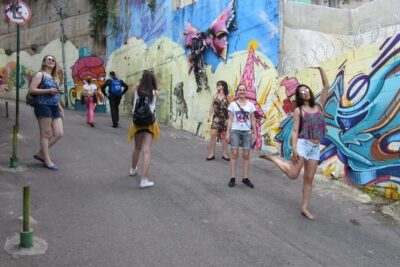
Favela Tour Rio de Janeiro – Vidigal Walking Tour by Russo Guide
Read our review →

Private Walking and Cultural Tour Rocinha-Rio de Janeiro
Read our review →

Sunrise and Sunrise Walk Two Brothers with Local Guide
Read our review →More of this kind of Rio day