
Reviewed · STREET ART
Rio Street Art Tour
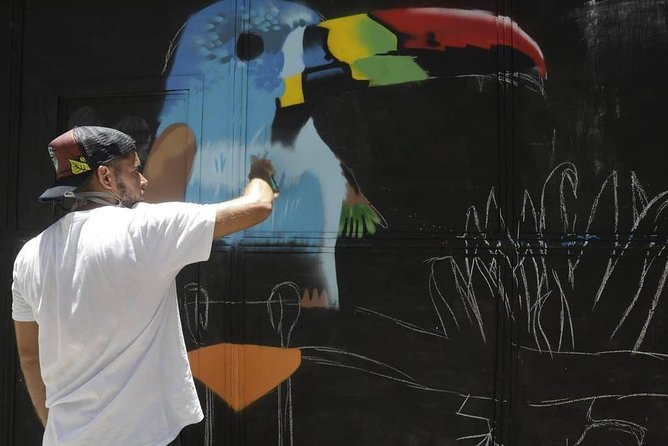
Rio’s walls tell stories, and you can read them. This 4-hour Rio Street Art Tour uses a local guide to connect folk art and street art to how neighborhoods feel, not just what looks cool on a wall. With a small group capped at 15, you get real conversation time instead of a fast photo sprint.
I especially like the stop-by-stop pacing. You’re not stuck in one area, and you get varied “street art settings,” including a cemetery homage. Second, I love how the guide frames what you see through artists, local context, and city life, with guides like Nina often described as passionate and easy to follow in English.
One thing to consider is the value question. At $75 per person, it’s a fair price if you want a guided, story-driven walk, but it may feel high if you mainly want to self-explore for less time.
In This Review
- Key things to know before you go
- Street art in Rio is not random graffiti, it’s neighborhood storytelling
- How the 4-hour format works for real sightseeing
- Copacabana art stop: reading murals through a famous neighborhood lens
- São João Batista Cemetery: Selaron’s homage in an unexpected setting
- Botafogo finish: ending in a younger art-filled neighborhood
- Small group energy: why 15 people changes the whole tour
- Price and value: $75 for a guided street-level art education
- The guide experience: names, style, and how the stories land
- Meeting and getting oriented without stress
- What to bring for this kind of street art walk
- Who should book this Rio Street Art Tour
- Should you book this Rio Street Art Tour?
- FAQ
- How long is the Rio Street Art Tour?
- What is the price per person?
- How many stops are included and where do they happen?
- Is admission required for the listed stops?
- Where do I meet the tour?
- Where does the tour end?
- Is hotel pickup included?
- Is alcohol included?
- How big is the group?
- What is the weather and cancellation situation?
Key things to know before you go

- Small group, max 15, so questions do not get lost
- Three distinct areas: Copacabana, São João Batista Cemetery, and Botafogo
- Selaron stop option at an intimate homenaje setting in the cemetery
- Free admissions at the listed art stops
- Ends near metro access at Parcão da Nelson Mandela, making it easy to continue your day
A few more Rio outings to weigh up
- Rio Street Art Tour
★ 5.0 · 39 reviews - Private Tour of Rio de Janeiro Street Art
★ 5.0 · 1 review - From Graffiti to History: Exploring Rio’s Street Art and Culture
★ 5.0 · 1 review - Rio de Janeiro Street Art Private Walking Tour with a Guide
★ 5.0 · 1 review
Street art in Rio is not random graffiti, it’s neighborhood storytelling
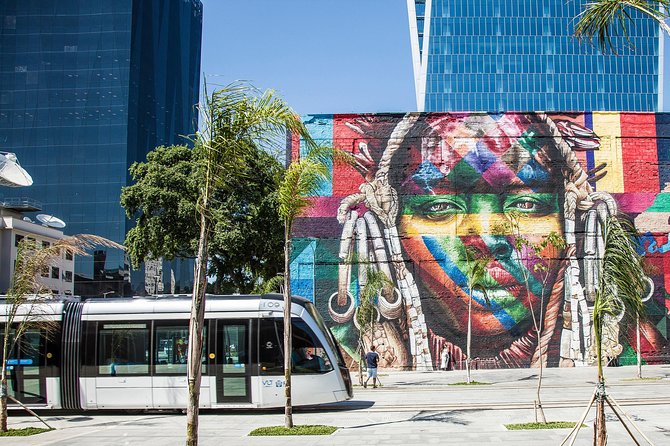
In Rio de Janeiro, street art works like a second language. It shows up on buildings, house fronts, and neighborhood corners, but it also picks up cultural memory, politics, humor, and community pride. This tour is built to help you read that language instead of just staring at it.
The best part is the framing. Rather than treating murals as isolated art objects, the guide ties them to where they live, how people pass through the area, and what the city tries to communicate. You end up understanding why the street looks the way it does, even if you are not an art scholar.
And because the tour is guided, you get context fast. A good mural can stop you for ten minutes, but without context you might only notice color. With context, you start noticing names, styles, recurring symbols, and the way artists respond to Rio.
How the 4-hour format works for real sightseeing
This is a 4-hour, walk-focused tour with three scheduled blocks of time: 1 hour 30 minutes in Copacabana, about 1 hour 10 minutes at São João Batista Cemetery, and about 1 hour 20 minutes in Botafogo. That adds up to enough time to slow down at works that actually catch your eye, without feeling like you have signed up for a half-day hike across the entire city.
The small group cap matters. When there are fewer people, your guide can steer attention on the details you might miss, and you can ask questions without waiting your turn. It also makes it easier to adjust on the fly if someone needs a short break.
There is also a practical pacing benefit. You are spending daylight hours moving between neighborhoods, so you are not doing one long, exhausting stretch in one place. If Rio weather cooperates, you get a full “arc” of the city rather than a single snapshot.
Copacabana art stop: reading murals through a famous neighborhood lens
Copacabana is the logical starting point. It is widely recognized, but the tour treats it like more than a postcard. You will see art around the neighborhood and hear how the street art scene connects to the city’s broader rhythms.
Why this stop works: it teaches you to spot how street art changes with surroundings. In a place people already think they know, the murals and installations add a quieter layer of meaning. Instead of only associating the area with beaches and views, you start associating it with voices and street-level culture.
What to expect in practice is a walk that mixes viewing with explanation. You are not just looking at one mural. The time block suggests you will move through multiple pieces and viewpoints across Copacabana, picking up a feel for the neighborhood’s artistic “tempo.”
The possible drawback is simple: Copacabana can be busy. That means you will want basic street-smart habits like staying with the group and keeping your phone secure. If you are sensitive to crowds, try to stay patient and lean into the guide’s stories, because the art makes the walking feel purposeful.
São João Batista Cemetery: Selaron’s homage in an unexpected setting
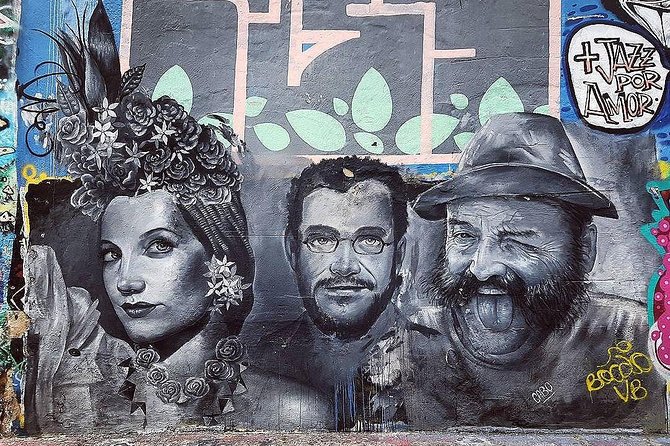
This stop is the emotional curveball. You can choose to see a very intimate homage to the Chilean artist Selaron at his eternal resting place. Even if you already know the Selaron name, the setting changes how it hits.
A cemetery can sound gloomy, but the inclusion here matters because it shows how street art can cross into public memory and personal devotion. Street art in Rio is not always meant to be temporary. Sometimes it becomes a marker of grief, identity, and tribute.
You get about 1 hour 10 minutes here, which is enough time to pay attention without feeling rushed. The fact that admission is listed as free is a real practical win, too, because it keeps the tour focused on the viewing rather than extra ticket lines.
One consideration: because it is a cemetery, dress and behavior should be respectful. Keep your volume down, move carefully, and treat this like a cultural site, not just another mural wall.
Botafogo finish: ending in a younger art-filled neighborhood
Botafogo is where the tour closes its story. You continue onward and end in this bustling young neighborhood filled with art and stories. The time block is about 1 hour 20 minutes, which is a good length for a final “linger and reflect” segment.
Why Botafogo is a strong ending: by the time you reach the neighborhood, you already have tools for seeing. After Copacabana and the cemetery stop, you can spot artistic patterns and thematic links more easily. The ending also makes sense logistically, because you do not end back where you started.
The meeting details are especially useful here. The tour ends at Parcão da Nelson Mandela on R. Nelson Mandela, and it says you end at another metro station. That matters for planning your last hour of Rio, because you can hop back to your next stop without guessing transportation.
If you like finishing a tour near transit, this is one of the better endpoints on the Rio scene. You should still double-check your map location, but the tour is clearly built for easy continuation.
If this one is full, Rio has these as well:
- Rio de Janeiro: 6-Stop Highlights of Rio with Lunch★ 4.4 · 5,157 reviews
- Christ the Redeemer Entry Ticket by Corcovado Train★ 4.4 · 4,476 reviews
- Rio’s City Tour – Tickets for Christ, Sugar Loaf & Lunch included★ 5.0 · 4,389 reviews
- Full Day: Christ Redeemer, Sugarloaf, City Tour & Barbecue Lunch★ 4.5 · 3,142 reviews
- Rio de Janeiro: Rocinha Favela Walking Tour with Local Guide★ 4.8 · 3,052 reviews
Small group energy: why 15 people changes the whole tour
A max group size of 15 travelers is not just a comfort detail. It changes how much you can learn and how much the guide can tailor the pacing.
When a group is larger, guides often protect time by giving shorter explanations. With a smaller group, you tend to get more back-and-forth. You can point out something you’re curious about, and your guide can connect it to what you will see next.
It also supports learning through recognition. One of the tour’s strongest signals from the provided experience notes is that the guide helps you identify artists and works. When you can name an artist, a style, or a theme, street art becomes much more fun. It turns “pretty wall” into “I see that reference, I get why it’s there.”
Price and value: $75 for a guided street-level art education
At $75 per person for about 4 hours, the value depends on what you want from the tour. If you want a guided walkthrough with context, artist stories, and multiple neighborhoods, the price can make sense. The tour includes a local guide, and the listed stops have free admission.
A big value factor here is the guide time. Street art takes time to interpret, and a guide who can explain who made a work and why it matters speeds up your understanding. Also, because the tour includes multiple areas, you are paying for guided city navigation on foot, not just for one mural stop.
Where some people get frustrated is when they expect more time in more intense areas, or they compare it to longer tours at higher total cost. One of the key practical things I’d recommend is matching your expectations to the format: this is a short, focused walk with storytelling, not an all-day citywide art expedition.
If you’re the type who loves walking and learning, $75 feels like a decent rate for a structured tour. If you’re mainly chasing photos and you have a flexible schedule, you might prefer a cheaper self-guided route. The tour is at its best when you want a guided “how to look” lesson.
The guide experience: names, style, and how the stories land
The experience centers on a local guide who brings street art to life with cultural impact and city context. The provided notes highlight guide Nina specifically, and people describe her as passionate, punctual, and fluent in English.
There’s another subtle plus: attention to comfort. In the experience notes, Nina is mentioned as checking in to see if people needed to rest or get water. That kind of small care makes a guided walk easier to enjoy, especially in Rio’s heat.
You may also hear detours based on what you’re seeing. One example given is a detour to introduce works of Rafamon when those murals appeared later on the trip. That’s a good sign. It means the guide is not just reading a script. She is connecting dots so the street art makes sense as you move.
And if you’re wondering whether you’ll get repetitive explanations, the route design suggests variety: different neighborhoods, different settings, and an option to see Selaron at an intimate resting place. You are likely to feel the tour changing gears, which helps it stay interesting for the full 4 hours.
Meeting and getting oriented without stress
The start point is Rua Siqueira Campos, 96 – Copacabana. The tour ends at Parcão da Nelson Mandela on R. Nelson Mandela, and the tour notes that you end at another metro station.
Two practical points for your planning:
- There is no hotel pickup and drop-off, so you need to arrive under your own steam.
- It is near public transportation, so metro access is part of the intended route.
If you end up at the wrong nearby metro station, do not panic. The experience notes include a situation where the group met at the wrong station at first, and the guide helped reconnect quickly. The lesson for you is simple: save the meeting location details, share a contact method if provided, and keep your bearings early.
What to bring for this kind of street art walk
Since this tour is weather-dependent, plan like you are doing outdoor sightseeing. The guidance says it requires good weather, so keep that in mind if Rio is having an off day.
For comfort, treat it like a neighborhood walk:
- Wear comfortable shoes you can stand in for the full 4 hours.
- Bring water, especially because the guide may check in if you need it.
- Expect to move between neighborhoods, so keep bags light.
If you are carrying cameras, plan to use them during stops rather than constantly while walking. Street art is best when you pause, look up, and listen. You will get more from the art when you can hold still long enough to notice details.
Who should book this Rio Street Art Tour
This is a smart pick if you:
- Like street art but want the stories behind it
- Want a guided walk that covers more than one neighborhood
- Prefer a smaller group (15 max) for better conversation time
- Are visiting Rio for the first time and want to see a different side beyond the obvious highlights
It may be less ideal if you want nonstop intense action in only one area, or if you are on a super-tight budget and prefer totally self-guided exploring. Also, because you choose an option at the cemetery stop, you should feel comfortable with a more reflective setting.
Families are allowed with an adult present for children, and service animals are allowed. If that matters to your planning, this tour is set up with those basics covered.
Should you book this Rio Street Art Tour?
I’d book it if you want street art that comes with explanation, not just photos. The combination of three distinct stops, free admissions at the listed locations, and a small group capped at 15 makes it a good value for people who enjoy walking and learning.
I would pause only if $75 feels like too much for a half-day activity, or if your idea of street art is mostly about self-guided wandering. In that case, you might get more satisfaction spending the day exploring on your own and paying only for the major set pieces you truly care about.
But if you like art plus city context, and you want to understand Rio through its walls, this tour is an easy yes.
FAQ
How long is the Rio Street Art Tour?
The tour is about 4 hours.
What is the price per person?
The price is $75.00 per person.
How many stops are included and where do they happen?
There are three main stops: Copacabana, São João Batista Cemetery (with an optional Selaron homage visit), and Botafogo.
Is admission required for the listed stops?
Admission is listed as free for the stops.
Where do I meet the tour?
The meeting point is Rua Siqueira Campos, 96 – Copacabana, Rio de Janeiro – RJ, 22031-072, Brazil.
Where does the tour end?
The tour ends at Parcão da Nelson Mandela, R. Nelson Mandela, 53-31 – Botafogo, Rio de Janeiro – RJ, 22260-005.
Is hotel pickup included?
No. Hotel pickup and drop-off are not included.
Is alcohol included?
Alcoholic drinks are not included. They are available to purchase.
How big is the group?
The tour has a maximum of 15 travelers.
What is the weather and cancellation situation?
The experience requires good weather. If it is canceled due to poor weather, you will be offered a different date or a full refund. Free cancellation is available up to 24 hours in advance for a full refund.
Recently added around Rio






Street Art, compared.


Rio de Janeiro Street Art Private Walking Tour with a Guide
Read our review →
From Graffiti to History: Exploring Rio’s Street Art and Culture
Read our review →More of this kind of Rio day