
Reviewed · HISTORICAL TOURS
E-Bike Tour: Local Guide, Historic Center to Ipanema
Stepping from Pedra do Sal toward Ipanema, you get Rio’s big stories and big views in just 3 to 4 hours. What I like most is the mix of Afro-Brazilian cultural stops and classic Rio landmarks, with lots of short photo breaks along the way. One thing to consider: parts of the ride involve street traffic and busy shared paths, so you should feel comfortable staying alert.
This is also a small-group style experience, capped at 4 travelers, and it comes with a real guide plus helpful extras like a coconut water stop and a Polaroid photo. If you want a long, seat-of-the-pants ride without having to plan or hop buses, this works well, but it is not a slow museum crawl.
In This Review
- Key highlights to know before you go
- Why this e-bike tour works so well in Rio
- Starting at Bafo da Prainha, then walking into samba’s roots
- Pedra do Sal to Valongo, UNESCO and the weight of the past
- Kobra’s Panal Etnias and other quick photo magnets
- Palácio Tiradentes and the architecture of Brazil’s politics
- Cinelândia, Biblioteca Nacional, and the Theatro Municipal sweep
- Lapa to Selarón, then the ride becomes pure Rio-watching
- Ipanema and Arpoador, ending where the views feel earned
- Guide quality, language help, and the extras that make the day smoother
- Price and value: is $88.29 per person fair?
- Who should book this tour, and who should skip it
- Should you book this DiCria e-Bike Tour?
- FAQ
- How long is the e-bike tour?
- What is the price per person?
- Are admissions included?
- Where does the tour end?
- How big is the group?
- What languages does the guide speak?
- What is included besides the e-bike and guide?
- FAQ
- Is snacks included?
Key highlights to know before you go
- Pedra do Sal and Cais do Valongo in the same ride, with explanations tied to samba and slavery history
- Cinelândia to Biblioteca Nacional to Theatro Municipal, hitting major architecture fast
- Painel Etnias (Kobra) and Escadaria Selarón as quick photo stops with context
- Copacabana bike path plus Flamengo waterfront views, then down to Ipanema and Arpoador
- Private-transport style support and a guide who can explain in English, Spanish, and Portuguese
More of Rio's older story on foot:
- Rio de Janeiro Historical Center Walking Tour
★ 4.5 · 336 reviews - Private Walking and Cultural Tour Rocinha-Rio de Janeiro
★ 5.0 · 239 reviews - Discover Rio Little Africa: A Cultural and Historical Journey
★ 5.0 · 238 reviews - Rio de Janeiro: Historic Rio and Santa Teresa Half-Day Tour
★ 4.4 · 228 reviews
Why this e-bike tour works so well in Rio
Rio can feel like a lot, fast. This tour is built for people who want to see a serious slice of the city without losing half the day to logistics. You cover Central Rio first, then you move toward the water, ending in the Ipanema-Arpoador zone. The pacing is all about short stops, quick explanations, and then riding again.
The e-bike part matters. It keeps the “busy sights” day from turning into a leg-burning workout. You still pedal sometimes, but the electric assist makes it manageable even if you have not ridden in years. And with a group size limited to 4, the guide can keep things moving without rushing you past every stop.
There is also value in how the guide frames the stops. The ride does not just point at landmarks. It connects them to stories you can carry with you later, especially around Rio’s Afro-Brazilian cultural roots.
Starting at Bafo da Prainha, then walking into samba’s roots
You kick off at Bafo da Prainha. Here, the guide sets the tone with an explanation that ties together the history of slavery in the area of Pedra do Sal, and the birth of samba and Carnival. It is not a long lecture, but it gives you a lens for what you will see next.
From there, you stop at Pedra do Sal, described as the Birthplace of Samba. The time at each site is short, but you do not just take a picture and leave. You get context for why this spot matters in Afro-Brazilian history and how that history connects to music, traditions, and Carnival culture.
Practical note: you’re moving on e-bike, so this part works best when you stay present. If you treat every stop like a quick selfie break, you may miss the point of why the guide slows down here.
Pedra do Sal to Valongo, UNESCO and the weight of the past
One of the most meaningful moments on the ride is Cais do Valongo. The guide explains it as the only physical trace of slavery in the Americas, and it is listed as a UNESCO World Heritage Site. That is heavy subject matter, and the stop is brief, but the framing is clear.
How to get the most out of it:
- Take the stop seriously, even if you only spend a few minutes there.
- Listen for the guide’s connection between the site and the larger story of Rio.
This is also where the tour shows good balance. It does not only highlight music and art. It also addresses the harsh reality underneath parts of Rio’s cultural identity. If you want a day that includes both beauty and truth, this stop makes the ride feel grounded.
Kobra’s Panal Etnias and other quick photo magnets
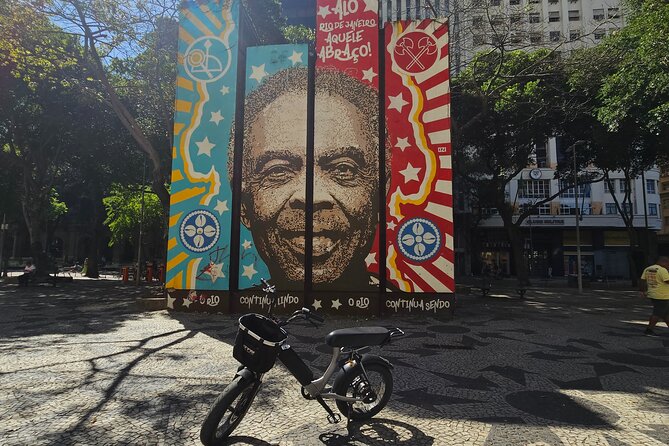
After the deeper history stops, the ride turns more visual. You make a stop at Painel Etnias for a photo break tied to Kobra’s world record work, described as the world’s largest graffiti.
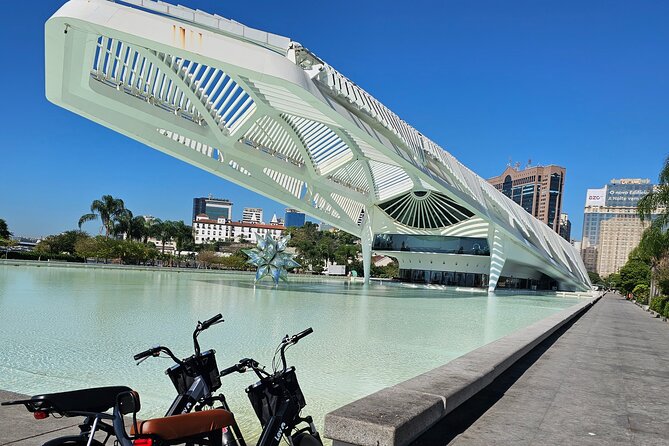
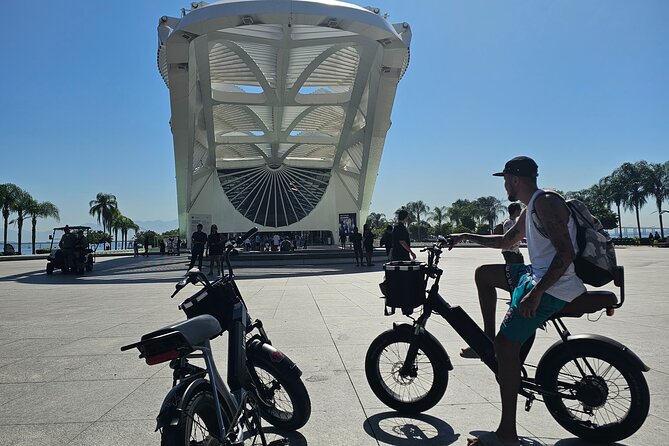
Next is Museu do Amanha, where you tour the outside of the museum plus Praça Mauá. This is not about going inside on this ride, it’s about seeing the area and letting the guide connect the setting to what you’ll notice as you continue.
Then you hit Paco Imperial, tied to the Imperial era. The guide points out history connected to the buildings in Praça XV, including the Imperial Palace. Short stops like this work best when you pause and look around, not only up at the main building.
Palácio Tiradentes and the architecture of Brazil’s politics

One of the most impressive segments is Palácio Tiradentes. You visit the building that houses the Legislative Assembly of Rio de Janeiro. The guide also explains that it once served as the seat of Brazil’s National Congress and that it is named after Tiradentes, an independence hero.
The stop includes mention of the building’s art deco design, and for many people this is a perfect “architecture brain candy” moment, where the explanation helps you recognize details you might otherwise overlook.
This is also a good reminder of how the tour balances tone. You can go from UNESCO-listed slavery traces to art deco politics without the day feeling random. It feels like Rio, not like a checklist.
A few more Rio outings to weigh up
- Small-Group Panoramic Bike Tour in Rio de Janeiro★ 5.0 · 153 reviews
- Rio de Janeiro: Guided Bike Tours in Small Groups★ 4.5 · 133 reviews
- Half Day Private E-Bike Tour in Rio★ 5.0 · 50 reviews
- Small-Group Urban Bike Tour in Rio de Janeiro★ 5.0 · 41 reviews
- Bike Tour Of Rio – Beaches and Lagoon★ 5.0 · 20 reviews
Cinelândia, Biblioteca Nacional, and the Theatro Municipal sweep
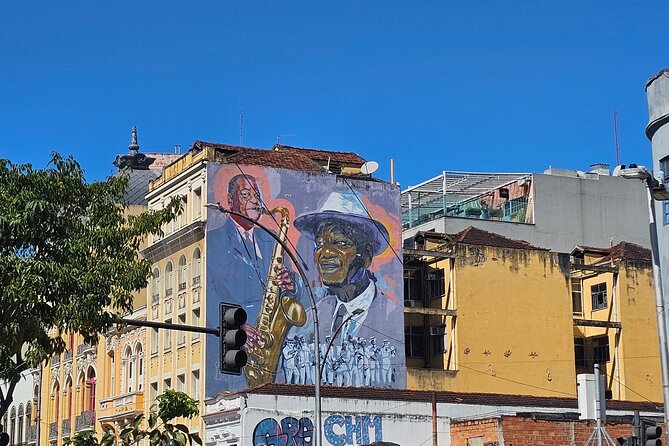
Then you ride into Cinelândia, where the guide tours the area for key landmarks like the Odeon Theater, Municipal Theater, National Library, and Pedro Ernesto Palace, plus street art.
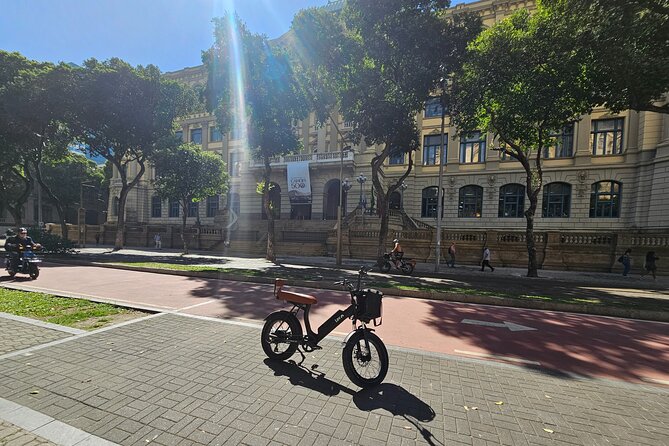
Right after that is Biblioteca Nacional. You get a quick look at the neoclassical building and learn it is one of Latin America’s largest and most important libraries, with collections that include books, manuscripts, and historical documents. The guide also shares how it traces back to the Portuguese Royal Library and how it became an intellectual landmark.
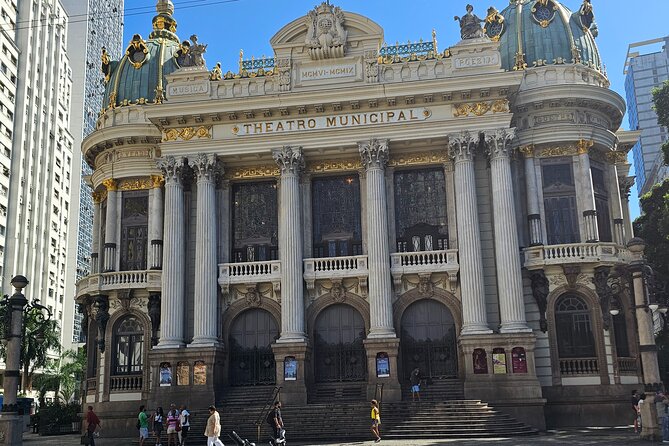
From there, you reach Theatro Municipal do Rio de Janeiro. You see a theater described as iconic and beautiful, inspired by the Paris Opera, and opened in 1909. The guide gives a brief explanation of its cultural significance, including its role hosting performances of opera, ballet, and classical music.
If you care about architecture, this “Central Rio run” is one of the best uses of time. You cover multiple major sites without the usual feeling of spending your whole day in transit.
Lapa to Selarón, then the ride becomes pure Rio-watching
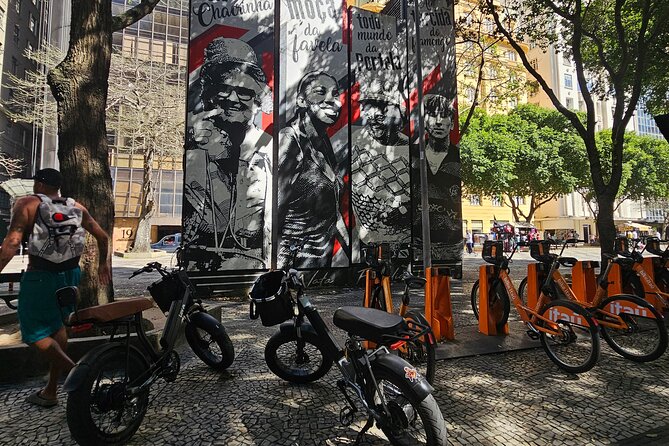
After Cinelândia and the libraries, you get a couple of classic photo stops. You hear a brief history of the Arcos da Lapa, then you make a stop at Escadaria Selarón for a photo spot and a short explanation.
Then you shift into a long scenic stretch along Aterro do Flamengo. This is your big payoff ride: you get views of Flamengo Beach with sightlines that include Christ the Redeemer and Sugarloaf Mountain. The tour allows about 30 minutes here, so it does not feel like rushed scenery.
From Aterro, you walk along Botafogo Beach for about 20 minutes, then you ride the entire bike path along Copacabana Beach for another 20 minutes. That bike-path time matters. It keeps the day fun and moving, and it lets you enjoy Rio’s shoreline without stopping every few minutes.
Ipanema and Arpoador, ending where the views feel earned
At Ipanema Beach, you continue until a short moment later when the bikes are stocked at Rua Sá Ferreira. The tour then ends at Pedra do Arpoador, with the final stop at Arpoador.
This ending zone is a smart choice. By the time you reach it, you have already covered the Central highlights and the historic sites, so the beach section feels like a reward instead of a random ending.
Guide quality, language help, and the extras that make the day smoother
The tour is led by an in-person guide, with language support in English, Spanish, and Portuguese. That matters in a city where small context shifts everything. Even when stops are only 5 to 10 minutes, a good guide can turn a quick glance into a memory.
One recurring positive theme is that the guide is patient, chill, and flexible with timing. That helps a lot if you are a first-time e-bike rider, or if you want extra time for photos rather than being pulled along on autopilot.
You also get small “Rio touches” included:
- A coconut water stop with a beautiful view of Sugarloaf Mountain
- 1 Polaroid photo included (extra Polaroids cost BRL15, or 3 for BRL45)
- A personalized holographic DiCria Rio Tours sticker
These are not life-changing perks, but they are the kind of small, tangible souvenirs that feel fun rather than forced.
Price and value: is $88.29 per person fair?
For $88.29 per person, you get a guided e-bike experience focused on a lot of famous Rio stops, plus private transportation, admissions listed as free for the covered stops, and built-in photo and refreshment extras.
Where the value shows:
- The ride is long enough to feel like a full city day, but short enough to stay relaxed at 3 to 4 hours
- The max group size of 4 travelers helps keep it personal
- You get a mix of cultural education and major sightseeing without separate tickets or museum planning listed in the stops
Where the value might not fit:
- If you prefer deep time at one or two places instead of fast moving highlights, this might feel too efficient. The stops are deliberately short, so you’re there to connect dots, not to linger for hours in each building.
A simple way to decide: if you want a strong “first-timer to Rio” day that moves from historic center to iconic beaches, the price makes sense for what you pack in.
Who should book this tour, and who should skip it
This tour is a strong match if you:
- Want a small-group experience with a guide who explains what you’re seeing
- Prefer e-bike riding for sightseeing over walking everywhere
- Like combining serious history stops with major Rio landmarks and beach views
- Want a day with built-in photo moments at places like Selarón and Painel Etnias
It might be less ideal if you:
- Get stressed by any street riding or crowds on shared paths
- Hate short stops and want long museum-style time only
- Are traveling with very specific accessibility needs, since the tour notes that most travelers can participate but does not spell out step-by-step access details
Should you book this DiCria e-Bike Tour?
If you want a practical, high-value Rio day that strings together Afro-Brazilian cultural sites, Central architecture, and the shoreline from Flamengo to Ipanema, I think it’s an easy yes. The small group cap helps, the guide language options are useful, and the included coconut water stop with a Sugarloaf view is a nice bonus.
I would book it when you can count on decent weather, since the experience requires good weather to run smoothly. And if you are even a little curious about how samba culture connects to specific places in the city, this tour gives you that context without dragging out the day.
FAQ
How long is the e-bike tour?
The tour lasts about 3 to 4 hours.
What is the price per person?
The price is $88.29 per person.
Are admissions included?
The stops listed on the tour include free admission for each site noted.
Where does the tour end?
The tour ends in the Arpoador, Ipanema Beach area, and the bikes are stocked at Rua Sá Ferreira after the Ipanema Beach stop.
How big is the group?
The maximum group size is 4 travelers.
What languages does the guide speak?
The guide offers English, Spanish, and Portuguese.
What is included besides the e-bike and guide?
Included are private transportation, 1 Polaroid photo, a personalized holographic DiCria Rio Tours sticker, and a coconut water stop with a view of Sugarloaf Mountain.
FAQ
Is snacks included?
No, snacks are not included.
More E-Bikes in Rio de Janeiro
- E-Bike Ride: Beaches and Lagoon
★ 5.0 · 1 review
Recently added around Rio





Historical Tours, compared.

Private Walking and Cultural Tour Rocinha-Rio de Janeiro
Read our review →
Discover Rio Little Africa: A Cultural and Historical Journey
Read our review →

Rio Gastronomy: Culture & History Through The Art Of Food – Walking Group Tour
Read our review →
Adventure & History at Tijuca Forest (small group or private)
Read our review →
From the Past to the Present: A Historical Walking Tour of Rio
Read our review →More of this kind of Rio day