
Reviewed · CITY TOURS
Rio’s city walking tour: a glimpse of history and olympic legacy
Old Rio is where Rio explains itself fast. This city walking tour strings together churches, palaces, and downtown squares with a stop at Mauá Square, shaped by the Olympic legacy. I especially like the mix of grand religious architecture (São Bento and Candelária) and the “then and now” contrast of the Museum of Tomorrow area. The one thing to watch is that you still spend time in traffic and you will walk a solid amount over a few hours.
You’ll start with hotel pickup around São Conrado, Leblon, Ipanema, and Copacabana, then head into the historic core with a local guide doing the talking. Names that come up in the guide experience include André, Melanie, JB (Juan Bautista), and Jean-Baptiste, and the common thread is clear, practical storytelling plus a willingness to adjust the pace. With a max of 35 people, it’s sized to feel personal, but it’s not a slow stroll for casual walkers.
In This Review
- Key moments you will not forget on this Rio walk
- Why Old Rio makes sense as a walking tour
- Pickup, timing, and how the afternoon flows
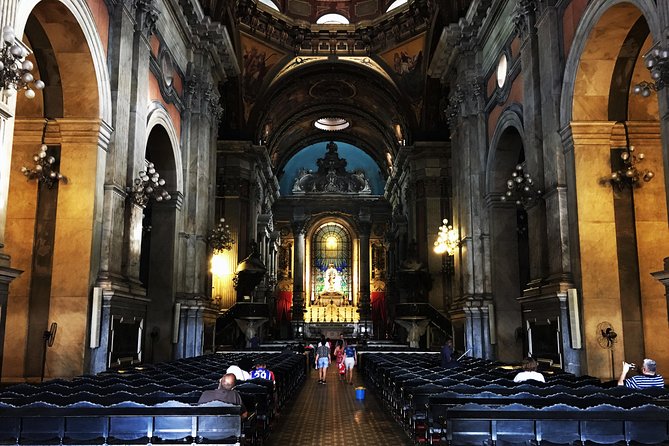
- Stop 1: Igreja de Nossa Senhora de Candelária and the neoclassical start
- Stop 2: Mosteiro de São Bento, chapel art, and the feeling of scale
- Mauá Square: where Olympic legacy changes the street-level vibe
- Museum of Tomorrow and other cultural stops around the waterfront core
- Praça XV do Novembro and Paço Imperial: the political heart of old Rio
- Market streets and the “downtown rhythm” you can’t get from a bus
- Tiradentes Palace from outside: brief, but part of the power map
- Confeitaria Colombo: a classic break that is worth the detour
- Metropolitan Cathedral of Saint Sebastian and Carioca Square: the cone that changes your photos
- Walking, comfort, and what to wear in Rio’s downtown streets
- Guides make the difference, and you can feel it
- Price and value: is $60.77 a good deal?
- Who this tour is best for
- Should you book this Rio city walking tour?
- FAQ
- What is the duration of the Rio city walking tour?
- What time does the tour start?
- How much does it cost?
- Where do you get picked up and dropped off?
- Is food included?
- Are admissions included for the main stops?
- What fitness level do I need?
- How big is the group?
- What happens if the weather is bad or the minimum number of travelers is not met?
Key moments you will not forget on this Rio walk
- São Bento Monastery: church art, gilt carvings, and a proper dose of colonial-era craftsmanship
- Nossa Senhora de Candelária: neoclassical architecture that started in 1630 and finished in 1775
- Mauá Square and Olympic legacy: new public space, entertainment and culture, plus the Cobra murals
- Paço Imperial and Praça XV do Novembro: power, coronations, and the Portuguese royal residence era
- Metropolitan Cathedral route: Uruguaiana Street to the conical cathedral and Carioca Square
More of Rio covered on foot:
- Rio de Janeiro: Rocinha Favela Walking Tour with Local Guide
★ 4.8 · 3,052 reviews - Rio De Janeiro: Half-Day Rocinha Favela Walking Tour
★ 4.7 · 2,272 reviews - 3 Hour Rocinha Favela Walking Tour with a Local Guide
★ 5.0 · 833 reviews - Favela Tour Rio de Janeiro – Vidigal Walking Tour by Russo Guide
★ 5.0 · 377 reviews
Why Old Rio makes sense as a walking tour
Downtown Rio can feel confusing at first. Streets curve, blocks stack, and important buildings sit in plain sight once you know where to look. A walking format fixes that. You’re not just seeing landmarks, you’re getting the geography in your head.
This route also gives you a clean “story arc.” It starts with major religious buildings, moves through the political heart of Brazil (squares and the Imperial Palace area), and then it jumps to a modern Rio moment with Mauá Square. That contrast helps you understand why the city looks the way it does.
Pickup, timing, and how the afternoon flows
The tour starts at 1:00 pm and runs about 4 hours. Hotel pickup and drop-off are included for most hotels in São Conrado, Leblon, Ipanema, and Copacabana, so you do not waste your trip figuring out buses or taxis in midday traffic.
A realistic expectation: even with a walking tour, downtown Rio can slow things down. Some days are smoother than others, and you may spend more time moving between stops if traffic is heavy. The better guides handle that by keeping the commentary going and using the travel time to explain what you’re passing.
Stop 1: Igreja de Nossa Senhora de Candelária and the neoclassical start
The afternoon begins at the Church of Our Lady of the Candelaria, a neoclassical church whose build began in 1630 and finished in 1775. It’s a strong opening because it sets the tone for what you’ll see later: Rio’s downtown is full of buildings shaped by empire, trade, and changing tastes.
If you like architecture, this stop is a quick win. The entrance and visit time are listed at around 10 minutes, which makes sense for getting the feel of the building without eating your whole schedule. Admission is listed as free.
Practical tip: this is a church. Go with quiet attention, and keep your phone ready, not out, so you do not annoy anyone.
Stop 2: Mosteiro de São Bento, chapel art, and the feeling of scale
Then you head to the São Bento Monastery. It’s considered one of the most important patrimonies of Brazilian architecture, founded in 1590 by two monks from Bahia. The main draw is what you can see inside and around the religious spaces, including paintings and ornate gilt carvings.
This is the stop that tends to spark the most wow moments. In the guide feedback I’ve seen, people consistently call out the Benedictine chapel and its standout artwork, as well as the Portuguese library building in the downtown area. Even if your time inside is short, the architecture is the kind that makes you slow down.
Because the monastery is a major interior experience, a knowledgeable guide matters here. A good one helps you read what you’re seeing, like why the art looks the way it does and what the monastery’s presence meant historically.
Mauá Square: where Olympic legacy changes the street-level vibe
After the older churches, you shift gears to Mauá Square. This area is presented as a gift from the Olympic legacy, and that’s not marketing language for show. The point is that this space changed the experience of the Cariocas, creating a new focal point for entertainment and culture.
You’ll also hear about the Cobra murals, which have become part of the visual identity of the area. This stop is less about a single building and more about the feeling of place. You’re standing in a redesigned downtown zone, where the city shows you a modern version of public life.
One drawback to keep in mind: this segment can feel more “views and wandering” than “sit and learn.” If you want deep museum time, you might want to plan extra hours elsewhere in Rio for that.
More of Rio's older story on foot:
- Rio de Janeiro Historical Center Walking Tour★ 4.5 · 336 reviews
- Private Walking and Cultural Tour Rocinha-Rio de Janeiro★ 5.0 · 239 reviews
- Discover Rio Little Africa: A Cultural and Historical Journey★ 5.0 · 238 reviews
- Rio de Janeiro: Historic Rio and Santa Teresa Half-Day Tour★ 4.4 · 228 reviews
- Rio de Janeiro: Little Africa Heritage Walking Tour★ 4.9 · 177 reviews
Museum of Tomorrow and other cultural stops around the waterfront core
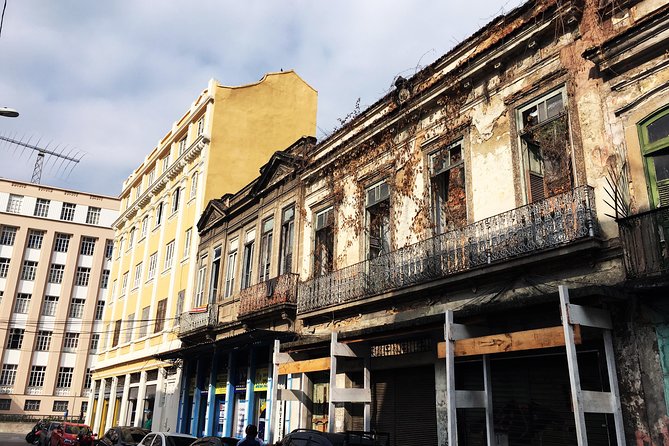
From Mauá Square, you’ll see the modern Museum of Tomorrow and pass through a major cultural center in Rio’s downtown area. The tour includes viewing and guided context rather than a full, long museum day, so treat it as a preview and a photo-and-story moment.
This is also where the “Rio timeline” theme clicks. You’re moving from colonial and imperial buildings into design-forward modern Rio. Even from the street, you can see how the city presents itself now, and your guide can connect that to the older story you just learned.
If you’re the type who hates rushing, ask your guide a simple question like: What should I prioritize if I come back here later? Many guides can point you toward what’s worth your money and time.
Praça XV do Novembro and Paço Imperial: the political heart of old Rio
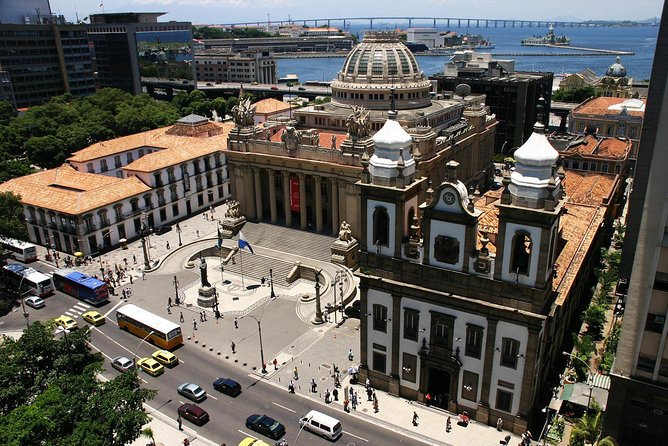
Then it’s back to history with Praça XV do Novembro. This is the square where Brazil’s emperors were crowned in the 1800s, and it also hosted other major historical events. It’s a great stop for two reasons.
First, it’s easy to understand why squares matter in city power structures. Second, it anchors your understanding of Brazil’s transition through empire.
Nearby, you’ll see the Portuguese-style Paço Imperial (Imperial Palace). Built for Brazil’s rulers as a home and workplace in the 1700s, it was also the residence of the Portuguese Royal Family when they arrived in Brazil. This is the kind of detail that makes downtown Rio feel more real, because you start recognizing the political weight behind the architecture.
Time note: most stops are around 10 minutes, except where you get a longer break. That keeps the tour moving and helps you cover more than one “big” landmark zone.
Market streets and the “downtown rhythm” you can’t get from a bus
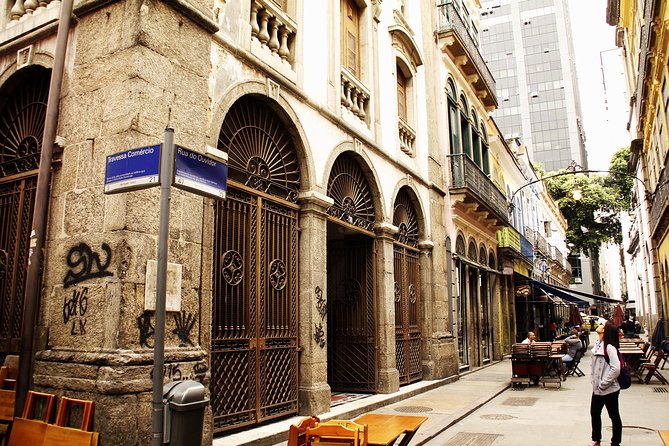
You’ll stroll down famous downtown market streets, passing by prominent buildings along Uruguaiana Street. This is where the tour becomes less about a checklist and more about learning how to navigate the area.
Some guides also help you stay alert in busy zones. One guide experience includes help with avoiding pickpocket trouble, which matters because crowded streets are where your attention gets scattered.
Also, if you like local texture, this part is useful. It’s not just churches and palaces. It’s streets with everyday activity, so you get a better sense of how Rio lives between monuments.
Tiradentes Palace from outside: brief, but part of the power map
You’ll see Tiradentes Palace from outside. You do not get the inside visit time for it during this tour, but it still works because it sits in the web of “who ruled what, from where.” By the time you get there, you’re already primed to notice patterns.
Think of this stop as a bookmark. The guide can tell you enough to help you place it, and then you move on before the afternoon turns into museum fatigue.
Confeitaria Colombo: a classic break that is worth the detour
Midway through, you stop at Confeitaria Colombo, one of Rio’s famous bakeries. You get about 20 minutes here, and admission is listed as free.
Even if you do not buy anything, it’s a meaningful stop because it shows you another face of downtown Rio: the polished, historic café culture. If you do want a snack, this is the place to do it, and it is also a nice reset before the more intense architecture portion of the walk.
The tour does not include food and drinks, so budget for snacks here if you need them. The benefit is that the break feels intentional, not tacked on.
Metropolitan Cathedral of Saint Sebastian and Carioca Square: the cone that changes your photos
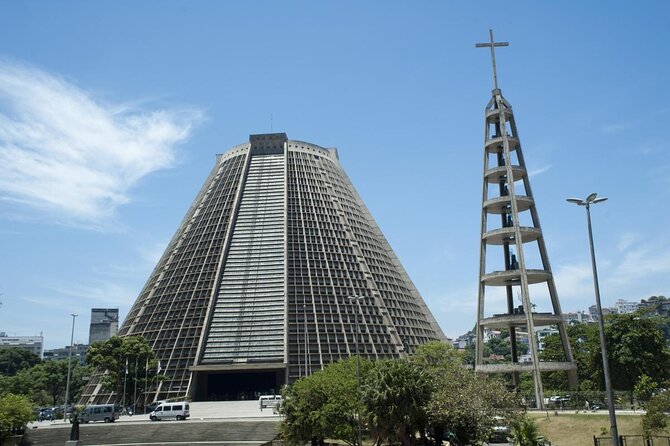
Your walking route finishes around the Metropolitan Cathedral of Saint Sebastian. The cathedral is described as an ancient conical cathedral, with a 96 meter internal diameter, 106 meter external diameter, and an overall height of 75 meters.
This kind of scale makes your phone camera struggle in the best way. You can also feel why it’s such a landmark in Rio’s skyline, even though you’re visiting it in the middle of a city street scene.
You’ll also continue toward Carioca Square as part of the ending stretch, and then your tour concludes. From there, you are free to explore the area on your own, or take a ride back to your hotel.
If you want to stretch the afternoon, this ending point is a good base. You’re near more downtown activity, so you can keep going without planning a whole new journey.
Walking, comfort, and what to wear in Rio’s downtown streets
This is a moderate physical fitness tour. That does not mean it’s a hike, but it does mean you should expect steady walking between stops and some time standing and looking up at large buildings.
Wear comfortable shoes with good grip. Downtown streets can be uneven, and the tour is scheduled for the early afternoon, which often means full daylight. Bring a hat or sunglasses if you’re prone to sunburn, and carry a small bottle of water since food and drinks are not included.
Also, if you prefer slower pacing, bring it up early. Some guides build flexibility into the schedule, and your best chance is to communicate what you need at the start.
Guides make the difference, and you can feel it
The strongest praise centers on guides who explain clearly and keep things moving at a pace that feels fair. Names that show up include André and Melanie, plus JB and Jean-Baptiste for particularly strong city storytelling.
One theme: guides that adapt. There are examples of guides adding sites if you have personal interests, and others adjusting the route if people already visited nearby attractions. That flexibility can turn a generic downtown walk into a tailored “this is the Rio I care about” afternoon.
The cautionary side is also real. A small number of experiences note issues like rushing, less walking than expected due to traffic, or communication glitches that affected timing. You cannot control every day in a city like Rio. What you can control is how you set your expectations: treat it as an organized walking introduction, not a guarantee of uninterrupted foot-only sightseeing.
Price and value: is $60.77 a good deal?
At $60.77 per person, this tour is priced like a guided downtown package, not a cheap self-guided stroll. What makes it more reasonable is that hotel pickup and drop-off are included, which can easily cost you time and money if you’re trying to do it yourself.
You also get multiple major sites in one afternoon: several churches, monastery viewing, historic squares, the Imperial Palace area, a major modern museum area, and the conical Metropolitan Cathedral. Many listed stops show admission as free, which helps your value calculation.
Where the price might feel steep is if you end up wanting lots of museum time on your own. This tour is designed for seeing and learning, not for deep, long entry-and-stay hours in every building. If you plan to do more exploring afterward, that’s a good use of your time.
My rule of thumb: if this is your first or second day in Rio, it’s a strong value because it gives you bearings. If you already know downtown well and you hate walking, you might get more value from picking one or two sites and going at your own speed.
Who this tour is best for
This fits well if you want:
- A first look at Old Rio downtown with a guide who explains what you’re seeing
- A blend of architecture, empire-era history, and modern Olympic-era Rio
- A structured route that helps you avoid getting lost, especially in busy areas
It’s less ideal if:
- You struggle with walking for a few hours
- You expect long museum visits at each modern site
- You strongly prefer slow, browse-at-your-own-pace touring
Should you book this Rio city walking tour?
If you’re excited by churches, squares, and the “Rio timeline” from empire to Olympic-era transformation, I’d book this. The biggest strength is that it hits key landmarks in a short, well-paced afternoon and includes hotel pickup so you can focus on the walk, not logistics.
If you are only interested in one neighborhood, or you want a full day at major museums, you might prefer a smaller, focused plan. But for getting your bearings fast and seeing iconic downtown Rio landmarks in one guided route, this is a solid way to start.
FAQ
What is the duration of the Rio city walking tour?
The tour lasts about 4 hours.
What time does the tour start?
It starts at 1:00 pm.
How much does it cost?
It costs $60.77 per person.
Where do you get picked up and dropped off?
Hotel pickup and drop-off are included for most hotels in São Conrado, Leblon, Ipanema, and Copacabana.
Is food included?
No. Food and drinks are not included.
Are admissions included for the main stops?
The listed stops show admission ticket free.
What fitness level do I need?
You should have a moderate physical fitness level.
How big is the group?
The tour has a maximum of 35 travelers.
What happens if the weather is bad or the minimum number of travelers is not met?
The experience requires good weather. If it’s canceled due to poor weather, you will be offered a different date or a full refund. If it’s canceled because the minimum number of travelers isn’t met, you will be offered a different experience/date or a full refund.
Recently added around Rio



City Tours, compared.

Rio’s City Tour – Tickets for Christ, Sugar Loaf & Lunch included
Read our review →
Full Day: Christ Redeemer, Sugarloaf, City Tour & Barbecue Lunch
Read our review →

Christ the Redeemer & Sugarloaf: Rio City Tour with Lunch
Read our review →
Carnival Backstage Tour at Samba City with Cocktail
Read our review →

One Day Tour in Rio: Christ, Sugar Bread, Lunch and City Tour
Read our review →
Rio de Janeiro Private City Tour: Christ, Sugarloaf & More
Read our review →More of this kind of Rio day