
Reviewed · WALKING TOURS
Rio Walking & Historical Tour
Rio’s old center tells its story on foot. This 3-hour historical walk connects the city’s big landmarks in a way that feels practical, not museum-bus-ride. You’ll follow a carioca guide through places tied to Portuguese colonial power, Brazil’s royal era, and the architectural taste changes that came with it.
Two things I really like: the small group size (up to 14) keeps the pace human, and the route hits major sites you can’t easily piece together on your own. If you get a strong guide, the explanations can be the difference between seeing buildings and understanding why they mattered.
One consideration: this is not a sit-down tour. You should be ready for a good amount of walking and a bit of time on your feet, and it’s not recommended if you have walking difficulties.
In This Review
- Key highlights worth your attention
- Rio’s 9:00 am Centro Sprint From Copacabana Palace
- What Makes a Carioca Guide Matter on This Route
- Municipal Theater to Paco Imperial, Where Rio Shows Its Big-Future Face
- CCBB Rio, The Library Power Stop You Might Not Expect
- Candelária Church, One Facade With Several Eras Inside
- Convent of St. Anthony and Morro de Santo Antônio
- Praça XV de Novembro, Cinelândia, and Arco do Teles: Three Stops, One Downtown Pulse
- Casa Franca-Brasil, A French-Tied Neoclassical Solar
- CCJF and Correios Cultural Centre: Eclectic Architecture and a Post Office Story
- São Francisco da Penitência, The One Stop With Extra Entry
- Price, Pace, and Who This 3-Hour Walk Fits Best
- Should You Book This Rio Walking & Historical Tour?
- FAQ
- How long is the Rio Walking and Historical Tour?
- Where do we meet, and where does the tour end?
- What time does the tour start?
- Is the tour in English?
- Is admission included for all stops?
- Do I need a mobile ticket?
- Is this tour suitable for people with walking difficulties?
- Can I cancel and get a full refund?
Key highlights worth your attention
- Centro landmarks in one tight route so you are not guessing which streets to hit
- A guide-led historical storyline tying buildings to real power shifts in Rio
- Neoclassical and eclectic architecture lessons at places like the Municipal Theater and CCJF
- Several major churches with standout design mixes like Candelária’s Baroque facade
- Public-transport realism, since the trip uses nearby transit and can include the subway
- One paid-entry stop (São Francisco da Penitência) so you can plan ahead
More of Rio covered on foot:
- Rio de Janeiro: Rocinha Favela Walking Tour with Local Guide
★ 4.8 · 3,052 reviews - Rio De Janeiro: Half-Day Rocinha Favela Walking Tour
★ 4.7 · 2,272 reviews - 3 Hour Rocinha Favela Walking Tour with a Local Guide
★ 5.0 · 833 reviews - Favela Tour Rio de Janeiro – Vidigal Walking Tour by Russo Guide
★ 5.0 · 377 reviews
Rio’s 9:00 am Centro Sprint From Copacabana Palace
This tour starts at the Copacabana side, meeting at Copacabana Palace, A Belmond Hotel (Av. Atlântica, 1702). The start time is 9:00 am, and the tour returns you to the meeting point at the end. That round-trip setup matters. You get a structured morning plan without needing to figure out transport logistics at every turn.
The price is $40.50 per person for about 3 hours, with a professional guide and a mobile ticket. For a guided walk that touches multiple landmark sites, I think the value is strongest if you want context, not just photos. The alternative is usually doing this on your own with an audio app, which can work, but it is easier to miss the “why” behind the architecture and street patterns.
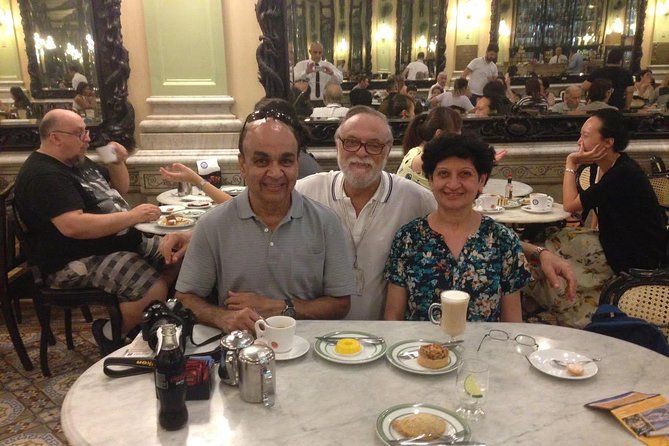
Also, you are not getting a huge crowd. The cap is 14 travelers, and that tends to make Q&A easier and the pace more comfortable. One practical note from real-world experience: when heat or timing is tough, group size can shrink, so you might end up with a closer-to-private feel.
What Makes a Carioca Guide Matter on This Route
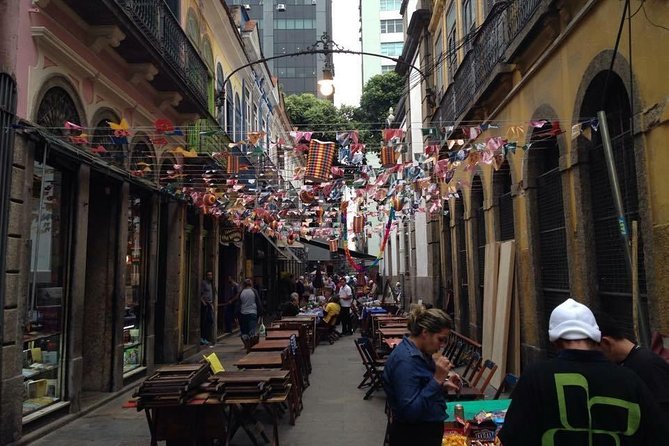
A walking historical tour can go two ways. Either it becomes a list of dates, or it becomes a story you can follow while you are standing in the street. The strength here is that you walk with a carioca guide who puts Rio’s major sites into context.
The sites you visit span colonial-era development, royal-era politics, and the later wave of formal civic architecture. When a guide explains that these buildings were tied to who had power, who paid, and who built, Rio starts to feel like one continuous timeline. That is what makes the walking part matter. You are not just transported between stops, you are moving through the city fabric that those decisions shaped.
Language is English (and in some cases Spanish), and confirmation is sent at booking time. If you are the kind of traveler who wants to understand what you are seeing in under three hours, this format fits well.
Municipal Theater to Paco Imperial, Where Rio Shows Its Big-Future Face
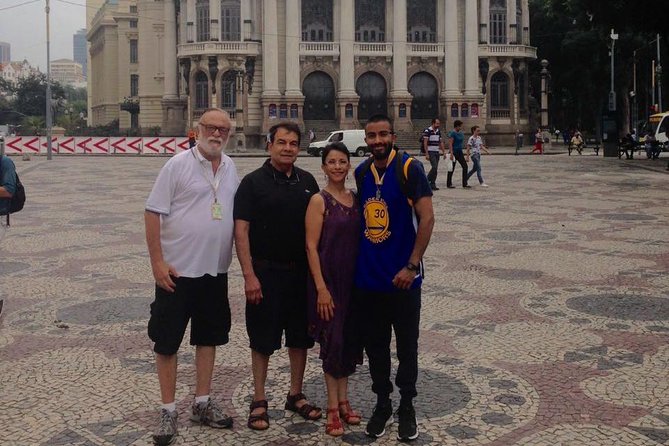
The walk begins in the area of the Municipal Theater (the Opera House). This building was constructed between 1906 and 1909 and uses an Eclectic architectural style. It is described as matching the architectural approach of the Paris opera tradition, so you can think of this stop as Rio showing ambition and sophistication in stone and ornament.
Why it works on a walking tour: the theater is not just a pretty facade. It signals when Rio started building civic identity with international references. You also get a feel for the scale of Centro Rio around you, which helps later when smaller alley narratives start to click.
From there, you move to Paço Imperial (Imperial Palace). This is a big shift from “showpiece” to “power center.” The palace began in the 18th century as a residence for colonial governors. From 1808, it served as a royal residence for King John VI of Portugal, first as King of Portugal, later also as King of Brazil. That 1808 turning point is a key to understanding why Rio grew in importance.
The practical win: the stop has free admission, and the tour includes short time windows at each landmark. That keeps the day moving and reduces the risk of getting stuck waiting in lines.
CCBB Rio, The Library Power Stop You Might Not Expect
Next is the Centro Cultural Banco do Brasil (CCBB). The building has neoclassical lines, and the origin story is surprisingly specific. The foundation stone was laid in 1880, and the project is tied to Francisco Joaquim Bethencourt da Silva, an architect linked to the Imperial House and to arts institutions.
This is where the tour gets extra useful, because you do not only see the exterior. The CCBB area is connected to an enormous library system, described as the largest library in Latin America and the 7th largest in the world, with around 9 million items. It also helped organize early library science courses in Latin America and supported modernization through online databases. Even if you are not a library person, it is a helpful reminder: culture is not only museums. It is education, cataloging, and access.
One detail I appreciate for planning: this stop is listed with free admission, so you can keep momentum. Another bonus from real tour feedback is that some groups get pointed to exhibits connected to money or archives in the bank building context, which can add a surprising layer to the walk.
Candelária Church, One Facade With Several Eras Inside
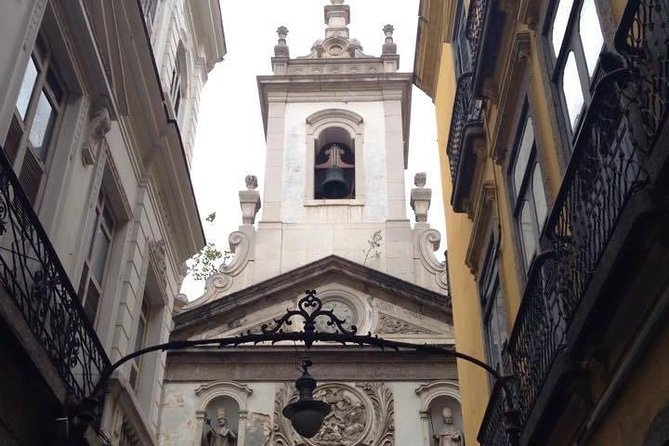
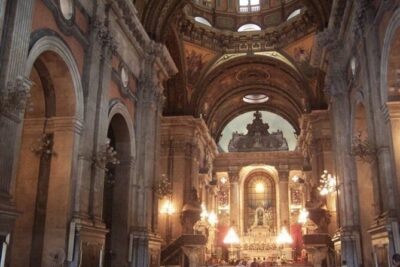
At Church of Our Lady of the Candelaria, the time period span is the headline. Built and decorated over a long stretch from 1775 to the late 19th century, it combines a Baroque facade with a neoclassical and Neo-Renaissance interior.
This kind of mix is the point of doing a guided route instead of randomly visiting churches. When you learn how these styles overlap, you stop seeing the church as a single “look” and start seeing it as a timeline in architecture. Rio’s center grew over decades, and that growth showed up inside and outside.
Practical tip: plan to pause for photos, but also be ready to listen while standing still. Churches make it easier to hear if the guide is directing you to specific transitions in design. This stop is also listed as free admission.
More of Rio's older story on foot:
- Rio de Janeiro Historical Center Walking Tour★ 4.5 · 336 reviews
- Private Walking and Cultural Tour Rocinha-Rio de Janeiro★ 5.0 · 239 reviews
- Discover Rio Little Africa: A Cultural and Historical Journey★ 5.0 · 238 reviews
- Rio de Janeiro: Historic Rio and Santa Teresa Half-Day Tour★ 4.4 · 228 reviews
- Rio de Janeiro: Little Africa Heritage Walking Tour★ 4.9 · 177 reviews
Convent of St. Anthony and Morro de Santo Antônio
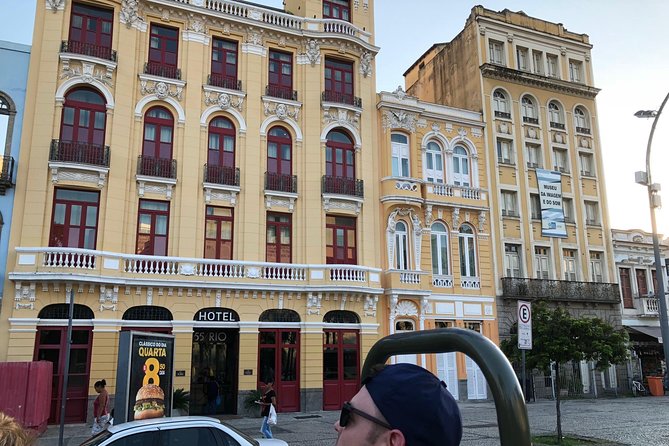
The Convent of St. Anthony brings the Franciscans into the story. The timeline starts in 1592, when the first Franciscan friars arrived near the Beach of Santa Luzia. They later built a small hermitage on a hill, and in 1607 they gained definitive possession of the site known as Morro de Santo Antônio. Construction began on June 4, 1608.
The way this stop is framed matters. It is not only a religious site. It is evidence of how the city’s early geography and settlement patterns took shape, because the convent was built on elevated ground near the coast.
The potential drawback is also simple: it is a historic area and you may be climbing or standing with uneven terrain. The tour is only 3 hours, but you are still stacking the walking demand. If you have knee issues or balance concerns, this is the section where you want to slow down and take it carefully.
Admission is listed as free, which keeps the stop efficient.
Praça XV de Novembro, Cinelândia, and Arco do Teles: Three Stops, One Downtown Pulse
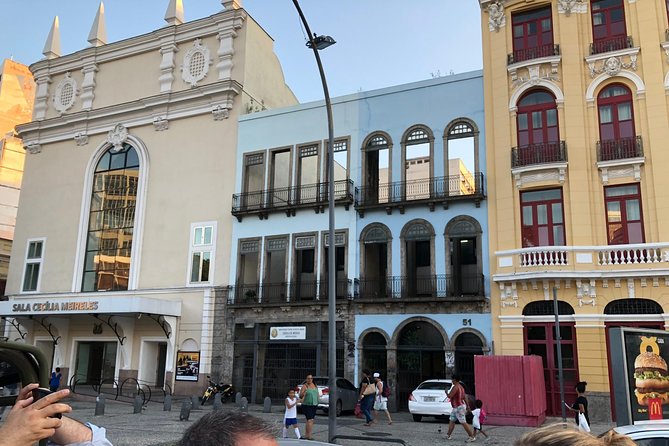
After the convent area, you head into a cluster of central civic spaces.
Praça Quinze de Novembro is located in Rio’s historical center. It sits by two important anchors: Palácio Tiradentes, seat of Rio’s Legislative Assembly, and Paço Imperial. The plaza is also connected to transportation with the Praça XV Station serving as a ferry terminal for destinations in Rio and Niteroi.
Why I like this kind of stop on a tour: it reminds you that history is not in a bubble. This is a working city square where people move through daily life.
Then you reach Cinelândia (officially Praça Floriano Peixoto). This is a major public square in Centro Rio. Names matter here too, because the official naming honors Floriano Peixoto, Brazil’s second president. It is a quick reminder that public space is political space.
Finally, Arco do Teles connects architecture to merchant growth. The description traces development starting in 1738 for a House of Governors under Gomes Freire de Andrade, Count of Bobadela. In 1743, construction finishes and the Largo do Paço region gains appreciation. The story continues when Portuguese judge Antônio Telles Barreto de Menezes buys land and builds rental houses for merchants visiting Rio, giving rise to the arch’s name.
These three stops together create a downtown rhythm: governance, civic identity, and commerce. If you want a mental map for Centro Rio, this is where it forms.
Casa Franca-Brasil, A French-Tied Neoclassical Solar
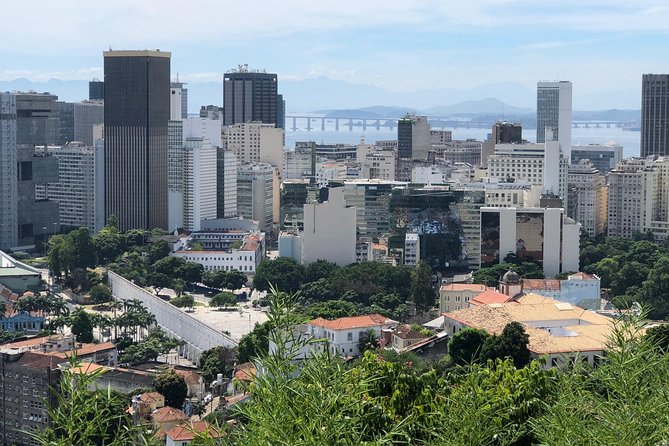
At Casa Franca-Brasil, you are stepping into neoclassical design with a linked backstory to the French Artistic Mission of 1816. The building was designed by Grandjean de Montigny and was commissioned by João VI of Portugal in 1819 for the installation of the city’s first Commerce Square. It was inaugurated May 13, 1820.
This stop can feel small compared with the theaters and big palaces. That is why it helps to have a guide. If you know it is tied to early commerce planning and international influence, you start noticing details that you might otherwise overlook.
Admission is listed as free, and the stop time window is short. Treat it as a “listen and look” moment, not a long lingering one.
CCJF and Correios Cultural Centre: Eclectic Architecture and a Post Office Story
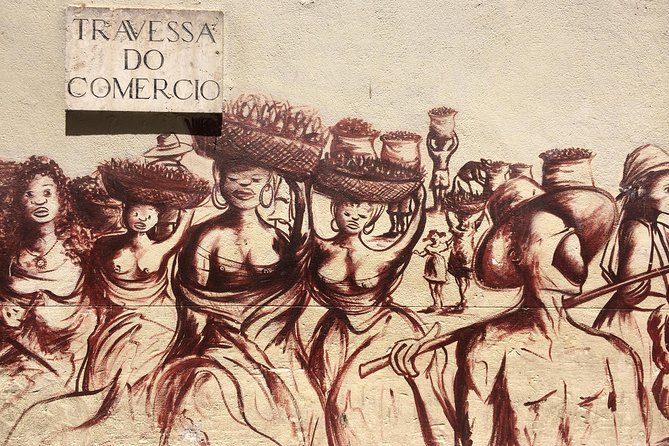
You next hit two buildings tied to national institutions and to how Rio repurposed major structures.
First is the Federal Justice Cultural Center (CCJF), occupying the former seat of the Federal Supreme Court. Construction began in 1905 as part of the reformulation project of Rio when it was the Federal Capital, led by mayor Pereira Passos. The building was originally intended for the Mithra Archiepiscopal, then purchased to house the Supreme Court. Inauguration happened April 3, 1909, and it is designed by Adolpho Morales de Los Rios, described as an important testimony of eclectic architecture.
The also-important historical layer here is that an older site in this area ties back to an imperial parliament built in 1640, including a lower-floor prison chain called the Old Chain. That connection includes Joaquim José da Silva Xavier, known as Tiradentes, waiting for execution before April 21, 1792.
This is the kind of context you want a guide for. Even if you cannot picture the old parliament, you can feel how the site kept being used for power and law.
Then there is Correios Cultural Centre. The building was built to house the Lloyd Brazilian shipping company school, inaugurated in 1922. The projected school never happened, and the property was used for administrative units and the Brazilian Post and Telegraph Company for more than five decades.
Practical takeaway: this tour is not only about royal palaces and ornate churches. It also tracks how Rio’s institutions ran, stored information, and moved communications.
Both these stops are listed with free admission and short time blocks, which keeps the walking tour compact and efficient.
São Francisco da Penitência, The One Stop With Extra Entry
The final major historic stop is the Sao Francisco da Penitencia Church. This is also described as Church of St. Francis of Penance. The Third Order of San Francisco settled in Rio in 1619, initially occupying a chapel inside the Franciscan convent church on Morro de Santo Antônio. In the mid-17th century, they got land next to the convent church to build their own temple. Construction was between 1657 and 1733, with interruptions.
One practical detail: admission at this church is listed as not included. So if you are budgeting tightly, plan for a separate entry cost here.
This is also the stop that can feel more meaningful if you want a deeper connection to how religious communities shaped the city’s early footprint. The tour keeps you moving, but this is the place where you usually want to slow down and take a careful look.
Price, Pace, and Who This 3-Hour Walk Fits Best
For $40.50, you get a guide, a compact route, and access to multiple landmark stops in Centro Rio. The value is best if you:
- are visiting for the first time and want a clear map of key areas
- enjoy architecture and want the “why” behind styles like Baroque, neoclassical, and eclectic
- prefer walking with stops that are short and structured, rather than long museum blocks
The pace is casual, but do plan for time on your feet. Real tour feedback highlights that groups can walk closer to 3 to 4 hours, with subway or public transit used to reach downtown. That is normal for this kind of morning plan from Copacabana.
If you do have mobility limits, the tour is not recommended. Even if you could manage a few steps, the route includes churches and historical terrain that may not be smooth.
What about group dynamics? With a maximum of 14 travelers, you are likely to feel less rushed than on a bigger coach-style tour. That is also why this tour often works well for couples, solo travelers, and small friend groups who want conversation with their guide.
Should You Book This Rio Walking & Historical Tour?
I would book this tour if your top priority is understanding Centro Rio fast and getting a grounded historical storyline while you walk between landmarks. The combination of major stops, short time windows, and a guide who can explain the connections makes it a strong intro to the city.
Skip it only if you dislike walking tours, you expect a beach-style Rio day, or you know you cannot handle the mobility demands. If this is your first day and you wanted the classic Rio postcard areas, you might still be happy, but you should know you are choosing the older, power-center side of the city.
Given the rating of 4.7 and the emphasis on friendly, patient guiding, this is one of the better ways to spend a morning in Rio with structure and real context.
FAQ
How long is the Rio Walking and Historical Tour?
It runs about 3 hours.
Where do we meet, and where does the tour end?
You meet at Copacabana Palace, A Belmond Hotel in Copacabana. The activity ends back at the same meeting point.
What time does the tour start?
The start time is 9:00 am.
Is the tour in English?
Yes. The tour is offered in English (and it may also be run by a multi-lingual guide in English and Spanish).
Is admission included for all stops?
Most stops are listed as free admission, but the Church of St. Francis of Penance (São Francisco da Penitência) has admission not included.
Do I need a mobile ticket?
Yes, the tour uses a mobile ticket.
Is this tour suitable for people with walking difficulties?
No, it is not recommended for people with walking difficulties.
Can I cancel and get a full refund?
Yes. You can cancel for free up to 24 hours in advance for a full refund. If you cancel less than 24 hours before the start time, the amount paid is not refunded.
Recently added around Rio




Walking Tours, compared.



3 Hour Rocinha Favela Walking Tour with a Local Guide
Read our review →
Favela Tour Rio de Janeiro – Vidigal Walking Tour by Russo Guide
Read our review →

Private Walking and Cultural Tour Rocinha-Rio de Janeiro
Read our review →

Sunrise and Sunrise Walk Two Brothers with Local Guide
Read our review →More of this kind of Rio day