
Reviewed · WALKING TOURS
Rio: Historical Walking Tour
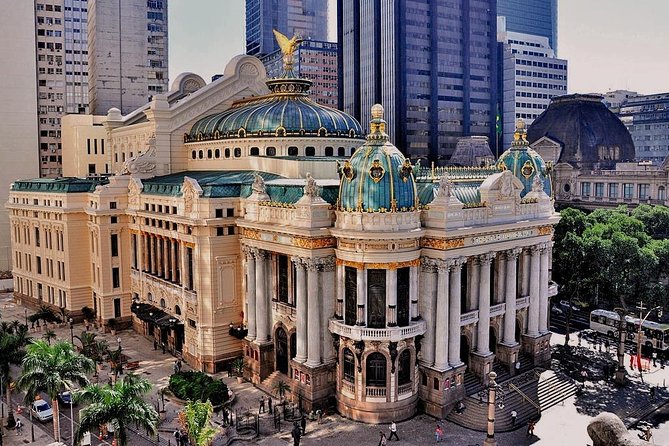
Rio’s center tells its story on foot. This 4-hour guided walking tour pairs subway transport with a paced downtown route through landmark squares and church architecture. I especially like the way the guide connects what you see to history and politics, and I love the mix of French-influenced streets and major civic buildings like Confeitaria Colombo and Candelária Church. The main catch is simple: it is not a good fit if walking is hard for you, since the route involves lots of time on foot, including cobblestones.
I also like that the tour plan keeps you moving efficiently. You get a guided walk through former capital highlights, with museum-like stops and iconic architecture, without needing to figure out transit on your own. And you finish back near Copacabana, so you can keep the day easy instead of stretching it into a full transportation puzzle.
One more consideration: some interior stops depend on being open. France-Brazil House and Bank of Brasil Cultural Center and even Candelária Church are listed as when open, so your exact look inside can vary a bit.
In This Review
- Key Highlights You’ll Care About
- From Copacabana to Cinelândia by Subway, Without the Guesswork
- Cinelândia and Praça Carioca, Where the French Footprint Shows Up
- Naval Club, Santo Antônio, and Ordem Terceira, Passing Stops With Context
- Confeitaria Colombo Built in 1894, More Than a Sweet Stop
- Tiradentes Palace (State Hall), Praça XV, and the Imperial Layer of Downtown
- Travessa do Comércio Cobblestones, Carmen Miranda’s Former Residence
- Church of Our Lady of the Merchants, Post Office Cultural Center, and the Cultural Institutions
- Candelária Church as the Closing Anchor, Then Subway Back
- What the Small-Group Format Actually Does for You
- Price and Value: Is $79 for Four Hours a Good Deal?
- Who Should Book This Rio Historical Walking Tour
- Should You Book It?
- FAQ
- How long is the Rio Historical Walking Tour?
- What does the $79 price include?
- Are drinks or meals included?
- What languages are available for the live guide?
- Where does the tour start and where does it end?
- Is the tour suitable for people with mobility impairments?
- Which stops might be affected by opening hours?
Key Highlights You’ll Care About
- Subway to downtown, then a focused walking route that keeps your time tight and your legs busy in the right places.
- Cinelândia Station area with French architectural influence, a clue to how Rio’s center was shaped.
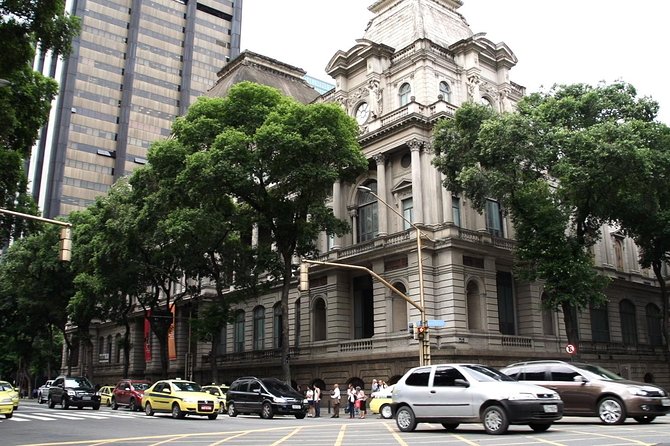
- Architectural heavy-hitters on the route, including Confeitaria Colombo (built in 1894) and Tiradentes Palace.
- Multiple landmark squares like Praça XV, plus classic Rio points such as Mestre Valentim’s Fountain and the Teles Arch.
- A cobblestone stretch at Travessa do Comércio, plus a stop tied to Carmen Miranda’s former residence.
- Guides who work the details. Recent guides named Monique, Mathilda, and others have been praised for clear explanations and for answering plenty of questions.
More of Rio covered on foot:
- Rio de Janeiro: Rocinha Favela Walking Tour with Local Guide
★ 4.8 · 3,052 reviews - Rio De Janeiro: Half-Day Rocinha Favela Walking Tour
★ 4.7 · 2,272 reviews - 3 Hour Rocinha Favela Walking Tour with a Local Guide
★ 5.0 · 833 reviews - Favela Tour Rio de Janeiro – Vidigal Walking Tour by Russo Guide
★ 5.0 · 377 reviews
From Copacabana to Cinelândia by Subway, Without the Guesswork
If you base yourself in Copacabana, this tour has a practical advantage: it uses the subway to get you where you need to go, then turns the day into a walk with a plan. The start point for one option is Av. Atlântica, 1702, Copacabana Palace, A Belmond Hotel, and the tour ends back at Copacabana Palace, A Belmond Hotel, which saves you from planning the return.
That metro component matters more than it sounds. Downtown Rio can be confusing if you’re figuring it out cold. Here, you’re dropped into the center with a guide, so you can spend your energy on seeing and learning, not on navigation.
Also note the languages. The live guide works in Spanish, English, and Portuguese. If you’re more comfortable with one of those, you’re in good shape.
Cinelândia and Praça Carioca, Where the French Footprint Shows Up
The tour begins its sightseeing push in the Cinelândia Station area, known for relics of French architectural influence. That detail is your clue for what to watch for as you walk: Rio’s downtown is not one style. It is layers, with clear moments where European aesthetics left a mark on the public buildings and civic spaces.
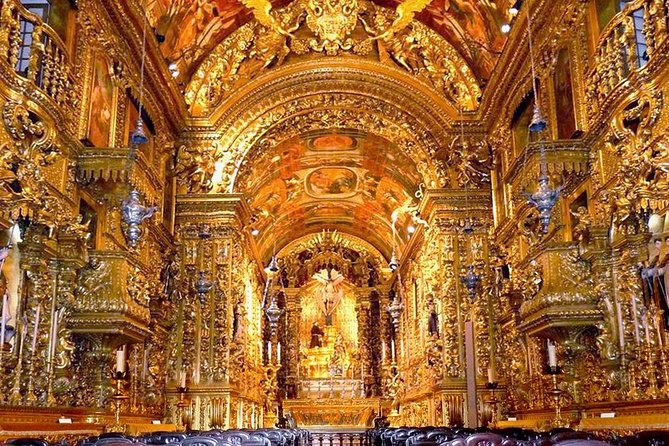
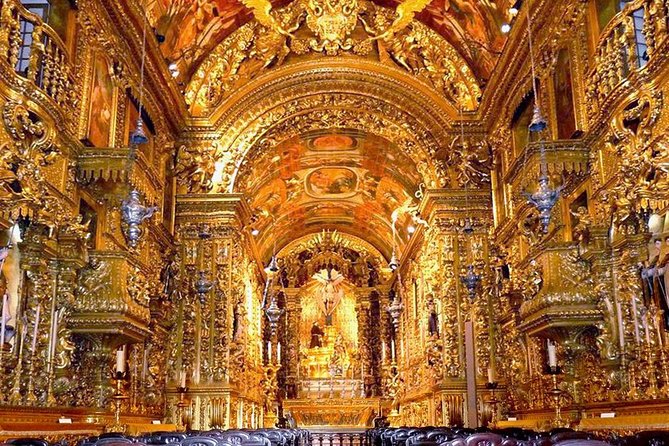
From Cinelândia, you head toward Praça Carioca, and this is where the route starts stacking impressive stops closely enough that you keep your momentum. On the way, you pass major landmarks including the Naval Club, the Monastery Church of Santo Antônio, and the Ordem Terceira de São Francisco da Penitência.
Here’s what makes this portion worthwhile for you: it’s not only photos. It’s a guided walk designed so you can notice how each building fits into the larger downtown story. If you enjoy architecture, the guide’s framing helps you see why these buildings belong together in the same walk.
Potential drawback for your comfort: this is still a walking tour, and churches and historic buildings often mean uneven ground and stairs. If you have balance issues, plan for a slower pace and consider skipping this one.
Naval Club, Santo Antônio, and Ordem Terceira, Passing Stops With Context
Three passes in a row can feel like a blur on some tours. This one is set up differently because the guide’s job is to give you the why behind each sight, not just the what.
The Naval Club, the Monastery Church of Santo Antônio, and the Ordem Terceira de São Francisco da Penitência are all included along your route to Praça Carioca. That makes sense because they represent different slices of civic and religious Rio, and they also help you “read” the neighborhood. You start to notice that the downtown center was built to concentrate power, worship, and public life in walkable proximity.
If you love asking questions, you’ll probably appreciate this segment. Guides on recent runs, including Monique and Mathilda, were praised for detailed cultural and historical commentary, and for answering lots of questions about history and politics. That kind of interaction is where a passing stop can turn into a real learning moment.
Confeitaria Colombo Built in 1894, More Than a Sweet Stop
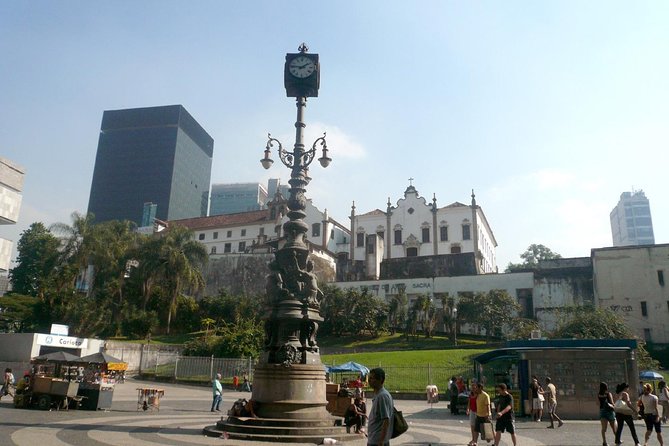
One of the signature stops is Confeitaria Colombo, built in 1894. This matters because it signals a shift from pure monument sightseeing into lived-in heritage, where a historic landmark is still operating as part of daily life.
Even if you do not plan to order anything, the value here is how the guide uses the building to explain the era that shaped it. A place like this is also great for orientation. Once you’ve anchored your brain to a known historic landmark, the surrounding civic buildings feel more connected.
Practical note: drinks and meals are not included. If you want a snack, plan to buy it yourself, or just treat the stop as a visual break rather than a long food stop. The tour is built to keep moving, so don’t count on a long sit-down.
Tiradentes Palace (State Hall), Praça XV, and the Imperial Layer of Downtown
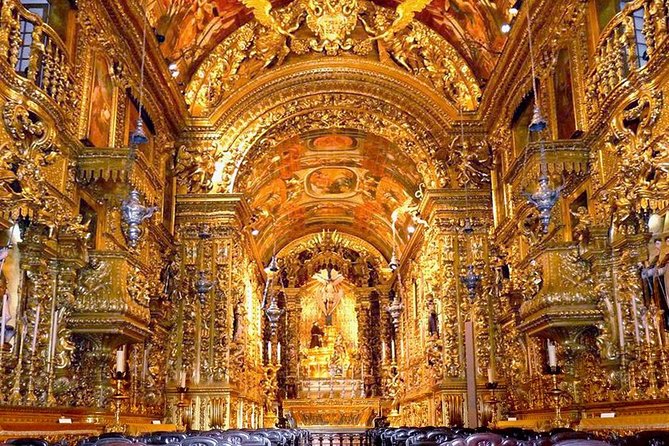
As you continue, you reach Tiradentes Palace, listed as the State Hall. Then you move into Praça XV, including the Imperial Palace, plus nearby points like the statue of General Osório and Mestre Valentim’s Fountain. You also see the Teles Arch.
This is a strong stretch for you if you like to connect architecture to political and civic life. Instead of random highlights, it’s a chain of public spaces that help explain how Rio’s downtown functioned as a power center. You’re walking through the kinds of settings where government, ceremony, and public identity come together.
What to watch for during Praça XV:
- The layout of the space and how buildings frame it.
- How monuments and fountains add a “timeline” feeling to the street view.
- The way the Teles Arch reads as a transition point, helping you move from one historic zone to the next.
A small caution: in historic centers, it’s easy to get distracted and lose your footing. Stay aware, especially if you’re wearing anything that slips on stone or you’re tired.
More of Rio's older story on foot:
- Rio de Janeiro Historical Center Walking Tour★ 4.5 · 336 reviews
- Private Walking and Cultural Tour Rocinha-Rio de Janeiro★ 5.0 · 239 reviews
- Discover Rio Little Africa: A Cultural and Historical Journey★ 5.0 · 238 reviews
- Rio de Janeiro: Historic Rio and Santa Teresa Half-Day Tour★ 4.4 · 228 reviews
- Rio de Janeiro: Little Africa Heritage Walking Tour★ 4.9 · 177 reviews
Travessa do Comércio Cobblestones, Carmen Miranda’s Former Residence
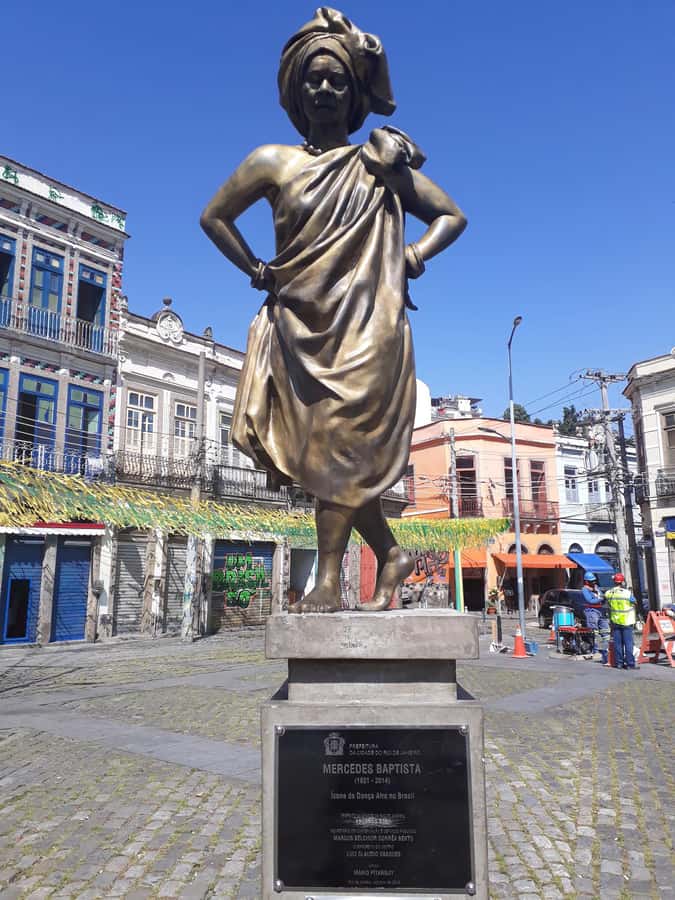
Then comes one of the more distinctive street segments: the cobble-stoned Travessa do Comércio. Cobblestones can be a love-or-hate detail, but here it’s worth it because it helps you experience the old downtown texture under your feet, not just through a window.
You also pass the former residence of Carmen Miranda. This is the kind of stop that balances the civic and religious monuments with a pop-culture connection you can remember later. It’s also a good moment to ask your guide about how entertainment and identity grew out of Rio’s public spaces, though you should let the guide’s style lead the conversation.
What I like about including something like this is that it stops the walk from becoming purely academic. Even if you are mostly there for architecture, you get a human anchor: a figure tied to Rio’s cultural exports.
Church of Our Lady of the Merchants, Post Office Cultural Center, and the Cultural Institutions
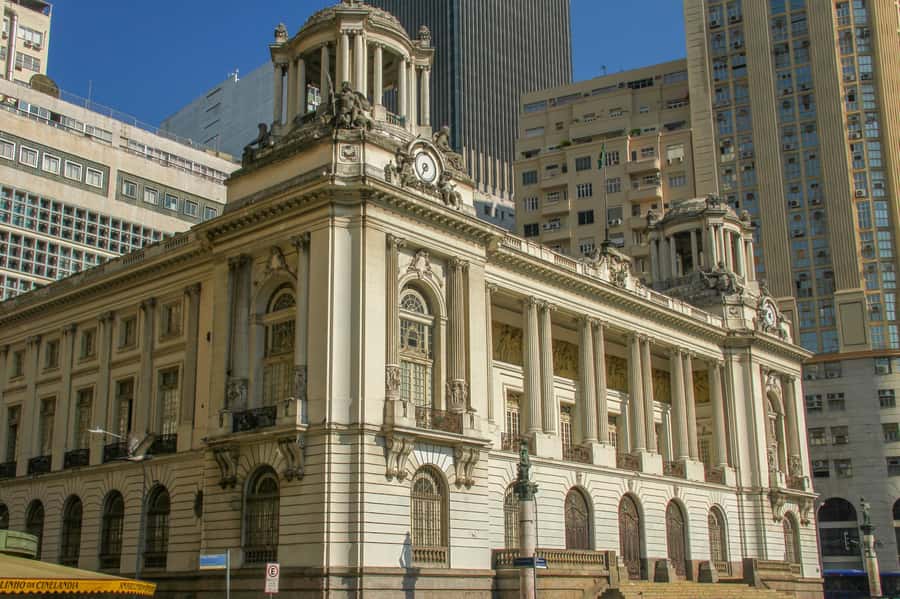
Later, you visit the Church of Our Lady of the Merchants and the Post Office Cultural Center. After that, the route includes the France-Brazil House when open and the Bank of Brasil Cultural Center and Candelária Church when open.
This is one of the best segments for value because it blends different “types” of places. Churches give you architectural and religious context. Cultural centers give you an institutional feel for how Rio preserves and repurposes historic spaces. The Church of Our Lady of the Merchants is particularly useful here because it reinforces the pattern you’ve already seen: the center of the former capital was built to concentrate meaning.
For you, the practical payoff is that these stops help you understand the city as a working system, not as a museum you sprint through. And since entrance fees are included, you avoid the annoying add-on costs that often pop up when tours include indoor stops.
Candelária Church as the Closing Anchor, Then Subway Back
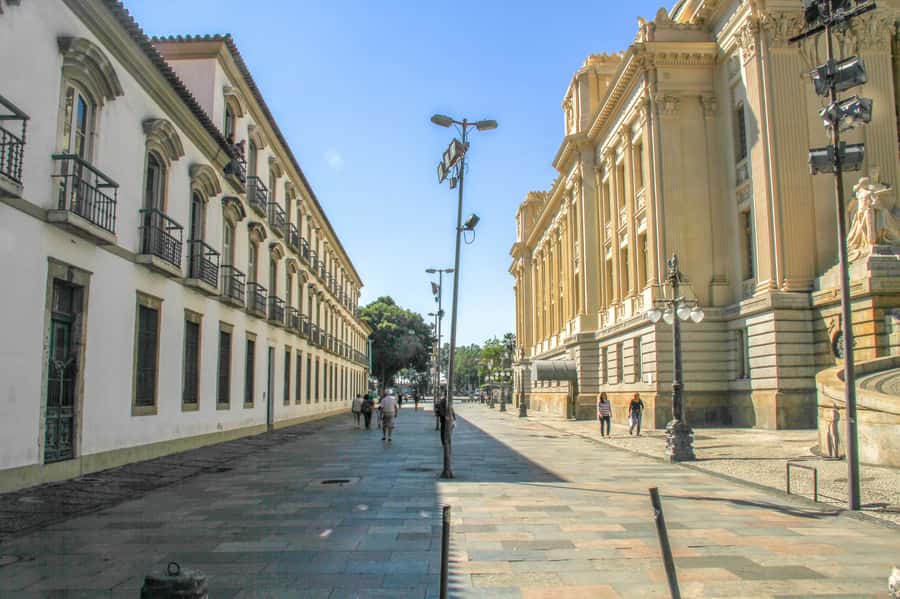
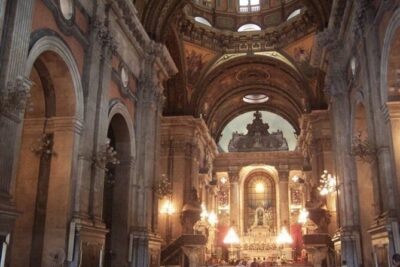
The tour reaches Candelária Church when open. It works well as a final anchor because it’s a strong visual and architectural finish to the route.
After that, you head back to your hotel by subway. This last transfer is not a throwaway detail. It reduces decision fatigue. You’re done with the sightseeing portion, and the tour hands you a simple route home.
If you’re planning the rest of your day, consider booking this earlier rather than last-minute late afternoon. The walking portion is steady, and you’ll want enough energy to enjoy your evening after.
What the Small-Group Format Actually Does for You
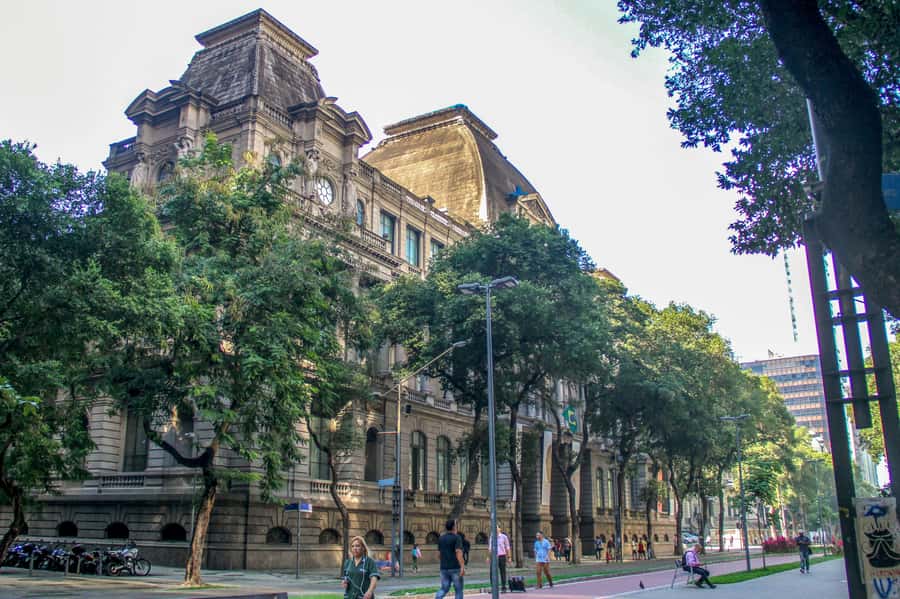
This is described as a small-group tour. That tends to matter in a walking tour like this, because it affects pace and attention.
In the guide feedback, the small-group dynamic shows up in the praise: one recent customer noted being with their husband only, and said the guide was flexible and combined what they wanted to see with the tour’s plan. That’s exactly the kind of benefit you want if you’re the type who asks questions, pauses for photos, or wants a short detour when something catches your eye.
You might also notice how the guide style can change the whole experience. Recent reviews highlight guides named Lucien, Monique, Ernani, and Mathilda. Across them, the recurring theme is prepared commentary and lots of answers. If you pick this tour, assume you will not just hear dates. You’ll get explanations tied to history and how the city functions.
Price and Value: Is $79 for Four Hours a Good Deal?
At $79 per person for a 4-hour tour, you’re paying for more than a leader walking beside you. The price includes entrance fees, a professional guide, and subway transport.
That combination is where the value typically shows up:
- Transport by subway is included, so you’re not paying extra or hunting schedules mid-day.
- Entrance fees are included, which matters when the tour includes indoor stops and when some sights are open and others are not.
- You’re getting a professional guide for the whole time, which is the main reason this tour is more useful than a self-guided stroll.
The main reason it might not feel like a bargain is the pacing and walking load. If you can only do short walks, you may feel like the time cost is too high relative to what you can comfortably cover.
Who Should Book This Rio Historical Walking Tour
This tour is a strong match if you:
- Like architecture and want it explained in context.
- Want a guided route through central landmarks without planning every transit hop.
- Prefer a structured 4-hour format over an all-day wandering plan.
- Speak Spanish, English, or Portuguese and want a live guide throughout.
It’s not ideal if you:
- Have walking difficulties or mobility limitations.
- Use a wheelchair, since it is not suitable for wheelchair users.
- Know you need long rests. The tour is built around walking between stops, including a cobblestone street segment.
Should You Book It?
I think you should book this tour if you want a smart way to experience downtown Rio’s architecture and civic layers in a single half-day block, with subway support and entrance fees handled. The guide quality seems to be a real strength, with multiple recent guides praised for detailed commentary and good question time. Just be honest with yourself about the walking requirement. If you can handle a steady walking pace, you’ll get a lot out of it, especially from Cinelândia through Praça XV and into Candelária Church.
FAQ
How long is the Rio Historical Walking Tour?
The tour lasts 4 hours.
What does the $79 price include?
The price includes entrance fees, a professional guide, a small-group tour, and transport by subway.
Are drinks or meals included?
No. Drinks and meals are not included.
What languages are available for the live guide?
The live guide is available in Spanish, English, and Portuguese.
Where does the tour start and where does it end?
One starting option is Av. Atlântica 1702, Copacabana Palace, A Belmond Hotel, and the tour finishes at the same hotel. The meeting point may vary depending on the option you book.
Is the tour suitable for people with mobility impairments?
No. It is not recommended for people with walking difficulties, and it is not suitable for wheelchair users.
Which stops might be affected by opening hours?
France-Brazil House, Bank of Brasil Cultural Center, and Candelária Church are listed as when open.
Recently added around Rio



Walking Tours, compared.

3 Hour Rocinha Favela Walking Tour with a Local Guide
Read our review →
Favela Tour Rio de Janeiro – Vidigal Walking Tour by Russo Guide
Read our review →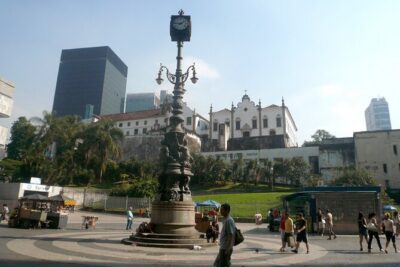
Private Walking and Cultural Tour Rocinha-Rio de Janeiro
Read our review →

Sunrise and Sunrise Walk Two Brothers with Local Guide
Read our review →More of this kind of Rio day