

Reviewed · LAPA TOURS
Historical Downtown and Lapa – Walking Tour
Rio’s downtown has a lot going on, but it can feel like noise. This walk makes it make sense, with in-depth historical commentary and real stops you can actually see up close. You’ll cover important Centro landmarks, then connect the story to Lapa and the famous tile stairs.
What I like most is the way the guide turns streets and buildings into a timeline you can follow. I also love that you get time to ask questions, so the tour becomes less of a lecture and more of a guided conversation about how Brazil’s politics shaped what you’re looking at.
One heads-up: like many smaller-group tours, it may get canceled if the minimum group size is not met, and some departures can be sensitive to language availability. If you have tight plans, you’ll want a backup.
In This Review
- Key highlights you should care about
- Getting started at Praça Floriano, then walking into Rio’s political story
- Biblioteca Nacional: more than a pretty facade
- Museu Nacional de Belas Artes and the WWII monument: art, memory, and the state
- Avenida Rio Branco: where modern power shows on a big boulevard
- Escadaria Selarón in Lapa: the tile stairs, plus the story behind them
- Feira da Praça XV and the República finish: ending in the action zone
- The guides matter, and this one tends to get the right ones
- Price and value in plain terms: $40 for guided tickets and a short walking loop
- Who will love this walk, and who might not
- Tips to get the most from your 3-hour Rio history walk
- Should you book the Historical Downtown and Lapa walking tour?
- FAQ
- How long is the walking tour?
- Where does the tour start and end?
- What is included in the price?
- Is food or drinks included?
- Do I need to worry about tickets for every stop?
- Is hotel pickup and drop-off included?
- Are there age requirements for children?
- How large are the groups?
- Can the tour be cancelled for a refund?
Key highlights you should care about

- A tight 3-hour route through Rio’s Centro, then into Lapa, so you don’t lose a half day to logistics
- Included entry tickets at major stops, including Biblioteca Nacional and Museu Nacional de Belas Artes
- Strong guide-led Q&A, with guides like Rafael and Juliana praised for answering questions and keeping people engaged
- Photo-friendly stops where you can actually pause, not just march past
- A small group size with a maximum of 20 people, which keeps the walk from turning into a crowd-control exercise
Other nights around Lapa:
- Rio: Pub Crawl in Lapa with Cachaça Tasting and Live Samba
★ 4.7 · 881 reviews - Santa Teresa, Lapa, and Cinelândia with Tram Ride and Selarón Steps
★ 4.5 · 274 reviews - Walking tour of the bohemian neighborhoods of Santa Teresa and Lapa
★ 5.0 · 59 reviews - Centro Historico and Lapa – Santa Teresa Walking, Historical and Bohemian Tour
★ 5.0 · 44 reviews
Getting started at Praça Floriano, then walking into Rio’s political story

This tour starts in Centro, at Praça Floriano, 1, and finishes at Praça Quinze de Novembro. That end point matters, because it drops you back into a very central area where you can keep exploring or connect to other parts of town.
You’re not doing this on a bus. You’re on foot, moving at a pace that feels like it fits the sites without rushing every stop. One review described walking about 3 miles at an average pace, and that tracks with a 3-hour plan that includes short breaks.
Your guide sets the tone early. You’ll hear the “why” behind what you see, not only the “what.” That’s especially helpful in Rio, where it’s easy to focus on famous scenery and miss how the city’s power centers, institutions, and neighborhoods connect.
Practical tip: bring a water bottle and plan for heat. One group said the day was cool and they enjoyed it; if the sun is strong, you’ll feel it more on a walking route.
Biblioteca Nacional: more than a pretty facade
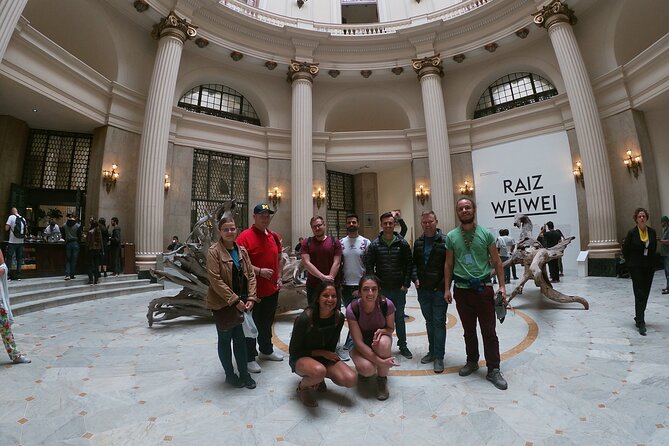
The first big stop is Biblioteca Nacional, with admission included and about 25 minutes on site. This is a smart start because it’s an institution tied to education, culture, and national identity, and the guide can use it to set up the broader historical thread for the whole walk.
What I like about this timing is that you’re not learning history only through buildings you pass. You get a real pause at a major landmark, then you continue with context in your head instead of trying to piece it together later.
Expect your guide to connect the library to the rise of institutions and the shifts in Brazil’s public life over time. Even if you’re not a museum person, this kind of stop is a good way to get your bearings fast in a place like Centro, where many structures look “important” but still need explanation.
If you tend to get restless inside buildings, don’t worry too much. The time here is short enough to stay active, but long enough for a meaningful overview.
Museu Nacional de Belas Artes and the WWII monument: art, memory, and the state
Next up is Museu Nacional de Belas Artes, again with admission included, about 15 minutes. In the itinerary details, this stop also connects with a National Monument related to the dead of the Second World War. Together, this pairing works well because it points to two different ways societies remember: through culture and through commemoration.
This is a place where the tour can answer a question you might not even realize you’re asking, like: how does a country honor its people, and how does that show up in public spaces?
What you’ll get from a well-run guide here is perspective. You don’t need to be a history buff to find the link interesting, but you’ll get more out of it if you enjoy political context. One highlight from past participants was that they loved being able to ask questions about Brazil’s political history during the walk.
Also, this is a “pause and look” stop. The time is not long, so you’re not meant to study every corner. Instead, you’re meant to notice what’s there, hear the story, take photos if you want, and move on with a clearer understanding of the city.
Avenida Rio Branco: where modern power shows on a big boulevard
Then comes Avenida Rio Branco, a walk of about 20 minutes. This stretch is where the city starts to feel like a stage for the state. Wide avenues, major facades, and a layout that makes it easy to read the city’s intent.
A walking guide is perfect here because you can look right and left while you learn what those buildings represent. You’re not only moving through the space, you’re decoding it.
Why this part matters: Centro can look chaotic if you’re just sightseeing. But on a boulevard like Avenida Rio Branco, you can see how planning and architecture support authority and public life. It’s also an easy section for the guide to connect earlier stops to later ones, so the tour feels like one continuous story instead of scattered photo stops.
If you’re trying to travel “light,” this is also manageable. It’s not museum time, it’s street time, which many people prefer when they want history without feeling stuck indoors.
Escadaria Selarón in Lapa: the tile stairs, plus the story behind them
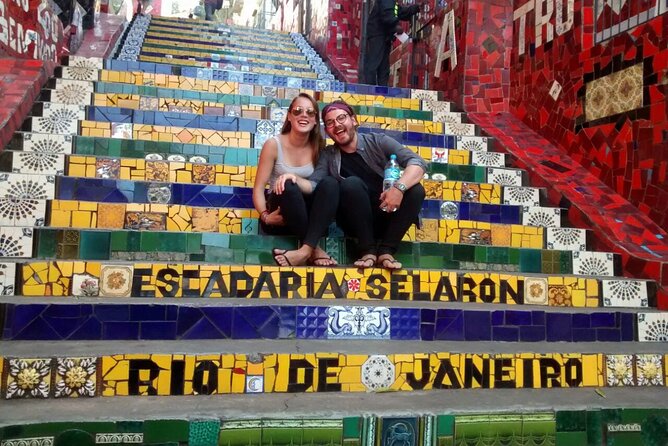
From there, you’ll reach Escadaria Selarón. This is one of the most famous stops in the entire route, and it’s not hard to see why. The stairs are colorful, photogenic, and impossible to ignore.
What makes it worthwhile in a history-focused tour is that the guide can frame it beyond the obvious “wow.” This is where the walk ties into Lapa’s cultural identity, and you start to see Rio as more than institutions and official landmarks.
In other words, the tour’s strength is that it doesn’t treat Lapa as a separate world. It treats it as part of the same city story, where culture and politics influence daily life, not just big buildings.
Plan to spend time here looking up. That’s the advantage of a walking tour with reasonable pacing. You’re not just glancing at the stairs while moving to the next checkmark.
More of Rio covered on foot:
- Rio de Janeiro: Rocinha Favela Walking Tour with Local Guide★ 4.8 · 3,052 reviews
- Rio De Janeiro: Half-Day Rocinha Favela Walking Tour★ 4.7 · 2,272 reviews
- 3 Hour Rocinha Favela Walking Tour with a Local Guide★ 5.0 · 833 reviews
- Favela Tour Rio de Janeiro – Vidigal Walking Tour by Russo Guide★ 5.0 · 377 reviews
- Rio de Janeiro Historical Center Walking Tour★ 4.5 · 336 reviews
Feira da Praça XV and the República finish: ending in the action zone
The last area you’ll get to is Feira da Praça XV, listed as external and about 15 minutes, with admission not included. This stop is your shift toward street-level life, where you can see the city’s energy rather than only its official monuments.
If your timing lines up, you might get extra atmosphere from market activity. One group noted markets were open when they walked on Saturday, and that added energy to the experience. Even when it’s not peak market time, the area still helps you land your tour in a place that feels alive.
Then you wrap up around the República area, with the tour ending at Praça Quinze de Novembro. That finish point is convenient for continuing on your own, since you’re still in Centro.
If you’re thinking about what to do next, this ending location is useful for grabbing food or linking to other neighborhoods. Just keep in mind the tour itself does not include food or drinks.
The guides matter, and this one tends to get the right ones
The tour’s biggest strength, based on what people rave about, is the guide. Names that come up often include Rafael and Juliana, and both are praised for being friendly, energetic, and ready to answer questions.
Juliana is specifically mentioned for speaking English and Portuguese, staying high energy, and sharing personal context from living in Rio. That combo is great because it helps you connect official history to lived reality.
Rafael also shows up as a standout, with strong historical knowledge and a focus on making the walk feel safe and engaging. One comment noted that the pace felt quick in a good way, and that there was time for a quick toilet break and a drink refill. That’s not a small detail. On a 3-hour walk, comfort matters.
Also, this matters for your learning style. If you like to ask “why” questions, the format makes it easy to do so without feeling disruptive. For many history-focused travelers, that interaction is the difference between a tour you forget and one you actually remember.
Price and value in plain terms: $40 for guided tickets and a short walking loop
At $40 per person for about 3 hours, this can be good value if you like guided history and want to avoid spending time figuring out what matters on your own. The itinerary includes admission tickets at key stops like Biblioteca Nacional and Museu Nacional de Belas Artes, which helps justify the price.
The tour also caps at 20 travelers, which usually means you get more interaction and less waiting. And the route is structured so you cover multiple landmarks without the “all day, all museum” problem.
What you should factor in: food is not included. You’ll want to plan snacks or accept that your next meal is after the tour. If you’re hungry, it’s smarter to eat before you start, or carry something small to tide you over.
If you’re on a tight schedule, this is also one of the more efficient ways to get a big-picture view of Rio beyond the usual “top three sights” approach.
Who will love this walk, and who might not
This is best for you if:
- You like history commentary and want more than surface-level sightseeing
- You want a route that keeps you moving but still allows time to pause and ask questions
- You’d rather learn while walking than sit in one place for hours
It might be less ideal if:
- You’re sensitive to walking on uneven city sidewalks for a few hours
- You want food included, or you need a long break at each stop
- Your schedule is extremely inflexible, since cancellations can happen when minimum numbers are not met
A small practical note: the tour says most travelers can participate, and it’s near public transportation. That’s good for flexibility if you need to plan around your other activities.
Tips to get the most from your 3-hour Rio history walk
A few ways to make this tour pay off beyond the photos:
- Arrive with a short list of questions about Brazil’s political history, your guide is clearly ready for that
- Bring water and wear comfortable shoes, this is a walking tour even if the pace is friendly
- Use the Q&A time to ask for next-step recommendations, guides are often generous with ideas for where to go and what to eat
And if you’re traveling with family or kids: children must be accompanied by an adult, so plan accordingly.
Should you book the Historical Downtown and Lapa walking tour?
I think this is a solid choice if you want a guided, history-focused introduction to Rio’s Centro and Lapa in a short time. The included admissions, the small group size, and the guide-led Q&A make it feel like more than a simple sightseeing loop.
Book it if you’re the type who enjoys understanding why a city looks the way it does. You’ll get a clearer map in your head of how Rio’s institutions, public spaces, and neighborhoods connect.
Skip it or plan carefully if your travel dates are rigid. If your departure happens during a low-booking window, cancellations can occur when minimum numbers are not met, and language-specific bookings can be affected.
If you want one efficient way to see Rio with context, this walk is one of the better bets.
FAQ
How long is the walking tour?
The tour is about 3 hours (approx.).
Where does the tour start and end?
It starts at Praça Floriano, 1 – Centro, Rio de Janeiro – RJ, 20031-050, Brazil, and ends at Praça Quinze de Novembro – Centro, Rio de Janeiro – RJ, 20010, Brazil.
What is included in the price?
All activities are included, and admission tickets are included for stops like Biblioteca Nacional and Museu Nacional de Belas Artes.
Is food or drinks included?
No. Food and drinks are not included.
Do I need to worry about tickets for every stop?
Some stops include admission tickets, while others are listed as external with admission not included. The tour includes the ticketed entries noted in the itinerary.
Is hotel pickup and drop-off included?
Hotel pickup and drop-off is not included unless you selected that option.
Are there age requirements for children?
Yes. Children must be accompanied by an adult.
How large are the groups?
The tour has a maximum of 20 travelers.
Can the tour be cancelled for a refund?
Yes, you can cancel up to 24 hours in advance for a full refund. If you miss the tour due to late or non-arrival of a cruise ship, refunds will not be issued.
Rio's Older Story on Foot
- Private Walking and Cultural Tour Rocinha-Rio de Janeiro
★ 5.0 · 239 reviews - Discover Rio Little Africa: A Cultural and Historical Journey
★ 5.0 · 238 reviews - Rio de Janeiro: Historic Rio and Santa Teresa Half-Day Tour
★ 4.4 · 228 reviews - Rio de Janeiro: Little Africa Heritage Walking Tour
★ 4.9 · 177 reviews
Recently added around Rio






Lapa Tours, compared.

Pub Crawl in Lapa with Cachaça Tasting and Live Samba
Read our review →
Santa Teresa, Lapa, and Cinelândia with Tram Ride and Selarón Steps
Read our review →
Walking tour of the bohemian neighborhoods of Santa Teresa and Lapa
Read our review →
Centro Historico and Lapa – Santa Teresa Walking, Historical and Bohemian Tour
Read our review →

Tour 1 ( 8 hours ) : Sugar Loaf , Corcovado , Old Downtown Lapa and Santa Teresa
Read our review →

Tour 8(4 hours )Tour Old Rio:Lapa ,Imperial Palace , Columbus Cafe , Opera House
Read our review →More of this kind of Rio day