
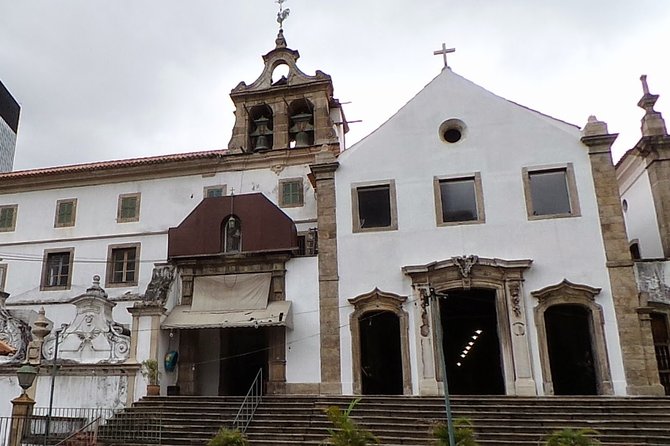
Reviewed · WALKING TOURS
Guided Walk through the Historic Center of Rio DE Janeiro
Rio’s downtown tells stories fast. In about three hours, you get a guided walk that stitches together theater, art, and old religious sites in Rio’s core. I love the small group feel, and I also like that many stops are free to enter, so you spend your time seeing instead of hunting tickets. One thing to plan for, though: a few big-name sights require admission tickets not included.
This is the kind of tour where your guide turns street corners into context. Cesar (mentioned in one of the guides’ experiences) made the whole area click for our group, with clear explanations and answers on how the region’s story ties back to Portuguese colonial times and how Brazil’s identity took shape.
In This Review
- Key highlights
- Starting Point at Cinelândia, and Why This Area Makes Sense
- Your Guide, Group Size, and the Pace That Helps You Learn
- Theatro Municipal: A Theater Facade With Specific, Ridiculous Detail
- Museu Nacional de Belas Artes: What You See Is the 19th-Century Story
- Convento de Santo Antônio: A Colonial Complex With a Real View
- Biblioteca Nacional: UNESCO Scale, and a Stop That Feels Like Brazil’s Mind
- Colombo and Primeiro de Maio: Downtown Street Life and Big Meaning in Small Blocks
- Igreja de Nossa Senhora da Candelária: The Church Stop With Social History
- Price and What You Really Get for $105
- Logistics That Can Make or Break Your Walk
- Should You Book This Historic Center Walk?
- FAQ
- What is the duration of the guided walk?
- How much does the tour cost?
- Where do I meet the guide?
- What language is the tour offered in?
- Is the tour private?
- Do I need a ticket for the tour?
- Are admission tickets included for each stop?
- Which stops are listed as free admission?
- Does the tour run in bad weather?
- What’s included and what’s not included?
Key highlights
- Theatro Municipal’s gilded eagle: a 350 kg eagle with 8,000 gold leaves (23 carats) on the facade
- Eliseu Visconti panel rescue: original details recovered during the theater’s renovation
- Convento de Santo Antônio above Largo da Carioca: a colonial-era Franciscan site on Morro de Santo Antônio
- National Library’s global scale: UNESCO recognizes it among the world’s biggest, and the largest in Latin America
- Old Rua Direita to Primeiro de Maio: a street with a name change tied to the Paraguayan War and Rio’s founding date
More of Rio covered on foot:
- Rio de Janeiro: Rocinha Favela Walking Tour with Local Guide
★ 4.8 · 3,052 reviews - Rio De Janeiro: Half-Day Rocinha Favela Walking Tour
★ 4.7 · 2,272 reviews - 3 Hour Rocinha Favela Walking Tour with a Local Guide
★ 5.0 · 833 reviews - Favela Tour Rio de Janeiro – Vidigal Walking Tour by Russo Guide
★ 5.0 · 377 reviews
Starting Point at Cinelândia, and Why This Area Makes Sense
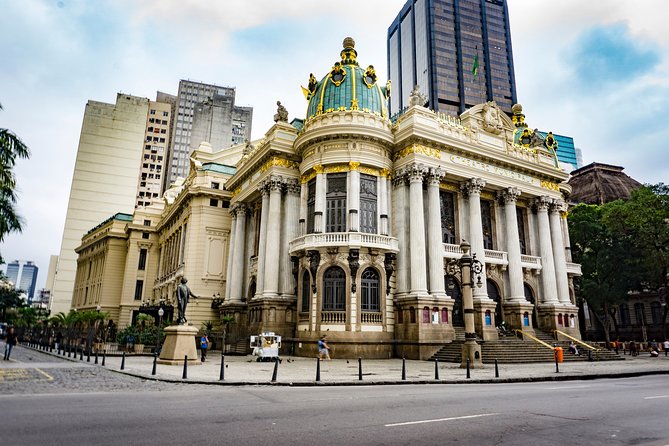
Cinelândia is a good place to begin because it puts you right where Rio’s civic and cultural life has long gathered. You meet at Cinelândia Square in the city center, and the walk stays focused on the historic core rather than spreading you thin across the entire city.
The whole experience runs about 3 hours. The good part is that it feels like a curated stroll, not a sprint, with multiple short stops where you can look up, orient yourself, and ask questions.
Your Guide, Group Size, and the Pace That Helps You Learn
This is a shared tour with a maximum of 15 travelers, so you get conversation without feeling lost in a crowd. The guide is professional and speaks English (and also Spanish and Portuguese), which matters because Rio’s downtown can be a mix of signage, history, and architecture that you miss if you go alone.
I like that the guide doesn’t just point at buildings. In one experience, Cesar was described as friendly and quick with history and context, including how the region’s story developed from Portuguese colony roots. That’s the difference between seeing the downtown and understanding why those places matter.
Timing is also realistic. Each stop is about 20 minutes (with 30 minutes at the National Library), so you’ll have enough time to look around without feeling dragged to the next block.
Theatro Municipal: A Theater Facade With Specific, Ridiculous Detail
Stop one is the Theatro Municipal do Rio de Janeiro, in Cinelândia. Opened in 1909, it’s one of Brazil’s major performing arts venues, and it has the kind of landmark presence that makes people slow down even if they weren’t looking for it.
I love how the tour spotlights renovation highlights rather than only general fame. During recent work, a large original panel by Italian Eliseu Visconti was rescued. And the facade treatment is explained with numbers, not fluff, including the 350 kg eagle perched above the building, covered with 8,000 gold leaves in 23-carat gilding.
The practical catch: admission ticket is not included. So you’ll enjoy the outside and the guide’s framing, but if you want to go inside, you should be ready to pay separately.
Museu Nacional de Belas Artes: What You See Is the 19th-Century Story
Next comes the Museu Nacional de Belas Artes. This museum concentrates a major collection of 19th-century art, and it’s considered one of the most important in its category in Brazil.
The tour time here is short, about 20 minutes, so this is not a full museum day. Instead, you’re getting a guided entry into what kind of collection to focus on, and how the museum fits into Rio’s role as a cultural center.
Like the theater, admission ticket is not included. That means you’ll want to decide in advance if museum entry is worth the extra cost for your group. If you’re more architecture-and-stories focused, you can still get a lot from the context and what the guide points out.
Convento de Santo Antônio: A Colonial Complex With a Real View
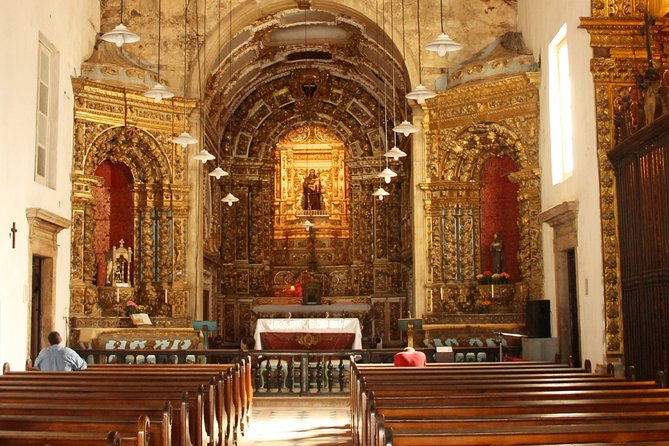
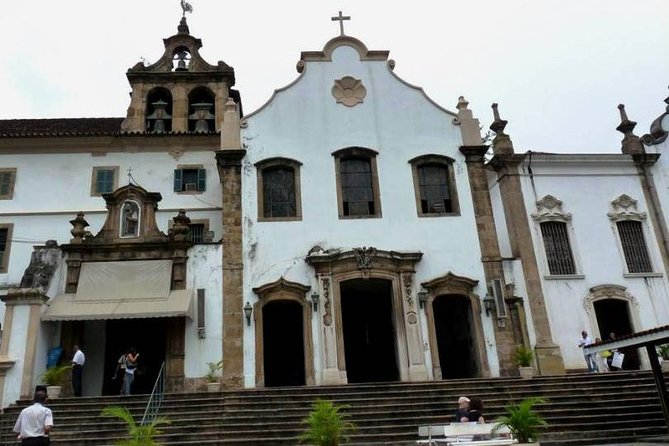
Then you move to the Convento de Santo Antônio, a Franciscan monastery on top of Morro de Santo Antônio and facing Largo da Carioca. This stop is special because it connects a religious site to a specific city viewpoint, so the “where” matters as much as the “what.”
The tour frames it as part of one of the oldest and most important colonial-era groups that still remain in the city. You’re also looking at a broader complex that links with the neighboring Church of the Third Order of São Francisco da Penitência.
Good news for your budget: admission is free here. You still get a guided visit for about 20 minutes, which is long enough to absorb the setting and ask questions without rushing.
One consideration: it’s a monastery and a religious place. Dress and behavior matter. Keep your voice down and treat it like you would a church you visit on purpose.
More of Rio's older story on foot:
- Rio de Janeiro Historical Center Walking Tour★ 4.5 · 336 reviews
- Private Walking and Cultural Tour Rocinha-Rio de Janeiro★ 5.0 · 239 reviews
- Discover Rio Little Africa: A Cultural and Historical Journey★ 5.0 · 238 reviews
- Rio de Janeiro: Historic Rio and Santa Teresa Half-Day Tour★ 4.4 · 228 reviews
- Rio de Janeiro: Little Africa Heritage Walking Tour★ 4.9 · 177 reviews
Biblioteca Nacional: UNESCO Scale, and a Stop That Feels Like Brazil’s Mind
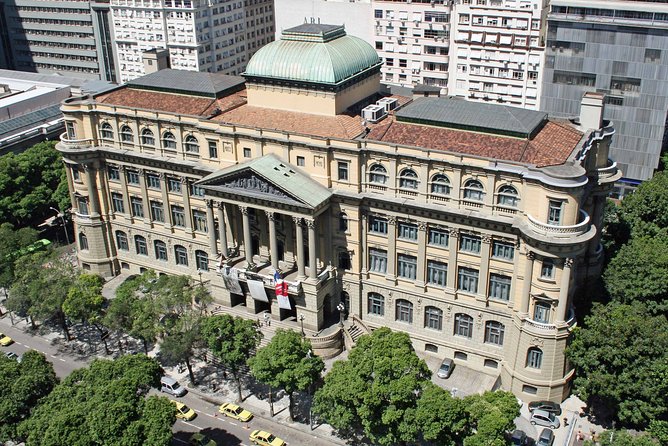
The Biblioteca Nacional (National Library of Brazil) is the one stop in the route where the group pauses a little longer, around 30 minutes. This matters because libraries can feel like a “quick glance” stop on tours, but here you have time to understand why it’s such a big deal.
The library is described as a depository of Brazil’s bibliographic and documentary heritage. UNESCO also recognizes it as one of the ten largest national libraries in the world, and the largest in Latin America.
I like that the guide can explain the significance without turning it into a lecture. You’re not just walking past a building, you’re learning why this institution is a cornerstone for how Brazil remembers itself.
This stop is free. That’s a solid value play in a tour where some headline attractions have separate admission fees.
Colombo and Primeiro de Maio: Downtown Street Life and Big Meaning in Small Blocks
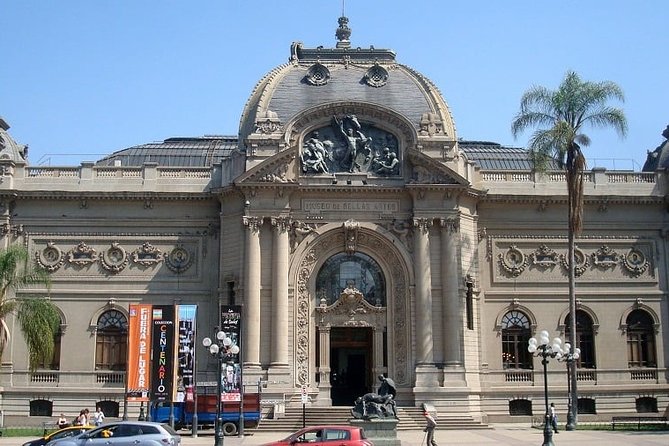
After the library, you reach Colombo (Confeitaria Colombo), a traditional confectionery in the city center and a major tourist point. The tour keeps this to about 20 minutes, so it’s less about shopping and more about using the place as a way to understand downtown Rio as a lived-in space.
Because food and drinks are not included, this is your chance to decide. If you want a snack or coffee, you’ll pay on your own. If you’d rather keep your money for tickets at the paid sights, you can simply enjoy the atmosphere and move on.
Then you hit Primeiro de Maio, known historically as the old Rua Direita, the oldest street in Rio and one of the most important in the 19th century. The tour connects the street’s original role linking Largo da Misericórdia to Morro de São Bento to why it later changed names.
In 1875, it became March 1 (Primeiro de Maio), honoring a victory in the Battle of Aquidabã that ended the Paraguayan War. The guide also ties it to a coincidence that March 1 is the date of Rio’s founding.
This is free, and the value is in perspective. One street can teach you how dates, wars, and politics shaped everyday city planning.
Igreja de Nossa Senhora da Candelária: The Church Stop With Social History
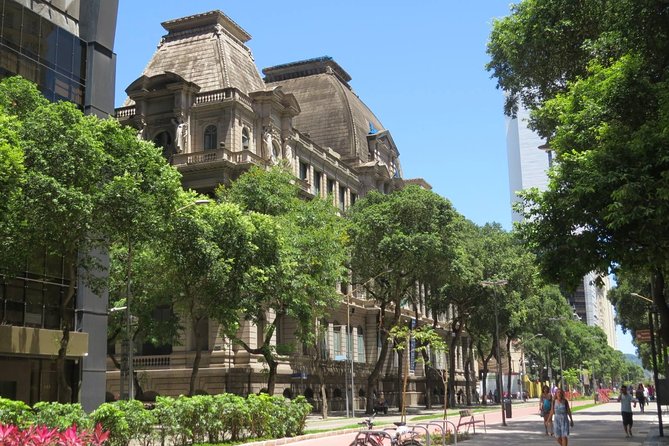
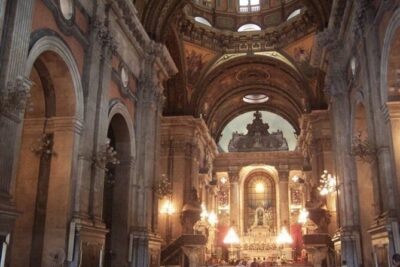
The final major stop is the Church of Our Lady of the Candelária (Nossa Senhora da Candelária). It’s a central religious monument in downtown Rio and a traditional stage for weddings in Rio society.
This is about 20 minutes on the tour. I appreciate that the guide explains why people show up for this church, not only for faith but also for life milestones that connect the building to social traditions.
As with some other sites, admission ticket is not included. You’ll likely focus on the exterior and guided context during your time, unless you choose to pay for entry separately.
Price and What You Really Get for $105
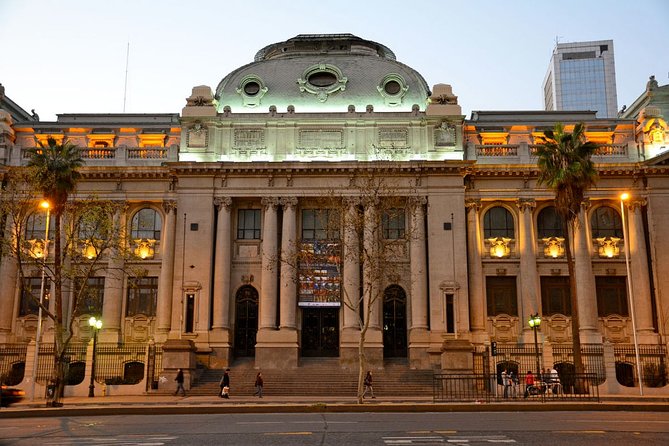
At $105 per person, the biggest question is value: are you paying for a walk with context, or for tickets and attractions?
Here’s the balanced answer. You’re paying for a professional bilingual guide and the time-savings and sense-making that comes with guided downtown navigation. The tour lasts about 3 hours, runs with a mobile ticket, and includes stops that are both iconic and instructive.
Cost-sensitive travelers should also know this: multiple stops are free to enter (Convento de Santo Antônio, Biblioteca Nacional, Colombo, and Primeiro de Maio). That helps offset the fact that some major buildings have admission not included (Theatro Municipal, Museu Nacional de Belas Artes, and Candelária).
So the smartest budgeting move is simple. Set aside extra money for any paid entry you want, and go into the free stops ready to enjoy explanations and viewpoints.
Logistics That Can Make or Break Your Walk
This tour runs rain or shine, and your pickup time is confirmed the day before by WhatsApp or the booking platform. That matters in a city center where schedules can shift due to traffic and how groups gather.
You also get flexibility in coordination. On busy days, the operator may use a specific meeting point to reduce waiting caused by traffic. Read the pickup note carefully so you don’t arrive at the wrong corner and start the day irritated.
Group size stays reasonable, with a maximum of 15. You’ll want comfortable shoes, because even though each stop is short, downtown walking adds up.
Should You Book This Historic Center Walk?
I’d book this tour if you want a guided path through the pieces of downtown Rio that connect culture, religion, and street-level history in a single compact morning or afternoon. It’s a good fit for couples, families, and anyone who likes to understand what they’re looking at, not just take photos.
Skip or consider your priorities if you’re trying to pack in paid museum and interior tours. Because ticket entry is not included for several headliners, your final “all-in” cost depends on how many interiors you decide are worth it.
If you’re the type who enjoys learning from a friendly guide like Cesar, who can connect Portuguese colonial roots to how Brazil evolved, you’ll likely feel like the downtown makes sense by the end of the walk.
FAQ
What is the duration of the guided walk?
The tour lasts about 3 hours.
How much does the tour cost?
The price is $105.00 per person.
Where do I meet the guide?
The meeting point is Cinelândia Square, Centro, Rio de Janeiro.
What language is the tour offered in?
The tour is offered in English, and the guide also speaks Spanish and Portuguese.
Is the tour private?
No. It is shared and not private, with a maximum group size of 15 travelers.
Do I need a ticket for the tour?
You receive a mobile ticket.
Are admission tickets included for each stop?
No. Admission tickets are not included for some stops, including the Theatro Municipal, Museu Nacional de Belas Artes, and the Church of Our Lady of the Candelária. Some stops are free to enter.
Which stops are listed as free admission?
Convent of St. Anthony, Biblioteca Nacional, Colombo, and Primeiro de Maio are listed as free admission.
Does the tour run in bad weather?
Yes, the tour does rain or shine. The day of the tour is chosen by the customer, and they state they will do the tour rain or shine.
What’s included and what’s not included?
Included: a professional bilingual tour guide. Not included: food and drinks and private transportation.
Recently added around Rio




Walking Tours, compared.



3 Hour Rocinha Favela Walking Tour with a Local Guide
Read our review →
Favela Tour Rio de Janeiro – Vidigal Walking Tour by Russo Guide
Read our review →

Private Walking and Cultural Tour Rocinha-Rio de Janeiro
Read our review →

Sunrise and Sunrise Walk Two Brothers with Local Guide
Read our review →More of this kind of Rio day