
Reviewed · WALKING TOURS
African Heritage and Docks Walking Tour
Rio’s story is written in its streets.
This African Heritage and Docks walking tour connects you to everyday Rio culture, then anchors it in the Afro-Brazilian history tied to the old port area. I like the way the stops are free to enter and paced to fit a 2.5 hour walk, so you are not stuck racing between paid attractions.
Two things I especially like: you get a richer look at Rio society than on the usual checklist tours, and the route focuses on African heritage in places many visitors skip. One consideration: this is a private walking experience, so if your group is small, the per-person value depends on how much you want a guide and how fast you can cover short stops.
In This Review
- Key highlights you should care about
- Why this Rio walking route feels different
- A quick value reality check on the price
- Before you go: what your 2.5 hours actually includes
- Private tour, so plan for your group vibe
- Start at Praça XV and set your bearings fast
- Boulevard Olímpico: Olympics-era corridor with a colonial port past
- Mauá Square: port-adjacent culture and modern institutions nearby
- Igreja de São Francisco da Prainha: where a buried beach becomes nightlife
- Pedra do Sal: Carnaval roots and Afro-religious spread
- Cais do Valongo: the docks where enslaved Africans arrived
- The optional Instituto dos Pretos Novos visit, and what it means for your budget
- What makes it feel personal, not just educational
- Who this tour suits best
- Should you book the African Heritage and Docks tour?
- FAQ
- How long is the African Heritage and Docks walking tour?
- How much does it cost?
- Is the tour in English?
- Are tickets included for the main stops?
- Where does the tour start and end?
- What time is Cais do Valongo open?
- Is transportation included?
- Is this tour private?
- Can I cancel for a full refund?
Key highlights you should care about
- Afro-Brazilian focus across multiple historic port sites
- Free admission at every listed stop, including Cais do Valongo
- A private tour format, so the pace can feel personal to your group
- Olympics-era Boulevard Olímpico meets colonial port history
- End at Cais do Valongo, a central place for the story of enslaved arrivals
More of Rio covered on foot:
- Rio de Janeiro: Rocinha Favela Walking Tour with Local Guide
★ 4.8 · 3,052 reviews - Rio De Janeiro: Half-Day Rocinha Favela Walking Tour
★ 4.7 · 2,272 reviews - 3 Hour Rocinha Favela Walking Tour with a Local Guide
★ 5.0 · 833 reviews - Favela Tour Rio de Janeiro – Vidigal Walking Tour by Russo Guide
★ 5.0 · 377 reviews
Why this Rio walking route feels different
Rio is loud, photogenic, and huge. Most tours skim the postcard version and move on. This one slows down just enough to show you how Rio’s port neighborhoods helped shape modern Brazilian culture, especially Afro-Brazilian traditions.
I like that the guide angle is not just facts on a signboard. If your guide is Rômulo, for example, you are likely to get that rare combination of clear explanations and visible pride for the city. That matters, because you do not only want to know what happened, you want to understand what it meant and how people live with that legacy now.
A quick value reality check on the price
At $49.05 per person for about 2 hours 30 minutes, you are paying for a local guide and a smart route, not for a pile of ticketed attractions. Since the listed stops have free admission, your money goes to interpretation and timing.
Also, the tour is booked about 36 days in advance on average. That hints it is a popular way to experience this part of Rio without getting lost in it. If your dates are fixed, don’t wait too long.
Before you go: what your 2.5 hours actually includes
This is a walking tour with a guide, offered in English, and designed for most travelers. You get a mobile ticket, and the meeting point is Praça Quinze de Novembro in Centro, near the Estátua do General Osorio.
The itinerary runs through five major stops, each with a set time allotment. That structure is useful. You are not guessing how long to linger, and the guide can keep the story coherent instead of letting the walk turn into a series of quick photo stops.
Private tour, so plan for your group vibe
The tour is private, meaning only your group participates. That usually makes the experience calmer and more flexible. If your group has different interests, you can generally ask follow-up questions instead of competing with a larger crowd.
A small caution though: private does not always mean shorter waits. If you want the most comfortable experience, show up a few minutes early and be ready to walk steadily between stops.
Start at Praça XV and set your bearings fast
Your tour begins at Praça Quinze de Novembro – Centro, Rio de Janeiro, by the Estátua do General Osorio, with the historic Praça XV area as the staging point.
This is a good starting choice. Praça XV sits right in the port-side story you will spend the rest of the walk unpacking. Getting the map in your head early helps. You’ll understand why later stops feel connected rather than random.
If you are using public transportation, this area is convenient. You are also in the central part of Rio where you can easily grab a snack or a drink before the tour, since food and drinks are not included.
More of Rio's older story on foot:
- Rio de Janeiro Historical Center Walking Tour★ 4.5 · 336 reviews
- Private Walking and Cultural Tour Rocinha-Rio de Janeiro★ 5.0 · 239 reviews
- Discover Rio Little Africa: A Cultural and Historical Journey★ 5.0 · 238 reviews
- Rio de Janeiro: Historic Rio and Santa Teresa Half-Day Tour★ 4.4 · 228 reviews
- Rio de Janeiro: Little Africa Heritage Walking Tour★ 4.9 · 177 reviews
Boulevard Olímpico: Olympics-era corridor with a colonial port past
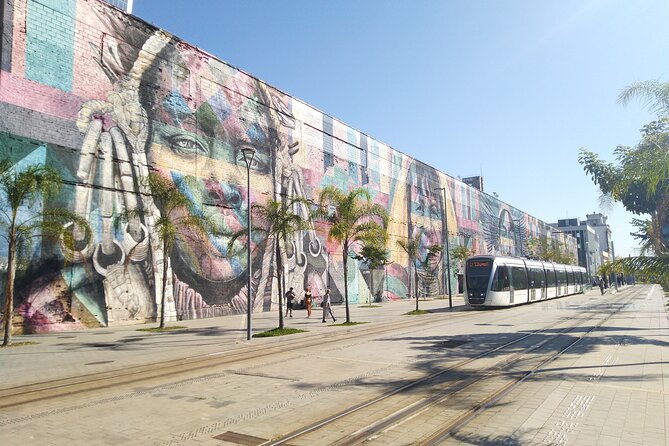
Stop 1 is Boulevard Olímpico. The key idea here is change over time. The corridor was built for the Olympics, but it occupies space where the old port area existed in colonial times.
Why this matters: it reminds you that cities do not “freeze” history in place. Space gets repurposed. Even when buildings disappear, routes, labor zones, and migration patterns can leave a long imprint on a neighborhood.
You also get about 30 minutes here, with free admission. That is enough time for context without turning it into a long lecture.
A practical tip: if you want photos, this is a strong area for shots that show both modern Rio and older layers of place. Aim for angles that include street lines and the sense of “corridor,” not just one landmark.
Mauá Square: port-adjacent culture and modern institutions nearby
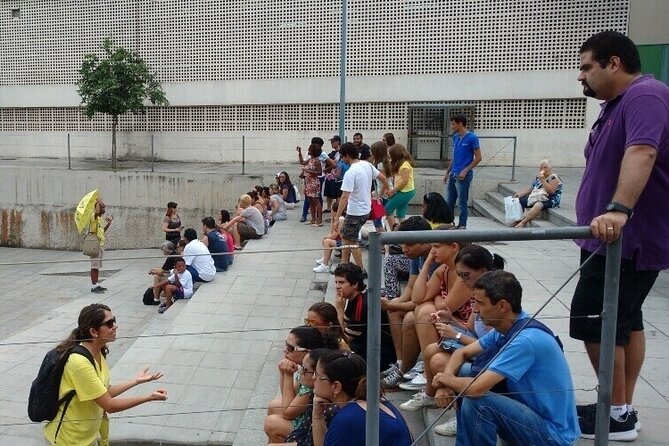
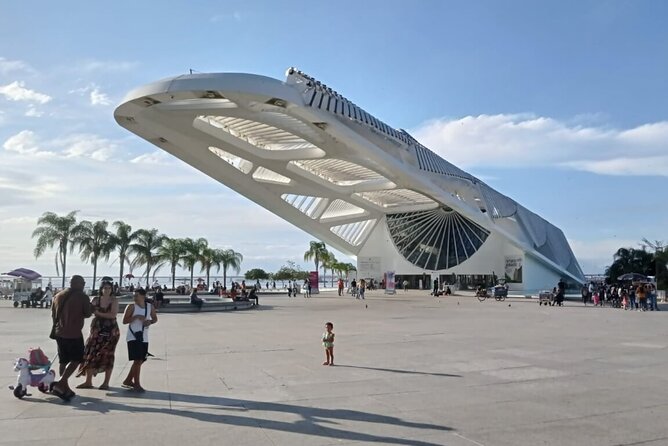
Stop 2 is Mauá Square, about 20 minutes, free to enter. It sits next to the Port and is near two modern cultural sites: the Museum of Tomorrow and the Rio Art Museum.
This stop adds contrast. You can walk from the port story and then look at the kind of public culture Rio builds today. It is a good mental shift, because Afro-Brazilian history is not only about the past. It is also about how modern Brazil carries culture forward through institutions, art, and public spaces.
What to watch for: how your understanding changes. After the first stop, you may interpret the square as “just another waterfront area.” After the guide’s framing, you will likely see it as a hinge point between older port activity and newer public life.
Igreja de São Francisco da Prainha: where a buried beach becomes nightlife
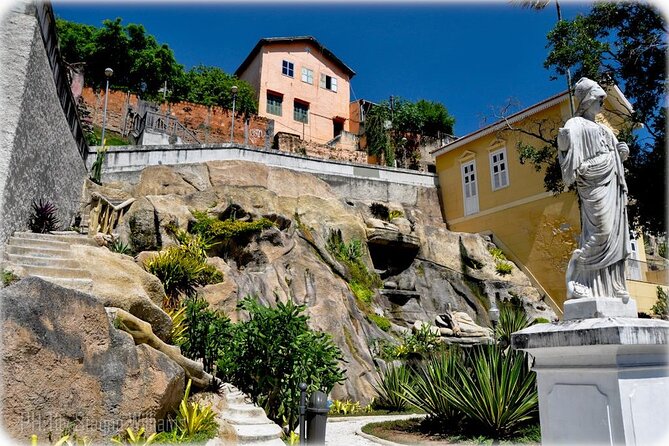
Stop 3 is Igreja de São Francisco da Prainha, around 20 minutes, free. The area was a former beach that was later buried, and it is now known as a stronghold of local bars.
This is one of those moments where Rio’s layered past shows up in plain sight. Even without deep reading, you can feel how people use the space now. The guide’s job is to connect that present-day social energy to the older geography of the area.
Why it is valuable: it prevents Afro-Brazilian history from becoming only “sad history.” Culture also means gathering, music, and late-night city life. You are looking at continuity, not just rupture.
Potential drawback: bars and nightlife are not included, and this stop is short. So don’t expect a party scene on the tour. Just use it as a context stop, and if you want to continue afterward, ask the guide for suggestions.
Pedra do Sal: Carnaval roots and Afro-religious spread
Stop 4 is Pedra do Sal, about 15 minutes, free. This is a historic site where Carnaval and some African religions began to spread.
That sentence is doing a lot of work. Carnaval is often treated like pure spectacle. Here, you get a lens that connects performance traditions to community identity and spiritual practice. The guide framing is the difference between seeing Carnaval as one more annual event and understanding it as a cultural system with deep roots.
Since this stop is brief, your best move is to listen closely and take notes. If you later visit the area on your own, you’ll know what to look for, and you will not miss the reason this spot matters.
Cais do Valongo: the docks where enslaved Africans arrived
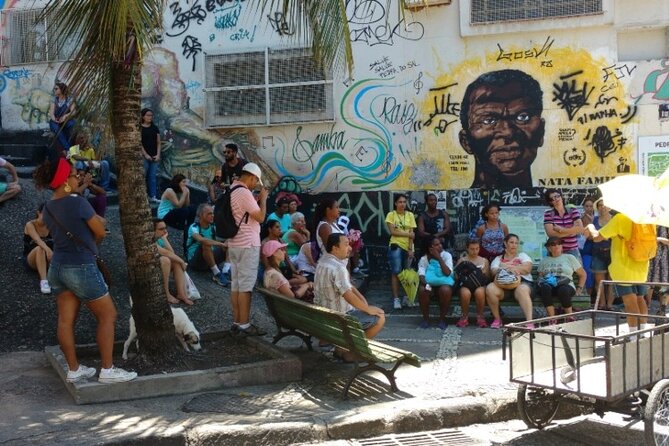
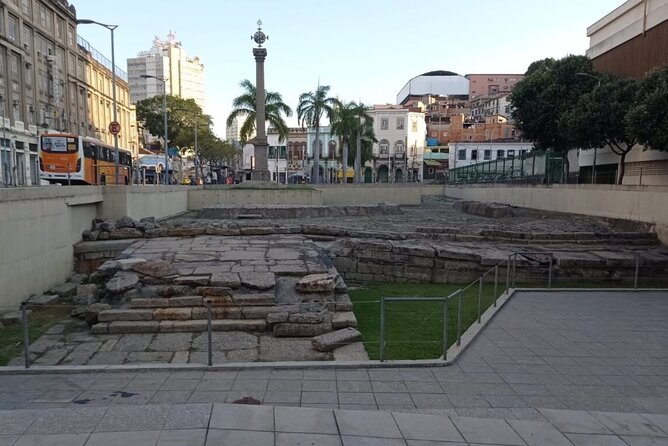
Stop 5 is Cais do Valongo, about 20 minutes, free. This is the docks where African slaves used to arrive in the 1800s.
This is the anchor of the whole tour. It is also the part where the guide’s tone matters. You are not being asked to “speed through” the story. You are given time to understand what happened in this place and why it is still central to how people talk about Afro-Brazilian heritage in Rio.
You end at Cais do Valongo at Av. Barão de Tefé – Saúde, Rio de Janeiro, RJ 20220-460. The site opening hours are listed as Monday through Saturday, 9:30 AM to 1:30 PM, so timing matters if you plan extra time before or after.
Practical advice: since your tour ends here, plan your next step nearby. This area can be convenient if you are pairing it with other port-side sights, but it is not a “hop on the next street for a random café” situation unless you do a little planning.
The optional Instituto dos Pretos Novos visit, and what it means for your budget
Tickets are not included for an optional visit to Instituto dos Pretos Novos. That tells you the tour is built as a base route with a clear upgrade path if you want more depth.
If you are the kind of traveler who loves museums, bring some extra budget for that add-on. If you prefer walking and conversation over indoor exhibits, you might skip it and still get a strong experience from the five free stops.
The best value approach I’d use: do the main walk, then decide right after the tour if you want to spend more time with the subject. The guide can usually help you judge whether that extra stop fits your interests.
What makes it feel personal, not just educational
Education matters most when it changes how you see the city next. This tour is designed around that idea. You start in a central square, move through repurposed space, then land at a dock that holds real weight.
The guide is included, and the tour is private, so your questions do not get swallowed by a large group. If your group includes someone who asks “why does this matter?” they will get a real answer. If someone else prefers a lighter pace, the guide can often steer the conversation to match.
One more detail I really like for comfort: service animals are allowed, and the tour is near public transportation. That makes it easier to fit into a full Rio day without complicated logistics.
Who this tour suits best
This tour is a strong match if you want:
- A focused introduction to Afro-Brazilian culture tied directly to Rio’s port story
- A guided route that avoids turning Rio into a scavenger hunt
- A shorter commitment that still feels meaningful, since it lasts about 2 hours 30 minutes
If your priority is high-volume sightseeing, this might feel too short and too story-driven. But if you want substance, and you like walking in one coherent area, it works.
It is also a smart pick for travelers who want to understand Rio beyond beaches and viewpoints. The port districts are not always on the first-page itinerary, but they explain a lot.
Should you book the African Heritage and Docks tour?
I’d book it if you want a guided walk that connects place, culture, and history without wasting time on ticketed detours. The value is strong because the listed stops have free admission, and the guide experience is the real product.
Skip it or consider another option if you dislike walking for extended stretches or you only want “lighter” sightseeing. Also think about the optional Instituto dos Pretos Novos, since the main tour covers the core route, but you may want to budget if you want that extra museum time.
If you are curious about Rio’s African heritage and how it shows up in culture, this tour is a very practical way to get there.
FAQ
How long is the African Heritage and Docks walking tour?
It lasts about 2 hours 30 minutes.
How much does it cost?
The price is $49.05 per person.
Is the tour in English?
Yes, it is offered in English.
Are tickets included for the main stops?
Admission tickets for the listed stops are free, but tickets for the optional visit to Instituto dos Pretos Novos are not included.
Where does the tour start and end?
It starts at Praça Quinze de Novembro – Centro (near Estátua do General Osorio) and ends at Cais do Valongo on Av. Barão de Tefé – Saúde.
What time is Cais do Valongo open?
The listed opening hours are Monday through Saturday, 9:30 AM to 1:30 PM (for the dates shown).
Is transportation included?
No, transportation is not included.
Is this tour private?
Yes, it is a private tour or activity, and only your group participates.
Can I cancel for a full refund?
Yes. You can cancel up to 24 hours in advance for a full refund. If you cancel less than 24 hours before the experience starts, the amount paid is not refunded.
Recently added around Rio

Walking Tours, compared.

3 Hour Rocinha Favela Walking Tour with a Local Guide
Read our review →
Favela Tour Rio de Janeiro – Vidigal Walking Tour by Russo Guide
Read our review →
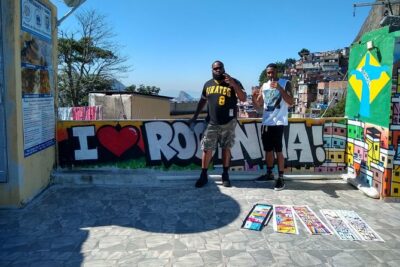
Private Walking and Cultural Tour Rocinha-Rio de Janeiro
Read our review →

Sunrise and Sunrise Walk Two Brothers with Local Guide
Read our review →More of this kind of Rio day