
Reviewed · CYCLING TOURS
Rio Rainforest Ride An Unforgettable Mountain Bike Tour
Upgrading Rio with pedal power. This Rio de Janeiro mountain bike tour pairs city history with the Tijuca rainforest and some of the best lookouts in town. I especially like the views from Mirante Dona Marta plus the fact that the most scenic cycling happens on a road closed to private cars, so you can focus on the ride. One real consideration, though, is that the route is mostly climbing uphill for long stretches, so you need solid fitness.
You start in Cosme Velho, then work your way toward Rio’s green spine while your guide, Michael, keeps the group moving and explains things clearly. The tour is capped at a maximum of 6 people, which matters because it keeps the pace human and the stops actually useful.
This is also an outdoors-first experience. If you do not enjoy being outside, or you have trouble with sustained uphill effort, skip it.
In This Review
- Key highlights before you ride
- Why this Rio mountain bike ride feels different
- Where you meet and how the first 30 minutes set the tone
- Stop for Machado de Assis vibes and the Carioca River origin
- Mirante Dona Marta viewpoint break at the steepest moment
- Paineiras visitors centre and the Christ the Redeemer museum area
- The Tijuca National Park stretch you’ll remember
- Price and what $70.57 really buys you
- Who this tour fits (and who should pass)
- What to bring so the uphill stays fun
- Guide and equipment: the small details that matter
- Should you book Rio Rainforest Ride?
Key highlights before you ride
- Small group of 6 keeps the pace comfortable and the guide easier to hear
- Mirante Dona Marta gives you one of Rio’s classic payoff views after the steep climb
- Paineiras visitors centre connects cycling routes with the Christ the Redeemer area and its museum
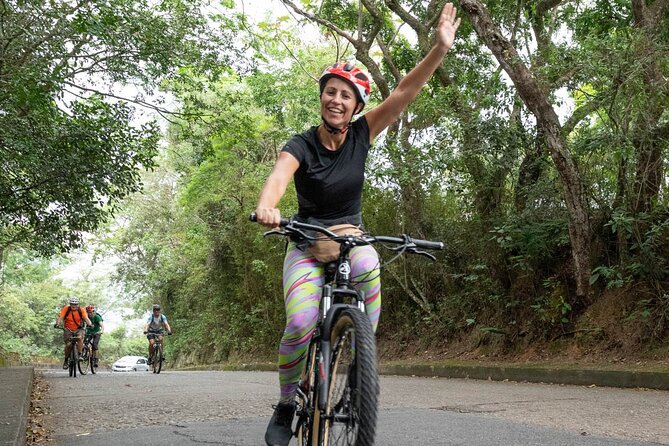
- Car-free Redentor Road cycling means you get rainforest vibes without weaving through private traffic
- Helmet and well-kept mountain bikes are part of the deal, so you can show up and ride
- Short, stop-and-stretch breaks (15 to 25 minutes) help you reset during the climb
A few more Rio outings to weigh up
- Small-Group Panoramic Bike Tour in Rio de Janeiro
★ 5.0 · 153 reviews - Rio de Janeiro: Guided Bike Tours in Small Groups
★ 4.5 · 133 reviews - E-Bike Tour: Local Guide, Historic Center to Ipanema
★ 5.0 · 76 reviews - Half Day Private E-Bike Tour in Rio
★ 5.0 · 50 reviews
Why this Rio mountain bike ride feels different
Most Rio tours do the same loop of famous sights, then you’re back in a car again. This one is built around movement, and you feel the change in altitude as you go. You start near Cosme Velho, then you climb toward the Christ the Redeemer area and finish in Parque Nacional da Tijuca, where you’ll cycle through the kind of greenery that makes Rio look almost impossible.
What I like is the mix of payoff types. You get viewpoint scenery, yes. But you also get a practical nature experience because the Tijuca section is part of a national park ride where the road is closed to private cars. That single detail changes the whole feel. You can relax your shoulders, listen to the surroundings, and enjoy the road instead of scanning nonstop for traffic.
You also get a few short history touchpoints without turning the day into a lecture. You’ll pause in spots that connect local identity to place names and water sources. The tour keeps those moments brief so you can keep riding while still feeling like you understood what you were seeing.
Where you meet and how the first 30 minutes set the tone
The ride meets at Ladeira dos Guararapes, 33, Cosme Velho, Rio de Janeiro, RJ 22241-220. It ends back at the same meeting point, which keeps logistics simple. It’s also described as near public transportation, which is a big plus in Rio when you want flexibility.
In the first stretch, you’re not just warming up your legs. You’re getting the geographic frame. Cosme Velho is known for a mix of old neighborhoods and stately homes, and it connects to one of Brazil’s major literary figures, Machado de Assis. That background matters because it gives you a sense that you’re not only riding through a park, you’re cycling through layers of the city.
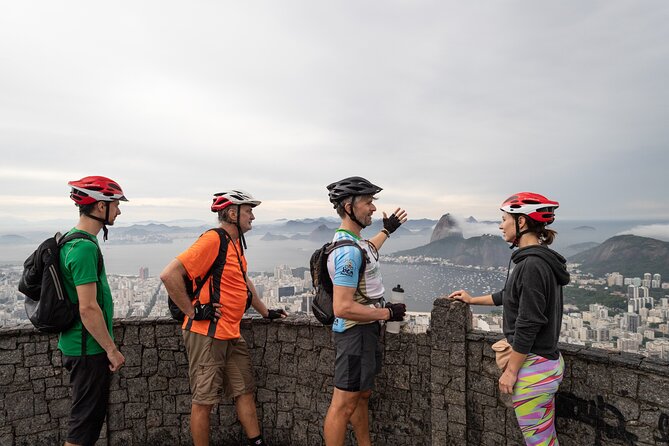
If you’re less experienced with biking, the small group size helps. With only up to 6 travelers, your guide can keep track of how everyone is doing and slow down when needed. That also makes the early pace easier to manage, since you’re not stuck in a big group where nobody wants to stop.
Tip: wear shoes you trust. You’ll be climbing uphill for much of the ride, so comfort and grip matter more than you think.
Stop for Machado de Assis vibes and the Carioca River origin
One of the most interesting early stops is a historic neighborhood that links orange groves, country homes, and Machado de Assis. Even if you are not a literature buff, this kind of stop does something useful: it changes how you look at a neighborhood. You start noticing why certain streets feel like they belong to Rio’s older identity, not just a modern city map.
Right after that, you head to Caixa da Mãe D’água (Rio Carioca). This is where you meet the Carioca River conceptually and historically, since it was the main water source for Rio in its early days. The river is part of why the people of Rio call themselves Cariocas. It’s a quick stop, around 15 minutes, and admission is free.
What this gives you as a rider is context. When you later see the rainforest section, you’re not just thinking green scenery. You remember that this area’s relationship with water and survival has shaped Rio for centuries. It’s also the kind of pause that helps you catch your breath before the climb intensifies.
Mirante Dona Marta viewpoint break at the steepest moment
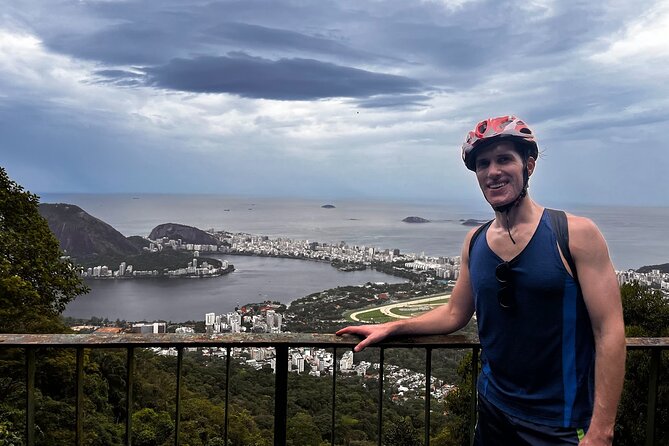
The ride’s standout viewpoint stop is Mirante Dona Marta. It’s timed for about 20 minutes, and it includes a rest moment right at the top of the steepest climb. That matters because the timing is intentional: you get a breather when you most need one, then you get your payoff.
You’ll likely feel the difference right as you arrive. Instead of pushing through exhaustion, you can stop, take photos, and take in the view. Mirante Dona Marta is known as one of Rio’s best lookouts, and the tour builds it into the route when you’re already earning it.
Admission is free here too, which keeps the experience focused on the ride and the scenery instead of fees.
Practical advice: if you’re the type to rush to get the perfect photo, slow down a bit. Use the rest to fully reset your legs and breathe evenly before you remount.
Paineiras visitors centre and the Christ the Redeemer museum area
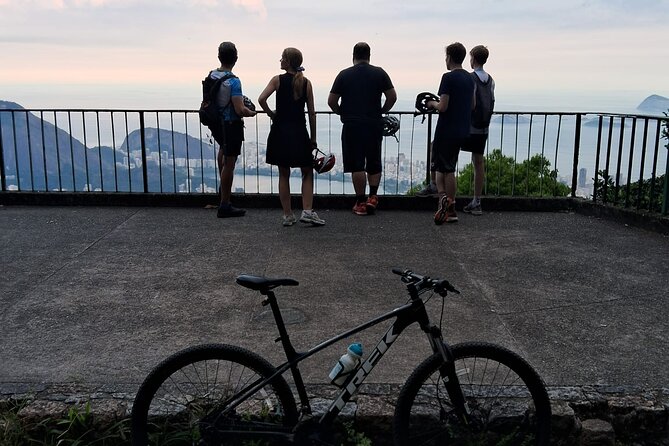
Next comes Centro De Visitantes Paineiras, about 25 minutes. It’s located at the base of Christ the Redeemer and includes a lookout plus time to grab a drink or snack. The centre also houses a museum that covers the history of the area, including Christ the Redeemer and the funicular railway used to reach it.
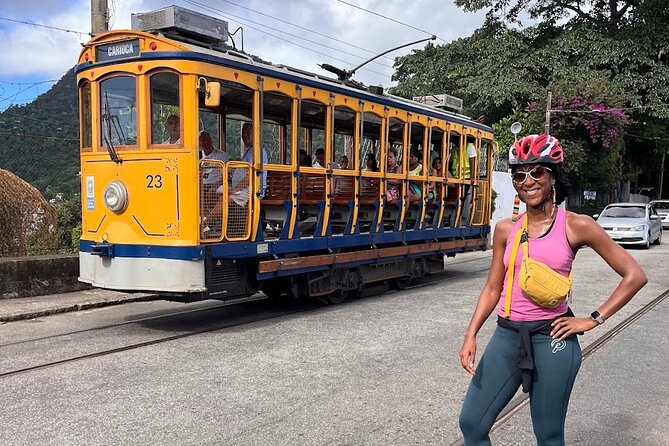
This stop is valuable because it bridges two sides of your day. You’re cycling through nature, but you’re also cycling through Rio’s most famous hill experience. The museum context helps you connect what you see from the bike to what created access in the first place, especially the funicular railway.
Admission is free. That means you can spend your time inside based on your interest level, not on whether your ticket budget allows it.
If you want maximum value from this stop, do two things. First, take advantage of the chance to drink and eat, since you’ll likely need energy for the Tijuca stretch. Second, use the museum area to understand what’s around you, even if you only scan the highlights.
If this one is full, Rio has these as well:
- Rio de Janeiro: 6-Stop Highlights of Rio with Lunch★ 4.4 · 5,157 reviews
- Christ the Redeemer Entry Ticket by Corcovado Train★ 4.4 · 4,476 reviews
- Rio’s City Tour – Tickets for Christ, Sugar Loaf & Lunch included★ 5.0 · 4,389 reviews
- Full Day: Christ Redeemer, Sugarloaf, City Tour & Barbecue Lunch★ 4.5 · 3,142 reviews
- Rio de Janeiro: Rocinha Favela Walking Tour with Local Guide★ 4.8 · 3,052 reviews
The Tijuca National Park stretch you’ll remember
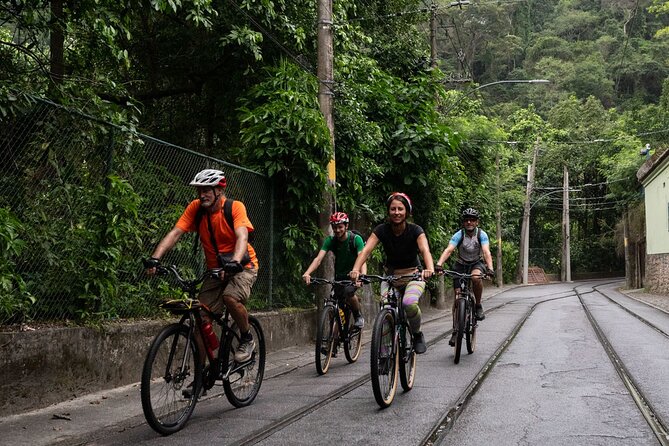
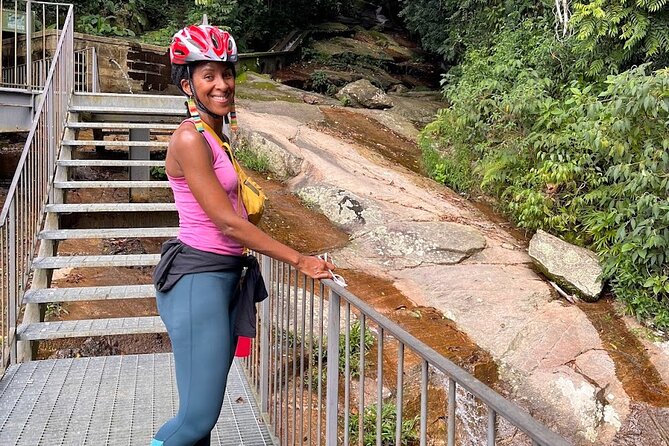
The core riding moment is Parque Nacional da Tijuca, where you enter the Redentor Road for some of the most amazing cycling of any city route. This is the section where you get spectacular views, roadside waterfalls, and the possibility of forest animals passing by if you’re lucky.
The tour gives you about 1 hour here, and the big reason it feels special is the road rule. The section is closed to private cars, so you can relax. You’re still working hard on a bike, but you’re not dealing with constant traffic stress. It changes the rhythm from commuting to experiencing.
It’s also described as part of one of the world’s biggest urban rainforests. Even if you know the facts, it hits differently when you’re riding through it. The forest breaks up sound, shades the road, and gives you that sense that the city has slipped into something wilder.
What to watch for while you ride:
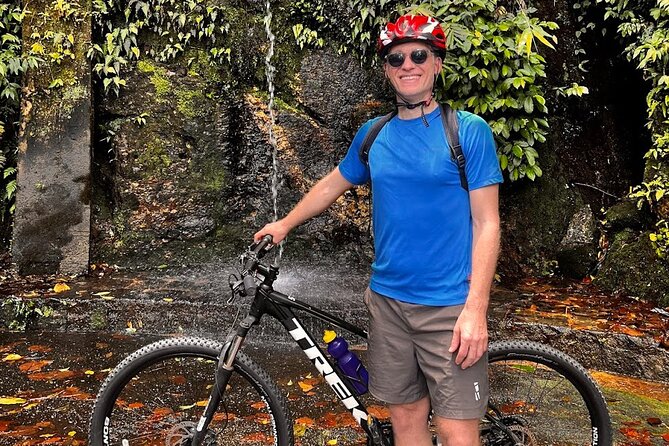
- Waterfalls along the roadside when the route opens up
- Tree shade changes, which can make the pace feel easier or harder
- Any animal movement at the edges of the road or just off the path
You might not see animals, and that’s fine. The value is that you are riding through genuine protected-green space while still connected to Rio’s view points.
Price and what $70.57 really buys you
At about $70.57 per person, this is not a budget add-on. But it does look like good value for what you get: a guided half-day style cycling experience, multiple planned stops, and bikes and helmets that are in great condition.
Here’s what makes the price feel more fair than it first appears:
- You’re riding for roughly 3 hours 30 minutes, not just doing a quick sampler
- You get a guide who helps with pacing and explanations (Michael gets specific praise for being kind and communicative)
- The ride includes multiple meaningful stops, including free-entry viewpoint and visitors centre time
- The route includes protected natural scenery in Tijuca, which is a huge chunk of the experience
The other part of value is group size. Maximum 6 travelers makes it easier to get individual attention and adjust pace if you are not used to steep climbs.
Bottom line: if you are fit enough to enjoy the uphill, you’ll feel like you paid for time outside plus real scenery. If you’re not, you’ll pay for a struggle.
Who this tour fits (and who should pass)
You should seriously consider this ride if you want a Rio de Janeiro experience that’s not just photo stops. I love tours that mix city context with active time in nature. This one gives you that, and it’s built around views, rainforest cycling, and short historic pauses.
It’s best for:
- People who ride bikes at least semi-regularly
- Travelers who enjoy outdoors time and don’t mind effort
- Anyone who wants a small-group guide experience, not a crowded bus vibe
It’s not a great match if you:
- Are in poor physical condition, or not used to steady climbing
- Don’t enjoy being outdoors for several hours
- Get uncomfortable with long uphill effort, because most of the ride time is climbing uphill
This is also a strong choice if you like having a guide who pays attention to the group. In practice, that makes a huge difference when you’re riding uphill and trying to keep a consistent rhythm.
What to bring so the uphill stays fun
The tour description calls for strong physical fitness, and the reviews back up that it is a challenge. So plan like you’re going to work.
I recommend you come prepared with:
- Comfortable cycling shoes or supportive sneakers with grip
- Water, even if you plan to grab a snack at Paineiras
- Sunscreen and a hat, because you’re exposed during parts of the climb and viewpoints
- A light layer you can manage, since conditions can change near the park
A small but important mental tip: don’t treat the ride like a race. Use the planned rest at Mirante Dona Marta to reset. Then settle into a steady effort for the Tijuca stretch.
Also, check your comfort with biking on uneven surfaces. You’ll be on roads in the park zone, but it’s still an outdoors ride, not a flat bike path.
Guide and equipment: the small details that matter
The best thing about a guided biking tour is not just the route. It’s whether you feel supported while you ride. Michael, the guide mentioned in feedback, is described as kind, helpful, and communicative. That matters because clear directions keep you from wasting energy and stress during climbs.
Equipment is also a core value here. The bikes are described as well maintained, basically like as-good-as-new condition, and helmets are provided. That means you can focus on enjoying the scenery and not worrying about basic safety or fit.
When you book a small group tour, you want consistency. You’ll likely get it here, because max 6 people also means the operator can manage equipment and pacing better.
Should you book Rio Rainforest Ride?
Book it if you want a Rio de Janeiro mountain bike tour that mixes city identity, classic viewpoints, and real rainforest riding on a car-free park road. If you like active sightseeing and you know how to handle uphill effort, this is the kind of day that becomes a story you keep telling.
Skip it if you’re expecting a casual downhill cruise. This ride leans hard into climbing, and you should treat the fitness requirement seriously. If the idea of long uphill biking makes you nervous, pick an easier Rio day instead.
One final decision helper: ask yourself whether you want your Rio highlight to be movement plus scenery. If yes, this tour fits. If you want maximum comfort with minimum exertion, it’s not the right match.
Recently added around Rio




Cycling Tours, compared.
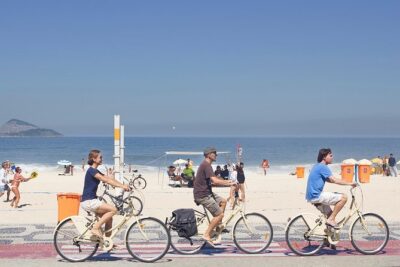
Small-Group Panoramic Bike Tour in Rio de Janeiro
Read our review →
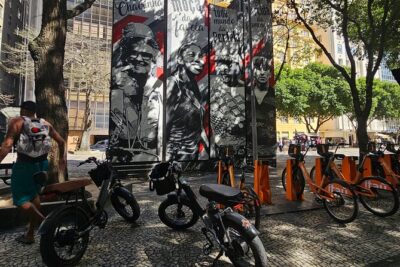
E-Bike Tour: Local Guide, Historic Center to Ipanema
Read our review →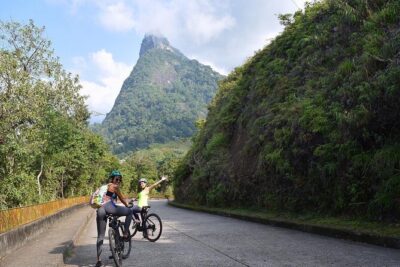
Small-Group Urban Bike Tour in Rio de Janeiro
Read our review →
Small-Group Ultimate Bike Tour from Rio de Janeiro
Read our review →
Rio Bike Tour – Discover the Beaches and Lagoon
Read our review →More of this kind of Rio day