
Reviewed · WALKING TOURS
Rio de Janeiro: Bossa Nova Walking Tour with Guide
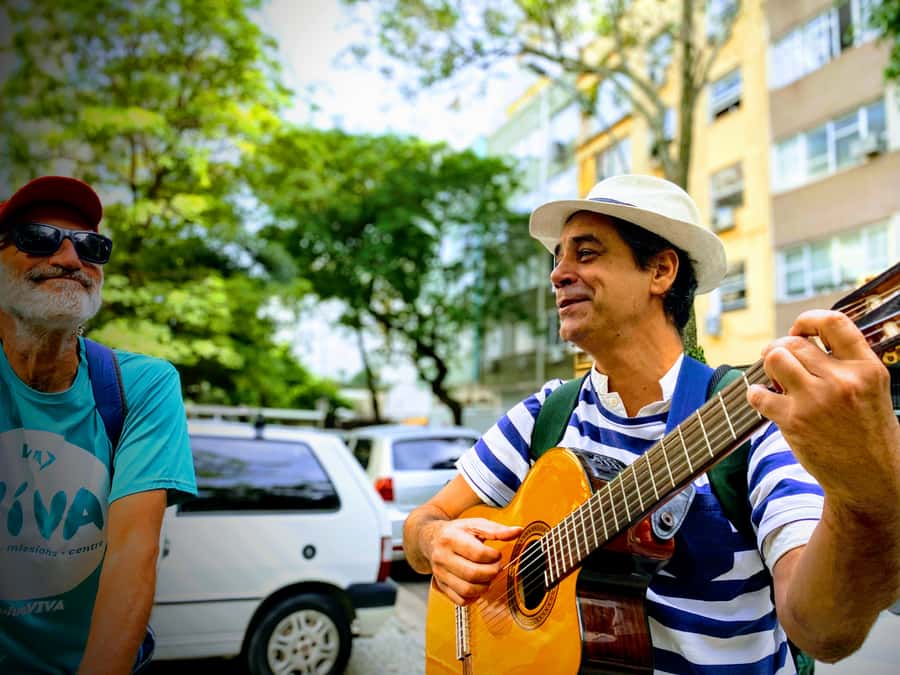
Bossa Nova sounds better on the sidewalk. I love the live music moments built into the route and the way the guide turns Ipanema and Copacabana streets into a real timeline, but one small drawback is the performances are short, not a full concert. The best part is how smoothly the story and the guitar come together, even when you are just pausing for photos.
I’m especially into tours where you get context fast, and this one gives it in 3 hours while you walk between famous viewpoints and the quieter corners where songs were made. You’ll meet in Praça Nossa Senhora da Paz in Ipanema, then end at Restaurante e Bar Garota de Ipanema, after a circuit that includes multiple music stops and a final bar moment.
In This Review
- Key points worth your time
- Why this Bossa Nova walk works in Rio
- Start at Praça Nossa Senhora da Paz, then get your bearings fast
- Ipanema highlights: Rua Nascimento Silva, Cantagalo, Praça General Osório
- Toward Copacabana: Av. Atlântica, Dorival Caymmi, Arpoador
- The Jobim and culture stops: Tom Jobim, Laura Alvim, and the final bar
- Live Bossa Nova with a guide who plays, and what to expect musically
- Price and comfort: is $49 good value for this route?
- Should you book this Rio Bossa Nova Walking Tour?
- FAQ
- Where is the meeting point for the tour?
- How long is the Rio Bossa Nova walking tour?
- What languages are available?
- Is live music included?
- What should I bring for the walk?
- Is the tour suitable for children or wheelchair users?
Key points worth your time
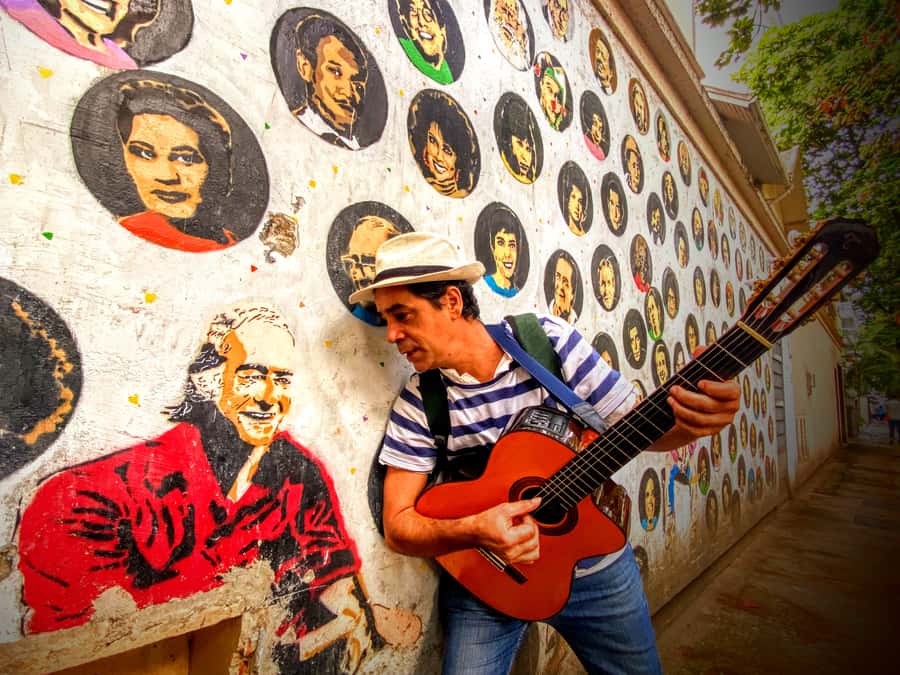
- A guide-musician, not just a narrator: the person leading you also plays guitar and other instruments as the walk goes on.
- Ipanema to Copacabana in one loop: you’ll connect the style to real places you can still see today.
- Built-in live Bossa Nova pauses: the route includes several short performances at different scenic points.
- Real names, real eras: you’ll hear how Tom Jobim, Vinícius de Moraes, João Gilberto, and others shaped the sound.
- Tight focus on the 50s-60s golden years: the stories aim to put you in the moment, not just list facts.
- Small-group feel is possible: private or small-group options help keep it more personal.
More of Rio covered on foot:
- Rio de Janeiro: Rocinha Favela Walking Tour with Local Guide
★ 4.8 · 3,052 reviews - Rio De Janeiro: Half-Day Rocinha Favela Walking Tour
★ 4.7 · 2,272 reviews - 3 Hour Rocinha Favela Walking Tour with a Local Guide
★ 5.0 · 833 reviews - Favela Tour Rio de Janeiro – Vidigal Walking Tour by Russo Guide
★ 5.0 · 377 reviews
Why this Bossa Nova walk works in Rio
Rio’s music culture isn’t frozen in a museum. It’s tied to streets, neighborhood corners, and the way people gather near the beach. That’s why this walking tour format fits so well, you aren’t hearing Bossa Nova as an idea, you’re hearing it while moving through the exact geography that shaped the sound.
What makes this experience stand out is the mix of storytelling and performance. The guide is also a musician and singer, so the tour keeps shifting between history and sound. I like that approach because it prevents the classic problem with music tours, where you spend the whole time listening to someone talk and then you get one short song at the end.
There’s also a practical benefit: at a steady walking pace over about three hours, you can cover a lot of iconic Rio sights without the hassle of transfers. You get scenic pauses too, which matters in Rio, where even a simple street corner can turn into a photo moment when ocean air hits.
Start at Praça Nossa Senhora da Paz, then get your bearings fast
The tour begins in Praça Nossa Senhora da Paz in Ipanema. It’s near exit A of the nearby metro station, so you can usually get there without a complicated route. The night before, you’ll receive an email with the exact meeting spot inside the square and instructions to find your guide, which helps if you arrive early or the area feels busy.
The first stop has a classroom-style introduction, around 20 minutes. This is where you get the foundation: what Bossa Nova is, how it emerged, and why Rio in the 50s and 60s mattered. You’re also setting up your listening for later, so when the guitar starts, it feels connected instead of random.
One detail I really appreciate is the personality factor. Reviews point to guides like Guilherme, described as personable and full of knowledge, and a musician like Gui who clearly enjoys what he is sharing. That matters because Bossa Nova is subtle, and you want someone who can explain the meaning without turning it into a textbook.
Bring comfortable shoes and plan for street walking. You’ll be outside most of the time, and you’ll want your legs to feel good when you switch from talking to picture stops to short music breaks.
Ipanema highlights: Rua Nascimento Silva, Cantagalo, Praça General Osório
Once you’re oriented, the walk starts threading through Ipanema with several photo stops and quick story stops along the way. Some of the stops are described more generally, like hidden corners and secret photo points, which actually works in your favor. You are not only chasing postcard locations, you are learning how to notice the in-between spaces where music life tends to happen.
Rua Nascimento Silva is one of the specific street stops, and it’s the kind of place where your guide can connect the dots between neighborhood geography and musical community. The tour’s focus is on where Bossa Nova was written, played, and composed, so each street pause is used to anchor a memory or a fact to a real place.
Cantagalo and Praça General Osório are next in the pacing. These are ideal for looking around and feeling the scale of the area. You’ll likely get more than one scenic pause here, because a lot of Bossa Nova’s personality is about cool confidence, not just beach nostalgia. The guided stops help you see how the style fits the neighborhood vibe.
What you should watch for during these Ipanema portions is the rhythm of the tour itself. It’s not a nonstop concert, it’s a walking story with musical punctuations. You’ll hear live music as you move, then you’ll get context, then you’ll walk again. That rhythm is a huge part of why it feels like you are learning without losing the plot.
If you want extra music time, this is also the stage where you may notice whether your taste is for short performances. One review noted that the guide and musician in one person told the story well and played some songs, but that they would have liked to hear more music. You can use that as a self-check: if you mainly want a long live set, this format may feel too brief. If you want story plus music, it’s a strong match.
Toward Copacabana: Av. Atlântica, Dorival Caymmi, Arpoador
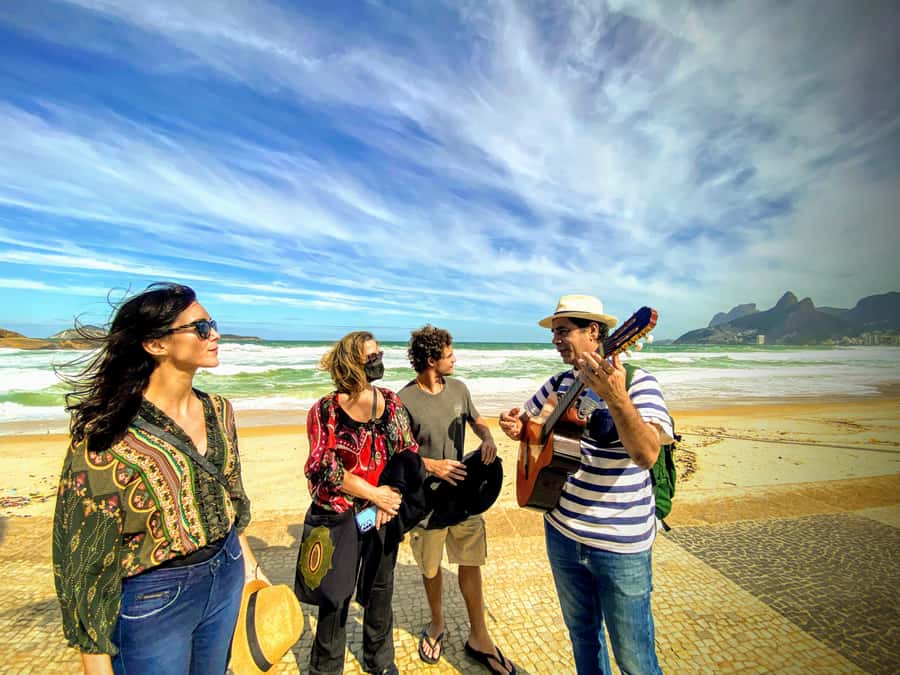
After you’ve built the Ipanema context, the walk moves toward the coastline feel that makes this whole Rio experience make sense. Av. Atlântica is a standout here, including a specific stop at number 3968. This is where you can connect the sound of Bossa Nova to the environment it floated over, beach air, street noise, and the steady flow of people.
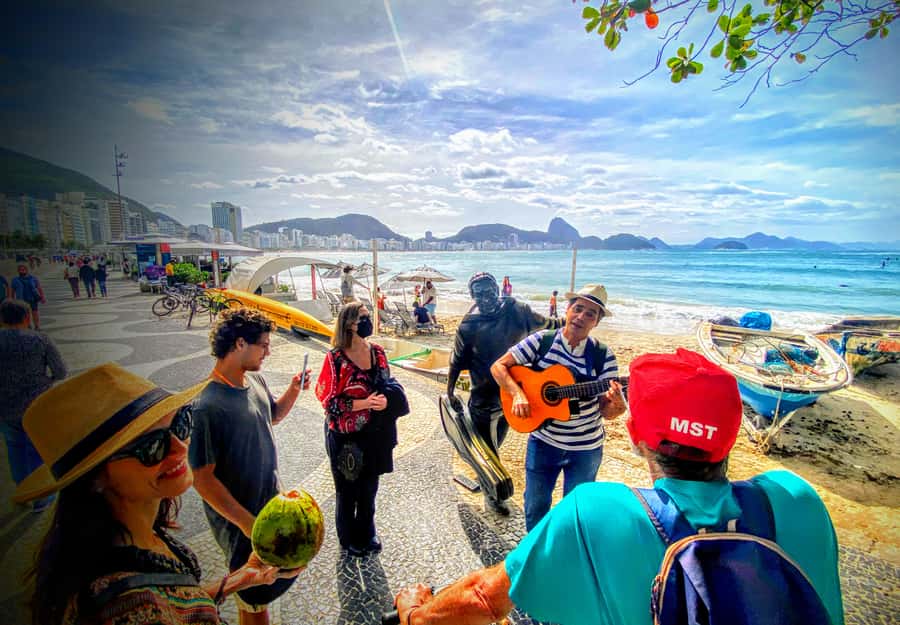
There’s another key music connection at the Estátua de Dorival Caymmi. Caymmi is a major name in Brazilian music, and placing him on the route gives you a broader frame for how styles influence each other. The tour keeps your attention on the bigger story, not only the narrow spotlight on Bossa Nova’s core figures.
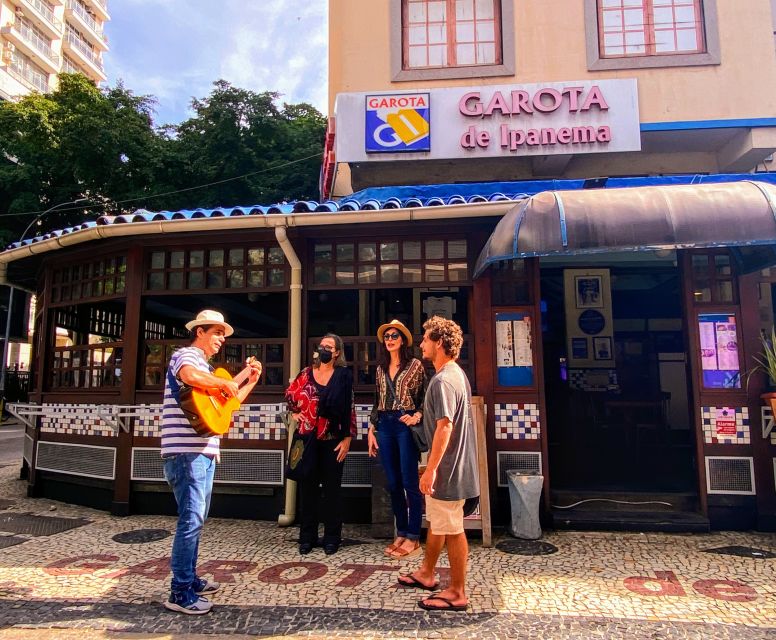
Then comes Garota de Ipanema, the famous landmark tied to the spirit of the neighborhood and the title that many visitors associate with Rio’s musical identity. From a practical perspective, this stop also helps you understand why the tour route makes sense. It’s a natural visual anchor, so when your guide references songs and the era around them, you have a place to attach the details.
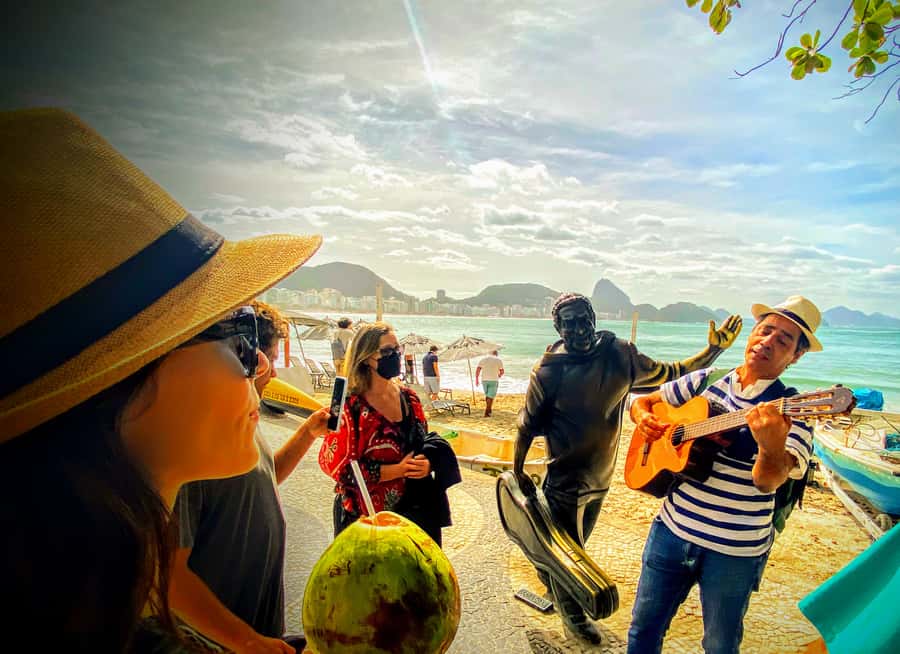
Arpoador follows, another classic viewpoint where you can look out at the shoreline and feel the scenery the music is linked to. The tour uses these spots as both photo moments and listening moments, with short live music breaks that keep the experience moving.
One thing to keep in mind: because this portion is more scenic, you might spend a little longer looking and listening than you expect. That’s normal in Rio. The payoff is worth it if you like mixing music with views, and if you are happy walking through neighborhoods rather than just standing still.
The Jobim and culture stops: Tom Jobim, Laura Alvim, and the final bar
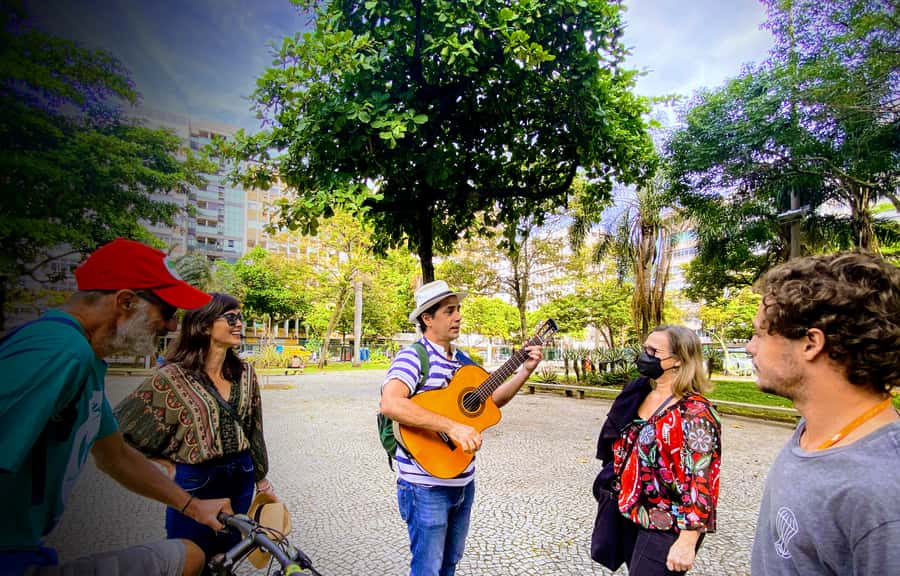
Toward the end, the tour leans more directly into Bossa Nova’s core identity through specific cultural landmarks. You’ll pass the Estátua de Tom Jobim, which is one of the most on-the-nose moments of the entire route for fans. This is where your earlier story about the composers starts to click into a clear mental map, because the name is right there in front of you, tied to the way the tour has been explaining the evolution of the style.
Next is Casa de Cultura Laura Alvim. Even though this stop is brief, it adds an extra layer that I appreciate. It’s a reminder that Bossa Nova wasn’t only a collection of songs, it was part of a cultural ecosystem that included performance spaces, art institutions, and public life.
Then the tour shifts to a local bar stop. The point isn’t to turn it into a drinking crawl. It’s to close the loop where you started thinking about music as a social thing. A bar is a natural setting for Bossa Nova’s mood, the kind of place where conversations and melodies share the same air.
The experience finishes at Restaurante e Bar Garota de Ipanema. If you like the idea of ending right where the neighborhood identity is strongest, this final stop does the job. You can also use it as a convenient landing point for whatever you do next, whether that’s grabbing food nearby or strolling toward the coast again.
A few more Rio outings to weigh up
- Rio de Janeiro: Guided Jeep Tour through Tijuca Rainforest★ 4.3 · 740 reviews
- Jeep Adventure: Guided Tour through Tijuca Rain Forest★ 4.0 · 554 reviews
- Rio de Janeiro: Favela Santa Marta Top Tour with Local Guide★ 4.9 · 488 reviews
- Sunrise Mirante dona Marta Specialized Guide and Photos★ 5.0 · 246 reviews
- Rio de Janeiro: Favela Santa Marta Tour with Resident Guide★ 4.6 · 220 reviews
Live Bossa Nova with a guide who plays, and what to expect musically
Let’s talk about the musical side, because that’s why you’re booking. This tour includes a live performance of Bossa Nova, and it’s not just one moment. The route includes multiple short concert moments spread across different points, with live music breaks of about 10 to 20 minutes depending on the stop.
The guide-musician format is the key. Reviews highlight that the guide also sings and plays guitar, and that he brings the story to life as he performs. That is what makes this tour feel different from a standard walking history tour with a playlist in the background.
Still, balance is important. Since performances are short and separated by walking segments, it’s not the same as booking a dedicated Bossa Nova show where you might want a long, continuous set. One review noted they would have liked more music, and that aligns with the tour’s structure. If your goal is maximum songs-per-hour, you might feel a bit hungry at the end.
But if you want Bossa Nova understood in context, the approach works well. You hear a snippet, then you learn why the sound mattered, then you connect that meaning to a specific place you just visited. For me, that combination is where the tour becomes memorable.
Also, the guide’s language flexibility helps. The tour runs in Portuguese, Spanish, and English, so you should be able to follow along without needing to guess. If you’re Spanish-speaking, you’ll likely find it easier to catch the nuance in how the era is described.
Price and comfort: is $49 good value for this route?
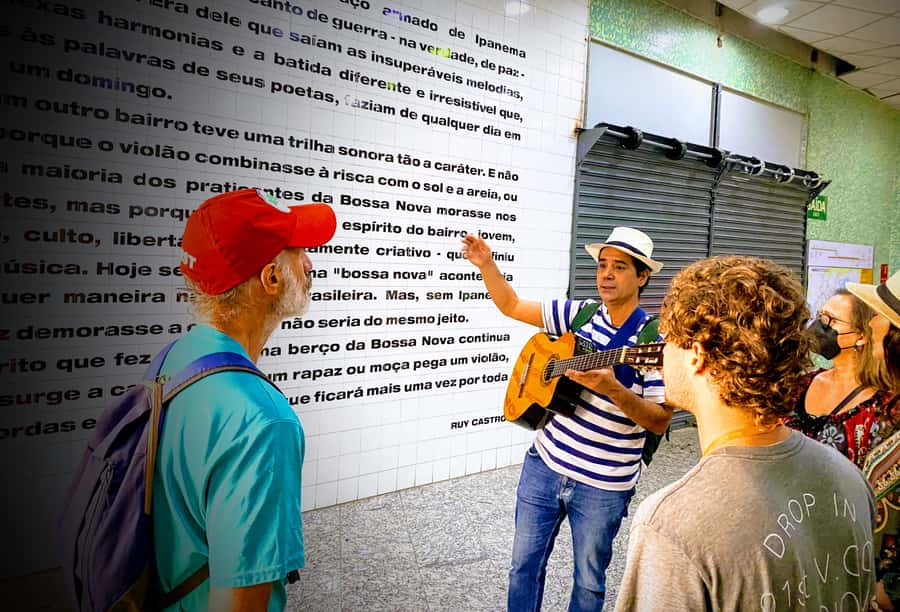
At $49 per person for about three hours, this isn’t a budget-only stroll, but it also isn’t priced like a premium ticket. What you are paying for is the pairing of a guided walk plus live performance, and the fact that the guide is also a musician. That combination is harder to come by than a typical sightseeing tour with a speaker or a basic recorded audio track.
You also get a lot of named touchpoints across Ipanema and Copacabana, including landmarks like Praça General Osório, Estátua de Dorival Caymmi, Garota de Ipanema, Arpoador, and Estátua de Tom Jobim. That matters because you’re not only moving through streets, you’re learning why those places are connected to the music.
The group style can matter for comfort and value too. Private or small groups are available, and in a tour like this, smaller tends to mean more attention to your questions. If you’re a true music fan, that can be the difference between enjoying the story and getting personal recommendations for what to listen to after.
On the comfort side, the big requirement is simple. Wear comfortable shoes, and dress for walking. You are on foot for the whole experience, and it’s not set up for people who need mobility assistance or wheelchair access.
This tour is not suitable for children under 8, and it’s not meant for people with mobility impairments or wheelchair users. If that affects you, you’ll want to choose a different format.
Should you book this Rio Bossa Nova Walking Tour?
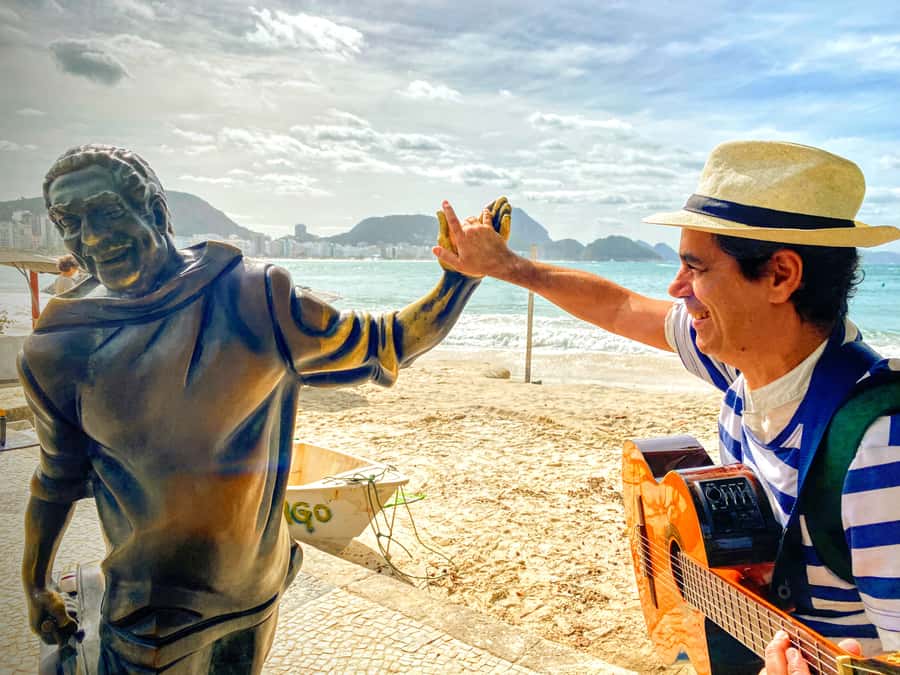
Book it if you want Bossa Nova with place-based context, and especially if you like the idea of hearing live music while walking through the neighborhoods tied to the era. It’s a good value when you consider you’re getting a guide plus live guitar moments across a concentrated route in Ipanema and Copacabana.
Skip it if you want a long, uninterrupted concert experience. This is a story-first walk with music punctuations, so it’s best for curious listeners who like history, street views, and short live performances rather than a full show.
If you decide to go, go in with a light plan. Wear comfy shoes, bring water if you like (food and drinks are not included), and come ready to listen for how the guide explains the shift from the 50s-60s glamour to the sound you hear today.
FAQ
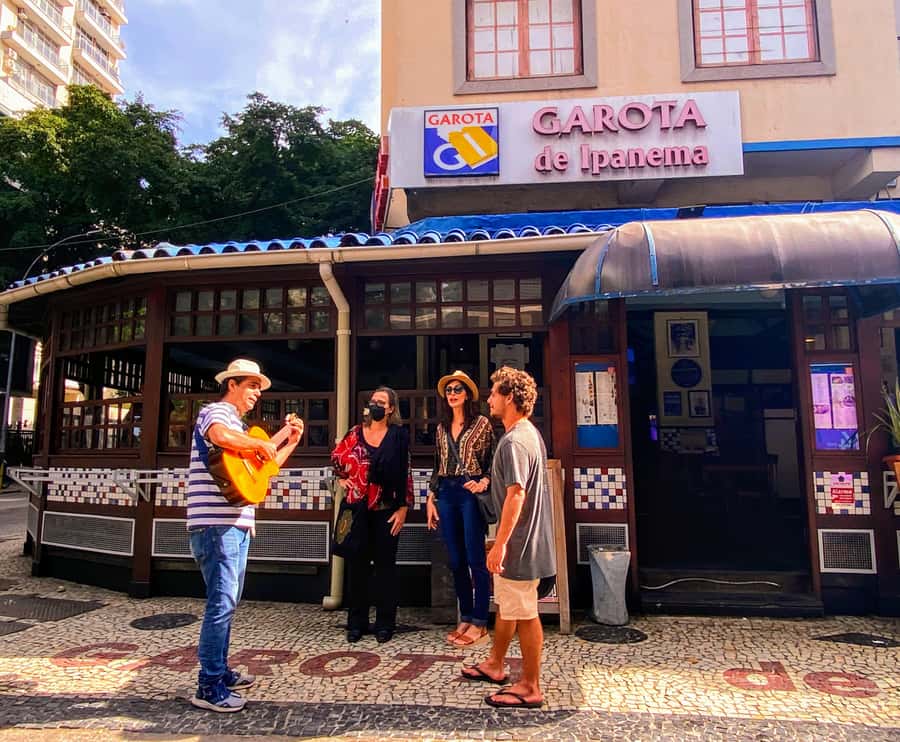
Where is the meeting point for the tour?
The meeting point is Praça Nossa Senhora da Paz in Ipanema, located near exit A of the nearby metro station.
How long is the Rio Bossa Nova walking tour?
The tour lasts 3 hours.
What languages are available?
The tour is offered in Portuguese, Spanish, and English.
Is live music included?
Yes. The experience includes a live performance of Bossa Nova by the musician during the tour.
What should I bring for the walk?
Wear comfortable shoes and comfortable clothes, since you will be walking throughout the 3 hours.
Is the tour suitable for children or wheelchair users?
No. It is not suitable for children under 8, and it is not suitable for people with mobility impairments or wheelchair users.
Recently added around Rio





Walking Tours, compared.


3 Hour Rocinha Favela Walking Tour with a Local Guide
Read our review →
Favela Tour Rio de Janeiro – Vidigal Walking Tour by Russo Guide
Read our review →

Private Walking and Cultural Tour Rocinha-Rio de Janeiro
Read our review →

Sunrise and Sunrise Walk Two Brothers with Local Guide
Read our review →More of this kind of Rio day