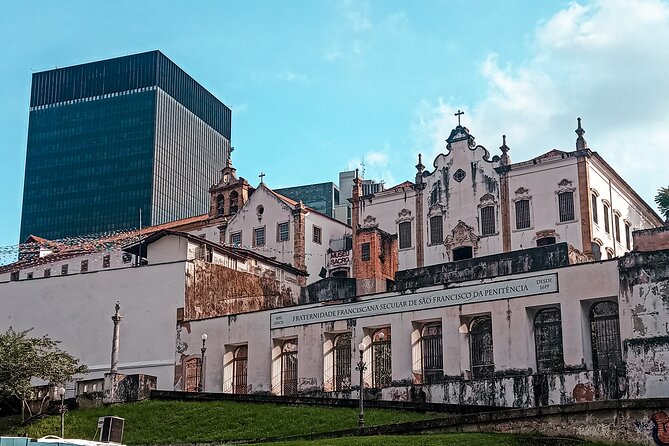
Reviewed · FULL-DAY
Rio Afro Experience – A full day in the African Diaspora
A history route with real faces. This full-day Rio Afro Experience is built like a story, using major sights plus the sites tied to enslaved Africans and Afro-Brazilian memory. I like the small-group feel (up to 20) because it makes the day easier to manage and more human, and I also like that key admissions and lunch are included so you spend less time worrying about tickets and more time listening.
The main thing to consider is that this is a tight, packed schedule. Some stops are brief (about 25 to 40 minutes), and the day depends on having good weather, so it helps to keep your expectations realistic if you like lingering or taking lots of slow photos.
In This Review
- Key highlights to know before you go
- A Full Day Tracing Rio’s African Diaspora, from Christ to Valongo
- Meeting at 9:00 and how the 8-hour flow works
- Corcovado and Christ the Redeemer, 2 hours with your ticket included
- Santa Teresa for Parque das Ruinas, history plus art corners
- Escadaria Selarón, the 3,000-tile staircase and what the tiles signal
- MUHCAB and the territory museum feel, a focused Little Africa stop
- IPN in Gamboa, the cemetery and the Memorial of the New Black
- Cais do Valongo and the UNESCO pier, the arrival trace you cannot miss
- Pedra do Sal, Quilombos Remains and the Salt Stone community
- Lunch at an Afro-Brazilian restaurant, fixed menu and an easy energy plan
- Price and value: is $360.35 worth it?
- Guides that shape the whole tone, Val Vargas, Gabbi, Bruna, and Jean
- Best for you if you want a meaning-first Rio day
- The one watch-out: a packed day where you choose what to absorb
- Should you book Rio Afro Experience?
- FAQ
- How long is the Rio Afro Experience tour?
- What time does the tour start?
- Is pickup available?
- What language is the tour in?
- What is the maximum group size?
- What is included in the price?
- Is lunch included, and is it flexible?
- Are drinks included?
- Which stops have admission tickets included?
- What happens if the weather is poor?
Key highlights to know before you go
- Guides who connect the dots between Rio landmarks and African Diaspora history, with stops explained in plain language
- Admissions and lunch handled for Christ the Redeemer and the IPN memorial, plus an Afro-Brazilian lunch with a fixed menu
- Little Africa focus with museum and memorial visits tied to cultural memory, not just sightseeing
- UNESCO Cais do Valongo as the only material trace of the arrival of enslaved Africans in the Americas, included in the route
- Hands-on Rio art stops like Santa Teresa and the Selarón Steps, where creativity and history meet
- A manageable group size and an air-conditioned vehicle for the long movements between neighborhoods
A few more Rio outings to weigh up
- Full Day: Christ Redeemer, Sugarloaf, City Tour & Barbecue Lunch
★ 4.5 · 3,142 reviews - Rio’s Full Day: Selarón Steps, Christ & Sugarloaf – Tickets & Lunch Included
★ 5.0 · 2,724 reviews - Rio de Janeiro: Angra dos Reis and Ilha Grande Full-Day Tour
★ 4.6 · 1,673 reviews - Full Day Excursion to Petrópolis from Rio de Janeiro
★ 4.5 · 918 reviews
A Full Day Tracing Rio’s African Diaspora, from Christ to Valongo

If your idea of Rio is only beaches and viewpoints, this tour will change your angle. Rio Afro Experience uses the city’s most recognizable monument first, then pivots into the heart of Rio’s Afro-Brazilian story, including museums, memorials, and streets tied to ancestry and survival.
What makes it special is the sequencing. You start high above the city at Christ the Redeemer, then you move down through neighborhoods where you can feel the cultural layers of Rio, finishing with sites that document arrival, community, and continuity. The guide helps you connect each place to a bigger picture, so it is not just a checklist of attractions.
Meeting at 9:00 and how the 8-hour flow works
The day starts at 9:00am and runs about 8 hours. You ride in an air-conditioned vehicle, and pickup is offered, which matters in Rio where traffic and distance can eat your day fast.
The itinerary is also paced so you are not stuck in one place too long. Some stops are longer, like Corcovado (around 2 hours), while others are more like focused visits (roughly 25 to 40 minutes). That means you get a complete arc, but you will need to be comfortable with time limits. If you like slow, independent wandering, you might still enjoy this, but you will probably want to plan extra time later for one or two areas that catch your interest.
Also, this experience requires good weather. If weather is poor, you get offered a different date or a refund. That is not a small detail here, since viewpoint-heavy stops can be disappointing when clouds roll in.
Corcovado and Christ the Redeemer, 2 hours with your ticket included
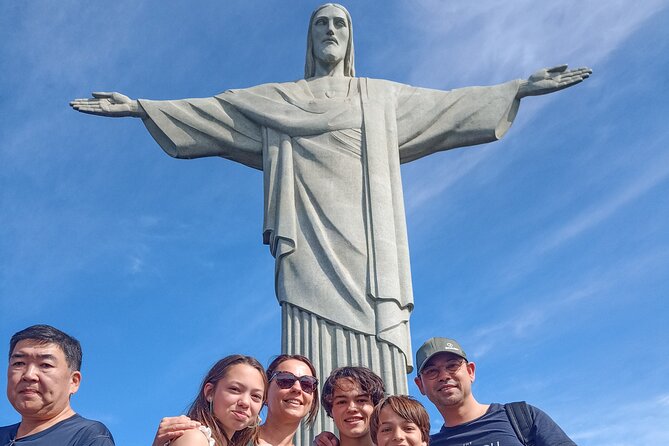
You begin with Corcovado and Christ the Redeemer, one of the most visited monuments in Brazil and one of the modern world’s famous landmarks. Your visit is about 2 hours, and the admission ticket is included.
This start works for two reasons. First, it sets the scale. From Corcovado, Rio reads like a map, not just a list of neighborhoods. Second, it gives context for the day: as you travel through the city afterward, you are moving between places with very different roles, from symbolic heights to the ground where history unfolded.
Practical tip: since the day starts early, you will likely get a smoother rhythm. If clouds are an issue, consider that your guide can help you time things so you still get good views during your window.
Santa Teresa for Parque das Ruinas, history plus art corners
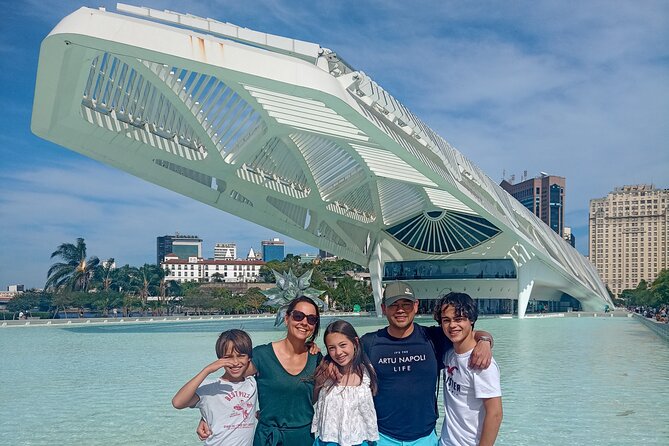
Next comes Santa Teresa, with a visit through the Historic District. This stop is around 1 hour, and it is described as passing through Parque das Ruinas and art workshops.
Santa Teresa is a nice bridge between the big headline sights and the more focused Afro-Brazilian memory stops later. You get the feel of a neighborhood where art and everyday life overlap. The practical advantage is that it is not only a viewpoint detour. It is a neighborhood stop that builds atmosphere for what comes next.
What to watch: this is a shorter block of time, so if Santa Teresa’s vibe clicks for you, you will probably want to return another day to explore deeper on foot.
Escadaria Selarón, the 3,000-tile staircase and what the tiles signal

Then you hit the Escadaria Selarón, the staircase made famous by Jorge Selaron, a Chilean artist who settled in Rio. The staircase is covered with more than 3,000 tiles from all over the world.
Your time here is about 30 minutes, and admission is free. This is one of those stops where the visual impact does the talking. But the best part is how the guide frames it. The staircase is not just a photo spot. It becomes part of Rio’s creative language, showing how outside influences and local identity can get woven into something public and lasting.
Practical note: because it is a popular spot, expect foot traffic. Keep your camera ready, but also take a moment to look closely at the mix of tiles and markings, since the small details are half the point.
If this one is full, Rio has these as well:
- Rio de Janeiro: 6-Stop Highlights of Rio with Lunch★ 4.4 · 5,157 reviews
- Christ the Redeemer Entry Ticket by Corcovado Train★ 4.4 · 4,476 reviews
- Rio’s City Tour – Tickets for Christ, Sugar Loaf & Lunch included★ 5.0 · 4,389 reviews
- Rio de Janeiro: Rocinha Favela Walking Tour with Local Guide★ 4.8 · 3,052 reviews
- Rio: Christ the Redeemer, Sugarloaf, Selaron & BBQ Lunch★ 4.5 · 2,428 reviews
MUHCAB and the territory museum feel, a focused Little Africa stop

After that, you spend about 40 minutes at MUHCAB (Museu da História e da Cultura Afro-Brasileira). The stop is connected to the region often referred to as Little Africa.
This is where the day pivots from outdoor landmarks into a more grounded cultural and educational moment. It is a useful midpoint because you have already seen Rio’s famous face, and now you are getting anchored in meaning. If you want the day to feel coherent, this stop is a big reason why.
Because your time is limited, try to go in with a simple goal: leave with one or two ideas you can carry to the memorial sites later. The guide’s explanation helps you pick what matters without turning the day into a textbook.
IPN in Gamboa, the cemetery and the Memorial of the New Black
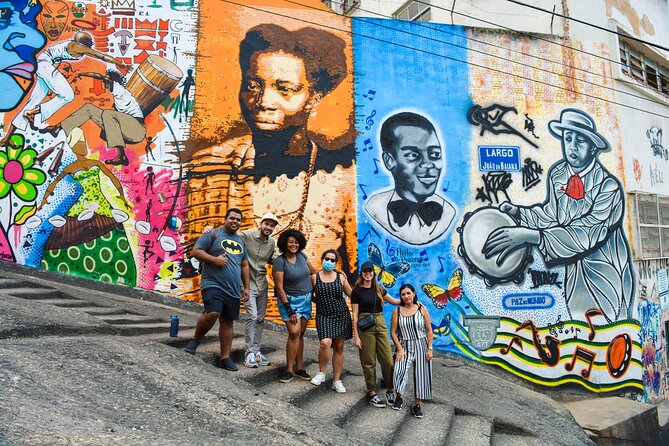
One of the most important stops is Instituto de Pesquisa e Memória Pretos Novos (IPN). You spend about 30 minutes here, and admission is included.
This visit includes the cemetery and Memorial of the New Black in the Gamboa region. The focus is on the preservation of material and intangible heritage connected to the archaeological site and African-matrix culture. It is a heavy subject, but the tour format keeps it respectful and structured, and the guide’s framing helps you understand why the site matters in the larger story of African Diaspora history.
Consideration: this is not the kind of stop where you should rush. Even within 30 minutes, you can still pause and take it in. If you are with kids, the guide will likely tailor the tone, but the topic is serious, so plan for questions.
Cais do Valongo and the UNESCO pier, the arrival trace you cannot miss

Next is Cais do Valongo, about 25 minutes and free. This is in the port area of Rio, tied to streets in the area and recognized as a UNESCO World Heritage Site since 2017.
The key point here is the wording of the significance: it is the only material trace of the arrival of enslaved Africans in America. That makes Cais do Valongo feel different from a normal ruin or historic marker. It is specific, physical, and connected to movement and arrival, not just general history.
Practical tip: if you want photos, do it efficiently. The main value is standing in the place and listening to the guide’s explanation.
Pedra do Sal, Quilombos Remains and the Salt Stone community
You finish with Pedra do Sal, a historical and religious monument in the health district near Largo da Prainha. It is about 30 minutes and free, and the route notes that it is where the Quilombos Remains Community of the Salt Stone is located.
This stop rounds out the day by adding community and continuity. After Cais do Valongo’s focus on arrival and IPN’s focus on memorial and preservation, Pedra do Sal brings the story closer to living cultural identity. If you were feeling emotionally heavy earlier, this last portion can help your brain and heart transition.
Like Santa Teresa and Selarón, this is also a spot where the setting helps. You do not just hear about the past. You see a place that has meaning in the present.
Lunch at an Afro-Brazilian restaurant, fixed menu and an easy energy plan
Lunch is included at an Afro-Brazilian restaurant with a fixed menu predetermined by Etnias Turismo. Alcoholic beverages are not included, and soda/pop, plus coffee and/or tea, are also not included.
For budgeting and timing, this is actually a plus. You are not guessing what will be open, or hunting for food right when you are tired. The downside is flexibility. If you have specific dietary needs, you will want to check what the fixed menu means for you before the day starts.
Price and value: is $360.35 worth it?
At $360.35 per person for about 8 hours, the price is not cheap. But the value math looks better when you see what is included.
You get:
- Air-conditioned vehicle and transport for the whole day
- A tour guide who ties the stops into one story
- Christ the Redeemer tickets included
- IPN tickets included
- Lunch included (fixed menu)
Many of the other key stops on the route are free, like MUHCAB, Escadaria Selarón, Cais do Valongo, and Pedra do Sal. So you are paying for the guided experience and the parts that are ticketed, plus a structured full-day route instead of assembling your own day across multiple neighborhoods.
The other value signal for me is the group size. Maximum 20 travelers usually keeps things from turning into a slow-moving line. Your guide can talk without competing with a crowd the whole time.
Guides that shape the whole tone, Val Vargas, Gabbi, Bruna, and Jean
This tour is not only about where you go. It is about how you understand why you are there.
In practice, the quality shows in the guides. Names like Val Vargas come up with a style that mixes friendliness, clear explanations about Blacks in the Diaspora, and humor at the right moments. Another guide, Gabbi, is described as knowledgeable and enthusiastic about Rio’s history and culture, and Bruna is highlighted for being professional and kind, with an approach that works even when you have a multi-generation group.
A good driver can also make a day feel smoother. Jean is mentioned as supportive, alongside Bruna, which matters when your schedule depends on moving between Corcovado, Santa Teresa, and the port area without wasting time.
If you like tours where you can ask questions and feel like the guide is actually tracking the emotional and educational flow, this is the kind of day that fits.
Best for you if you want a meaning-first Rio day
This experience is a strong fit if you:
- Want Rio beyond the obvious photo stops
- Like guided context that ties places to the African Diaspora story
- Prefer a structured day where transport and key tickets are covered
- Enjoy museum and memorial stops, not just outdoor sights
It is also a solid option if you are traveling with a mixed-age group, because the pacing uses vehicle time and scheduled visits. Just remember that some walking is involved, and parts of the day are brief by design.
The one watch-out: a packed day where you choose what to absorb
If you are the type who wants to linger at every viewpoint, you might feel rushed. The route works because each stop has a role, and the day keeps moving.
You should also know that lunch is a fixed menu. If you have strong dietary restrictions, plan ahead rather than hoping for a swap on the day. And since the experience requires good weather, if you are traveling in a season with lots of rain, keep flexible plans.
Should you book Rio Afro Experience?
Yes, if you want a single day that connects Rio’s iconic sights with the places that document African Diaspora memory. The included tickets, the guided story at each stop, and the focus on Little Africa make it feel more intentional than a generic city tour.
If your main goal is pure sightseeing with lots of free time, you might get less satisfaction. But if you want to come away understanding how Rio’s landmarks fit into a larger story of arrival, survival, culture, and community, this tour is an efficient, well-structured way to do it.
FAQ
How long is the Rio Afro Experience tour?
It is about 8 hours.
What time does the tour start?
The start time is 9:00am.
Is pickup available?
Yes, pickup is offered.
What language is the tour in?
The tour is offered in English.
What is the maximum group size?
The tour has a maximum of 20 travelers.
What is included in the price?
Included are an air-conditioned vehicle, a tour guide, Christ the Redeemer tickets, IPN tickets, and lunch at an Afro-Brazilian restaurant with a fixed menu.
Is lunch included, and is it flexible?
Lunch is included, and the menu is fixed and predetermined.
Are drinks included?
Alcoholic beverages are not included, and soda/pop, plus coffee and/or tea are not included.
Which stops have admission tickets included?
Christ the Redeemer and IPN have admission tickets included. The other listed stops are free.
What happens if the weather is poor?
If the tour is canceled due to poor weather, you will be offered a different date or a full refund.
Recently added around Rio





Full-Day, compared.

Full Day: Christ Redeemer, Sugarloaf, City Tour & Barbecue Lunch
Read our review →
Rio’s Full Day: Selarón Steps, Christ & Sugarloaf – Tickets & Lunch Included
Read our review →

Full Day Excursion to Petrópolis from Rio de Janeiro
Read our review →
Full Day in Rio: Christ by Train, Sugarloaf, Selarón & Barbecue
Read our review →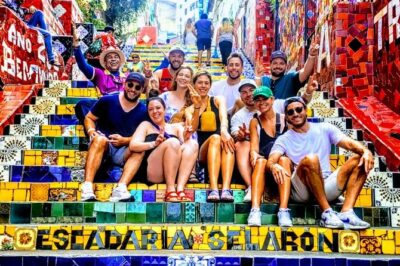
Private Custom Full-Day Highlights in Rio: Only the Best Sights!
Read our review →
Full Day Tour to Angra dos Reis and Grand Island
Read our review →