
Reviewed · RIO DE JANEIRO
Visit Indigenous Native Guarani Village in Marica
Guarani culture, a short drive from Rio. I love the warm welcome from Cacique Darcy Tupa at Aldeia da Mata Verde Bonita, and I love how translator Claudia helps everything land clearly in English. One consideration, though, is the fixed 3-hour village window, so if you want a long, slow sit-down with community life, this will feel time-limited.
You start at Copacabana and ride with a max 14 people group, with pickup along Barra da Tijuca, Sao Conrado, Leblon, Ipanema, and Copacabana. It is a well-paced half day that trades city time for real face-to-face moments, while also giving you an easy return to your original meeting point.
In This Review
- Key things I’d plan around
- First stop: a beach run that sets the day’s rhythm
- Stop at Barra da Tijuca: where pickup turns into part of the scenery
- The 64 km road to Aldeia da Mata Verde Bonita
- Arriving and being welcomed by Cacique Darcy Tupa
- The best part: 3 hours to participate and ask questions
- What you can realistically take from the village visit
- Stop at Copacabana: the easy finish and what to do next
- Price and value: what $333.25 is buying you
- Logistics that affect your comfort: timing, group size, weather
- Who this trip suits best
- Should you book the Indigenous Guarani Village visit in Maricá?
- FAQ
- FAQ
- How long is the visit to the Guarani village in Maricá?
- What is the meeting point for this tour in Rio?
- Does the tour include pickup?
- Where is the village visit, and how long do we stay?
- Is admission included for the village?
- What language is offered during the experience?
- What is the group size limit?
- Does the tour require good weather?
- Are service animals allowed?
Key things I’d plan around
- Small group size (max 14): more chance to hear, ask, and actually connect during the village visit.
- Meeting Cacique Darcy Tupa: the introduction comes directly from community leadership.
- Translator Claudia in English: you get clear explanations, not a rushed word-for-word trick.
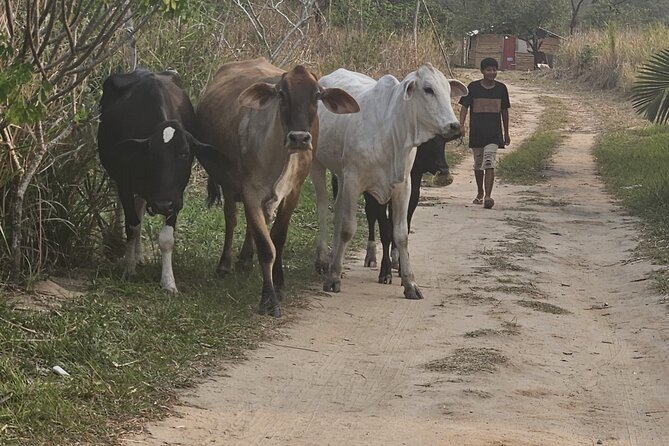
- A 64 km drive to Maricá: you are trading a little road time for a real change of pace.
- 3 hours at Aldeia da Mata Verde Bonita: enough time for stories, artefacts, and lots of photos.
Worth a look side by side. Others covering the same corner of Rio:
- Rio de Janeiro: 6-Stop Highlights of Rio with Lunch
★ 4.4 · 5,157 reviews - Christ the Redeemer Entry Ticket by Corcovado Train
★ 4.4 · 4,476 reviews - Rio’s City Tour – Tickets for Christ, Sugar Loaf & Lunch included
★ 5.0 · 4,389 reviews - Full Day: Christ Redeemer, Sugarloaf, City Tour & Barbecue Lunch
★ 4.5 · 3,142 reviews
First stop: a beach run that sets the day’s rhythm
This tour is built like a smooth city-to-country transition. It starts at Copacabana Palace, A Belmond Hotel on Av. Atlântica at 12:00 pm, then your vehicle works its way through the coastline for pickup. You can expect a small built-in buffer for timing, since pickup can be delayed by traffic.
From the moment you roll out, it feels like the day has two gears. The first gear is classic Rio: shoreline views and familiar neighbourhood stops. The second gear kicks in when you head toward Maricá and the Guarani village time begins. That split matters, because it makes the cultural part feel like a real destination instead of just a quick photo stop between other things.
Also, the pickup route is part of the experience. If you’re staying in or near Copacabana, you get an easy meeting point. If you’re nearer to Ipanema, Leblon, or Barra da Tijuca, you likely catch the same car as part of the pickup sequence, instead of needing separate rides.
Stop at Barra da Tijuca: where pickup turns into part of the scenery
Before you ever reach Maricá, you spend time at the start of the route in the Barra da Tijuca area. The tour begins by picking passengers up there, then it passes Sao Conrado and Leblon before continuing.
The important practical point: this is not a silent transfer. You are moving along some of Rio’s most well known beach corridors, with short stops to pick up additional people. The tour lists the Barra da Tijuca beach segment as about 35 minutes, and admission is free for this portion because it is really about routing and meeting.
What this gives you is a low-stress start. You do not have to coordinate separate taxis with multiple people, and you are not trying to navigate public transit with luggage or timing pressure. For many visitors, that is half the value of a guided outing like this: the hard parts get handled while you focus on what you actually came to see.
The 64 km road to Aldeia da Mata Verde Bonita
Once you reach the Barra de Marica area, the tour shifts from coastline cruising to the 64 km road run toward the Guarani village. The drive is listed at about 1.30 hours, so you are not dealing with an all-day bus trip. Still, you should treat it as a real ride time, not something you can ignore.
This travel segment matters for two reasons. First, it sets expectations: you are leaving Rio behind and heading to a specific Tupi Guarani village site called Aldeia da Mata Verde Bonita. Second, the later village time is limited to about 3 hours, so the schedule is designed so you arrive with enough daylight and energy to participate.
Another timing note that helps you plan your afternoon: the tour ends back at the original meeting point in Copacabana. That means you can treat this as a half day structure, then decide what to do next without worrying about getting stranded far from your hotel area.
Arriving and being welcomed by Cacique Darcy Tupa
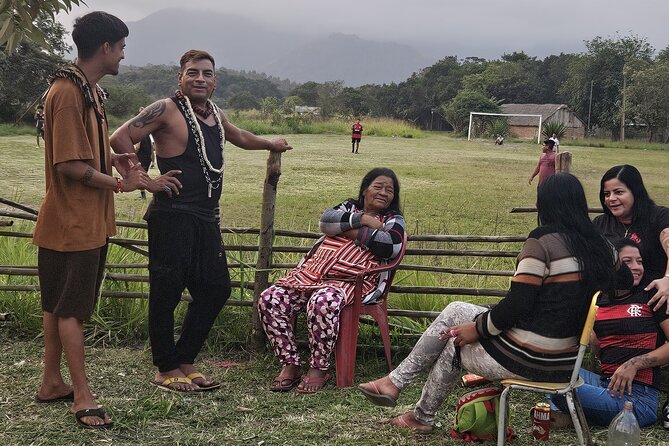
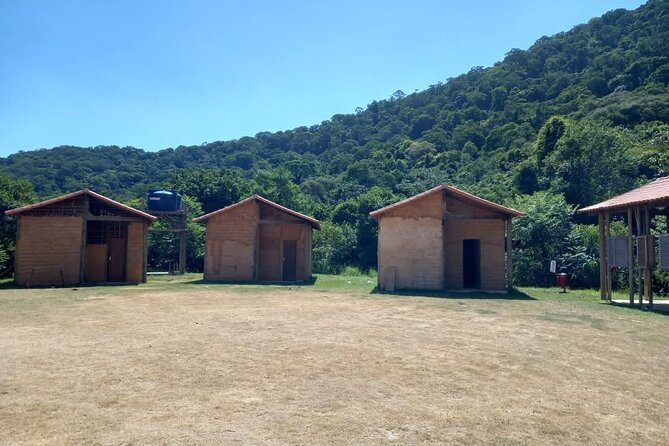
The heart of the experience is the village welcome. When you arrive at the Tupi Guarani village Aldeia da Mata Verde Bonita, you are greeted by the chief, Cacique Darcy Tupa.
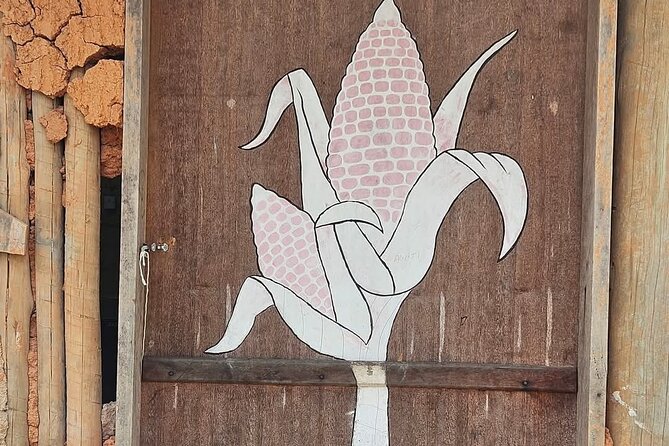
This is not a handoff to a generic voiceover. The structure is set up so the introduction and storytelling happen right there at the community level, with a direct link to leadership. You’re shown local artefacts made by community members, and you get stories about their way of life. That combination, artefacts plus explanation, is where cultural visits can either feel flat or feel meaningful. Here, the format is designed to support understanding.
The tour also runs with English support. In the best moments, that translator role is the difference between hearing sound and actually grasping meaning. Claudia is specifically mentioned as friendly and effective at explaining. If English clarity is important to you, that is a real advantage.
The best part: 3 hours to participate and ask questions
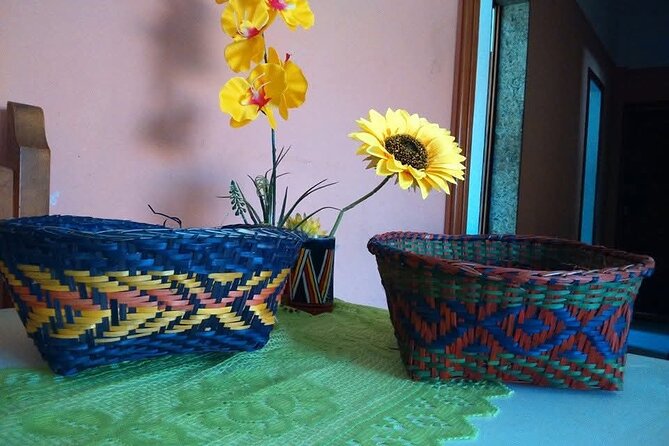
You stay in the village for about 3 hours. That is the key number to remember when deciding if this tour fits your style. It is long enough for real conversation and attention, not just a quick walk-through.
During that time, you can expect three main elements:
- artefacts made by the community
- stories about daily life and tradition
- time to take pictures and simply enjoy the setting
Some of the most memorable parts from the experience focus on community life itself, including music. One description highlights an event experience with music, plus participation in a party where different musicians and composers contributed. Even if your visit does not include the exact same moment, the point is that there is space for more than passive observation.
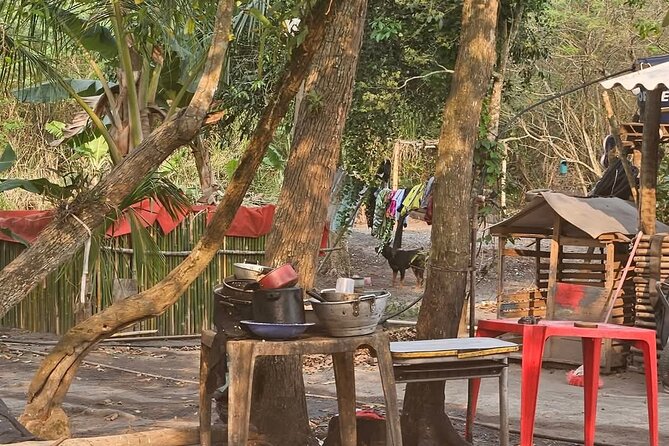
There is also mention of a peaceful river area nearby. You may notice a calming atmosphere that helps the cultural content stick, because you’re not constantly being pulled toward the next activity.
If this one is full, Rio has these as well:
- Rio de Janeiro: Rocinha Favela Walking Tour with Local Guide★ 4.8 · 3,052 reviews
- Rio’s Full Day: Selarón Steps, Christ & Sugarloaf – Tickets & Lunch Included★ 5.0 · 2,724 reviews
- Rio: Christ the Redeemer, Sugarloaf, Selaron & BBQ Lunch★ 4.5 · 2,428 reviews
- Rio De Janeiro: Half-Day Rocinha Favela Walking Tour★ 4.7 · 2,272 reviews
- Hang gliding Hang gliding Experience Rotorfly★ 5.0 · 2,009 reviews
What you can realistically take from the village visit

Cultural tours can go two ways. They can turn into a checklist, or they can give you a frame you can actually carry home. This one is built for the second approach, mostly because the session is anchored by people and interpretation.
You learn through:
- direct greeting and leadership introduction
- artefacts you can see and connect to stories
- time that is not overly rushed
For your planning, here’s the practical truth. You will get information during the village visit, but you are also there to witness how community life is organized and how music and social moments show up. If you’re the kind of person who likes to sit through explanations and linger after the first answers, you’ll get more out of those 3 hours.
If, instead, you prefer tightly structured attractions with constant action, this may feel calmer than you expect. That calm is part of the point, but it is worth flagging.
Stop at Copacabana: the easy finish and what to do next
After the village time, the tour returns to Rio and includes beach-area drop-offs. You stop at Copacabana to drop passengers, then continue to Ipanema, then Leblon, and finally back toward Barra da Tijuca. The tour ends back at your original meeting point.
The final beach segments are listed at about 35 minutes, and admission is free for these parts. In plain terms, this is the wrap-up, not another sightseeing block. The vehicle will shift you back to where you started, so you are not stuck trying to catch transport right after the village experience.
This ending structure is especially helpful because the village visit is the main emotional and educational highlight. You do not want the last step of your tour to turn stressful. Here, it is designed to keep the transition clean.
Price and value: what $333.25 is buying you
The price is $333.25 per person for an approximately 6-hour experience. That is not cheap by Rio standards, so the value question is fair.
Here’s where the pricing starts to make sense. You are paying for a guided trip with:
- organized pickup around major Rio beachfront neighbourhoods
- a private road transfer to a specific Guarani village site about 64 km away
- English support during the village portion
- admission included for the village visit
- a small group size, max 14
If you tried to recreate this independently, you would likely spend time coordinating transportation, and you might not have the same level of structured interpretation once you arrive. Also, the presence of Claudia as translator support is a meaningful part of the value, because cultural meaning depends on clear communication.
So if your top priority is a well-run day where you can focus on people and stories, the cost may feel justified. If you’re mainly chasing beach time and quick photos, you can probably find cheaper options. But if you want a serious cultural meeting in Maricá, this format is built to deliver that.
Logistics that affect your comfort: timing, group size, weather
A few operational notes matter because they shape how smooth the day feels.
- Pickup delays: the tour asks you to allow a small delay due to traffic. Plan for it, and you’ll stay relaxed.
- Group size: max 14 means you are not packed in like a typical bus day tour.
- Start time: 12:00 pm is midday. If you prefer an early morning start, you may need to adjust your schedule.
- Weather requirement: the experience requires good weather. If poor weather cancels it, you’ll be offered a different date or a full refund.
None of those details are glamorous, but they are the things that decide whether a half day feels easy or annoying.
Who this trip suits best
This experience fits best if you:
- want a direct community introduction, not just a viewpoint
- care about understanding through translation
- like structured time at the village, about 3 hours
- prefer a small group (max 14) over large bus chaos
It also works well if you are staying near Copacabana, Ipanema, Leblon, or Barra da Tijuca because pickup is built around those areas. Service animals are allowed, and the tour is listed as near public transportation, so accessibility planning is straightforward on your end.
If you’re easily bored by calmer, conversation-based settings, you might feel restless during the storytelling portions. On the other hand, if you enjoy questions and listening, you’ll likely find the village time satisfying.
Should you book the Indigenous Guarani Village visit in Maricá?
Yes, I’d book it if your goal is to meet real people, hear explanations in English, and spend real time inside a Guarani village setting. The strongest reason to choose this tour is the combination of a leadership greeting from Cacique Darcy Tupa, translated interpretation with Claudia, and a generous 3 hours to take in artefacts, stories, and even music when the schedule allows.
I would hesitate only if you know you want a long, unhurried day that stretches beyond a fixed half day, because the village window is set and the rest of the day is built around pickup and return. Think of this as a focused cultural visit, not a full-day rural retreat.
FAQ
FAQ
How long is the visit to the Guarani village in Maricá?
The tour lasts about 6 hours.
What is the meeting point for this tour in Rio?
The meeting point is Copacabana Palace, A Belmond Hotel, Av. Atlântica, 1702 – Copacabana, Rio de Janeiro, RJ 22021-001, Brazil.
Does the tour include pickup?
Yes, pickup is offered. Pickup can begin from Barra da Tijuca and also includes stops for passengers in areas like Sao Conrado, Leblon, Ipanema, and Copacabana, with a small delay possible due to traffic.
Where is the village visit, and how long do we stay?
The village visit is to Tupi Guarani Village Aldeia da Mata Verde Bonita, and you stay there for about 3 hours.
Is admission included for the village?
Yes. Admission ticket for the village portion is included.
What language is offered during the experience?
The tour is offered in English, and the village storytelling includes translation support.
What is the group size limit?
The maximum number of travelers is 14.
Does the tour require good weather?
Yes. The experience requires good weather. If it is canceled due to poor weather, you will be offered a different date or a full refund.
Are service animals allowed?
Yes, service animals are allowed.