
Reviewed · ROCK CLIMBING ADVENTURES
Urca Climbing Class
Rock climbing can start with one careful rope step. In Urca, at Morro da Babilônia, this 3-hour class is a smooth intro to the sport, with instructors like Raoni and Luiz teaching the basics on real rock, not in a classroom.
Two things I really like: you get multiple climbs so you can improve fast, and you learn the mindset that climbing is mostly technique and control. One consideration: the climb depends on good weather, so cloudy or rough conditions can change the plan.
In This Review
- Key Things That Make This Urca Climbing Class Worth Your Time
- Why Morro da Babilônia in Urca Works So Well for First-Time Climbers
- Price and Time: What $54.21 Buys You in About 3 Hours
- From Praça Gen. Tibúrcio to the Rock Foot: How the Lesson Unfolds
- Safety That Makes Sense: Rope Security, Helmets, and Basic Knots
- What You Actually Learn on the Wall, Not Just What You Do
- Photos, Views, and the Little Confidence Boost You Feel After Round Two
- Who Should Book This Course? Ages, Confidence Levels, and First-Timers
- What to Bring (and What to Handle Since Snacks Are Not Included)
- Booking Advice: How to Pick the Best Day in Rio
- Should You Book This Urca Climbing Class?
- FAQ
- Where do I meet for the Urca Climbing Class?
- How long is the climbing class?
- What is included in the price?
- Are snacks included?
- Will I climb more than once?
- What climbing equipment will I use?
- Is the class suitable for beginners?
- What if the weather is bad or I need to cancel?
Key Things That Make This Urca Climbing Class Worth Your Time
- Certified, safety-first instruction: The course is certified by the Brazilian Association of Mountain Guides, and the focus stays on secure setup and clear communication.
- You practice with real gear: Climbing shoes, harness/seat (listed as chair), helmet, carabiners, brakes, and rope are all part of the session.
- Multiple attempts on the wall: You climb a short stretch between 20 and 30 meters, with at least 3 climbs so you can build confidence.
- Knots and basics, explained early: You learn knots and core techniques, then put them to work immediately.
- Private class for your group: It is private, so you are not squeezed into a mixed crowd.
- A short trail to the climbing area: You walk a pleasant, short approach before you get to the rock foot area for the lesson.
More granite routes with a rope on:
- Sugarloaf Mountain Climbing Trail
★ 5.0 · 73 reviews - Rio de Janeiro: Hiking and Rappelling at Tijuca Forest
★ 4.8 · 44 reviews - Half Day Hiking and Climbing Adventure at Sugarloaf Mountain
★ 5.0 · 38 reviews - Climb Rio de Janeiro: Rock Climbing Tailored for All Levels
★ 5.0 · 32 reviews
Why Morro da Babilônia in Urca Works So Well for First-Time Climbers
Urca is a smart choice for a beginner climb because it feels close to Rio’s energy, yet the mountain setting keeps the class focused. Morro da Babilônia is the specific spot, and the session starts with a short trail to the foot of the rock. That approach matters more than you might think, because it gives you a chance to settle in, meet your guide, and get comfortable with the gear before anything technical happens.
This kind of rock climbing introduction is all about removing mystery. The instructors aim to demystify climbing by explaining what is actually happening, where the safety comes from, and what your body should do. In plain terms: the rope provides security, and the system is meant to catch mistakes while you learn.
I also like that the class is designed to work for a wide range of people. You are not being pushed into long, exhausting routes. Instead, you learn core skills and then climb a small rock stretch repeatedly, so you keep the momentum.
Price and Time: What $54.21 Buys You in About 3 Hours
The price here is $54.21 per person for about 3 hours. That is a solid value for a guided beginner experience because the session includes equipment and instruction. You are not just watching, and you are not responsible for buying or renting a pile of gear before you even start.
Most beginner activities try to pack a lot into a short window. What makes this one feel fair is that it is structured around practice. You will get an explanation of equipment and knots, then you practice basics, and you climb multiple times so the learning sticks.
Also, the timing can help you if you are juggling a Rio itinerary. The activity runs daily from 7:00 AM to 4:00 PM, so you can usually fit it around other plans. It is also commonly booked about 9 days in advance, which is a hint that good weather and popular times can sell out faster than you expect.
One small practical note: snacks are not included. That is not a deal breaker, but it does mean you should plan to eat before or after so the session stays comfortable.
From Praça Gen. Tibúrcio to the Rock Foot: How the Lesson Unfolds
You meet at Praça Gen. Tibúrcio, 520 in Urca. The activity ends back at the same meeting point, so you are not dealing with complicated drop-offs. Since it is near public transportation, it is easier to reach without a big logistical headache.
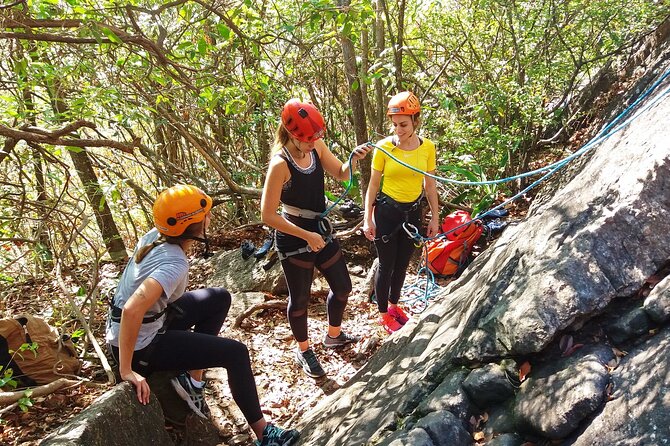
Once you arrive, expect the start of a classic climbing rhythm: gear, check-in, and instructions. The guide/instructor explains the sport, what each piece of equipment does, and which knots are used. This is the part that can feel slow if you want to climb right away, but it is also the part that makes the rest of the class feel safe and understandable.
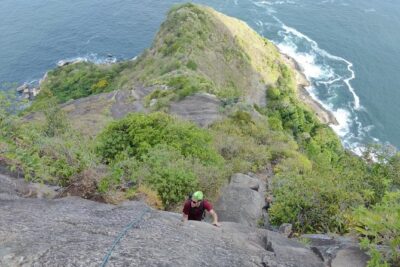
Then you head to Morro da Babilônia via a short and pleasant trail. When you reach the foot of the rock, that is where the lesson really becomes practical. The instructors have patience, and you get hands-on practice with basics before you go up.
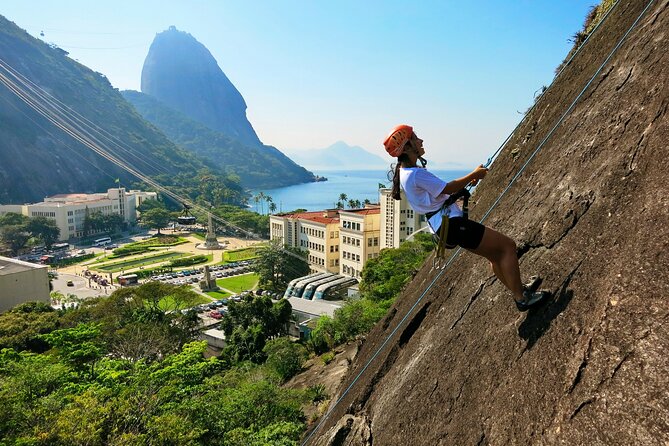
On the wall, you climb a stretch between 20 and 30 meters. The key detail is that you do not just go once. You climb at least 3 times, which helps you compare what you did earlier versus what you do differently after the instructor corrects your technique. That repetition is how you get better quickly.
Safety That Makes Sense: Rope Security, Helmets, and Basic Knots
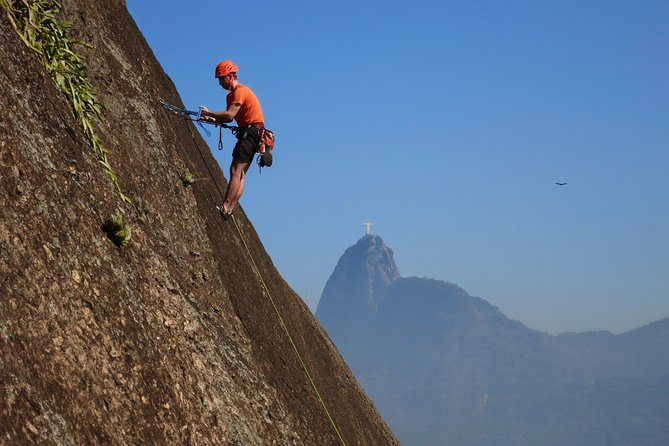
Climbing has a reputation for danger, and that fear is normal. The instructors here are explicit about safety and about how security works. The rope is central to the system, and they explain how it provides security while you learn.
You use a complete set of climbing gear: climbing shoes, a harness/seat (listed as chair), helmet, carabiners, brakes, and rope. Each item has a job, and the class teaches you the roles instead of treating the gear like a black box. That is how you go from feeling nervous to feeling informed.
The course also emphasizes that climbing is not only about arm strength. A common beginner panic is thinking your arms must power everything. Here, you learn that most of the force comes from the legs, with arms used for balance and control. It is a relief, and it also keeps you from burning out too soon.
The certification detail matters too. This class is certified by the Brazilian Association of Mountain Guides, and the activity is described as secure. In real life, that usually translates into careful setup, clear guidance, and an instructor who does not rush you into going higher before you understand the basics.
What You Actually Learn on the Wall, Not Just What You Do
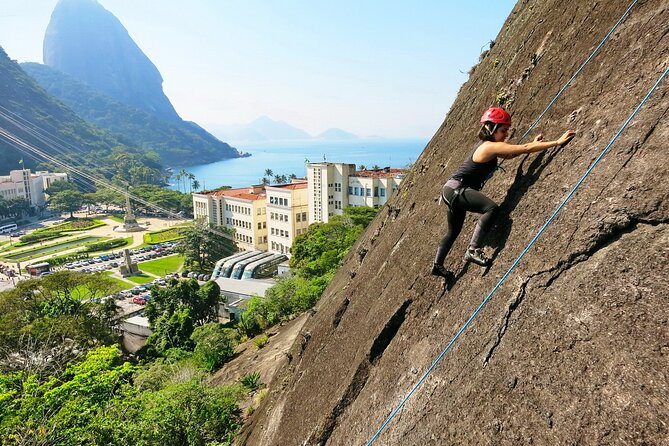
The class is designed for your first contact with the sport. That means you will not be treated like a tourist holding a harness. Instead, you learn the foundations that every climber should know, then you practice those skills immediately.
You learn equipment basics first: what the pieces are, how they connect, and why the setup matters. Then you get instruction on knots and basic techniques. The important part is that this is paired with practice, not just explanation.
Then the climbing portion gives you real feedback in real time. When you climb a short stretch repeatedly (20 to 30 meters total, but broken into multiple climbs), you can adjust your body position and technique on the next attempt. In other words, you get to build muscle memory without needing hours of practice.
I like that the class also addresses the mental side. You get a chance to change your story from climbing is risky and confusing to climbing is a skill you can learn step by step. It is that shift that keeps people coming back for more.
More things to make by hand in Rio:
- Rio de Janeiro: Beginner Samba Lesson in Ipanema★ 4.9 · 1,071 reviews
- Rio de Janeiro: Samba Class in Copacabana★ 4.6 · 262 reviews
- samba class in Ipanema★ 5.0 · 182 reviews
- Samba Class and Samba Night Club Tour in Rio★ 5.0 · 177 reviews
- Brazilian BBQ Class in Rio (3.5h): 10 Recipes & Bottomless Drinks★ 5.0 · 118 reviews
Photos, Views, and the Little Confidence Boost You Feel After Round Two
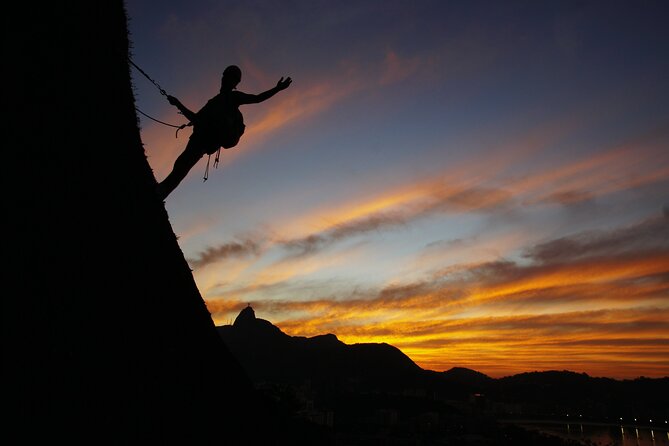
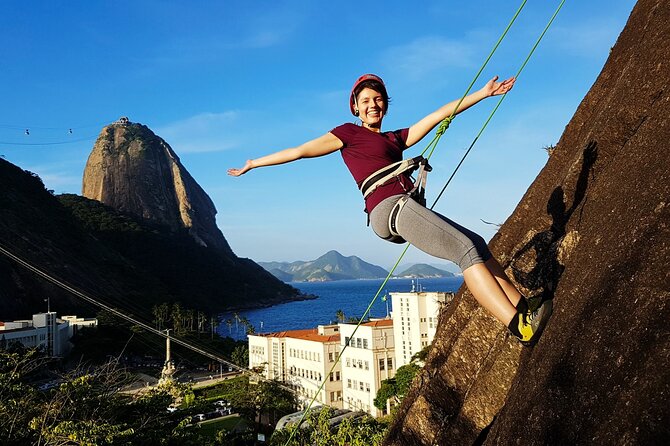
Even though the goal is learning, the payoff is not only technical. You are climbing near a famous Rio viewpoint area, and the Morro da Babilônia setting gives you a view that makes people pause mid-thought. The class is not just about height, it is about control, and once you find that rhythm, you start noticing your surroundings more.
You also get multiple climbs, which creates multiple opportunities for that first real photo moment. The class is set up so you can climb at least 3 times, so you are not only hoping round one goes well. Round two and round three are often where confidence clicks, because you already survived the first attempt and learned what to adjust.
There is a subtle bonus here for first-timers: you feel less like you are being tested and more like you are building skills. When the instructor corrects something and you get to try again right away, it is easier to accept feedback without feeling embarrassed.
If you care about getting the best shot, it helps to listen for the moments the guide indicates. Your hands might be busy, but your timing can be better when you know when the instructor expects you to pause or move through a specific section.
Who Should Book This Course? Ages, Confidence Levels, and First-Timers
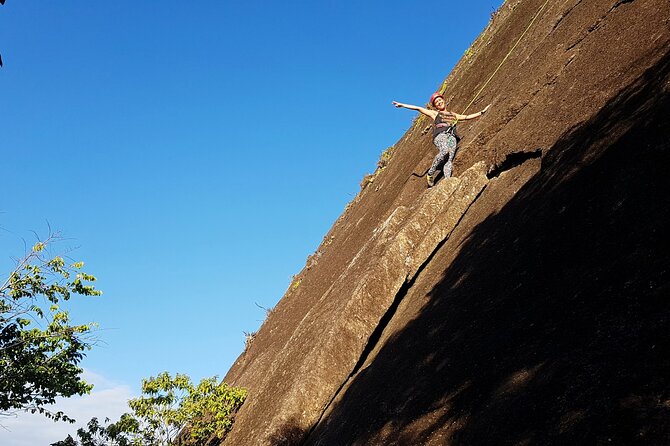
This class is listed as suitable for most travelers. That is broad, but the details make it feel realistic for beginners. You are starting on a short stretch and climbing at least 3 times, so you are not stuck doing one long, draining attempt.
The best fit is anyone who wants a guided introduction where safety and teaching are taken seriously. The vibe is also good if you worry you need strong arms. The instruction is built around rope security and leg-driven technique, and that helps people who assume they cannot do it.
It also seems to work across ages. One participant did it as an older beginner, and another did it with a young child, with the guide being tactful and focused on encouragement and safe pacing. If you are thinking, I am too old, or I am not athletic, this is exactly the kind of class where that worry gets tested and usually softened.
If you are already an intermediate climber, you might find the basic content light. But if you want a confidence reboot in a beginner-friendly setting, it can still be a good reset.
What to Bring (and What to Handle Since Snacks Are Not Included)
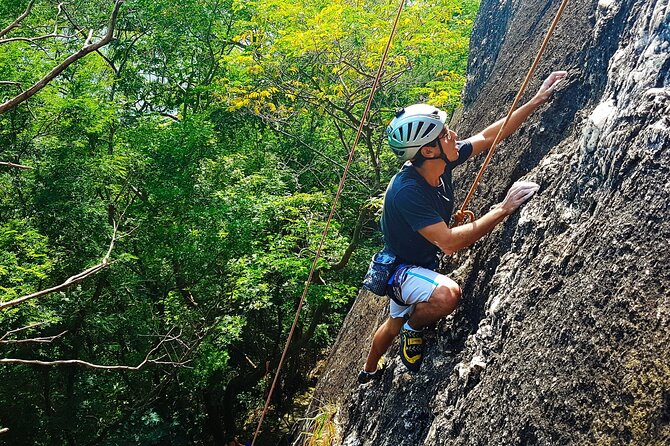
The activity includes the climbing equipment, so you do not need to hunt down rentals. What you should plan for is simple comfort and timing.
Since snacks are not included, I recommend planning a meal before you go or arranging something afterward. If you tend to feel low-energy when you work hard, do not assume you will be fine with just whatever you ate hours ago.
Other than that, keep your day flexible for the timing window. Opening hours run daily from 7:00 AM to 4:00 PM. And because the experience requires good weather, the schedule might shift if conditions are not right.
If you bring a camera or phone, you will likely want a plan for pictures between climbs. Your hands are tied up during climbing, so the easiest photos are often the quick moments after a successful attempt.
Booking Advice: How to Pick the Best Day in Rio
Because this activity requires good weather, you should think of it as a day-choice, not just a calendar-choice. If Rio gives you a weather window, book for that window. If not, be ready to move plans.
The fact that this class is commonly booked about 9 days in advance suggests it is popular. If you are traveling during peak periods, earlier booking gives you more options for time slots and weather alignment.
If you are trying to decide between mornings and afternoons, go with the time that makes the rest of your day easiest. You have about 3 hours, and the activity ends where it starts, so you can usually pair it with nearby sightseeing in Urca.
Finally, double-check that you are comfortable with a short trail approach. It is described as pleasant and short, but it is still walking before you climb.
Should You Book This Urca Climbing Class?
Book it if you want a true beginner climb where safety and teaching come first. The certified instruction, included gear, and repeated climbs create a learning loop that works. You will leave knowing more than just how to hold on, you will understand how rope security and technique work, and you will likely feel calmer about your ability than you did at the start.
Skip it or choose another option if you only want to climb once, or if your main goal is long, advanced routes. This is a short, structured intro course, and it is meant to build fundamentals, not to chase height for height’s sake.
If you are in Rio and you want a hands-on activity that mixes nature with a real skill, this is a smart use of three hours.
FAQ
Where do I meet for the Urca Climbing Class?
You meet at Praça Gen. Tibúrcio, 520 in Urca, Rio de Janeiro, RJ 22290-270, Brazil.
How long is the climbing class?
The duration is approximately 3 hours.
What is included in the price?
The price includes use of climbing equipment, and the activity is certified by the Brazilian Association of Mountain Guides. It is also described as secure and private.
Are snacks included?
No, snacks are not included.
Will I climb more than once?
Yes. You will climb a small stretch of rock between 20 and 30 meters, and you can climb at least 3 times.
What climbing equipment will I use?
You will use climbing shoes, a chair (harness/seat), helmet, carabiners, brakes, and rope.
Is the class suitable for beginners?
Most people can participate. The class is designed as an introduction to rock climbing and includes learning equipment, knots, and basic techniques with practice, while explaining safety and how rope security works.
What if the weather is bad or I need to cancel?
The activity requires good weather. If it is canceled due to poor weather, you will be offered a different date or a full refund. You can cancel for a full refund up to 24 hours in advance of the experience start time.
Recently added around Rio






Rock Climbing Adventures, compared.

Half Day Hiking and Climbing Adventure at Sugarloaf Mountain
Read our review →
Climb Rio de Janeiro: Rock Climbing Tailored for All Levels
Read our review →

Sugar Loaf Hiking – Visit Rio’s Best Attraction Hiking & Climbing
Read our review →More of this kind of Rio day