
Reviewed · GUIDED FAVELA TOURS
The real life behind the word favela
Rocinha changes how you see Rio. I like how this tour is run by a local guide and built around a Rocinha reality check, not postcard clichés. You get private transportation, a viewpoint stop, and a personal guide who helps you connect what you see on the ground with how everyday life actually works.
The best part is the human scale of it. This is a small-group outing (max 20) with enough time for real back-and-forth questions, and guides such as Carlos and Carolina are praised for clear English and thoughtful explanations. One caution: some people have felt uneasy about extra money requests, so be ready for uncomfortable moments if tipping expectations come up.
In This Review
- Key highlights before you go
- Rocinha, the city within a city, and why this tour starts there
- Favela Lives Tour, the small-group feel, and the 3-hour reality check
- Getting around: private transport, a viewpoint stop, and narrow-lane conditions
- Culture you can see up close: capoeira, schools, and a cathedral tied to Rocinha
- Your guide is the experience: Carlos, Carolina, Gilvan, and the Q-and-A factor
- Safety, respect, and the tipping question to handle with clarity
- Price and value: why $49.05 can make sense for Rio
- Timing, weather, and avoiding a rough start
- Should you book this Rocinha tour? My honest take
- FAQ
- How long is the Rocinha tour?
- What is included in the price?
- What is the meeting point for the tour?
- Is food included?
- How many people are in the group?
- Does the tour require good weather?
Key highlights before you go

- A local-run agency focused on real life in Rocinha
- Small group size, max 20 travelers, with a personal guide
- Private transportation plus a viewpoint stop
- Culture and community stops, including places linked to capoeira, schools, and a cathedral
- A guided route that prioritizes staying together and asking questions
- Food and souvenirs are not included, so plan your budget accordingly
Other guided walks through the favelas:
- Rio de Janeiro: Rocinha Favela Walking Tour with Local Guide
★ 4.8 · 3,052 reviews - Rio De Janeiro: Half-Day Rocinha Favela Walking Tour
★ 4.7 · 2,272 reviews - 3 Hour Rocinha Favela Walking Tour with a Local Guide
★ 5.0 · 833 reviews - Favela Tours
★ 5.0 · 660 reviews
Rocinha, the city within a city, and why this tour starts there
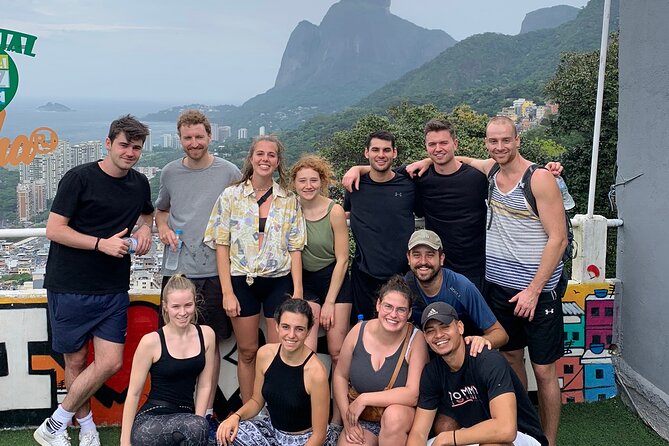
Rocinha is often described as a city inside a city, and the scale matters. It is the largest favela in Latin America, which is exactly why a tour like this can feel more like orientation than sightseeing. Instead of treating Rocinha as a single boxed-in topic, the experience nudges you to see neighborhoods, schools, community rhythms, and day-to-day practical choices.
The tour’s promise is simple: forget the movie version of favelas, and come meet the real one. That framing is important for your expectations. If you arrive thinking you will get a debate, you might be frustrated. If you arrive thinking you will ask questions and learn from how people describe their routines, you will get a much better trip.
Also, I like that the operator is created by a local guide with years of experience. In practice, that usually means fewer scripts and more lived context, including why certain areas feel safer to navigate with guidance, and why the story of Rocinha is more complex than fear or pity.
Favela Lives Tour, the small-group feel, and the 3-hour reality check
This is a 3-hour experience, and that timing is genuinely useful. In one afternoon (or morning), you can get your bearings, see a few cultural stops, and still have time for questions without feeling like you are trapped in a long bus ride.
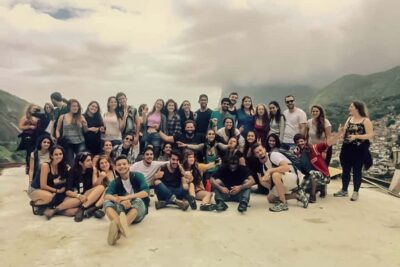
The group limit matters too. With up to 20 people, you are not lost in a crowd. You can hear explanations, you can ask follow-ups, and your guide can adjust on the fly if a question sparks discussion. The experience includes private transportation, which helps you spend your limited time where it counts, moving through and around Rocinha rather than sitting in transit.
Another value point: admission ticket is included. A lot of city tours nickel-and-dime you once you arrive. Here, that cost is already handled.
Where you meet also helps. You start at Metrô São Conrado (Saída B, Estr. da Gávea, São Conrado). Ending back at the same meeting point makes it easier to plug the tour into the rest of your Rio day without a complicated second commute.
Getting around: private transport, a viewpoint stop, and narrow-lane conditions
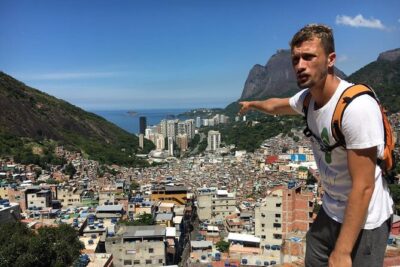
You should expect a guided route that includes a viewpoint. That matters because Rocinha’s layout can be hard to grasp from street level alone. A viewpoint stop gives you a mental map, even if you cannot learn the city like a local in three hours.
You will also navigate tight streets. One of the most commonly praised parts of this tour is the way guides lead you through narrow ways, with quick transitions that keep the group together. In some versions of the experience, you may start with a motor-taxi style transport segment before continuing on foot or with shorter hops. That kind of local transport is not just for speed. It helps you understand how movement works in a place built for people, not for tourist buses.
Practical tip: plan for moderate physical fitness. That doesn’t mean it is a hike, but it does mean you should be comfortable walking on uneven ground and keeping your footing while you shift lanes with your guide.
What to wear:
- Comfortable closed-toe shoes (you will be glad you did)
- Light layers for Rio weather
- A small day bag that does not force you to rummage every two minutes
- Your phone ready for photos, but only when it feels appropriate and when your guide signals it
Culture you can see up close: capoeira, schools, and a cathedral tied to Rocinha
This is not just about buildings. The tour leans hard into culture and community anchors you can actually point to.
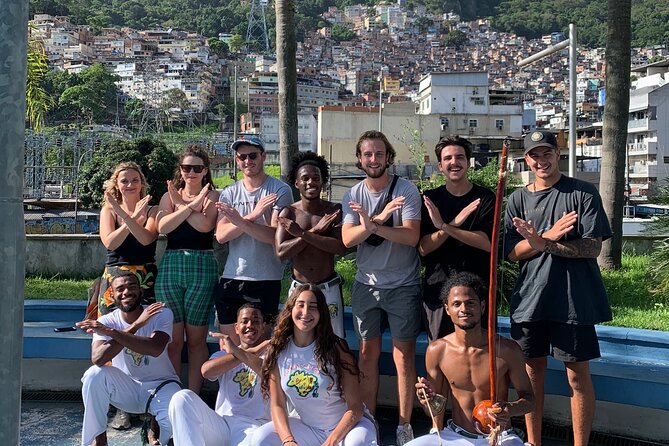
In past experiences, the route has included stops or pass-bys related to capoeira, local schools, and a cathedral connected to Rocinha’s beginnings. That combination is meaningful. Capoeira is a living art form, not a museum piece. Schools represent the future, and a cathedral tied to the area’s origins shows how spiritual and community identity develop over time.
Even if you do not know capoeira from a quick YouTube search, you can still learn what it means locally. The value is in the guided explanation: why people practice, how the art functions socially, and how community life repeats itself day after day.
For me, these stops are the antidote to lazy thinking. It is easy to treat a favela as a single story. Seeing community institutions makes it harder to reduce people to one narrative.
A small but memorable detail from one guide-led moment: in at least one experience, the group had a chance to play soccer with local teenagers. That kind of interaction is optional in spirit but powerful in effect. It shifts you from spectator mode into “we are sharing space” mode.
Your guide is the experience: Carlos, Carolina, Gilvan, and the Q-and-A factor
This tour lives or dies with the guide, and the names people mention give you a clue about what to look for. Carlos and Carolina are praised for strong English and clear explanations. Gilvan gets credit for friendliness and helpfulness. Across these stories, one theme repeats: the guide answers questions without shrinking the topic to a soundbite.
What that means for you: you should come with curiosity. Bring questions about how daily routines work, how people move around, and what surprises visitors the most. If you show respect and keep the conversation human, you will likely get human answers.
One more thing I appreciate: some guides apparently take extra time when the group clicks. Carolina, for example, is described as going a step further after the tour to show an additional spot. That is not guaranteed, but it signals an attitude worth seeking: guides are not just collecting time slots.
One way to help the whole experience go better:
- Ask one thoughtful question, not five rapid-fire ones
- Listen for the first answer, then ask your follow-up
- If you want a photo, ask or wait for guidance
You will get more out of the tour if you treat it like a conversation with a local teacher, not a quick photo stop.
If this one is full, Rio has these as well:
- Rio de Janeiro: 6-Stop Highlights of Rio with Lunch★ 4.4 · 5,157 reviews
- Christ the Redeemer Entry Ticket by Corcovado Train★ 4.4 · 4,476 reviews
- Rio’s City Tour – Tickets for Christ, Sugar Loaf & Lunch included★ 5.0 · 4,389 reviews
- Full Day: Christ Redeemer, Sugarloaf, City Tour & Barbecue Lunch★ 4.5 · 3,142 reviews
- Rio’s Full Day: Selarón Steps, Christ & Sugarloaf – Tickets & Lunch Included★ 5.0 · 2,724 reviews
Safety, respect, and the tipping question to handle with clarity
Safety is the word that matters here, and the most positive experiences mention feeling safe on the tour. People also say they felt comfortable enough to participate and ask questions without being rushed.
Still, you should treat this as a neighborhood experience, not a theme park. Your guide is the authority on what route makes sense, where it is okay to pause, and how to keep the group moving smoothly.
Now the part you should plan for: money expectations. One experience described pressure to pay extra for something after a stop, including a request for 5 reals per person after staying on a terrace. Another person mentioned an uncomfortable sense of implied pressure for tips.
None of this should scare you off automatically. But it should make you prepare. My advice:
- Bring small bills or coins so you are not scrambling mid-moment
- If someone asks for money, pause and ask what it is for
- If you are uncomfortable, say so calmly and stick with your guide’s direction
- Avoid acting like you are in charge. You are not. You are visiting a community
A tour like this can challenge your preconceptions. That emotional work is part of the payoff, but you do not need to force yourself to feel okay with every request.
Price and value: why $49.05 can make sense for Rio
At about $49.05 per person for roughly three hours, the key question is what you actually get. Here, the value comes from the combination:
- Private transportation
- A personal guide
- A viewpoint stop
- Admission ticket included
- A small group experience (max 20)
If you have ever booked a bargain tour in a big city, you know the pattern. The price looks fine until you realize you are paying for transport, tickets, and guide time separately. This tour bundles several of the big costs into one.
What is not included is also clear: foods and souvenirs. So do not assume you will be fed. If you want a snack later, plan for it. If you want a small purchase, plan to pay in cash on the ground.
This is the kind of trip that works best when you are not trying to pack in ten stops. It is better as a focused chunk of Rio learning, especially if you already did the postcard stuff and want the city to look different when you go to sleep that night.
Timing, weather, and avoiding a rough start
This experience depends on good weather. That makes sense, since guided walking and viewpoint stops are easier when conditions are stable. If the weather turns, you should expect rescheduling or a full refund option.
It also has a minimum number of travelers requirement. In practice, that means on rare days it might not run as scheduled.
One more practical note: confirmation is usually received at booking time, unless you book within two hours of travel. If you are booking last minute, assume you might need patience while the operator checks availability.
If you are heading into Rio on a tight schedule, I’d treat this as a must-do slot with buffer time. That way, even if something small changes, you are not sprinting to catch dinner or another reservation.
Should you book this Rocinha tour? My honest take
If your goal is to get beyond headlines and see how people build daily life in a real neighborhood, this tour is a strong pick. I especially think it fits you if:
- You want context fast and you like guided Q-and-A
- You prefer small groups over big bus tours
- You are open to learning, even if it nudges your comfort level
- You value cultural stops tied to community, not just views
I would reconsider if:
- You hate uncertainty around money requests and you strongly prefer tours with strict, transparent pay-only rules for everyone
- You want a hands-off experience with zero emotional intensity
- You cannot handle moderate walking on uneven streets
For most first-time Rio visitors who feel curious rather than entitled, Favela Lives Tour is a smart booking. It is not perfect, because real life is not perfect. But when it works, it does what you came to Rio for, it changes your perspective while staying grounded in people, places, and conversation.
FAQ
How long is the Rocinha tour?
It lasts about 3 hours.
What is included in the price?
The tour includes private transportation, a viewpoint, a personal guide, and an admission ticket.
What is the meeting point for the tour?
The tour starts at Metrô São Conrado (Saída B, Estr. da Gávea, São Conrado, Rio de Janeiro, RJ, 22610-001). It ends back at the same meeting point.
Is food included?
No. Foods are not included.
How many people are in the group?
The tour has a maximum of 20 travelers.
Does the tour require good weather?
Yes. It requires good weather, and if it is canceled due to poor weather, you will be offered a different date or a full refund.
Recently added around Rio






Guided Favela Tours, compared.

3 Hour Rocinha Favela Walking Tour with a Local Guide
Read our review →
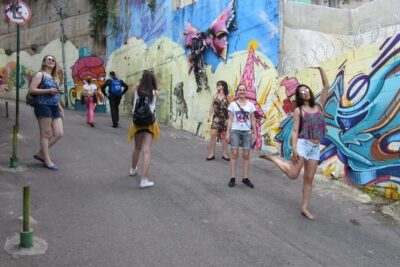
Favela Tour Rio de Janeiro – Vidigal Walking Tour by Russo Guide
Read our review →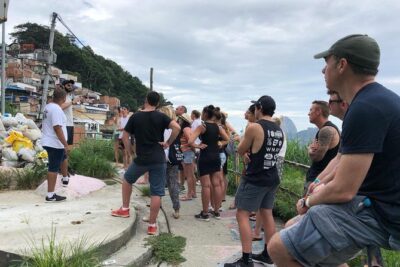
More of this kind of Rio day