
Reviewed · SAMBA NIGHTS
Samba Soul Tour
Samba has a map in Rio. This half-day route connects samba’s origins to the city’s port history, then carries you to the working world behind Carnival at Cidade do Samba. I especially like how the tour makes you connect dots, from Praça Mauá’s role in welcoming ships to the places where samba culture took shape.
The second big win is the hands-on production focus at Cidade do Samba. You see how allegories, costumes, and big-car assembly come together by hand, with the professionals who make a parade possible. One thing to plan around: the Museu de Arte do Rio portion depends on the day, and the tour also needs decent weather to run smoothly.
In This Review
- Key Things I’d Prioritize on Samba Soul Tour
- A Guided Route from Praça Mauá to Samba City
- Stop 1 at Museu de Arte do Rio (MAR) for Port-Zone Views
- Stop 2 at Praça Mauá, Where Avenida Rio Branco Begins
- Stop 3 on Boulevard Olímpico, Spotting Docks and Street Art
- Stop 4: Inside Cidade do Samba, Where Carnival Gets Made
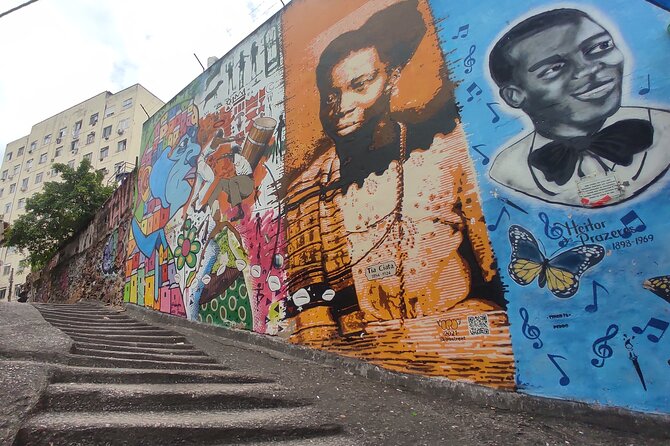
- Stop 5 at Pedra do Sal, Small Africa and Urban Samba Roots
- Stop 6 at Largo da Prainha and the Mercedes Baptista Statue
- Timing, Transit, and Group Size: What the 4 to 5 Hours Actually Feels Like
- What You Should Bring (So You Enjoy It More)
- Who This Tour Fits Best
- Should You Book the Samba Soul Tour?
Key Things I’d Prioritize on Samba Soul Tour
- Praça Mauá first, samba second: start with the port-era context that shaped Rio’s cultural mix.
- VLT tram time is learning time: the ride between stops is part of the story, not dead travel.
- Cidade do Samba is the main event: you get an included workshop ticket for behind-the-scenes production.
- Pedra do Sal is where the sound comes from: it is tied to the small Africa area and the birth of urban carioca samba.
- End with a roda de samba vibe: you finish near Largo da Prainha, where you can join the mood of an authentic samba gathering.
Other samba nights around Rio:
- Rio de Janeiro: Beginner Samba Lesson in Ipanema
★ 4.9 · 1,071 reviews - Rio: Pub Crawl in Lapa with Cachaça Tasting and Live Samba
★ 4.7 · 881 reviews - Rio: Carnival Backstage Tour at Samba City with Cocktail
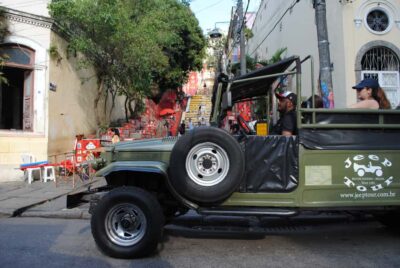
★ 4.6 · 520 reviews - Hop-ON Hop-OFF Sightseeing Bus in Rio de Janeiro – Rio Samba Bus
★ 3.5 · 457 reviews
A Guided Route from Praça Mauá to Samba City
Samba Soul Tour is set up like a guided walk that uses transit like a classroom. You start near the port zone, then move step by step toward Samba City, with short stops that help you read Rio like a storybook.
This is a compact group experience, capped at a maximum of 15 people, and it is offered in English. Expect about 4 to 5 hours, so it is a smart choice when you want context and still want your evening free.
The value is practical: the tram rides (VLT) and the Cidade do Samba ticket are included, so you are not juggling extra entry fees for the main production stop. Lunch is not included, so plan to eat on your own after.
Stop 1 at Museu de Arte do Rio (MAR) for Port-Zone Views
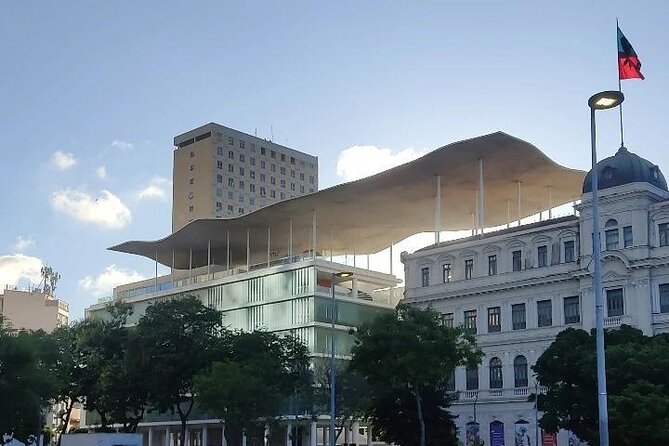
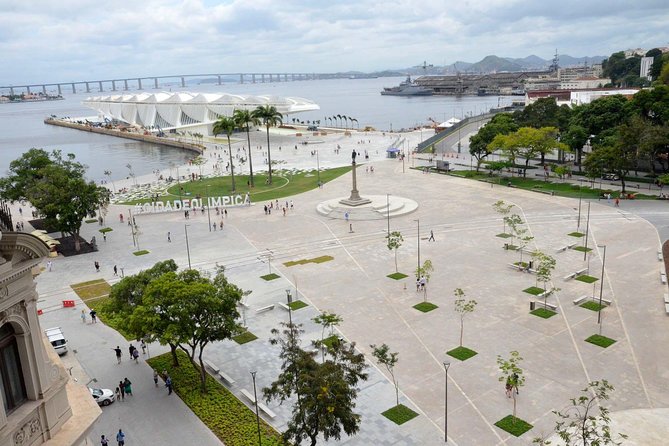
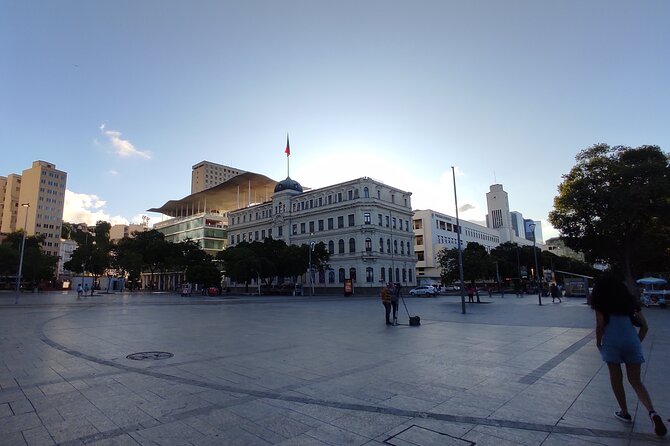
You meet at Museu de Arte do Rio, at Praça Mauá. Before you go anywhere else, you head up to the museum terrace for a panoramic look over Praça Mauá and Guanabara Bay. It is a quick way to ground the whole tour, because this area is tied to Rio’s shipping and cultural contact.
Here is the practical catch: the MAR stop includes time at the terrace, but admission to the museum is not included, so you should treat it as a viewpoint moment more than a museum visit. Also note the museum closes on Mondays. If you are traveling on a Monday, the schedule may feel tighter, since that stop may not run like you expect.
I like starting with views because you get oriented fast. Once you see Guanabara Bay and the port layout, the later cultural stops make more sense, even if you do not know the city yet.
Stop 2 at Praça Mauá, Where Avenida Rio Branco Begins
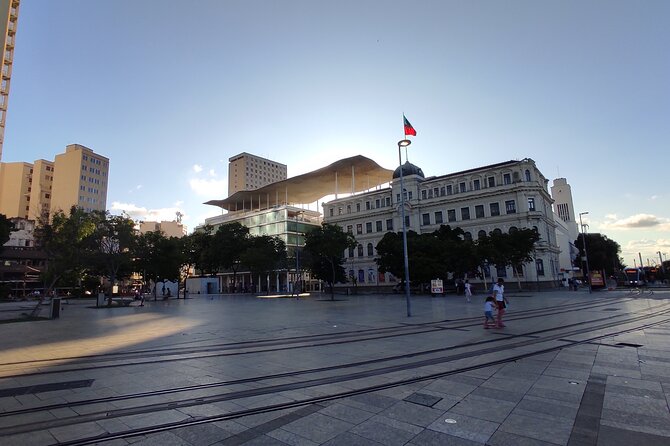
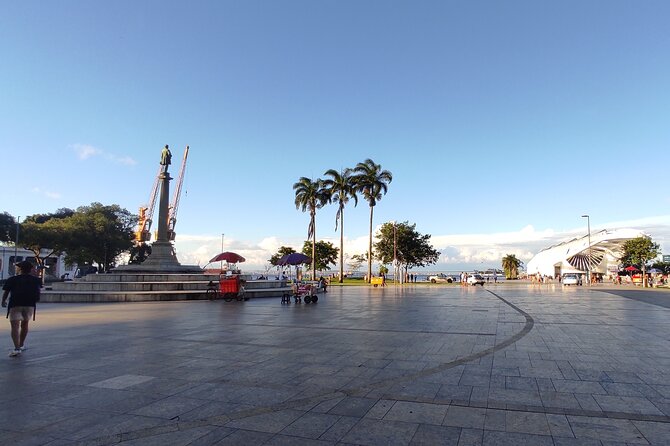
Praça Mauá is more than a plaza. It marks the beginning of Avenida Rio Branco and the Port Region, and it became a key arrival point for visitors once Porto do Rio opened in the early 1900s. This is the kind of history that matters because it explains why the city’s culture formed through movement, trade, and constant new arrivals.
Around the square you pass or see important landmarks including the Rio Art Museum (MAR) and the Museum of Tomorrow, plus the Night building, which was Rio’s first skyscraper built in 1930. You also get the “beginning-of-the-story” feeling, because from here you are stepping into the part of Rio that connected people and ideas.
The stop is short, about 30 minutes, and it is free. That length is ideal for photos and a basic orientation, without turning the tour into a long, museum-heavy day.
Stop 3 on Boulevard Olímpico, Spotting Docks and Street Art
Next comes the tram ride on the VLT from Plaza Mauá toward Samba City. During this segment, you can spot old docks and a street art gallery along Olympic Boulevard. This is one of those sections where your eyes do the work, because the route itself helps you visualize the port infrastructure that fed the city’s growth.
The time is around 30 minutes, and the tram tickets for this portion are included. I recommend treating this as your reset moment. If you need water, this is a good time to grab it, since you will be closer to the production zone soon.
Street art can be hit-or-miss if you are not a fan, but here it adds a layer of modern Rio culture on top of the older port setting. It helps the tour feel like Rio now, not just history on paper.
Stop 4: Inside Cidade do Samba, Where Carnival Gets Made

Cidade do Samba is the centerpiece, and it is where the tour earns its best marks for substance. You follow the same exploratory route toward Samba City, then the Carnival Experience opens the workshop for visitors.
This is where you see the creation and production of a samba school parade long before it happens at Marquês de Sapucaí Sambadrome. The workshop focus is practical and very visual. You learn how allegories and customs are produced, how carnivalesque designs are handled, and how the big-car assembly is done by hand. You also get close to the hard work of the professionals involved in the production.
I especially like this stop because it flips a common travel assumption. Many people think Carnival is just costumes and music. Here, you see it as engineering, craft, and teamwork. Even if you only know the basics of samba schools, the process gives you a deeper appreciation for why the final parade looks the way it does.
Time matters here: the included stop is about 1 hour at Cidade do Samba. That is enough to understand the steps without leaving you exhausted. Your guide can also translate the cultural meaning into clear terms, and one reviewer highlighted how their guide, Celine, explained not only samba history but also a brief history of Brazil.
One more practical note: since Cidade do Samba is production-focused, your pace slows a bit. Wear comfortable shoes and keep your phone ready, because you will likely want photos when the workshop scenes open up.
If this one is full, Rio has these as well:
- Rio de Janeiro: 6-Stop Highlights of Rio with Lunch★ 4.4 · 5,157 reviews
- Christ the Redeemer Entry Ticket by Corcovado Train★ 4.4 · 4,476 reviews
- Rio’s City Tour – Tickets for Christ, Sugar Loaf & Lunch included★ 5.0 · 4,389 reviews
- Full Day: Christ Redeemer, Sugarloaf, City Tour & Barbecue Lunch★ 4.5 · 3,142 reviews
- Rio de Janeiro: Rocinha Favela Walking Tour with Local Guide★ 4.8 · 3,052 reviews
Stop 5 at Pedra do Sal, Small Africa and Urban Samba Roots
After the workshop, the tour pivots to the sound itself. Pedra do Sal sits in the historic region known as small Africa, which stretched from around Plaza Mauá to Cidade Nova. This area mattered because it helped shape where samba traditions developed, played and danced by people building community through rhythm.
At Pedra do Sal, the focus is on the rural samba roots, the style of music made with hands and percussion, and the dancing traditions that include tap dancing, sieved steps, and umbigadas (a belly-to-belly dance gesture). The tour also points out that urban carioca samba emerged there, coming from popular samba and older ranch settings from carnival.
This stop is shorter, about 20 minutes, and it is free. That makes it easy to fit, but it also means you should come ready to pay attention. If you want a longer story, you might later pair this with time in the area on your own, but even the quick version gives you a key piece of context.
I find Pedra do Sal especially helpful if you feel a bit lost on your first Rio trip. When you connect samba to specific neighborhoods and social spaces, it stops being vague cultural talk and becomes something you can picture.
Stop 6 at Largo da Prainha and the Mercedes Baptista Statue
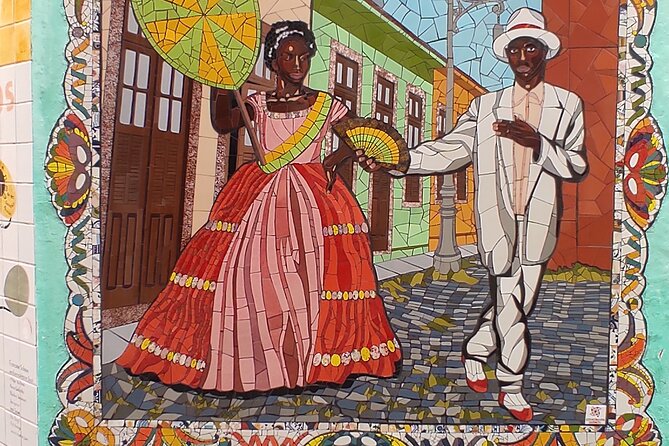
You finish near Estátua de Mercedes Baptista, in the Largo São Francisco da Prainha area. The tour closes by spotlighting black women and their role in samba music and Afro-Brazilian dance, then sets you in the right place to catch the mood of samba at roda de samba.
Largo da Prainha is also where you can grab a snack and refreshments before or during the end of the tour. The point is not a big formal event that lasts forever. It is more about helping you land in the culture naturally, so your last hour feels like Rio, not just a transfer.
This is also a practical ending zone. The area has bars, taxis, and Uber options, and the tour ends near the Estátua de Mercedes Baptista. You will likely find it easy to continue your evening without extra planning.
Timing, Transit, and Group Size: What the 4 to 5 Hours Actually Feels Like
The schedule moves in short blocks. You start at MAR, then you do Praça Mauá, then you ride the tram to Samba City, then you work through Cidade do Samba, then you go to Pedra do Sal, and finally you wrap at Largo da Prainha.
Because the stops are staggered, your feet get a break between locations thanks to the included tram segment. Still, you should expect some walking between viewpoints and plazas. Comfortable, closed-toe shoes help a lot, especially in Rio where surfaces can range from smooth to uneven.
Weather matters for this tour. It requires good weather, and if conditions are poor, you get offered another date or a full refund. That tells you the route includes enough outdoor time that you should not assume a rainy day plan will work.
Group size stays small. With a max of 15 travelers, you are less likely to feel swallowed by the group. It also usually means your guide can keep the pacing human, especially during the workshop stop.
What You Should Bring (So You Enjoy It More)
Since lunch is not included, you will want to think about food timing. Either have an early meal before you go or plan a snack afterward when you reach the Prainha area.
Bring:
- Water, especially if the day is warm
- Comfortable shoes for plaza walking and production-area movement
- A light layer, if evening feels cooler near the bay
- Your camera or phone, because the MAR terrace view and the workshop visuals are photo-friendly
Also keep an eye on the MAR detail if you are visiting on a Monday. The museum is closed on Mondays, and while the terrace viewpoint is part of the plan, it is smart to be prepared for a different feel that day.
Who This Tour Fits Best
This is a strong fit for you if you want samba with context, not just a single show. The tour is designed to link the social, economic, and political background of samba traditions to the spaces where those traditions formed and evolved.
It also works well if you like understanding how things are made. Cidade do Samba is not just a viewing area. It is about craft, process, and the work behind the spectacle.
You might like this less if you prefer a very relaxed sightseeing day with minimal standing. There is structure here, and the tour expects you to keep moving between cultural stops.
Language is English, and most travelers can participate. If you can manage a half-day walking schedule with short transit segments, you are in the sweet spot.
Should You Book the Samba Soul Tour?
Book it if you want a practical, story-driven way to understand Rio’s samba culture. The tour’s best strength is balance: you get port-zone history at Praça Mauá, a roots stop at Pedra do Sal, and then real production craft at Cidade do Samba. The included tram tickets and the workshop admission also make it easier to plan without surprise add-ons.
I would especially recommend it to first-timers who feel like samba is everywhere in Rio but hard to place. This route gives you the places and the logic, so samba starts to feel specific instead of generic.
Skip it or reschedule if your dates depend on Monday visits to MAR, or if you know your trip coincides with unreliable weather. The tour needs good weather to feel right.
If you want one ticket that turns samba from entertainment into understanding, Samba Soul Tour is a smart choice.
Recently added around Rio



Samba Nights, compared.


Pub Crawl in Lapa with Cachaça Tasting and Live Samba
Read our review →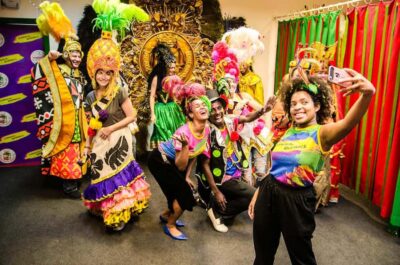
Carnival Backstage Tour at Samba City with Cocktail
Read our review →
Hop-ON Hop-OFF Sightseeing Bus in Rio de Janeiro – Rio Samba Bus
Read our review →
Carnaval Experience: Backstage Tour at Samba City with Cocktail
Read our review →
More of this kind of Rio day