
Reviewed · GUIDED FAVELA TOURS
Rio de Janeiro: the biggest favela tour in Rio, lest go!
A favela tour that changes your view fast. This one starts at the bottom of Rio’s largest hillside communities and then moves with intention, from a quick briefing on respect to graffiti history, local homes, and big-time panoramic views with Jefferson, a resident guide named in multiple departures.
What I like most is the mix of street life you can actually see up close, especially the photo stops around the local market for food and arts with skilled artists. I also love the climb for the wall paintings and the viewpoints that frame Ipanema, Leblon, Flamengo, Lagoa Rodrigo de Freitas, Christ the Redeemer, and then Copacabana and Sugarloaf from higher up.
A possible drawback is the physical side. Expect a lot of steps and hiking, and the tour is not suitable for pregnant women. You’ll also want to bring cash for the local guide, which is listed as $10.
In This Review
- Key highlights you will feel on the day
- Why this big favela tour works (and not just for photos)
- Meeting point on R. Sá Ferreira, and the short pre-climb setup
- The favela market stop: food, arts, and real photo opportunities
- Graffiti wall paintings: where the neighborhood’s stories show up
- Coffee in a local house: the moment the tour becomes personal
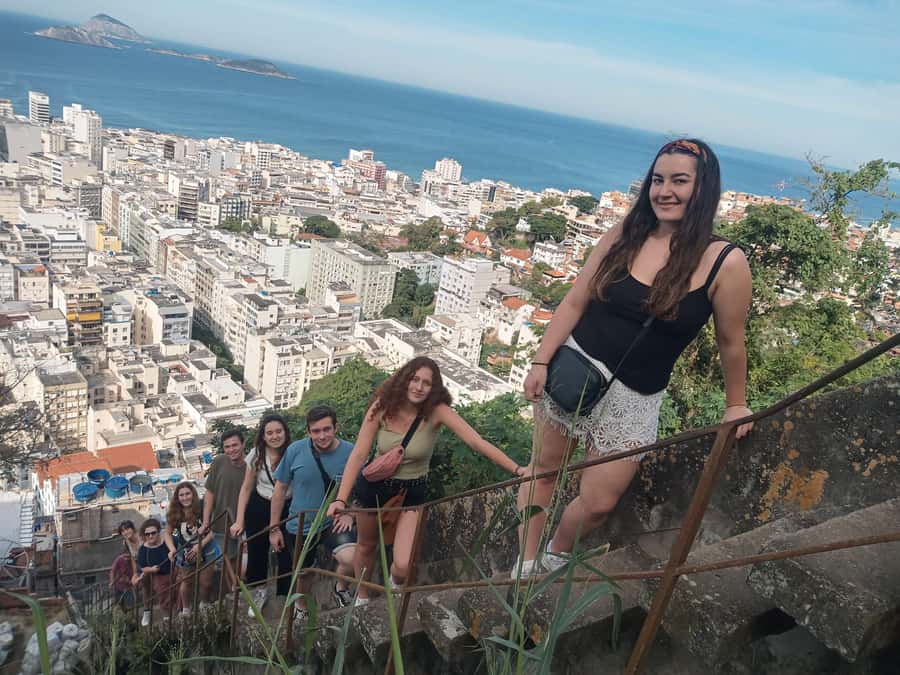
- The climb to the hilltop: steps, viewpoints, and city landmarks in layers
- Optional motorcycle ride and soccer: choose your level
- Gallery time and the kids painting program: why this stop has weight
- Drinks, appetizers, and Brazilian music at the top
- Value and pricing: is $80 worth it here?
- Who should book, and who should skip
- Quick planning tips so you enjoy every stop
- Should you book this big favela tour?
- FAQ
- How much does the Rio favela tour cost?
- Where do we meet for the tour?
- How long is the tour?
- What is included in the price?
- What should I bring?
- Are food and drinks included?
- Can I ride a motorcycle or play soccer?
- Is it suitable for pregnant women?
Key highlights you will feel on the day
- A safety-first community briefing before you wander
- Market photo stops for food and arts, guided by someone from the neighborhood
- Graffiti and wall paintings that read like a timeline
- Local house visit for coffee and everyday life
- Optional soccer with locals, plus a short motorcycle ride (if you want it)
- A viewpoint route with skyline views from multiple angles
Other guided walks through the favelas:
- Rio de Janeiro: Rocinha Favela Walking Tour with Local Guide
★ 4.8 · 3,052 reviews - Rio De Janeiro: Half-Day Rocinha Favela Walking Tour
★ 4.7 · 2,272 reviews - 3 Hour Rocinha Favela Walking Tour with a Local Guide
★ 5.0 · 833 reviews - Favela Tours
★ 5.0 · 660 reviews
Why this big favela tour works (and not just for photos)

Rio’s favela areas can get talked about as one scary blob in travel marketing. This tour is different because it treats the community as a living place, with rules, relationships, and pride. You start at the bottom, get practical instructions on how to behave, and then move through the neighborhood in a way that helps you understand what you are seeing instead of just taking pictures.
Two things make this one feel grounded. First, you get to see the everyday texture of Rio, like food and arts at the local market, not a staged performance. Second, the guide experience matters. Jefferson is named by travelers as a resident who knows the neighborhood and helps you meet the people you pass, which is a big part of why this tour tends to feel safe and human.
There’s also a clear reason the route includes both street-level stops and a high viewpoint. You are not only collecting images. You are building a sense of place, how the hills rise, how routes connect, and how the city’s famous landmarks sit next to real local life.
Meeting point on R. Sá Ferreira, and the short pre-climb setup
You meet right by Copacabana at R. Sá Ferreira, 38, at the corner with Avenida Nossa Senhora de Copacabana and Rua Sá Ferreira. It’s a practical location because you are close to a lot of major areas, yet this tour still begins where the neighborhood does.
Before you head into the thicker part of the tour, there is a short scooter transfer listed as 15 minutes. That helps you avoid spending the first stretch of the day in traffic and lets the day focus on the community walk and the climb.
The group then settles into what the tour asks for: listen closely, keep your phone and camera use respectful, and follow the guide’s instructions. This is not just etiquette. In hillside neighborhoods, how you move, where you stop, and how loudly you talk can shape the mood in seconds. The tour is built around that reality, which is why it tends to feel welcomed rather than like an awkward outsider mission.
The favela market stop: food, arts, and real photo opportunities
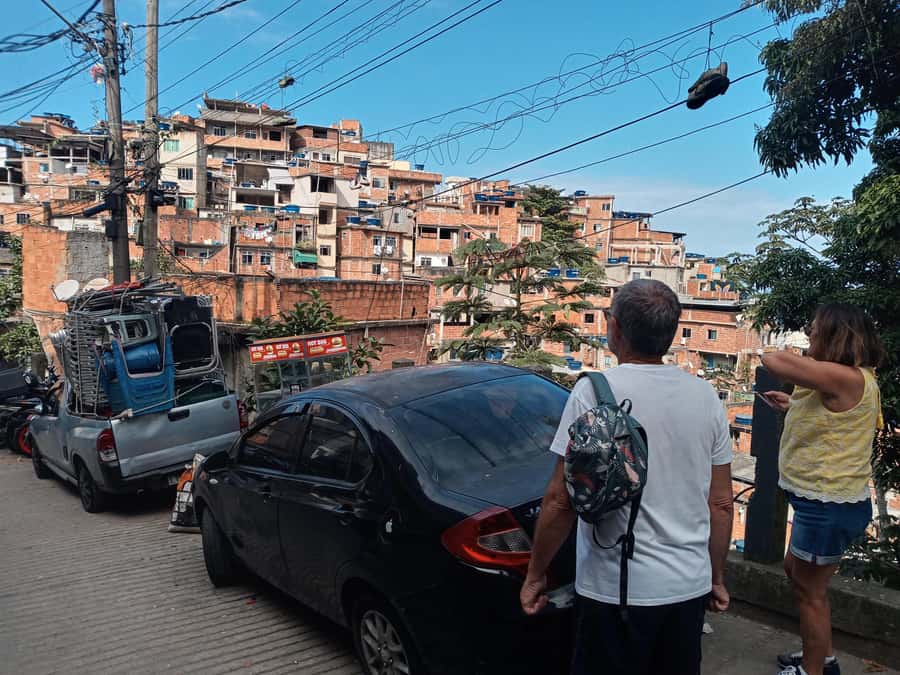
One of the most praised parts of this experience is the chance to take photos around the local market, especially for food and arts. This is not a quick glance. You get time to look, learn what you are seeing, and photograph in a way that fits the moment.
What I like about this style of stop is that it gives you something specific to look for. When you shoot food, you want clean angles and honest light. When you shoot arts, you want names, materials, hands at work, and the tools around them. With a resident guide, you are less likely to miss the story behind a craft or end up taking the kind of photo that makes people feel like background scenery.
There’s also a social payoff. As you walk through, you get introduced to locals and you pass people who are not performing for you. That’s where the trip starts to feel like Rio, not just a viewpoint package.
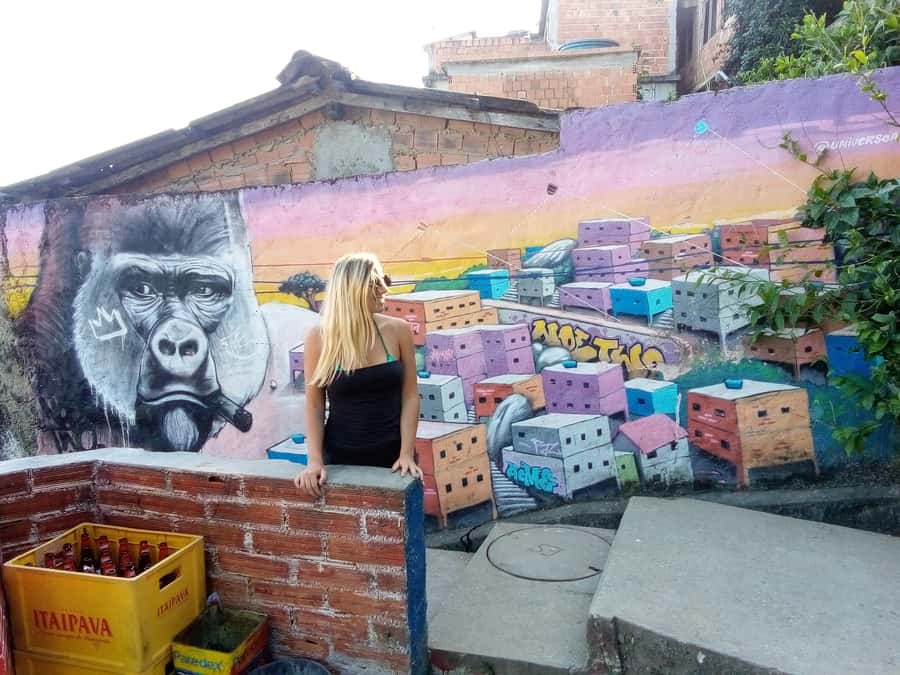
Graffiti wall paintings: where the neighborhood’s stories show up
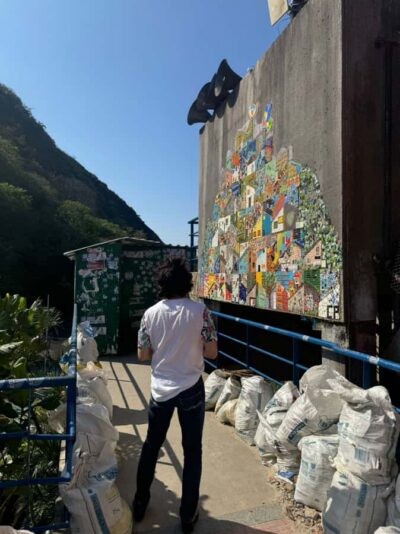
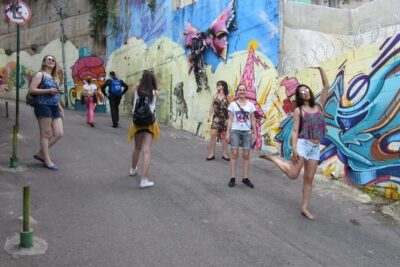
After the market, you move into the section focused on wall paintings inside the favela. The tour description frames it as full of history and passion, and the route is designed so you can actually see how the artwork connects to the community.
Here’s how to get the most out of it. Don’t treat the walls like a mural gallery where you only need the best angle. Instead, notice placement. Notice layers. Notice how different sections carry different moods. When you understand that, the art stops being just color on concrete and becomes a language for memory, identity, and resilience.
Also, photography here can be tricky in a good way. The best shots usually come when you slow down, wait for a natural moment, and let the guide handle the timing. If the group is moving, be ready to move with it. If the guide says stop, that’s when you stop and get your shot.
Coffee in a local house: the moment the tour becomes personal
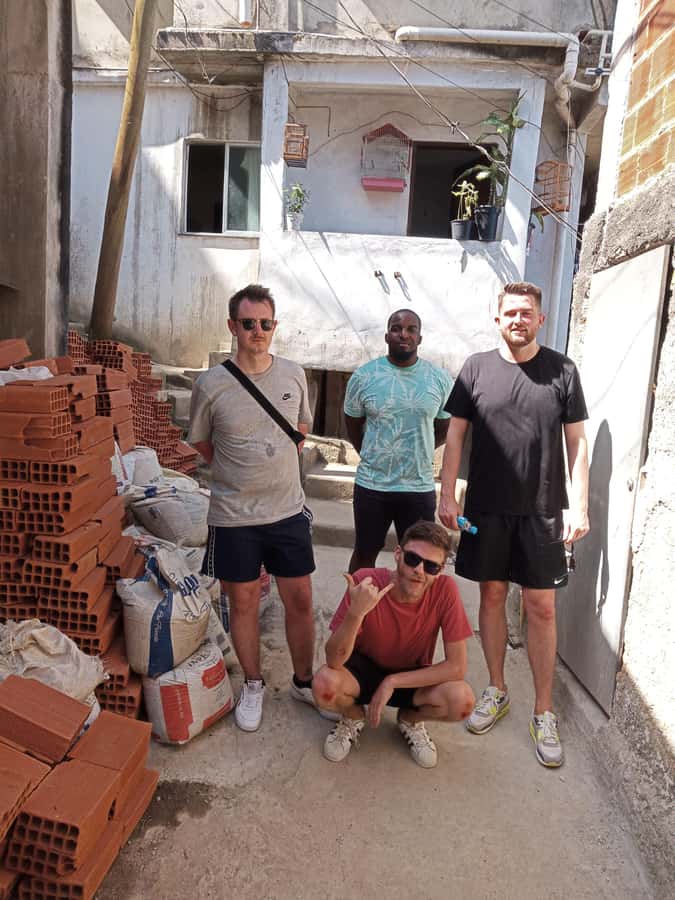
A standout part is the experience of life inside a local house, with a coffee stop. This isn’t positioned as a luxury add-on. It’s framed as a window into daily routines, where you see how people live and how hospitality works in a neighborhood setting.
Why this matters for your trip: the viewpoint from high up can be breathtaking, but it can also feel distant. Coffee brings it back to earth. You understand the tour is not only about views of Rio. It is about people who live in the same city you came to see.
Be prepared for a contrast in pace. Moments like this usually feel quieter than the market and street-art sections. If you are rushing, you miss it. If you listen, you get the kind of connection that makes the rest of the day click.
If this one is full, Rio has these as well:
- Rio de Janeiro: 6-Stop Highlights of Rio with Lunch★ 4.4 · 5,157 reviews
- Christ the Redeemer Entry Ticket by Corcovado Train★ 4.4 · 4,476 reviews
- Rio’s City Tour – Tickets for Christ, Sugar Loaf & Lunch included★ 5.0 · 4,389 reviews
- Full Day: Christ Redeemer, Sugarloaf, City Tour & Barbecue Lunch★ 4.5 · 3,142 reviews
- Rio’s Full Day: Selarón Steps, Christ & Sugarloaf – Tickets & Lunch Included★ 5.0 · 2,724 reviews
The climb to the hilltop: steps, viewpoints, and city landmarks in layers
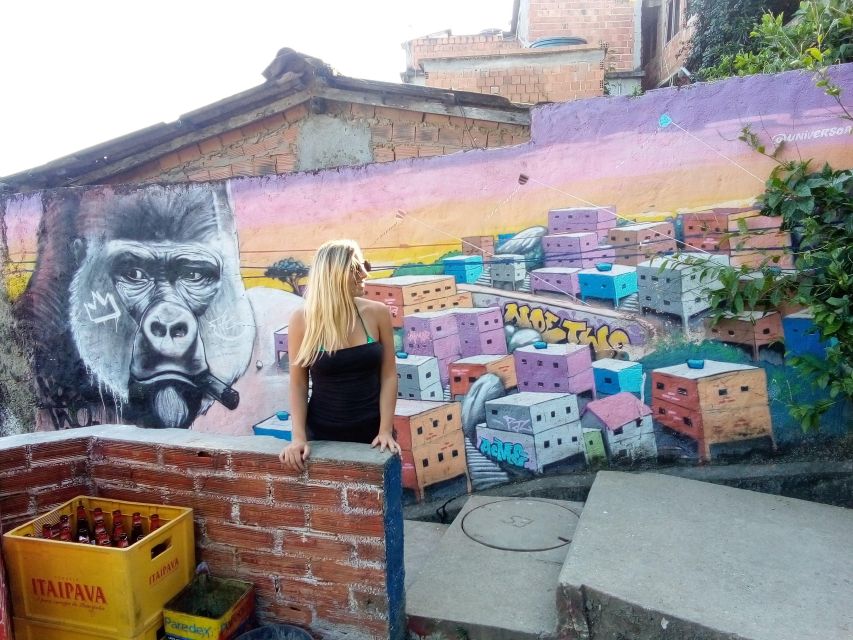
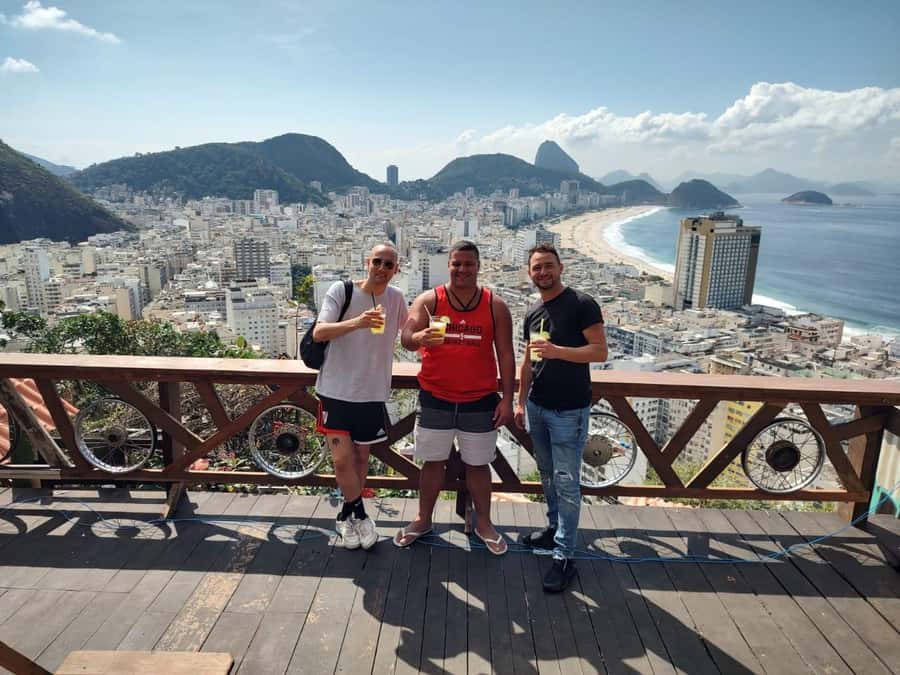
Then comes the hike. The plan includes hiking up to the top of the hill for sweeping views, and this is where comfortable shoes matter. The tour notes list sports shoes and breathable clothing for a reason.
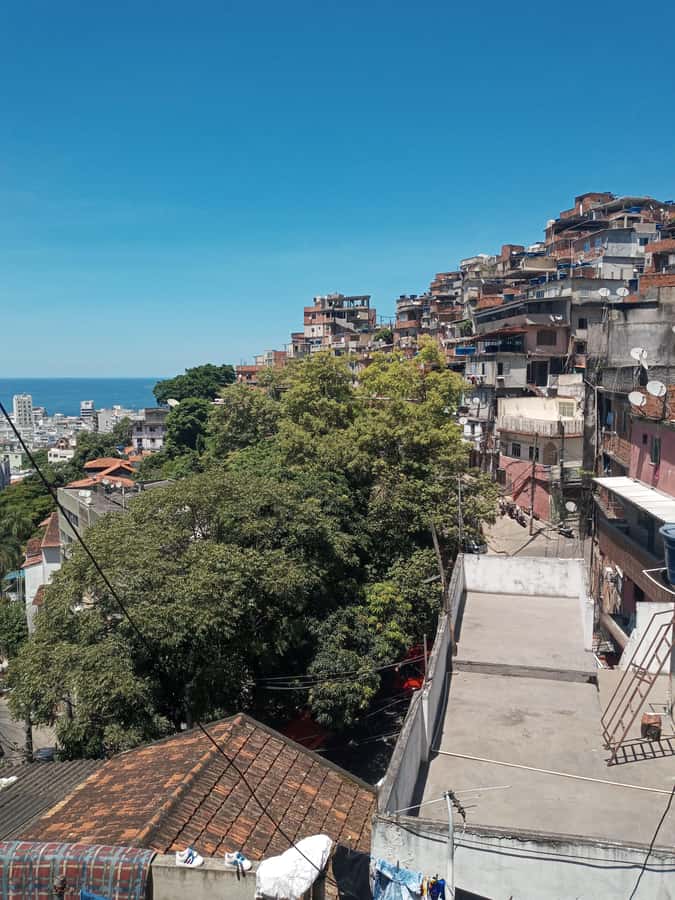
At the viewpoint, you get a long look across Rio. The route is designed so you can see recognizable landmarks from up high, including Ipanema, Leblon, the Flamengo club, Lagoa Rodrigo de Freitas, Christ the Redeemer, the jungle areas, and then later Copacabana Beach and Sugarloaf from the top of the hill.
One tip that makes this section better: when your guide points things out, don’t only look for the landmark. Notice the geography. Hills change sightlines. Coastline changes sound. Rio’s neighborhoods stack on different elevations, which is part of why the view feels different from a simple beach walk.
This is also where you get a big part of the emotional payoff people talk about. A good climb does two things. It earns your view. And it helps you feel respect for the physical effort of living on a slope.
Optional motorcycle ride and soccer: choose your level
There are a couple of optional ways to add variety during the tour.
First, there is an option to get on the motorcycle for about 5 minutes straight to the middle of the favela. The wording suggests it is a short ride, not an all-day transport solution. If you choose it, treat it as a quick flavor of the neighborhood route, not as a replacement for walking and stopping.
Second, playing soccer with locals is listed as an option. This is one of those activities that can either feel awkward or feel wonderful, depending on attitude. If you’re open and playful, you’ll likely find it lands well. If you are stiff, camera-first, or worried about being in the way, it can feel off. You will get guidance, but your energy still matters.
Gallery time and the kids painting program: why this stop has weight
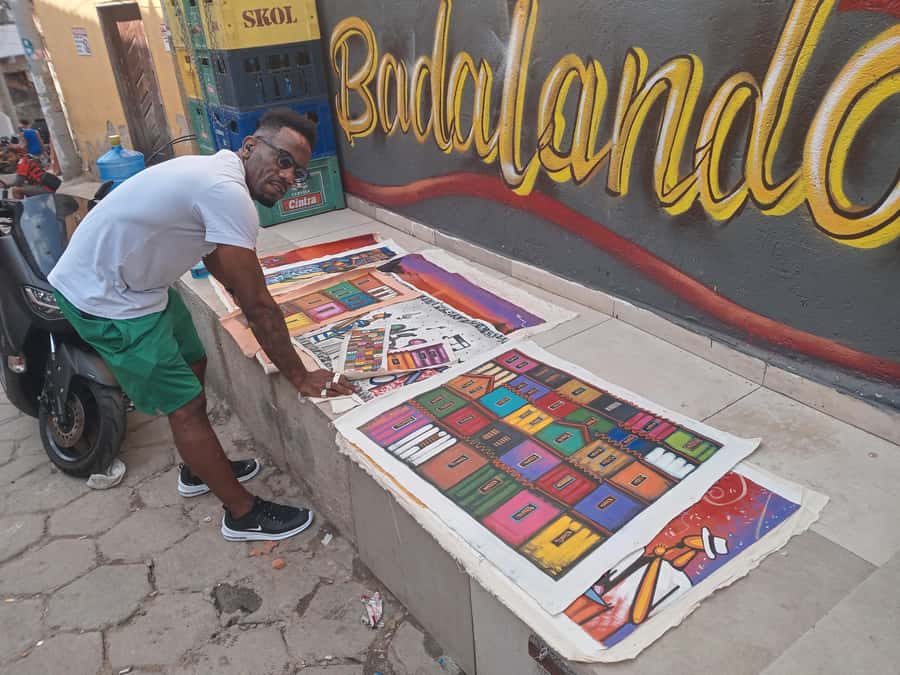
The tour also includes a visit to the gallery of a famous local who teaches kids how to paint and have a better life. Even if you’re not a museum person, this stop tends to matter because it shows the future being built from inside the community.
What makes it valuable is the connection to the earlier stops. Street art on walls connects to art in a classroom or studio space. Food and market life connect to daily stability. The tour is basically teaching you to connect dots across ordinary places.
If you care about how art and education work together, you’ll appreciate this section. If you only came for the views, you might find this part slows the day down, but it usually adds the meaning you did not know you were missing.
Drinks, appetizers, and Brazilian music at the top
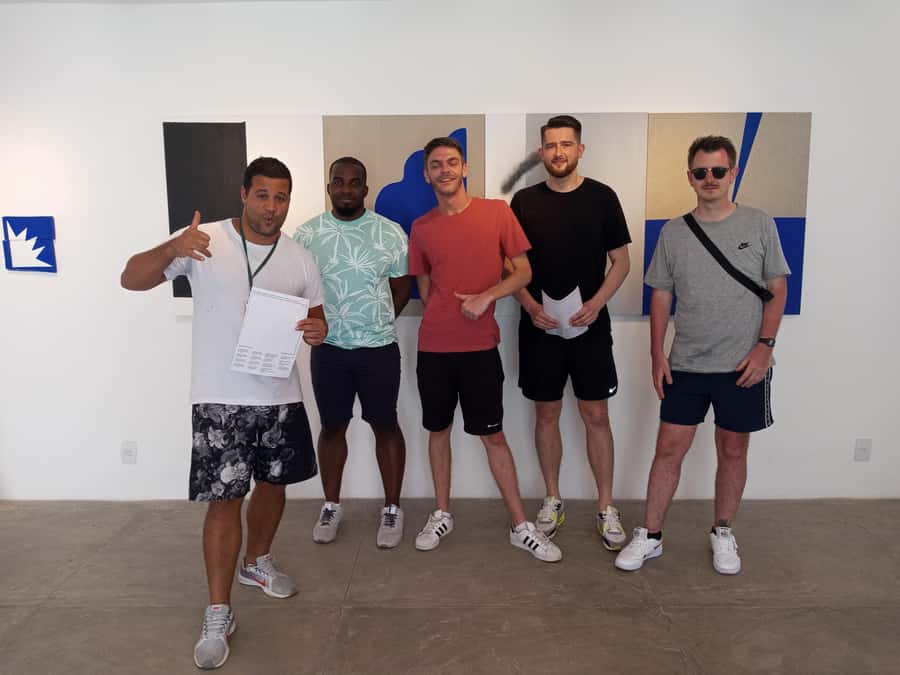
At the end, there is time at the top of the favela for drinks, appetizers, and Brazilian music. Importantly, food and drinks are listed as not included, so if you plan to order something, budget for it and bring cash.
This is a nice finishing rhythm because you’ve already earned the viewpoint. Instead of just staring and leaving, you get a social moment that feels Rio, with sound and conversation in the open-air space.
Also, since the tour is built to finish right back at the meeting point, you avoid the classic problem of ending somewhere random and then figuring out logistics alone.
Value and pricing: is $80 worth it here?
At $80 per person for a guided, multi-part neighborhood experience, you are paying for more than walking time. You are paying for:
- a local resident guide who helps you behave correctly and safely
- structured stops for market, wall art, and viewpoints
- optional activities like a short motorcycle ride and soccer (if you choose them)
- a visit that goes beyond the typical photo agenda, including a local house coffee and an art teaching space for kids
Could you do part of this DIY? Sure, but DIY tends to turn into guesswork. You still need community context, introductions, and the right way to pause for photos. The $80 price makes sense when you value that guidance, especially if you want to understand Rio beyond the postcard layer.
A quick cost note: besides the $10 cash you are asked to bring for the local guide, food and drinks are not included. If you drink or snack at the end, that will add to the total. Still, the tour gives you clear options, so you can keep it simple.
Who should book, and who should skip
This is a strong fit if you:
- want an authentic Rio experience that goes beyond beach and traffic views
- care about street art with context, not just photos
- like meeting locals and moving with a guide who knows the area
- can handle a lot of steps and hiking
You should skip if:
- you are pregnant, since it is explicitly listed as not suitable
- you have mobility limits that make stairs hard
- you hate climbing and prefer flat sightseeing only
If you are nervous about safety, read that as a normal feeling, not a reason to avoid. This tour is built around briefing, respect, and a resident guide, and that is what tends to make people feel at ease.
Quick planning tips so you enjoy every stop
Bring:
- breathable clothing
- sports shoes
- cash (listed as $10 for the local guide)
Wear:
- clothes you can move in. Steps are real here.
- something you can handle for an active day with multiple stops.
Plan your headspace:
- expect a mix of energetic street moments and quieter coffee and gallery time
- be patient during photo stops. The best shots often take time and permission
Also, keep language in mind. The tour runs with an English, Portuguese, or Spanish live guide, which helps you follow the story and rules without confusion.
Should you book this big favela tour?
If you want a Rio experience that feels like Rio, this is worth serious consideration. The biggest reasons to book are the resident-led perspective, the structured stops that connect market life to wall paintings to a kids art program, and the viewpoint circuit that lays out the city landmarks you came for.
I’d book it if you enjoy walking, you want photos with context, and you are willing to act with respect and follow the guide’s direction. I would not book it if climbing stairs is a deal breaker for you, or if you fall into the not-suitable-for-pregnant-women category.
FAQ
How much does the Rio favela tour cost?
It costs $80 per person.
Where do we meet for the tour?
You meet at the corner between Avenida Nossa Senhora de Copacabana and Rua Sá Ferreira, exact address Rua Sá Ferreira, 38.
How long is the tour?
The details describe a day with several timed parts, including a 3-hour sightseeing break at Copacabana and an additional 1 hour at the end, plus a short scooter transfer.
What is included in the price?
The tour includes a coffee break and the meeting point.
What should I bring?
Bring breathable clothing and sports shoes, and bring cash (listed as $10) to pay the local guide.
Are food and drinks included?
No. Food and drinks are listed as not included, though the tour mentions optional drinks and appetizers at the end.
Can I ride a motorcycle or play soccer?
A motorcycle ride is listed as an option for about 5 minutes straight to the middle of the favela. Playing soccer with locals is also listed as an option.
Is it suitable for pregnant women?
No, it is not suitable for pregnant women.
If you want, tell me your travel month and fitness level, and I’ll suggest whether to take the motorcycle option and how to time your day around the hill climb.
Recently added around Rio





Guided Favela Tours, compared.

3 Hour Rocinha Favela Walking Tour with a Local Guide
Read our review →
Favela Tour Rio de Janeiro – Vidigal Walking Tour by Russo Guide
Read our review →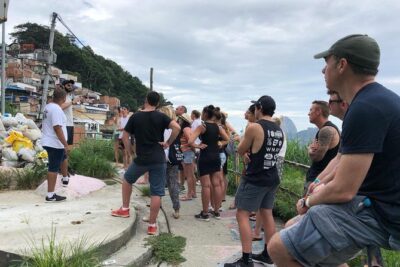
More of this kind of Rio day