

Reviewed · WALKING TOURS
Rio de Janeiro: Downtown Walking Tour
Rio’s city center tells stories fast. This Downtown Rio walking tour connects you to Brazil’s shift from monarchy to republic while you move through real streets, not staged history. I especially liked how you get a clear timeline of the country and Rio in a short 4 hours.
Second, I loved the architecture contrast, from grand old buildings to the more formal cultural blocks around Cinelândia. You see places you would likely miss on your own, like the Paço Imperial area, do Carmo Convent, and the CCBB Cultural Center stop at Brazil Bank. One thing to plan for, the tour is rain or shine and it is a lot of walking on uneven sidewalks, so comfortable shoes matter.
In This Review
- Key things I’d plan around
- Entering Downtown Rio, starting at Atlantico Business Hotel
- A monarchy-to-republic timeline in the historic center
- What you should expect at these early stops
- Dos Teles Arch and the winding alley feel
- Candelária Church, the city’s religious anchor
- CCBB, the Brazil Bank Cultural Center stop
- Cinelândia Square and the classic Rio cultural corridor
- How this part helps you later in Rio
- Colombo’s Bakery snack stop, a landmark you can taste
- Ending at a Downtown Rio subway station
- Guide quality makes a real difference
- Price and value: what you pay for, and what you get
- Weather, pace, and footwear: the practical bits that decide your day
- Who should book this Downtown Rio walk
- Should you book Rio de Janeiro: Downtown Walking Tour?
- FAQ
- How long is the Rio de Janeiro Downtown Walking Tour?
- Where do I meet the guide?
- Is hotel pickup included?
- Does the tour run in bad weather?
- What languages are available for the guide?
- Is the subway ticket included?
- What should I bring for the walk?
- Is this tour suitable for wheelchair users?
Key things I’d plan around
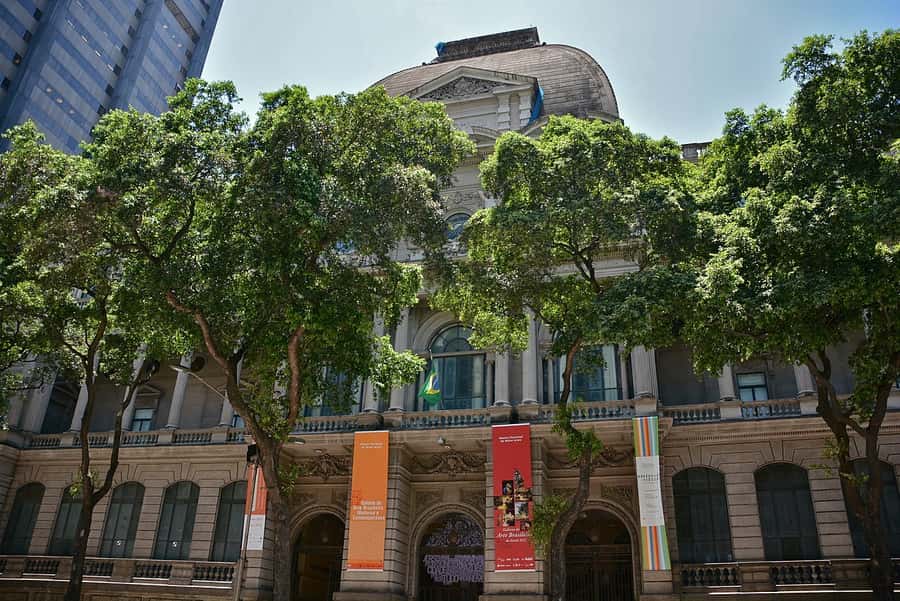
- A focused 500 years of history, from monarchy-era traces through the republic period
- Landmarks plus alleyway atmosphere, including the dos Teles Arch and nearby winding streets
- Architecture stops that are practical to locate, like Candelária Church and CCBB
- Cinelandia Square as the “modern contrast”, with major cultural and political buildings along the way
- A guided language bridge, since the tour runs in Portuguese, Spanish, English, Italian, and French
More of Rio covered on foot:
- Rio de Janeiro: Rocinha Favela Walking Tour with Local Guide
★ 4.8 · 3,052 reviews - Rio De Janeiro: Half-Day Rocinha Favela Walking Tour
★ 4.7 · 2,272 reviews - 3 Hour Rocinha Favela Walking Tour with a Local Guide
★ 5.0 · 833 reviews - Favela Tour Rio de Janeiro – Vidigal Walking Tour by Russo Guide
★ 5.0 · 377 reviews
Entering Downtown Rio, starting at Atlantico Business Hotel
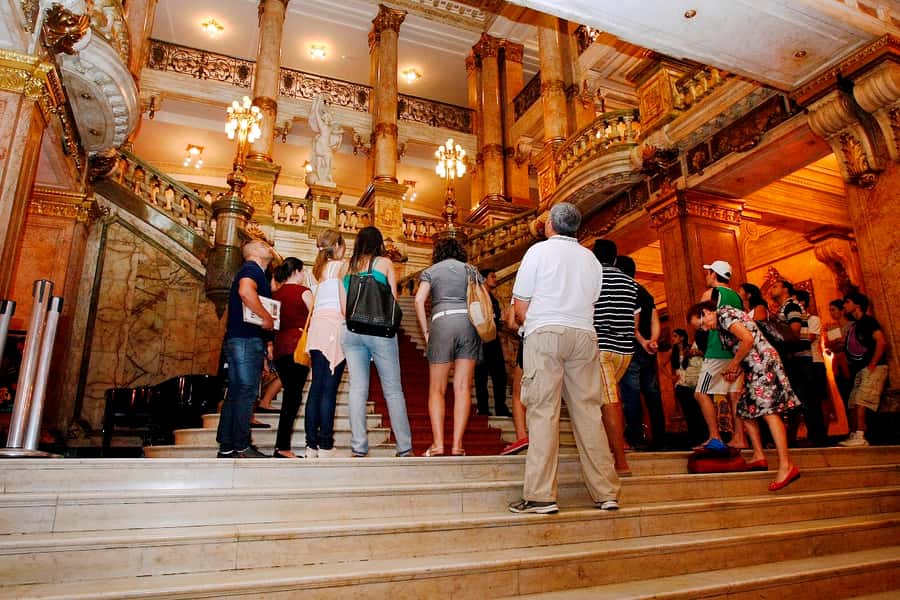
The tour meets at the Atlantico Business Hotel, Rua Senador Dantas, 25, Centro. Aim to arrive 15 minutes early, and the guide will call your name at the meeting point, which helps you avoid that awkward “is this my group?” moment.
You do not get hotel pickup. That is normal for a walking tour, and it also means you can start the day on your own schedule. If you need help reaching the meeting point, you can contact the operator for instructions, which is handy if you are staying outside Centro.
The big value here is simple: you get to downtown streets with an order to your walking. Instead of wandering and guessing what you are looking at, your guide connects each stop to the bigger story of how Rio and Brazil developed.
A monarchy-to-republic timeline in the historic center
The route begins in the historic center, where centuries-old roads and buildings show key periods of Brazilian history. The tour frames it as about 500 years, and it keeps returning to how power, politics, and culture changed from empire times into a republic.
One of the earliest stops is XV de Novembro Square, which gives you a “period marker” for the story. From there, you move into the architecture cluster where Rio’s past feels physically present, not just explained on a plaque.
You will see the ALERJ building and then walk past Paço Imperial and do Carmo Convent. These names matter because they connect you to different layers of the city, government and authority around one corner, religious history around another. It is a good reminder that downtown Rio grew as a working center, not only a postcard background.
What you should expect at these early stops
These are active street scenes, so expect to walk, look, and pause when the guide pulls you back to the story. You will likely take photos from multiple angles because older centers often reward looking up, not only straight ahead.
Practical note: the sidewalks can feel tight and busy. Keep your phone accessible, but also keep an eye on where the group moves next so you do not lose the line of travel.
Dos Teles Arch and the winding alley feel
After the square and major buildings, the tour shifts tone. You walk past the dos Teles Arch and then move into winding alleyways. This part is where downtown feels more lived-in, because you are seeing the city’s older street logic in motion.
If you like neighborhoods that still have texture, this section will likely be one of your favorites. It is also a useful contrast to the bigger civic buildings you saw earlier. The arch and lanes show how people actually moved through the city long before modern transit dominated daily routes.
The guide helps by explaining what you are looking at, so the alleyway maze does not just become a scenic detour. You end up understanding why it exists where it does in the historic center’s layout.
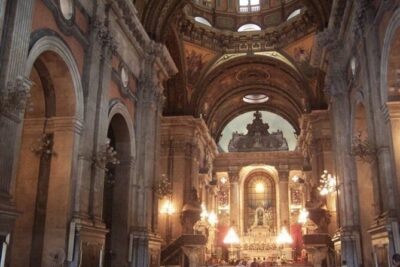
Candelária Church, the city’s religious anchor
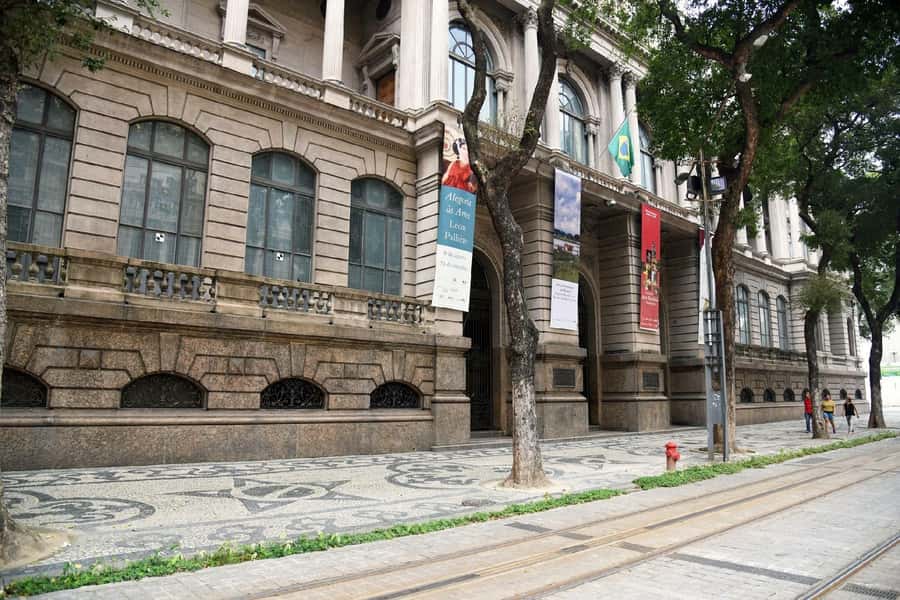
Next comes Candelária Church. This stop is not just about the structure itself. The guide frames why the church matters to the city, which changes how you look at it.
For first-time visitors, this is a smart inclusion because Candelária is a place you might recognize from photos, but you may not know what role it played in the urban story. When you learn the “why,” the visit feels more grounded.
If you care about architecture and history, you also get a chance to practice the right kind of viewing. Spend a few seconds looking at how it sits within the surrounding streets, not only how it looks from one front angle.
If this one is full, Rio has these as well:
- Rio de Janeiro: 6-Stop Highlights of Rio with Lunch★ 4.4 · 5,157 reviews
- Christ the Redeemer Entry Ticket by Corcovado Train★ 4.4 · 4,476 reviews
- Rio’s City Tour – Tickets for Christ, Sugar Loaf & Lunch included★ 5.0 · 4,389 reviews
- Full Day: Christ Redeemer, Sugarloaf, City Tour & Barbecue Lunch★ 4.5 · 3,142 reviews
- Rio’s Full Day: Selarón Steps, Christ & Sugarloaf – Tickets & Lunch Included★ 5.0 · 2,724 reviews
CCBB, the Brazil Bank Cultural Center stop
Then you reach CCBB, the Brazil Bank Cultural Center. Locals call it CCBB, and your guide will use that name as you approach, so it helps you follow the plan without guessing.
This is the kind of stop that works well in a walking tour because it is both visual and interpretive. You are still in downtown’s old-town zone, but you are now looking at a cultural center where the past is being used in a more modern way.
I like this stop because it breaks up the day. You get the chance to refocus from “historic monuments” into “what the city does today with historic spaces.”
Cinelândia Square and the classic Rio cultural corridor
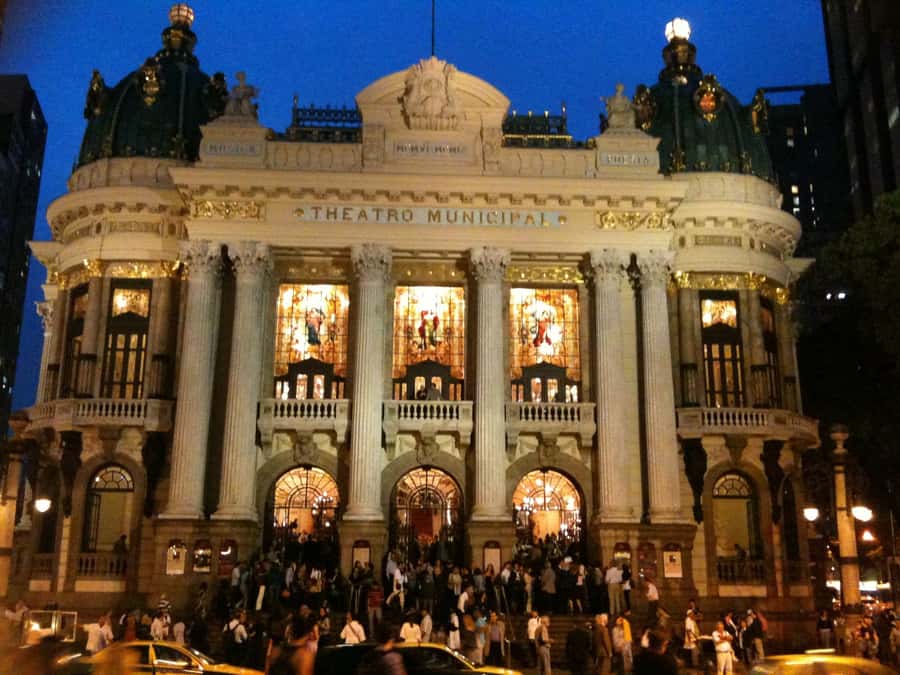
After the CCBB area, the tour moves into Cinelandia Square, where the atmosphere changes again. This is where you see the built contrast between old and more modern civic culture.
You walk down the street to the square and explore the political and cultural buildings around it, including:
- the Municipal Theater of Rio de Janeiro
- the National Library of Brazil
- the National Museum of Fine Arts
- the City Council of Rio de Janeiro
This stretch is a major reason the tour is worth doing even if you are not an architecture fanatic. You get a “downtown corridor” view, and your guide’s context helps you understand why these institutions cluster here.
How this part helps you later in Rio
Even after the tour ends, this Cinelândia block stays in your head as a map reference point. When you later take photos, plan museum visits, or navigate to other central neighborhoods, you are no longer relying on memory alone.
That is practical value. It is not just a walk with explanations. It sets you up to explore the rest of downtown with less stress.
Colombo’s Bakery snack stop, a landmark you can taste
The tour finishes with a visit to Colombo’s Bakery, one of the city’s main landmarks, where you can grab a snack. This is the part of the day where you get a break and a simple reward.
You should treat it as a snack stop, not a full meal, since food and drinks are not included. Still, it is a classic downtown touch, and it gives you something tangible to do besides take photos and keep moving.
If you have a sensitive stomach or you know crowds make you hungry fast, consider bringing a little extra cash for drinks or a bigger snack. The tour pacing is steady, and a mid-route stop means you do not have to hunt for food on your own.
Ending at a Downtown Rio subway station
The walking tour ends at a subway station in Downtown Rio. From there, you can return to your hotel or continue exploring on your own.
This ending style is smart for value. You are not forced into a rigid “then we all go back together” moment. You can switch plans based on what you feel like doing next, especially if you still want to linger near any of the stops.
One note to budget for: subway tickets are not included. The tour data says it is BRL 15 roundtrip per person if you need it. If you already have a transit plan, you can ignore this. If not, it is an easy cost to miss.
Guide quality makes a real difference
The tour includes a multilingual guide, and the day depends heavily on how they pace the story. The standout theme in the guide feedback is clarity plus personality, with several named guides praised for language skills and patience.
For example:
- Angelica was praised for expert knowledge and strong Italian, plus a friendly, helpful approach.
- Lavinha received praise for being patient, explaining thoroughly, and delivering a big tour without rushing.
- Antonio was praised for passion for history, answering questions with patience, and adding small stories that made both famous and less-known corners feel connected.
- Renato was praised for punctuality and strong Spanish with good historical and architectural handling.
That does not mean every moment will be identical. One feedback point was that a guest wanted more detail around certain building stories and dates. My practical take for you: if a specific building matters to you, ask a question. A good guide usually adjusts when you show interest, and even a brief question can turn a “look and move” moment into a “now I get it” moment.
Price and value: what you pay for, and what you get
At $47 per person for 4 hours, this is priced like a real guided experience, not a casual stroll. You are paying for the route planning, the guide’s explanations, and the ability to hit a lot of meaningful downtown places without figuring out directions on the fly.
Your included item is straightforward: a multilingual guide. Everything else that costs money along the way, like subway fare or food and drinks, is not bundled. That means you should budget a bit extra if you plan to use the subway after the tour.
I think this price works best if:
- you are on a first visit to Rio and want a downtown orientation fast
- you care about history and architecture, but you do not want to do it alone
- you want a structured route through Centro without wasting time
If you prefer fully independent exploring, you might feel you could walk these streets without paying. But the payoff here is the “why” behind each stop, and that is where a guide earns their keep.
Weather, pace, and footwear: the practical bits that decide your day
The tour takes place rain or shine. That is great if you hate plan changes, but it means you should dress for wet streets and bring shoes that work on uneven pavement.
You should bring:
- comfortable shoes
- passport or ID card (a copy is accepted)
Not allowed: luggage or large bags. This matters because Centro sidewalks can be narrow, and carrying a big bag will slow your comfort and your movement with the group.
Also, this tour is not suitable for people with mobility impairments or wheelchair users. The route depends on walking and navigating streets that are not designed for wheel access.
In high season, tours can take longer due to traffic and crowds. Translation: you may spend a bit more time waiting between stops, and the day can feel slightly tighter than you planned.
Who should book this Downtown Rio walk
This tour is a strong fit if you:
- want a guided orientation to Centro
- like architecture with context, especially the classic institutions around Cinelândia
- enjoy history that is tied to buildings, squares, and street patterns
- want multiple language options, since the guide can be Portuguese, Spanish, English, Italian, or French
It is also a solid option if you are trying to make one limited sightseeing window count. Four hours is long enough to feel like you did something meaningful, but short enough to still have energy left afterward.
Where I would hesitate:
- if you cannot do long walking on city sidewalks
- if you want a slow, museum-style day with minimal street movement
- if you are expecting meals and transit fully included
Should you book Rio de Janeiro: Downtown Walking Tour?
I would book it if you want your first Centro experience to come with a story that actually holds together. The mix of XV de Novembro Square, Paço Imperial and do Carmo Convent, Candelária Church, CCBB, and then Cinelândia Square gives you a strong “Rio in one corridor” feeling.
If you are the type who loves asking questions and letting a guide steer you toward meaning, you are in the right place. The guide feedback shows real strengths in language ability, patience, and making both famous and lesser-known corners click.
Skip or choose another format if walking is hard for you, if your schedule cannot handle rain or shine, or if you already know you prefer self-guided exploration with no structured stops. For a first-time downtown orientation with strong architecture and history value, this is a good use of time.
FAQ
How long is the Rio de Janeiro Downtown Walking Tour?
The tour lasts 4 hours.
Where do I meet the guide?
You meet at Atlantico Business Hotel, Rua Senador Dantas, 25, Centro. Arrive 15 minutes before it starts, and the guide will call your name.
Is hotel pickup included?
No, hotel pickup and drop-off are not included.
Does the tour run in bad weather?
Yes. The tour takes place rain or shine.
What languages are available for the guide?
The live guide is available in Portuguese, Spanish, English, Italian, and French.
Is the subway ticket included?
No. A subway ticket is not included. If needed, it is listed as BRL 15 roundtrip per person.
What should I bring for the walk?
Bring comfortable shoes and a passport or ID card. A copy is accepted.
Is this tour suitable for wheelchair users?
No. It is not suitable for people with mobility impairments or wheelchair users.
Recently added around Rio




Walking Tours, compared.



3 Hour Rocinha Favela Walking Tour with a Local Guide
Read our review →
Favela Tour Rio de Janeiro – Vidigal Walking Tour by Russo Guide
Read our review →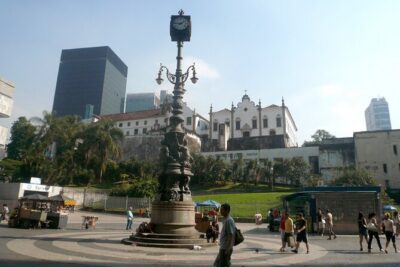

Private Walking and Cultural Tour Rocinha-Rio de Janeiro
Read our review →

Sunrise and Sunrise Walk Two Brothers with Local Guide
Read our review →More of this kind of Rio day