
Reviewed · WORKSHOPS
Rio de Janeiro: Brazilian Cooking Class with Hotel Pickup
One kitchen, two classic Rio dinners, and you drive the action. This 4-hour class in Copacabana turns restaurant recipes into a hands-on meal you can actually repeat at home, plus you get round-trip hotel transfer. I especially liked how the chef taught ingredient choices, not just steps, and how the class felt social without feeling rushed.
I also loved that you can pick your main dish ahead of time, feijoada or seafood moqueca, and then build a full spread around it, including sides and Brazilian sweets. The one catch is timing: in high season, traffic can stretch the schedule a bit, so I’d plan for extra room in your day.
In This Review
- Key highlights at a glance
- Hotel pickup to Copacabana kitchen, then you choose feijoada or moqueca
- Feijoada and seafood moqueca: how the chef teaches the flavor logic
- Building a full Brazilian plate: coalho cheese, pepper jelly, brigadeiro, and more
- Caipirinha and coconut shake mixing time: the tasting comes with a skill
- The chef’s teaching style, and why Carina and Simone were praised
- Timing and logistics in Rio: 4 hours, plus traffic wiggle room
- Price and value: what $117 buys you in a real kitchen
- Who this class fits best in Rio
- Should you book this cooking class in Rio?
- FAQ
- How long does the Rio Brazilian cooking class last?
- What main dish can I choose before the class starts?
- Is round-trip hotel pickup included?
- Which areas do you pick up from?
- What languages are available for the instructor?
- What dishes will I help prepare?
- Are caipirinhas or coconut shakes included?
- Are additional drinks or dessert included?
- Can I bring my own knives?
- Is free cancellation and reserve now, pay later available?
Key highlights at a glance
- Pick your main dish: feijoada (black bean stew with pork) or seafood moqueca (fish stew with coconut milk)
- Chef-led “why this works” teaching: cultural stories plus practical ingredient tips
- You cook the sides too: coalho cheese with pepper jelly, brigadeiro, and more
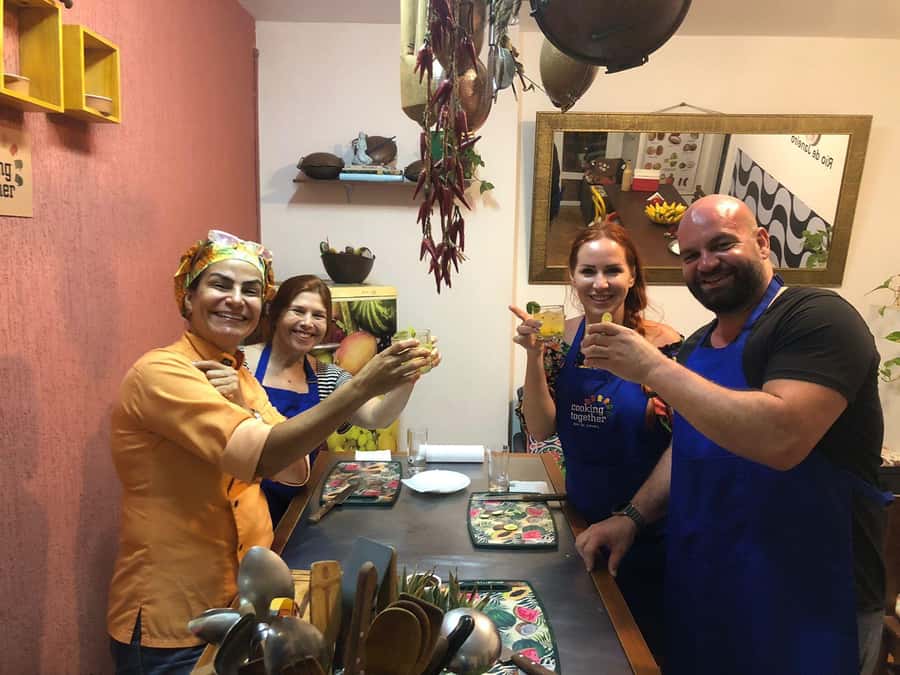
- Mix classic drinks: caipirinha and a coconut shake
- Safe, easy logistics: hotel pickup and drop-off included, with a driver you can spot
More things to make by hand in Rio:
- Rio de Janeiro: Beginner Samba Lesson in Ipanema
★ 4.9 · 1,071 reviews - Rio de Janeiro: Samba Class in Copacabana
★ 4.6 · 262 reviews - samba class in Ipanema
★ 5.0 · 182 reviews - Samba Class and Samba Night Club Tour in Rio
★ 5.0 · 177 reviews
Hotel pickup to Copacabana kitchen, then you choose feijoada or moqueca
The experience starts with afternoon pickup from many Rio areas, including Leblon, Ipanema, Copacabana, Leme, Botafogo, Flamengo, and Centro, plus the cruise port. That matters in Rio, where getting from point A to point B on your own can eat up time, energy, and patience. You show up, get sorted, and you’re on your way to a chef’s kitchen instead of hunting for the place.
Once you arrive, the chef runs the show. You’ll meet the instructor and get an overview of what you’ll cook, with enough structure that even if you’re not a confident home cook, you still know what the next step is. One practical detail I appreciate: you can bring your own set of knives if you want, which is helpful if you travel with a trusted blade.
The class begins with a choice: before the cooking gets going, you select either feijoada or seafood moqueca. That choice helps the whole meal make sense, because the sides and cooking flow are built around the main dish you picked.
Feijoada and seafood moqueca: how the chef teaches the flavor logic
If you choose feijoada, you’re working with a classic Brazilian comfort staple: a hearty black bean stew with pork. The chef doesn’t treat it like a one-note “boil and wait” dish. You’ll learn about ingredient handling and the kind of balance that makes feijoada taste deep, not heavy.
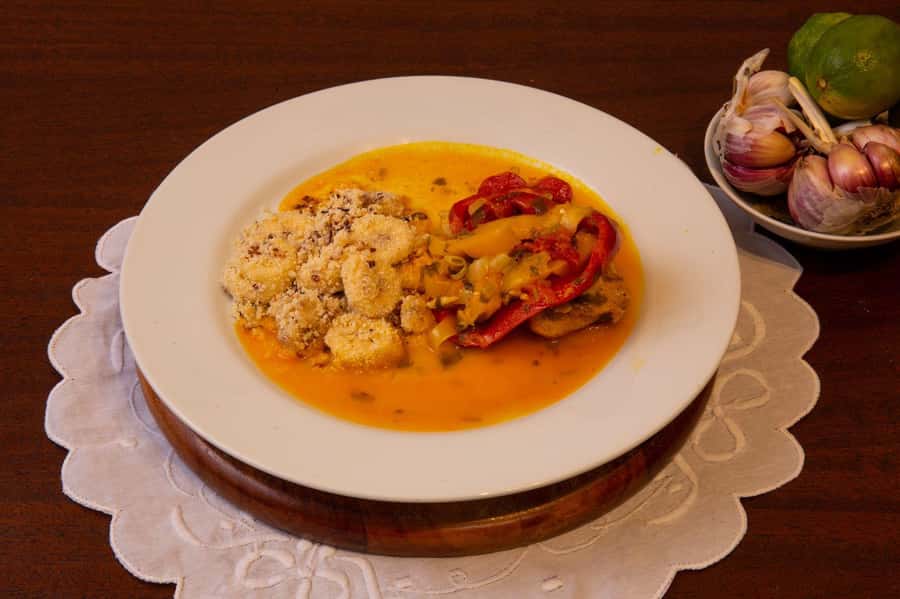
If you pick seafood moqueca, you’ll cook a flavorful fish stew with coconut milk. This one is about warmth, aromatics, and how coconut rounds out the seafood. You’re not just copying a recipe. You’re being taught how to think about flavors as they build.
Either way, the chef talks about the stories and cultural significance of what you’re making. In one booking, Chef Simone was praised for explaining that cultural context before people started cooking. That order matters, because it makes the steps feel connected to something bigger than a checklist.
You’ll also get tips on ingredient selection. The class includes ingredients for all dishes, but the learning doesn’t stop at what’s in front of you. You’ll hear practical advice on choosing produce for meals like these, which is the kind of takeaway that actually shows up later when you’re grocery shopping.
Building a full Brazilian plate: coalho cheese, pepper jelly, brigadeiro, and more
A cooking class is only as good as its sides, and this one doesn’t skimp. You’ll prepare dishes that feel very Brazilian, not just generic “tapas-style” snacks. A few highlights from the menu you’ll likely make:
- Coalho cheese with pepper jelly: salty, melty cheese paired with sweet-and-spicy pepper jelly. It’s a great flavor contrast and a fun technique-friendly dish.
- Sausage with onion flambéed in cachaça: if you’ve never worked with flambé, this is the moment to learn how it’s handled safely and with purpose, not just theatrics.
- Brigadeiro: the beloved Brazilian dessert. In the class, you’ll make it as part of the experience, and you’ll get to taste what you made.
About dessert, one detail is worth noting: the listing says dessert is not included, while brigadeiro is clearly part of the cooking plan. In practice, you should treat brigadeiro as included because it’s part of the prepared dishes in the class. If you’re hoping for extra dessert beyond what’s made during the session, plan on paying for add-ons.
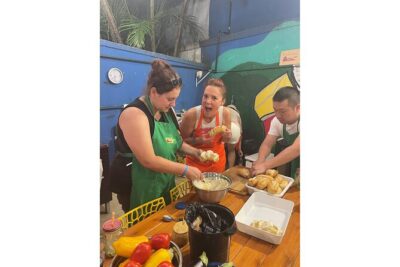
Also, don’t expect the meal to be a buffet line where everyone stays passive. You’re in the kitchen making components, then you sit down to eat what you cooked. That full-circle moment, where you taste the dishes you built step by step, is where the class earns its value.
Caipirinha and coconut shake mixing time: the tasting comes with a skill
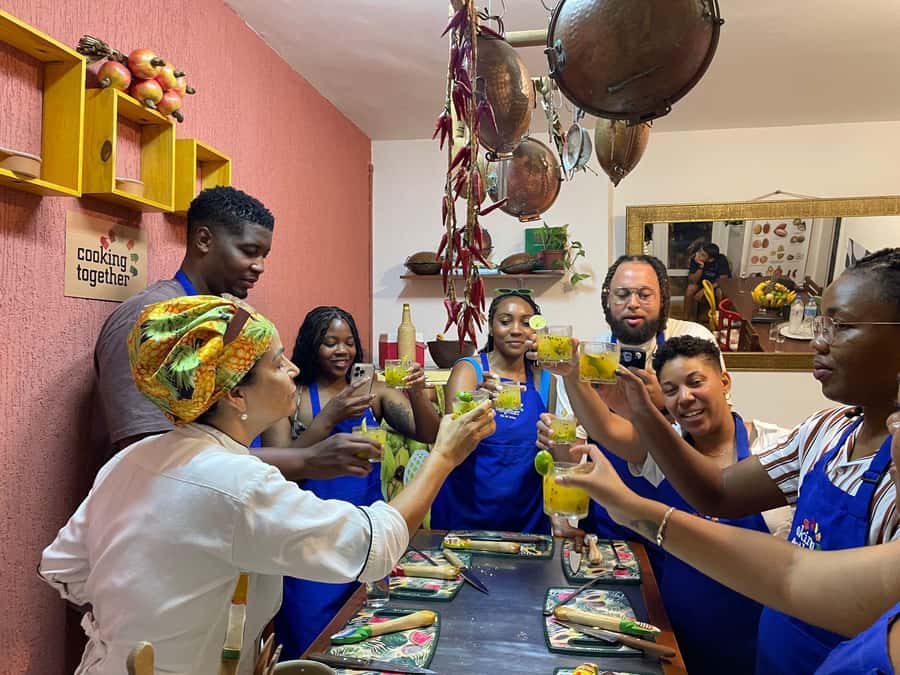
Food is the headline here, but drinks are part of the learning. You’ll mix traditional Brazilian drinks like caipirinha and a coconut shake, which turns the class from “cooking lesson” into “Brazilian meal ritual.”
Caipirinha is built around muddling citrus with spirit and sugar, so the texture and timing matter. If you’ve ever had caipirinha that tasted too sharp or too watery, this is your chance to understand how balance changes with technique. The coconut shake is a cool counterpart, creamy and refreshing, and it’s a natural pairing with richer dishes like feijoada.
Two practical tips if you’re doing your own version later:
- Taste as you go when you mix, since citrus brightness and sweetness can vary by ingredient quality.
- Treat coconut drinks as texture-driven, so aim for a consistent thickness instead of rushing the blend.
The class also notes that additional drinks are not included. That’s totally normal for a cooking workshop, and it’s a good reason to focus on the drinks that are part of the planned tasting.
The chef’s teaching style, and why Carina and Simone were praised
One reason this experience gets strong reviews is the teaching tone. People aren’t just learning how to cook. They’re learning how to cook Brazilian food with confidence.
Carina, for example, was described as a fantastic chef and teacher who made it extremely fun and taught a lot, even for people who aren’t regular home cooks. That matters because some cooking classes oversimplify, making the steps feel like a trick instead of a skill. Here, the lessons are grounded in explanation.
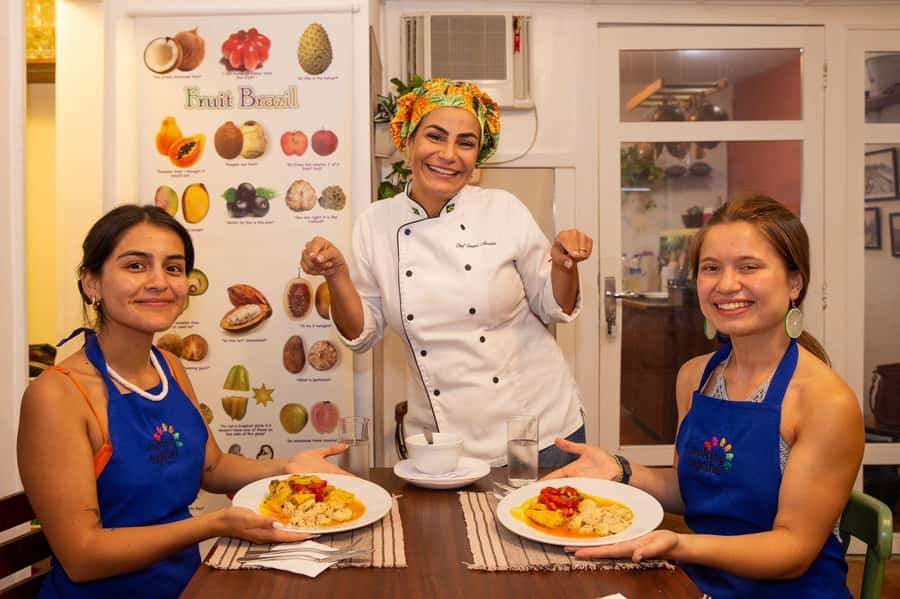
Chef Simone was praised for being thoughtful and patient, and for explaining the cultural significance behind dishes before people began cooking. That does two things at once: it gives you context, and it reduces confusion in the kitchen because you understand what you’re aiming for.
For you, the payoff is simple. When a chef explains what each dish is supposed to feel like, you stop treating cooking as memorization. You start treating it as decision-making.
If this one is full, Rio has these as well:
- Rio de Janeiro: 6-Stop Highlights of Rio with Lunch★ 4.4 · 5,157 reviews
- Christ the Redeemer Entry Ticket by Corcovado Train★ 4.4 · 4,476 reviews
- Rio’s City Tour – Tickets for Christ, Sugar Loaf & Lunch included★ 5.0 · 4,389 reviews
- Full Day: Christ Redeemer, Sugarloaf, City Tour & Barbecue Lunch★ 4.5 · 3,142 reviews
- Rio de Janeiro: Rocinha Favela Walking Tour with Local Guide★ 4.8 · 3,052 reviews
Timing and logistics in Rio: 4 hours, plus traffic wiggle room
The class is listed as 4 hours, and that’s usually a comfortable length for a full hands-on meal. You have time to cook, taste, and sit down together after. The flow is designed so you are not stuck chopping while everyone else is already eating.
In high season, though, you can lose time to traffic, and the schedule may run longer. If your day is packed, I’d pick this when you can give yourself a little buffer for pickup and return. Rio can be forgiving or frustrating depending on the hour.
Pickup and drop-off are handled for you, and that’s a real quality-of-life upgrade. One review mentioned the driver was easy to spot and got everyone safely to the destination, which matches what you want from transfer service: clear meeting points and no last-minute guessing.
Price and value: what $117 buys you in a real kitchen
At $117 per person for a 4-hour, hands-on class with round-trip transfer and ingredients for all dishes, the big question is value. Here’s how I’d size it up:
You’re paying for three things at once:
- A chef who teaches (not just someone who stands nearby while you follow a card)
- Ingredients for multiple dishes, including main, sides, and sweets
- Logistics via round-trip pickup and drop-off from your area
If you tried to recreate this on your own, you’d likely spend a chunk of money just buying ingredients, especially for a full spread and specialty items like cachaça for onion flambé. Add in the time to find the right ingredients, the time to prep everything, and the hassle of getting to the right kitchen or market, and the price becomes easier to justify.
It’s also a good value because you’re not leaving hungry. You cook, then you eat. That’s the difference between a short demo and a workshop style meal.
That said, this price is better when you want the experience, not just the food. If your only goal is to eat a Brazilian dinner and you’re not interested in learning steps, you could find cheaper meals elsewhere. But if you want practical skills and an actual cultural explanation, this hits a strong sweet spot.
Who this class fits best in Rio
This is a great match if you:
- Want a meaningful local food experience without doing heavy research
- Like hands-on cooking and want recipes with context
- Plan to spend time in Copacabana, Ipanema, or nearby areas and appreciate pickup
- Enjoy social meals with other participants, but still want structure in the kitchen
It’s also ideal for couples. One booking described the class as private and hands-on for just the husband and wife, which is exactly the kind of setup where you can ask questions freely.
If you’re traveling solo, it still works because the class includes tasting and conversation time, and the chef can answer questions as you cook. If you’re traveling with someone who doesn’t cook much, you’ll still get to participate, taste, and learn, even if you do fewer tasks at first.
Should you book this cooking class in Rio?
I think you should book if you want more than a meal. This is a kitchen-based experience where you make key dishes like feijoada or seafood moqueca, add Brazilian sides, and learn how to mix drinks like caipirinha. The best sign is the repeated praise for the chefs, including Carina’s fun, clear teaching and Chef Simone’s patient explanations of why dishes matter.
Skip it if you’re short on time and can’t afford a fixed 4-hour block, or if you hate the idea of cooking while on vacation. Also, if you want lots of extra drinks or a bigger dessert program, remember additional drinks and dessert are not included.
If you can give it a spot in your afternoon, this is one of those Rio activities that gives you something you can bring home: not just memories, but actual steps and flavor instincts.
FAQ
How long does the Rio Brazilian cooking class last?
The class duration is 4 hours.
What main dish can I choose before the class starts?
You can choose between feijoada or seafood moqueca.
Is round-trip hotel pickup included?
Yes. The experience includes round-trip transfer.
Which areas do you pick up from?
Pickup is offered from most hotels in Leblon, Ipanema, Copacabana, Leme, Botafogo, Flamengo, and Centro areas, plus the cruise port.
What languages are available for the instructor?
The instructor speaks Portuguese, Spanish, and English.
What dishes will I help prepare?
Besides your chosen main dish, you’ll also prepare side dishes such as coalho cheese with pepper jelly and brigadeiro, plus other items like sausage with onion flambéed in cachaça.
Are caipirinhas or coconut shakes included?
Yes. You’ll mix and taste traditional Brazilian drinks like caipirinha and a coconut shake as part of the experience.
Are additional drinks or dessert included?
Additional drinks are not included, and dessert is listed as not included.
Can I bring my own knives?
Yes, you can bring your own set of knives if you want.
Is free cancellation and reserve now, pay later available?
Yes. You can cancel up to 24 hours in advance for a full refund, and you can reserve now and pay later.
Recently added around Rio






Workshops, compared.




Brazilian BBQ Class in Rio (3.5h): 10 Recipes & Bottomless Drinks
Read our review →

More of this kind of Rio day