
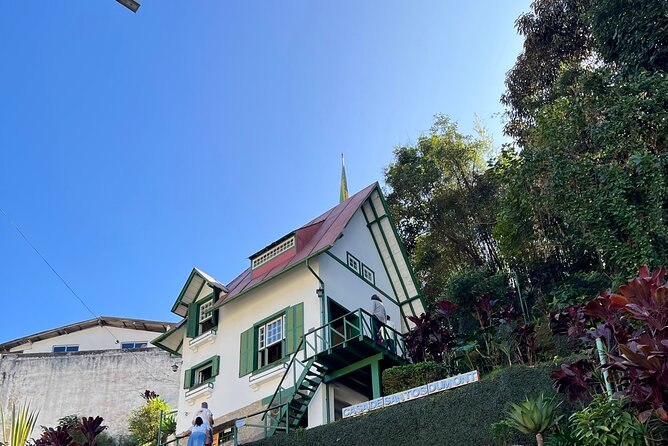
Reviewed · PETRóPOLIS IMPERIAL CITY TOURS
Private Petrópolis -Imperial Museum,dummont house,Cristal Palace,S.Pedro Church
A rainy-day cure for Rio blues.
This private Petrópolis tour turns a long day into a smooth, guided sweep through the town’s top stops, with air-conditioned transport and a guide who keeps your pace realistic. I especially love how the Imperial Museum and the cathedral connect the city’s story to real places you can stand in. One thing to keep in mind, the day runs about 7 to 10 hours, so you will want comfortable shoes and patience for road time.
If you are the type who likes details without chaos, this works. In the kind words I heard from guide Ederson, he’s the sort who explains what you are seeing as you go, instead of dumping facts and moving on. The main drawback is that some ticketed stops may not be included in your exact package, so you should confirm what you will pay for on arrival if anything is separate.
In This Review
- Key Points to Know Before You Go
- A Private Petropolis Day That Feels Less Like a Check List
- Catedral de São Pedro de Alcântara: Why This Cathedral Took Decades
- Santos Dumont’s House: Clever Inventions You Can Spot Instantly
- Bohemia Brewery Stop: Beer Heritage With Real Names and Real Dates
- Crystal Palace: A French-Made Structure With a Local Purpose
- Imperial Museum: The Neoclassical Palace That Explains Petropolis
- Quitandinha Palace: Norman Casino Glamour After the Rules Changed
- Price and Value: Where the Money Actually Goes
- Who Should Book This Private Petropolis Tour
- Should You Book This Private Petrópolis Tour?
- FAQ
- What time does the tour start?
- How long is the Petropolis private tour?
- Is this a private tour?
- What is included in the price?
- Are lunch and drinks included?
- Which stops have tickets marked as optional or not included?
- What if weather is bad?
Key Points to Know Before You Go
Private means focused attention so you can ask questions and slow down when something grabs you.
Imperial Museum entry is included via your guide, so you do not lose time lining up.
Several famous sites are free such as the Catedral de São Pedro de Alcântara and the Crystal Palace.
Santos Dumont’s house is full of clever quirks like the hot-water system and unusual stair rules.
The day is history-heavy, but not only museums since you also see working beer heritage and big architectural landmarks.
Expect optional costs at Bohemia and other major attractions, depending on what you choose to enter.
More trips up to Petropolis:
- Full Day Excursion to Petrópolis from Rio de Janeiro
★ 4.5 · 918 reviews - From Rio de Janeiro: Petrópolis Day Trip with Optional Lunch
★ 4.3 · 203 reviews - Petrópolis Day Trip from Rio de Janeiro including Imperial Museum and Crystal Palace
★ 4.0 · 101 reviews - Discover Petropolis and its Hidden Gems with our Private Tour
★ 5.0 · 98 reviews
A Private Petropolis Day That Feels Less Like a Check List
Petropolis is the kind of place you can see in bits and pieces, but it is also the kind that rewards a guide. I like doing it as one long loop: you get the feel of why the city exists, how it grew, and how the elite lifestyle became part of the buildings you still walk through today. With a private setup, you are not split into a giant group that forces everyone to move at one speed.
The ride from Rio is part of the experience. You start early, then settle in for the mountain route. One practical upside: you can plan your day without juggling tickets and timing, since your guide is handling the important admissions, especially for the Imperial Museum.
The watch-out is simple. This is a full-day commitment, and the itinerary packs a lot of “look and learn” moments. If you get museum fatigue fast, I’d suggest mentally planning for breaks rather than thinking you can sprint through everything.
Catedral de São Pedro de Alcântara: Why This Cathedral Took Decades
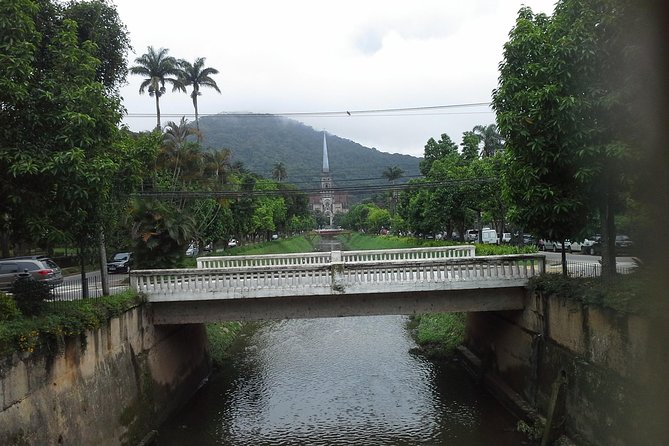
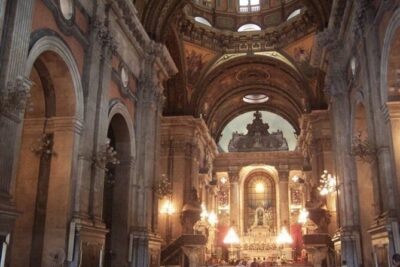
The cathedral is the kind of building that makes you notice time. Construction started with new plans moving in the 1840s, then stalled and restarted as political priorities shifted. When the current neo-Gothic building began, it followed a style that was popular at the time, and it draws inspiration from older churches in northern France.
I like how the place tells a bigger story than architecture alone. Your guide can connect the timing to the influence of Dom Pedro II and Princess Isabel, then to how the work continued long after the early monarchy era. Even the details of the interior and exterior were delayed, with the tower only completed between 1960 and 1969, so the building became a long-term project rather than a single “finish date.”
This is also where the Imperial Mausoleum becomes part of your visit. After the Imperial Family ban was annulled in 1920, remains associated with Dom Pedro II and D. Tereza Cristina moved from Lisbon, first to Rio, then to Petropolis. The mausoleum was inaugurated in 1939, and Princess Isabel and Count D’Eu were later buried there as well.
If you enjoy historical continuity, you will feel it here. If you only want quick photo stops, you might find this stop heavier than expected.
Santos Dumont’s House: Clever Inventions You Can Spot Instantly
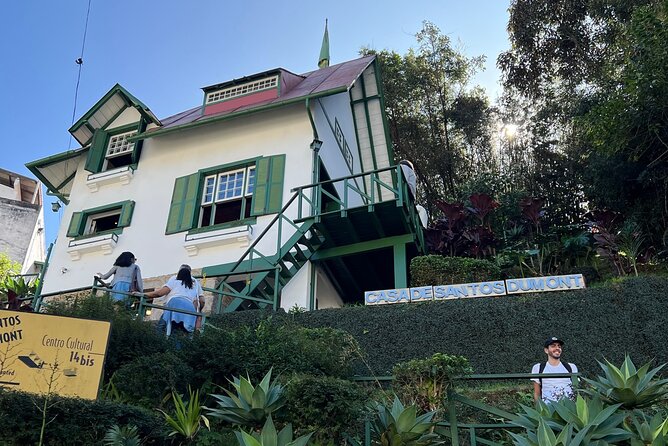
Santos Dumont’s home is compact, but it is never dull. It sits on a steep locality, and that matters, because the house was built to match the way people lived in Petropolis’s empire-era “summer season.” You get a sense of the lifestyle shift right away, from landscape and climate to everyday design.
I love that the quirks are not random trivia. They reflect how inventive Dumont could be, even in daily comfort. The property includes a hot-water shower heated with alcohol, described as the only one of Brazil at that time. There are also unusual “rules” tied to the stairs, like climbing the external staircase with the right leg and raising the internal one with the left leg.
Another detail that makes this house fun is how it is laid out. The rooms connect without partitions, so the flow feels open even though the setting is steep. With three floors plus an observatory, you have multiple levels to explore, which helps keep the visit from feeling one-note.
Practical consideration: the house can be physically demanding if stairs bother you. It is not described as difficult in the info you provided, but since it is multi-floor and steep, you should wear shoes with good grip.
Bohemia Brewery Stop: Beer Heritage With Real Names and Real Dates
Even if you do not drink beer, this stop can be worth it because it is about a local industry that started with immigrants and evolved with the market. Bohemia was founded in 1853 in Petropolis by Henrique Kremer, a German settler who originally worked under the artist name Bohemia brewery.
After his death in 1865, the business shifted to his heirs and took the name Augusto Kremer & Co. Over time, partners separated, and Frederico Guilherme Lindscheid took charge. Later, production and sales evolved as well, moving from direct local sales to broader distribution through regional dealer networks.
What I like is that you are not just told “it became famous.” The story includes the reason flavor changed over time. The original German style was stronger and more bitter, but competitive pressures and local taste pushed the beer toward a lighter profile. If you are a beer nerd, you’ll also appreciate the later branded releases.
For example, Dark Bohemia (Schwarzbier) was launched in 2002 with rare malts imported from Munich, plus a softer, velvety, full-bodied style with creamy froth. Bohemia Weiss arrived in 2003. The bohemian royall ale, also from 2003, is described as an English recipe with high fermentation and about 6% alcohol. There is also a Bohemia confraternity abbey beer launched in 2005.
This is also where your choices matter. The ticket for the brewery is listed as optional in the package details, so you can decide based on your interests and how much time you want to spend.
Crystal Palace: A French-Made Structure With a Local Purpose
The Crystal Palace is one of those places that looks like it belongs to a different country, which is exactly the point. The structure was pre-assembled and commissioned by Count d’Eu, built in French workshops, and inspired by London’s Crystal Palace as well as the one in Oporto. That connection gives you a fun “how ideas travel” feeling.
At this stop, I’d pay attention to what it was meant to do, not just how it looks. In the Count’s plan, the palace was intended to help Princess Isabel cultivate vegetables. Later, it got a different job entirely. In 1938 it was covered with tin sheets and bricks to house the Historical Museum of Petropolis, before the museum moved to the Imperial Museum location.
You can see that the building kept reinventing itself. In 1967 it was dropped by the heritage institute, but it remained covered, then the walls were restored in time for a centenary celebration in 1984. Today the walls are covered in glass, and the palace hosts exhibitions and events, including the Bauernfest, an annual celebration tied to German settlers in Petropolis.
This stop is quick, but it gives you a lot. If you enjoy architecture, it is a “stop and reframe your expectations” moment. If you want only deep museum time, this might feel like a break.
A few more Rio outings to weigh up
- Museum of Tomorrow, AquaRio & Olympic Boulevard in Rio de Janeiro★ 4.5 · 69 reviews
- Olympic Boulevard, Museum of Tomorrow & Historical Rio★ 4.5 · 66 reviews
- Rio: Olympic Boulevard, AquaRio and Museum of Tomorrow Tour★ 4.5 · 54 reviews
- Rio: Olympic Boulevard, Museum of Tomorrow & History Tour★ 4.1 · 47 reviews
- Museum of Tomorrow Guided Tour, Admission & Transfer★ 4.5 · 38 reviews
Imperial Museum: The Neoclassical Palace That Explains Petropolis
The Imperial Museum is the heart of the day for me, and it is also the reason the whole Petropolis story makes sense. The palace complex began with Dom Pedro I and his interest in the mountain region, then shifted to Dom Pedro II. Before the palace existed, the land went through a few ownership steps and plans, including a later purchase that connected to the idea of a “Palace of Concordia.”
Construction is tied to the founding of Petropolis itself. Dom Pedro II signed the decree on March 16, 1843, which created Petropolis. The city’s growth and the building of the palace relied on European immigration, especially Germans, under the supervision of Major Júlio Frederico Koeler.
When you walk through the museum today, you are in a place designed with serious imperial resources. The neoclassical building began in 1845 and was completed in 1862. The original plan was developed by Koeler, and after his death the design was modified, including a granite portico added to the central body. Decoration also involved architects connected to the Imperial Academy of Fine Arts.
One detail that I love because it is tactile, not just symbolic, is the flooring and materials. The vestibule floor is described as Carrara marble with black marble from Belgium. Other floors and frames used hardwoods like jacaranda and cedar, as well as materials associated with different provinces of the Empire.
In the tone of guide Ederson’s approach, this museum stop is not just about reading labels. He was noted for using historical paintings and pointing out what changes you can see and what those changes meant. That is the kind of guide skill that turns the museum from “I saw rooms” into “I understood why the rooms matter.”
Good to know: the Imperial Museum admission is included, so you should use that saved time to slow down inside and let the guide’s explanations land.
Quitandinha Palace: Norman Casino Glamour After the Rules Changed
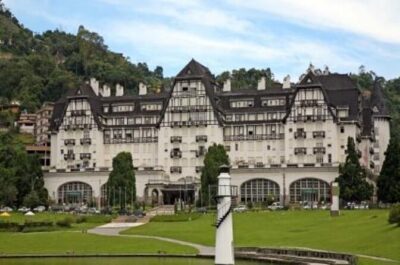
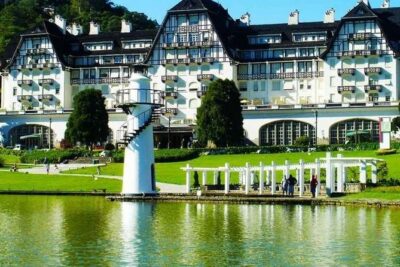
Quitandinha Palace is another “wow, why is this here?” moment. The building’s Norman style is compared to European casinos that were popular before World War II, and the interior is described as recalling Hollywood-era movie sets. Set designer Doroth Draper is named in the description, which is a hint that this place was designed to feel like a spectacle.
I like that the details here are specific. Quitandinha was built on a 50,000 square meter site, designed as the “Game Capital Bank in Brazil.” Marble bathrooms, chandeliers with crystal pendants, and a powerful lighting system were part of the planned luxury, meant to impress at a scale described as large enough to fill a city.
The Mauá Hall is the kind of statistic that sticks. It is said to be about 30 meters high and 50 meters in diameter. The Teatro Mecanizado is described as having three rotating stages with capacity around 2,000 people. There is also a lake shaped like the map of Brazil, with a lighthouse on the island of Marajó.
The big turning point came when gambling was banned in the country. On May 30, 1946, President Dutra banned the games, and the hotel could not survive as planned. Over time, apartments were sold off, and by January 1989 the building was restored for a new life as a congress and events venue.
A practical note based on your tour details: tickets for Quitandinha are listed as not included in the package. So you might be able to view the property from the outside and still get the story, but if you want full access, you may need to pay separately depending on how your day is arranged.
Price and Value: Where the Money Actually Goes
At $167.57 per person for a 7 to 10 hour private day, this is not cheap in the way that budget bus tours are. But it is also not a “pay for a bus and hope” kind of price.
Here’s what you are buying:
- Private guide time, which is the difference between being rushed through “highlights” and actually understanding why each place exists.
- Air-conditioned vehicle, which matters on a full-day road trip from Rio.
- Included Imperial Museum admission, a real time saver and a clear value item.
You should also watch for add-on costs. The brewery stop and other ticketed attractions have ticket information marked as optional or not included in the package details. That does not make it bad, it just means you should decide ahead of time which stops you want to pay to enter versus just see.
If you like history and architecture and you want a guided “Petropolis story” without logistics headaches, the value makes sense. If you only care about one or two stops, you might feel the price more.
Who Should Book This Private Petropolis Tour
This fits best if you:
- want the top Petrópolis sites in one day without coordinating buses and tickets yourself
- like guided storytelling that connects architecture to how the empire and immigrants shaped the city
- prefer private pacing, where your guide can slow down if you want photos, answers, or extra time
I would be cautious if:
- you have limited mobility or struggle with steep multi-floor walking, since at least one stop involves a steep house setting and multiple levels
- you hate long days, because 7 to 10 hours is a real chunk of time
If you are visiting Rio for a short trip and want a single high-value day trip that feels structured, this is a strong option.
Should You Book This Private Petrópolis Tour?
Yes, if you want a guided Petropolis day that mixes major landmarks with practical comfort. The best reason to book is the combination of included Imperial Museum entry, a guide who can explain what you are seeing, and a private setup that lets the day feel more thoughtful than rushed.
I’d only hesitate if you want a very flexible day, or if you are not interested in paying separate tickets for some stops. If you do like history, architecture, and the Petrópolis empire-era vibe, this is the kind of day trip that leaves you feeling like you actually understand the place, not just that you checked names off a list.
FAQ
What time does the tour start?
The tour start time is 9:30 am.
How long is the Petropolis private tour?
It runs about 7 to 10 hours.
Is this a private tour?
Yes. It is private, so only your group participates.
What is included in the price?
You get an air-conditioned vehicle, a professional guide, and admission tickets for the Imperial Museum are provided by your guide.
Are lunch and drinks included?
No, lunch is not included.
Which stops have tickets marked as optional or not included?
Tickets for Cervejaria Bohemia are listed as optional, and Dummont house tickets are listed as not included in the package details. Tickets for Quitandinha Palace are also listed as not included.
What if weather is bad?
The experience requires good weather. If it is canceled due to poor weather, you will be offered a different date or a full refund.
Recently added around Rio

Petrópolis Imperial City Tours, compared.
Full Day Excursion to Petrópolis from Rio de Janeiro
Read our review →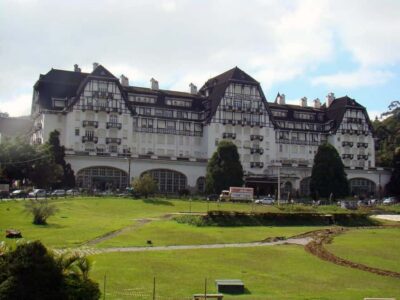

Petrópolis Day Trip from Rio de Janeiro including Imperial Museum and Crystal Palace
Read our review →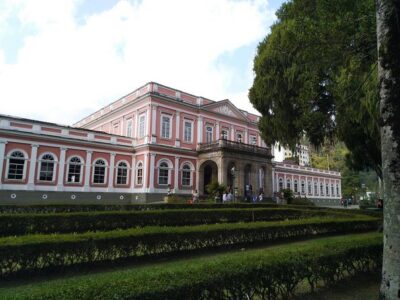
Discover Petropolis and its Hidden Gems with our Private Tour
Read our review →

Petropolis The Imperial City with Beer tour and Lunch
Read our review →
Guided Tour to the Imperial Cida of Petrópolis with Lunch
Read our review →More of this kind of Rio day