Reviewed · RIO DE JANEIRO
Path DA Resistance: Discover the Black Culture of Rio
Rio hides its Black history in plain sight. This guided walk threads together Little Africa landmarks, from the Museu de Arte do Rio to the Cais do Valongo ruins, so you see Rio’s story in the streets, not just in books.
I love how the route stays tightly connected from stop to stop, with a guide who keeps the meaning clear instead of tossing facts at you. I also love the personal touch, since guide Lucas Reves is repeatedly praised as friendly and passionate, with a pace that makes it easy to ask questions. Free admission at each stop helps you focus your budget on the guide instead of entrance fees.
One thing to consider: this is an outdoor walking route and it requires good weather. If you hate walking in the sun or sudden rain, plan your day around flexible conditions.
In This Review
- Quick highlights
- Why this Little Africa route matters in Rio
- Price and what you actually get for $62.34
- Stop 1: Museu de Arte do Rio (MAR) and the start in Praça Mauá
- Stop 2: Escada da Bandeira do Brasil, an iconic staircase photo moment
- Stop 3: Mosaico Hilário Jovino and the carnival connection
- Stop 4: Largo São Francisco da Prainha, cultural expression and resistance
- Stop 5: Pedra do Sal, samba meeting point and monument
- Stop 6: Cais do Valongo, the slavery-era archaeological ruin
- Stop 7: Kobra’s Etnias mural, ending with Indigenous connection
- Your guide, pace, and group feel
- What to pack and how to plan your day
- Should you book Path DA Resistance: Discover the Black Culture of Rio?
- FAQ
- FAQ
- How long is Path DA Resistance: Discover the Black Culture of Rio?
- What language is the tour offered in?
- Is this tour private or shared?
- Are admission tickets included?
- Is food and drink included?
- Where does the tour start and end?
- Do I need good weather?
- Is a mobile ticket provided?
- What is the cancellation policy?
- Are service animals allowed and can most travelers participate?
Quick highlights
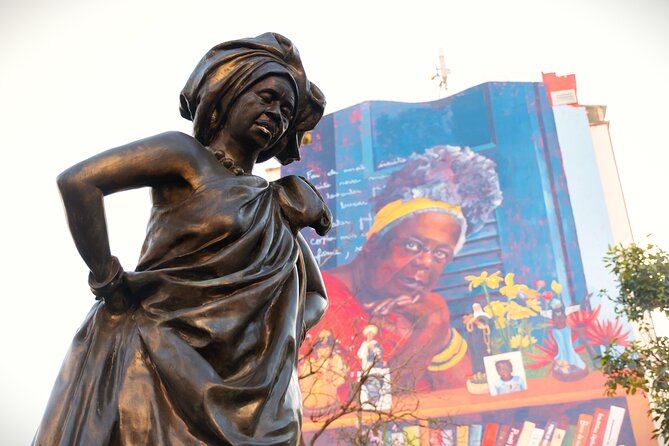
- Lucas Reves’ friendly, question-friendly style makes the route feel personal, not scripted.
- Free entry at every stop keeps the experience focused on interpretation, not ticket costs.
- Cais do Valongo is the heavy-hitter stop, an archaeological ruin tied to the landing of enslaved people.
- Photo stops built into the walk, including the Escada da Bandeira do Brasil and the Mosaico Hilário Jovino.
- Pedra do Sal and samba roots, a meeting point for musicians that also functions as a cultural monument today.
- Kobra’s Etnias mural adds a broader Indigenous connection at the end of the route.
Worth a look side by side. Others covering the same corner of Rio:
- Rio de Janeiro: 6-Stop Highlights of Rio with Lunch
★ 4.4 · 5,157 reviews - Christ the Redeemer Entry Ticket by Corcovado Train
★ 4.4 · 4,476 reviews - Rio’s City Tour – Tickets for Christ, Sugar Loaf & Lunch included
★ 5.0 · 4,389 reviews - Full Day: Christ Redeemer, Sugarloaf, City Tour & Barbecue Lunch
★ 4.5 · 3,142 reviews
Why this Little Africa route matters in Rio
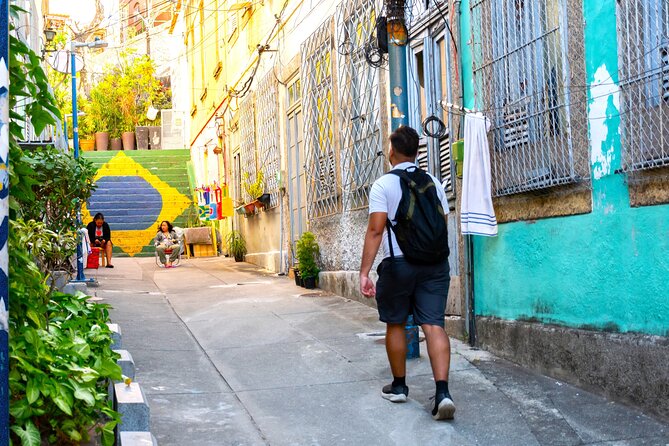
This tour is built around the idea that culture is not just something you look at. In Rio, it is something people build in real places, through music, public spaces, resistance, and memory.
You start at the Museu de Arte do Rio (MAR), then move through a series of outdoor points that map Black cultural life to specific streets, squares, and monuments. The emphasis is not only on suffering and slavery, which is present in the story, but also on community agency, cultural creation, and the way people kept shaping Rio while history tried to erase them.
What makes this route especially useful is how it links different moments. You are not jumping randomly from one topic to another. The guide ties together “Little Africa” as a lived neighborhood identity, then connects it to carnival culture, samba spaces, and finally the Cais do Valongo ruins. If you like history that shows up in everyday life, this is a strong fit.
Price and what you actually get for $62.34
At $62.34 per person, the price is paying for a guided walk plus a specialized Afro-Brazilian culture and history lens. It is not a museum-ticket binge.
Every stop lists admission ticket free, which matters because it means you are not double-paying for entrances while you are also paying for interpretation. In practical terms, you get a two-to-three-hour itinerary where the guide does the heavy lifting: context, transitions, and answers.
The tour also runs as a private experience, meaning only your group participates. That typically translates into more direct back-and-forth, especially if you like asking “why” questions. If you are traveling with family or a small group and want fewer crowd interruptions, that private setup is a real value.
Stop 1: Museu de Arte do Rio (MAR) and the start in Praça Mauá
You begin at the Rio Museum of Art, Praça Mauá area, right in the Saúde neighborhood. The first stop is built for setup: you get an explanation and contextualization of Little Africa here before stepping outside into the street-level sites.
This matters because the rest of the walk is full of strong landmarks, but the tour only works well if you understand what they represent. A quick but focused start at MAR helps you “read” what you see later, instead of treating each stop as an isolated photo opportunity.
The time here is about 20 minutes, and it is designed to be efficient. If you prefer slow museum wandering, you may find the museum portion short. But for a short half-day style experience, a quick orientation is smart. It keeps momentum, and it prevents the route from turning into a list.
Practical tip: wear comfortable shoes right away. Even though the first stop is at a museum, you are stepping into a walking day that connects multiple points close to public transportation.
Stop 2: Escada da Bandeira do Brasil, an iconic staircase photo moment
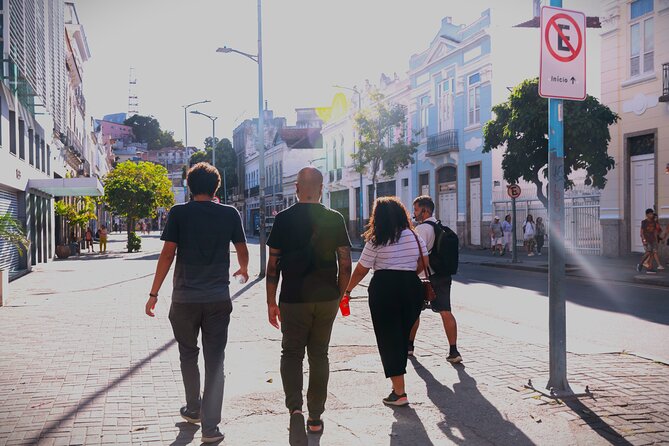
Next you head to the Escada da Bandeira do Brasil, with time set aside for a photo parade on Brazil’s iconic staircase. It is a short stop, around 15 minutes, but it is not included just for pictures.
The staircase becomes a symbol in the story because it sits in a wider network of public space, identity, and visibility. In a neighborhood narrative like this, architecture is never only architecture. It is where people pass, gather, celebrate, and mark their presence in the city.
Drawback to keep in mind: because the stop is brief, you will not have time for long detours or extended street exploration on your own. If you want to linger, plan to do that after the tour ends, not in the middle of the route.
This is also a good place to get your bearings. If you like learning by looking, you can use this moment to orient yourself visually before the walk deepens in cultural context.
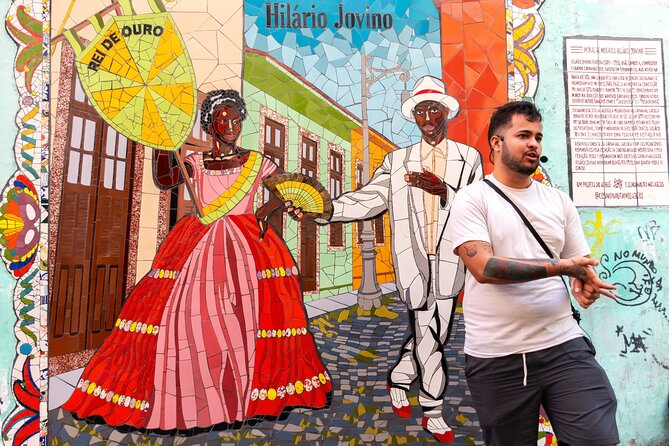
Stop 3: Mosaico Hilário Jovino and the carnival connection
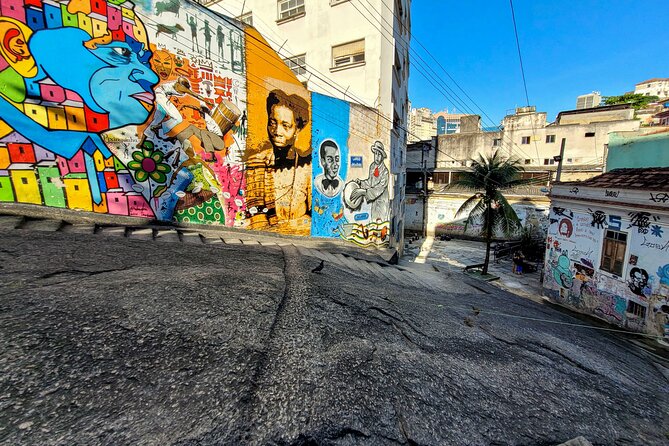
The walk continues to the Mosaico Hilário Jovino. Again, the stop is around 15 minutes, and the experience is described as a photo parade in the mosaic.
What makes this stop valuable is what the mosaic explains: the creation of carnival and its relationship with small Africa. So you are not just photographing a cool design. You are looking at a visual lesson about how cultural forms grow from specific communities and their histories.
This is where the tour’s approach starts to feel cohesive. Earlier you framed Little Africa. Now you see how cultural events like carnival connect back to that community life and its roots. If you already know carnival basics, this angle helps you understand where the energy comes from and how it relates to resistance and cultural continuity.
Good strategy: keep your phone camera ready, but keep one eye on the guide’s explanation. The mosaic is the kind of surface you can snap and move on, but the meaning is in what the guide helps you notice.
If this one is full, Rio has these as well:
- Rio de Janeiro: Rocinha Favela Walking Tour with Local Guide★ 4.8 · 3,052 reviews
- Rio’s Full Day: Selarón Steps, Christ & Sugarloaf – Tickets & Lunch Included★ 5.0 · 2,724 reviews
- Rio: Christ the Redeemer, Sugarloaf, Selaron & BBQ Lunch★ 4.5 · 2,428 reviews
- Rio De Janeiro: Half-Day Rocinha Favela Walking Tour★ 4.7 · 2,272 reviews
- Hang gliding Hang gliding Experience Rotorfly★ 5.0 · 2,009 reviews
Stop 4: Largo São Francisco da Prainha, cultural expression and resistance
Largo São Francisco da Prainha is the kind of public square that holds layers. Here, the tour focuses on cultural expression and resistance of the Black community in Rio de Janeiro.
You spend about 25 minutes at this stop, giving the guide room to connect the square to everyday life and historical struggle. Squares like this are where people can claim space without permission from institutions. They also become places where culture can survive, even when systems try to suppress it.
This stop is a turning point emotionally. Earlier locations lean into identity and cultural symbols. Here you get a more direct sense of how resistance operated in daily life, not only in dramatic events.
If you prefer a tour with deeper reflection, this is one to pay attention to. If you need a lighter mood, you still can take photos here, but the emphasis is meaning over scenery.
Stop 5: Pedra do Sal, samba meeting point and monument
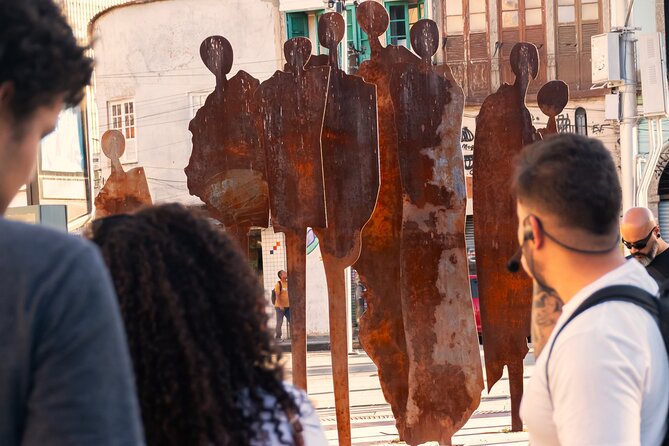
At Pedra do Sal, you get a cultural anchor. The stop is about 20 minutes, and it is described as a meeting point for samba musicians that also serves as a monument to Afro-Brazilian culture today.
This is one of the most practical and human stops on the route. Even if you visit during a quiet hour, the site is meant to connect you to the idea of samba as community practice, not only as performance.
The tour uses this location to link music to place. That is important because Rio’s Black cultural story is not only about what happened in the past. It is about what people kept doing, and where they did it.
One consideration: if you arrive expecting a lively street show, you might not get that in every visit. But that is not the point. The value is understanding why the site is remembered and how it represents ongoing cultural identity.
Stop 6: Cais do Valongo, the slavery-era archaeological ruin
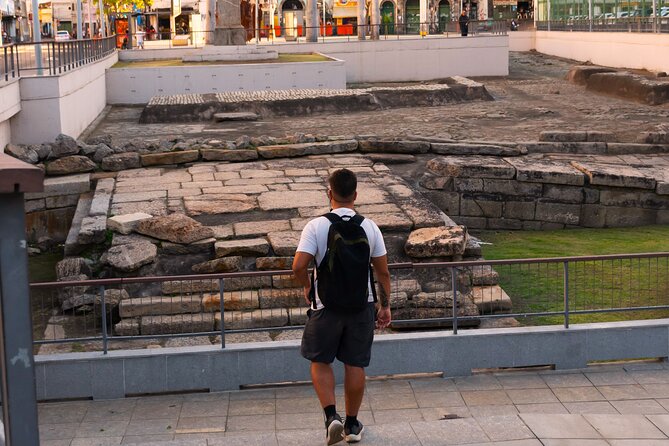
Then comes Cais do Valongo, the heavy-hitting stop on the itinerary. You spend about 20 minutes here, and it is described as an archaeological ruin from the slavery period, tied to the landing of 1 million enslaved people.
This is where the tour turns from cultural markers to historical weight. You are looking at physical traces of a system of forced migration and human suffering, and the guide helps connect that ruin to the wider story of Black community survival and cultural creation in Rio.
If you want a tour that treats this topic with seriousness, this stop delivers. It is not a quick mention. It is part of the route’s backbone.
Practical note: ruins and outdoor sites can involve uneven ground. Go slow, especially if you are wearing sandals. Your best bet is sturdy shoes and a calm pace.
Also, this is not the kind of stop where you want to rush. Even with a set time, you will get more out of it if you let the guide’s context land.
Stop 7: Kobra’s Etnias mural, ending with Indigenous connection
The final stop is Kobra’s mural, Etnias. You have about 15 minutes here, and the mural is described as depicting Indigenous peoples of all continents.
Ending with this mural is a smart choice, because it broadens the lens at the end. The route began with Black cultural identity and community resistance, then it lands on a visible Indigenous theme. In other words, you finish with a city-facing artwork that points to mixed layers of identity across the Americas.
This stop is also a nice “reset” moment after Cais do Valongo. You still carry the weight of the earlier context, but now you get a public-facing image that feels like reflection, memory, and presence all at once.
If you like street art, you will probably enjoy this ending more than you expect. Even if you are not an art person, the subject matter gives the guide something to connect to the broader story you’ve been building.
Your guide, pace, and group feel
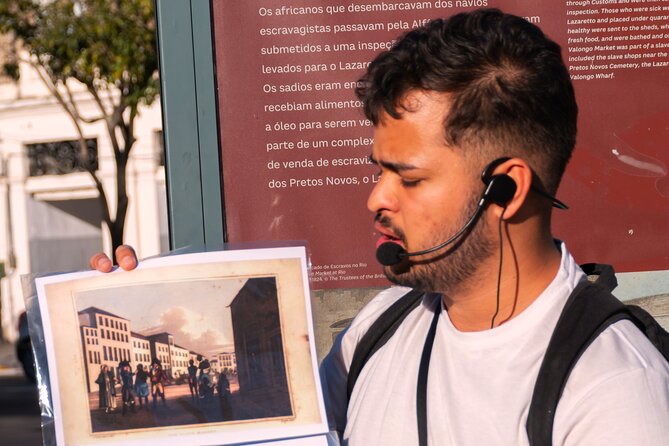
A major reason this tour earns such high marks is how the guide teaches. Lucas Reves is highlighted for being personable, friendly, and passionate while sharing Afro-Brazilian history. The feedback also points to strong pacing, plus a real effort to make sure questions get answered.
That matters for you because this is not a topic you want handled with a script. You want explanations that respect the subject and that allow you to ask follow-ups. Based on the guide style described here, that is exactly what you should expect.
You also get a private tour format, so it is just your group. That tends to make the questions flow more naturally, and it keeps the route from feeling like a stampede.
Total time is listed as about 2 to 3 hours. Given the stop durations, it is tight but not frantic. You should plan to stay alert and attentive rather than expecting a leisurely stroll with long breaks.
What to pack and how to plan your day
Food and drink are not included, so I suggest you handle meals before or after. If you tend to get hungry while walking, carry a small snack and water on your own.
This experience requires good weather. That is not just a fine-print detail. If rain hits, your route might change dates or be canceled for poor conditions, so build in some flexibility.
Since the tour is near public transportation, you will likely find it easier to connect to it than to remote sites. The start is at Rio Museum of Art, Praça Mauá, 5 – Saúde, and the end is near Kobra’s mural at Orla Pref. Luiz Paulo Conde – Centro, close to public transport.
Finally, because most travelers can participate and service animals are allowed, it is generally designed to be accessible for a range of visitors. Still, this is a street-level route, so comfort matters.
Should you book Path DA Resistance: Discover the Black Culture of Rio?
Book it if you want Rio’s Black culture explained through specific places, not vague “history talk.” The route hits key sites in a logical sequence, and the guide style is repeatedly praised for being friendly, passionate, and responsive.
Also book it if your ideal tour includes photo stops that actually connect to meaning. The staircase and mosaics are there, but they are not distractions. They are part of the cultural map.
Skip it only if you strongly dislike walking outdoors or you cannot be flexible about weather. Otherwise, this is excellent value for the time, because you are paying mostly for a specialized guide and you get free access at each stop.
FAQ
FAQ
How long is Path DA Resistance: Discover the Black Culture of Rio?
The tour lasts about 2 to 3 hours.
What language is the tour offered in?
The tour is offered in English.
Is this tour private or shared?
This is a private tour or activity, so only your group participates.
Are admission tickets included?
Yes. The stops listed all show admission ticket free.
Is food and drink included?
No. Food and drink are not included.
Where does the tour start and end?
It starts at Rio Museum of Art, Praça Mauá, 5 – Saúde, Rio de Janeiro – RJ, and ends at Kobra “Etnias” Mural, Orla Pref. Luiz Paulo Conde – Centro, close to public transportation.
Do I need good weather?
Yes. The experience requires good weather.
Is a mobile ticket provided?
Yes. The tour includes a mobile ticket.
What is the cancellation policy?
You can cancel for free up to 24 hours in advance for a full refund. If you cancel less than 24 hours before the start time, the amount paid is not refunded.
Are service animals allowed and can most travelers participate?
Yes, service animals are allowed, and most travelers can participate.