Reviewed · TOURS
Jewish Tour in Rio de Janeiro
Jewish Rio changes how you see the coast. This 3-hour small-group tour knits together synagogues, community life, and Holocaust memory across some of Rio’s most recognizable neighborhoods, so you get context without doing the logistics grind. I especially like the hotel pickup and drop-off, which keeps you from spending precious morning time wrestling with taxis and directions, and I also like the small group size that lets your guide slow down for questions. One possible drawback to plan for: a couple of the most meaningful stops depend on access or opening days, so you may get more exterior viewing at times than full inside time.
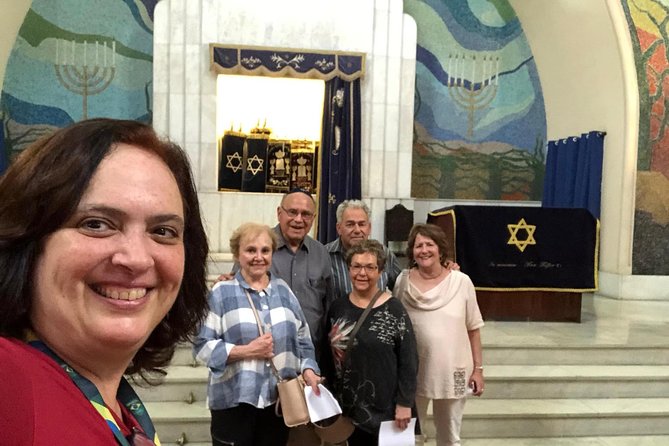
You start at 9:00 am at the Hilton Rio de Janeiro Copacabana, then ride in a comfortable van with a guide who can explain why these places matter in everyday Jewish life in Brazil. Guides seen with this tour include Ephraim, Leonardo, and others, and the common theme is personal, community-level storytelling, not just a rushed photo stop. With a maximum of 14 travelers, you should feel like the morning belongs to you, even though it moves at a city pace.
In This Review
- Key things to know before you go
- Jewish Rio is more than synagogues on a map
- Leblon, Beit Lubavitch, and Midrash learning in a high-end neighborhood
- Ipanema beach and the Jewish Community Center (CIB)
- Botafogo Beach, Anne Frank school networks, and the ARI synagogue
- Itzhak Rabin Park on Morro de Pasmado: a viewpoint with political memory
- Museu Judaico do Rio: where community memory is kept
- Grande Templo Israelita: a monumental landmark with limited visiting hours
- How the small-group format keeps the pace human
- Price and value: what $95 buys you in Rio
- Should you book this Jewish Tour in Rio de Janeiro?
- FAQ
- How long is the Jewish Tour in Rio de Janeiro?
- How much does the tour cost?
- What is included in the tour price?
- Are entrance fees included?
- How many people are in the group?
- Where is the meeting point and what time does it start?
- Is pickup available from ports and hotels?
- Is the tour suitable for children?
- What is the cancellation window?
Key things to know before you go
- Small-group format (max 14) helps you ask questions instead of shouting from the back of the van.
- Pickup plus drop-off at selected hotels saves time and hassle.
- A beach and city-route approach connects Jewish sites to real Rio neighborhoods, not just a list of buildings.
- Museu Judaico do Rio and the Grande Templo Israelita are included as key stops, but entrance fees are not included.
- Expect limited access at some sites depending on hours, special dates, and whether areas are open.
Worth a look side by side. Others covering the same corner of Rio:
- Rio de Janeiro: 6-Stop Highlights of Rio with Lunch
★ 4.4 · 5,157 reviews - Christ the Redeemer Entry Ticket by Corcovado Train
★ 4.4 · 4,476 reviews - Rio’s City Tour – Tickets for Christ, Sugar Loaf & Lunch included
★ 5.0 · 4,389 reviews - Full Day: Christ Redeemer, Sugarloaf, City Tour & Barbecue Lunch
★ 4.5 · 3,142 reviews
Jewish Rio is more than synagogues on a map
Rio is famous for beaches first, and history second. This tour flips that order. You’re not only shown where Jewish institutions are, you’re taught how Jewish life took root in Rio over time, and how different communities shaped what you see today.
The value here is the ordering of the morning. You begin with institutions tied to community and learning, you pass through neighborhoods where Jewish organizations built cultural and social space, and you end at monumental landmarks. In other words, you see Jewish Rio as a living network, not as an isolated “heritage checklist.”
The tour also gives you a built-in translator for Brazil’s Jewish story. A guide like Ephraim, or Leonardo, tends to explain not just dates and names, but the human why: why certain centers were created, why specific synagogues matter to different streams of Judaism, and why Holocaust memory is kept visible.
At $95 for about 3 hours, it’s not a bargain-price sampler. It is priced like a guided, door-to-door cultural experience, which matters in Rio because getting from one neighborhood to another can eat up your time fast. If you want the quick context and you don’t want to self-navigate, this is the kind of morning that pays off.
Leblon, Beit Lubavitch, and Midrash learning in a high-end neighborhood
The morning starts in Leblon, an upscale corner of Rio that immediately tells you something important: Jewish life in Rio is not only tied to one kind of neighborhood or one kind of lifestyle. Here, you’ll see the Beit Lubavitch Synagogue and the Midrash Cultural Center.
Leblon can feel like “Rio’s postcard money,” and that contrast is the point. Jewish institutions have been part of different neighborhood stories, not just the historic core you might expect. The stop is short, but it sets the tone: this isn’t only about buildings. It’s about religious practice and learning.
From there, you move toward the Ipanema/Leblon beach corridor. This is where the tour uses location as a classroom. Ipanema and Arpoador sit on a single stretch that most visitors recognize instantly, but few people connect it to Jewish community anchors. Past the waterline, you learn where major community spaces sit in the city fabric.
Ipanema beach and the Jewish Community Center (CIB)
Right around the Ipanema/Leblon zone, the tour includes the CIB, the Jewish Community Center. That matters because a community center is not just a building for services. It’s where life happens: programs, social connection, and a sense of belonging for people who may not have their family nearby.
One of the strongest details from this tour is how the center is described as open to people beyond a single strict religious lane. That is a rare thing on a synagogue-focused itinerary, and it’s why this tour feels more like “how Jews live in Rio” than “how to look at synagogues.”
If you like the idea of seeing cultural Judaism, not only worship spaces, this stop is a highlight. It also gives you a break in the morning rhythm, since beaches and community spaces are easier to picture than a museum collection.
Practical note: you’ll still be in a “see and move” format. This isn’t a slow walk-through with long sit-down time, but it is paced for understanding.
Botafogo Beach, Anne Frank school networks, and the ARI synagogue

Next comes Botafogo, and the tour leans into the classic Rio view angle. Botafogo Beach rewards you with those postcard perspectives, the kind where you can see how the city was built around its water and hills.
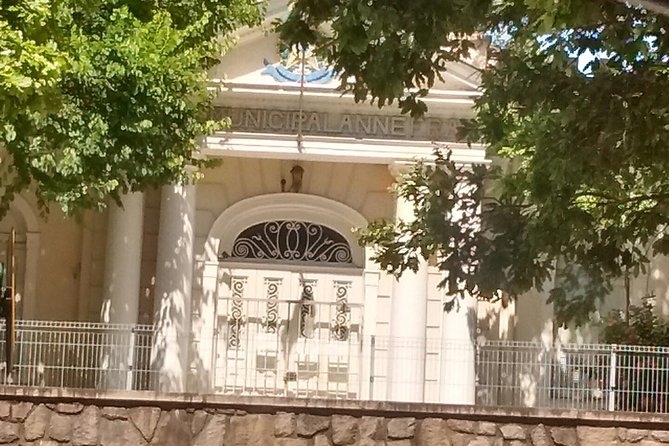
Then the morning shifts to something educational and public: the municipal school named after Anne Frank. The tour also explains that this school is part of a broader network of schools with her name in Brazil, connected to the promotion of values like respect for diversity and human rights.
This stop is meaningful because it shows Jewish memory in a mainstream public context. It’s not tucked away. It’s part of how education carries history forward.
After that, you’ll head to the A.R.I. Synagogue area. The ARI, the Israel’s Religious Association of Progressive Judaism’s in Rio de Janeiro, is affiliated with the World Union for Progressive Judaism. You also hear about how the Jewish Religious Association of Rio de Janeiro supported the Rabbi Henry Lemle Community Center, including classrooms, library, auditorium, administrative offices, and the synagogue “Henrique Peres,” which can host up to about 150 people. There is also a Center for Reference and Research on the Holocaust Zinner Family as part of the broader complex.
One nice surprise from the experience of previous groups: guides have been willing to arrange an extra moment for Shabbat services if schedules align. That’s not something you should assume will happen every time, but it’s a good sign of how invested the guides are in showing real community rhythm, not just architecture.
Itzhak Rabin Park on Morro de Pasmado: a viewpoint with political memory
Botafogo Bay is where the tour gives you a reset with a viewpoint. The stop includes Itzhak Rabin Park, located on top of Morro de Pasmado, which makes it accessible while still giving you those wide bay views over Botafogo and Urca Bay.
This is also a memory stop. The park is named after Itzhak Rabin, and it includes a bust representing the relationship of the Brazilian state with the state of Israel. If you like history that connects to geography, this is one of the easiest places to “read” the landscape and understand why that history is placed here.
The time at the park is limited, so come with the mindset of quick understanding plus photos. If you want long contemplation, this might feel short. But as part of a 3-hour structure, it works.
If this one is full, Rio has these as well:
- Rio de Janeiro: Rocinha Favela Walking Tour with Local Guide★ 4.8 · 3,052 reviews
- Rio’s Full Day: Selarón Steps, Christ & Sugarloaf – Tickets & Lunch Included★ 5.0 · 2,724 reviews
- Rio: Christ the Redeemer, Sugarloaf, Selaron & BBQ Lunch★ 4.5 · 2,428 reviews
- Rio De Janeiro: Half-Day Rocinha Favela Walking Tour★ 4.7 · 2,272 reviews
- Hang gliding Hang gliding Experience Rotorfly★ 5.0 · 2,009 reviews
Museu Judaico do Rio: where community memory is kept
The Jewish Museum of Rio de Janeiro is a key moment. The museum was founded in 1977 after a donation of a menorah, and it functions as a cultural center focused on preserving memory and promoting Jewish culture.
The tour describes the museum as active, not dormant. You’ll see exhibits on Jewish community history in Rio and on traditions across religious, cultural, and historical angles. It also runs research activities connected to migration and hosts annual competitions for students.
What I like about including this museum stop is the time balance. You do not lose the whole morning in one room, but you do get enough exposure to understand what the museum is trying to do: preserve community memory, educate visitors, and support research and archives.
A heads-up for planning: entrance fees are not included here. Also, in at least one experience, the Holocaust museum component was closed on the visit day. So even if your day includes this stop, some related exhibits may have limited access depending on what’s open.
If you want a more “structured inside learning” moment, this is the one.
Grande Templo Israelita: a monumental landmark with limited visiting hours
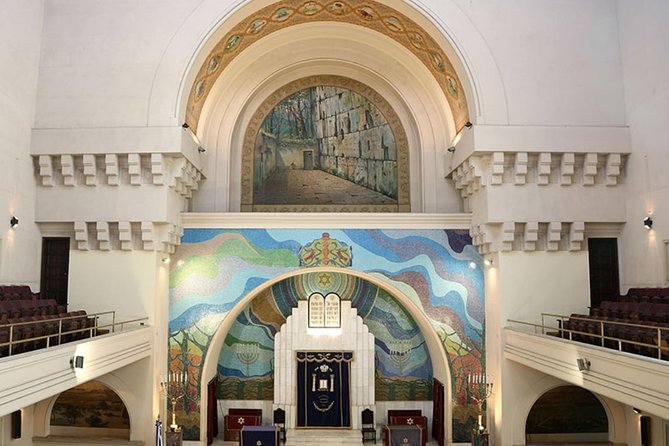
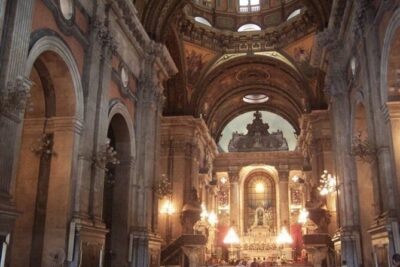
The last major religious landmark on the route is the Grande Templo Israelita do Rio de Janeiro. It’s described as the Jewish Community of Rio de Janeiro’s largest monument, tied to the history of the Yishuv and the city.
The architectural story is specific: the design was elaborated in 1919 by an architect named Vodred, and the temple opened in 1932. The mosaics were made in 1976 by artist Humberto Cozzo. The temple later collapsed in 1987, and it is currently open only during high holidays, special events, and tourist visits.
That last detail is why you should come with realistic expectations. Even though the building is important, you might not get full interior time like you would at an actively functioning everyday synagogue. Entrance tickets are not included, and access can be limited.
What makes this stop worthwhile is the scale and the story. You see how communal life built monumental identity, then how history and physical collapse changed what people can experience today.
If your priority is architecture and historical symbolism, this is a strong finish. If your priority is lots of inside time in multiple synagogues, you may find the day’s access varies.
How the small-group format keeps the pace human
With a maximum of 14 travelers, you avoid the usual large-group problem, which is simple: it becomes impossible for your guide to read the room. Here, the format supports a more conversation-based tour style.
Guides associated with the experience, including Ephraim and Leonardo, are often praised for being engaging and for answering questions beyond the basic facts. That matters because Jewish history in Rio is not a single storyline. You need explanations for multiple community types, and you need someone to connect the dots between institutions.
You also get a driver and a comfortable van. One past group specifically called out that the van was exceptionally comfortable, and another noted it was air conditioned. In Rio’s heat, that can be a genuine quality-of-life detail.
The route itself is a practical mix. You get the beach neighborhoods for city orientation, then the institutional stops that explain why those neighborhoods matter to Jewish life. By the end, you’ll have both the map in your head and the meaning attached to it.
Price and value: what $95 buys you in Rio
$95 per person for about 3 hours can feel like a lot until you price the alternative: you’d need transportation, you’d need to coordinate pickup, and you’d still need someone to interpret what you’re seeing.
This tour includes:
- a professional guide
- hotel pickup and drop-off at selected hotels
- port pickup and drop-off
- transport by car or van
What it does not include:
- food and drinks
- entrance fees
So the “value” is mostly about interpretation plus logistics. You’re paying for a guided morning that keeps you moving efficiently and helps you avoid spending extra time figuring things out on your own. In Rio, that can be worth it, especially if you only have one half-day and you want it to count.
The main cost trade-off is that museum and temple entrances can add up since they are not included. Also, because some stops can be limited by access, part of the value is realizing you’re buying the context, not a guaranteed long interior visit at every site.
Should you book this Jewish Tour in Rio de Janeiro?
Book it if you want your Rio morning to have structure and meaning. This tour is best for people who like heritage that connects to real neighborhoods. It’s also ideal if you want a guided introduction to Jewish life in Rio that goes beyond one museum or one synagogue.
I’d skip or reconsider if you strongly prefer multiple long indoor visits at major sites. This day is designed for variety and city context, and some stops can be exterior-focused depending on access. If that would frustrate you, you might prefer a different format that stays longer in fewer locations.
If you do book, go in with two priorities:
- Ask your guide questions about differences between community types and why certain institutions were created.
- Treat the beach segments as part of the learning, not just a scenic break.
This is one of those tours that can change how you remember a city afterward. You don’t just take photos. You leave with a story.
FAQ
How long is the Jewish Tour in Rio de Janeiro?
The tour runs for about 3 hours.
How much does the tour cost?
The price is $95.00 per person.
What is included in the tour price?
It includes a professional guide, hotel pickup and drop-off (selected hotels), port pickup and drop-off, and transport by car or van.
Are entrance fees included?
Entrance fees are not included. Some stops are listed as free (like certain synagogue and park views), but the Museu Judaico do Rio de Janeiro and the Grande Templo Israelita do Rio de Janeiro are listed as not included.
How many people are in the group?
The tour has a maximum of 14 travelers.
Where is the meeting point and what time does it start?
The tour starts at 9:00 am at the Hilton Rio de Janeiro Copacabana, Av. Atlântica, 1020, Copacabana, Rio de Janeiro, RJ 22010-000, Brazil.
Is pickup available from ports and hotels?
Yes. There is port pickup and drop-off, and hotel pickup and drop-off for selected hotels.
Is the tour suitable for children?
Children must be accompanied by an adult.
What is the cancellation window?
You can cancel for free up to 24 hours before the experience starts for a full refund.
If you want, tell me your dates and what you care about most (synagogues, museum time, or Holocaust memory), and I’ll suggest the best way to plan your other Rio stops around this 3-hour morning.
Recently added around Rio





Tours, compared.

Rio’s City Tour – Tickets for Christ, Sugar Loaf & Lunch included
Read our review →
Full Day: Christ Redeemer, Sugarloaf, City Tour & Barbecue Lunch
Read our review →