
Reviewed · WALKING TOURS
Half-Day Architecture Walking Tour in Rio
Rio’s buildings tell a story when you walk. This half-day route links Downtown Rio’s origins to modernist landmarks, with an architecture-focused guide and flexible start times.
I really like the guide-led context, especially when the commentary gets specific about how ideas moved from Europe into Brazil. I also like the value math, because most major sights on the route are free to enter, and only two stops typically require tickets.
One thing to consider: it’s a mostly outdoor downtown stroll, so good walking shoes matter, and the tour depends on workable weather conditions.
In This Review
- Key highlights to expect
- A Smart Half-Day Walk Through Rio’s Architectural DNA
- Meeting in Centro, then Walking Into the Past
- Stop 1: Largo da Carioca, Rio’s Downtown Starting Line
- Stop 2: Convent of St. Anthony, Built in 1608
- Stop 3: Cinelândia’s Architectural Mix, with Art Deco in the Mix
- Stop 4: Palacio Capanema, Le Corbusier’s Ideas on Rio Streets
- A Modernist Detour: Edifício Austregésilo de Athayde Symbolism
- Stop 5: Museu de Arte Moderna, Brutalism Comes to Life
- What You’ll Learn: From Colonial Faith to Modern Architecture Logic
- Price and Value: Is $60 Worth It?
- Timing and Group Size, What It Means for Your Experience
- Who Should Book This Tour, and Who Might Skip It
- Tips to Make the Most of Your Walk
- Should You Book This Half-Day Architecture Walk?
- FAQ
- How long is the Half-Day Architecture Walking Tour in Rio?
- How much does the tour cost?
- Are entrance fees included?
- Which sites does the tour include?
- Is roundtrip transfer included?
- Will I need to bring ID?
- What happens if the weather is bad?
Key highlights to expect

- Two start times so you can match the tour to your day
- A clear timeline of styles, from early colonial work to modernism and brutalism
- Small-group feel, with a maximum of 15 travelers per guide
- Optional mass at the Convent of St. Anthony, if schedules line up
- Real design history at Palacio Capanema, including links to Le Corbusier’s ideas
- Museum time for brutalism, with an additional entrance fee
More of Rio covered on foot:
- Rio de Janeiro: Rocinha Favela Walking Tour with Local Guide
★ 4.8 · 3,052 reviews - Rio De Janeiro: Half-Day Rocinha Favela Walking Tour
★ 4.7 · 2,272 reviews - 3 Hour Rocinha Favela Walking Tour with a Local Guide
★ 5.0 · 833 reviews - Favela Tour Rio de Janeiro – Vidigal Walking Tour by Russo Guide
★ 5.0 · 377 reviews
A Smart Half-Day Walk Through Rio’s Architectural DNA
This tour is built for people who want more than pretty photos. You’re walking through the parts of central Rio where power, religion, and design trends left physical fingerprints, and you get just enough time at each stop to make it click.
The biggest win is the pacing. Four hours is long enough to notice how the city’s look changes over time, but short enough that you’re not stuck traveling all day across multiple neighborhoods.
Also, I appreciate that you can pick between two convenient start times. That small choice makes the tour easier to fit into the rest of your Rio plans, especially if you’re doing the usual beach and viewpoint circuit.
Meeting in Centro, then Walking Into the Past
You start at Carioca / CentroCentro and end back at the same meeting point. That matters more than it sounds, because it reduces friction, especially in a busy downtown area where traffic can eat up time.
The route is near public transportation, so even if you’re not using transfers, you should be able to get yourself there without a headache. The tour guide leads the way, and you’re on foot long enough to absorb the street scale, not just stare at buildings from across the road.
Comfort notes are simple but important. Bring comfortable clothes and walking shoes, because the experience is designed around moving through downtown on foot.
Stop 1: Largo da Carioca, Rio’s Downtown Starting Line
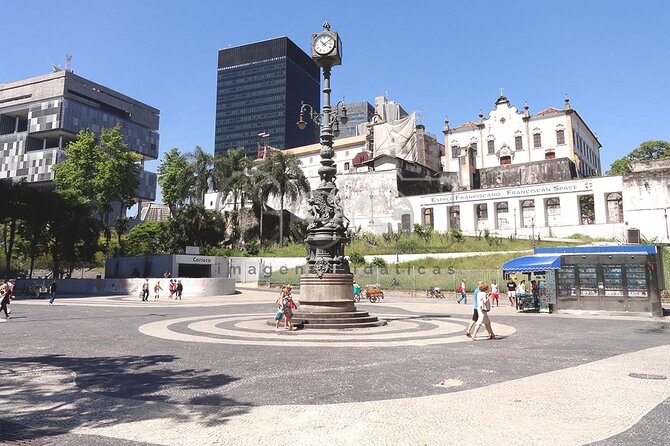
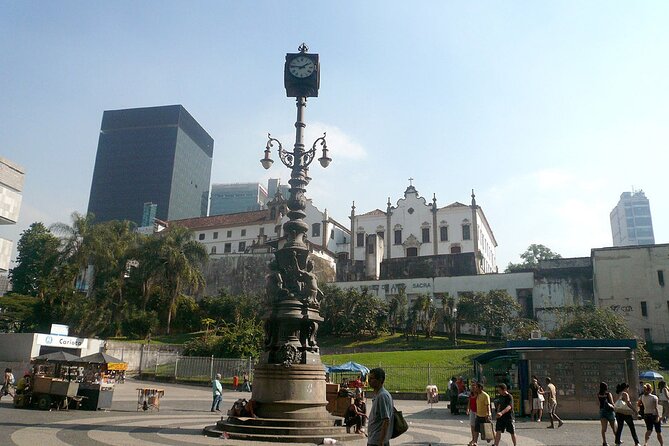
Largo da Carioca is considered the heart of Downtown Rio. It’s tied to when the city’s occupation began, so it’s a strong first stop for setting the stage.
From here, you can look toward the Church and the Convent of St. Anthony area. Even before you step inside anything, the point is to help you understand how this area became a center for religious and civic life, not just a random cluster of old buildings.
Practical timing helps here: you spend about an hour at this stop. That’s enough for you to see the area without feeling rushed, and it gives the guide room to explain what you’re looking at.
Stop 2: Convent of St. Anthony, Built in 1608
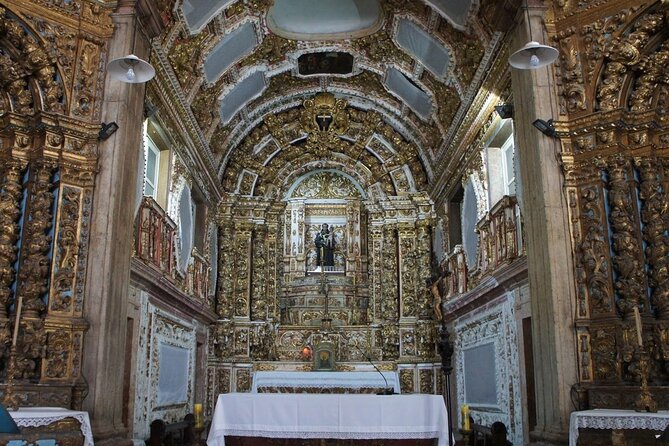
The Convent of St. Anthony is one of the early and important Catholic constructions in Rio. It was built in 1608 by the Order of St. Frances, so you’re dealing with a very early chapter of the city’s built heritage.
There is an entrance ticket of 10 BRL per person for this stop. If you’re lucky, you may be able to attend a mass, which can add a real sense of living tradition to the stone and wood you’re studying.
The visit is short, about 30 minutes, so your best move is to listen closely while also taking quick visual notes. Look at how the complex sits in the urban fabric, then compare it with what you’ll see later from the 20th century and beyond.
One consideration: if you have a tight schedule that day, this is the stop where your flexibility matters most. A mass depends on timing, and your guide may adjust around what’s possible on the day.
Stop 3: Cinelândia’s Architectural Mix, with Art Deco in the Mix
Cinelandia is where you start seeing the more theatrical side of central Rio’s architecture. The focus here is the Art Deco feel, and you get about 30 minutes to take it in.
Here’s the realistic expectation to keep in mind. You should look for Art Deco elements, but the area can also reflect older styles and grander early-20th-century design language, so the Deco details may be more scattered than you expect.
This is a great stop for people who like comparing styles. Stand back and scan the façades, then come closer for details. The guide’s job is to help you spot what’s decorative versus structural, and why the city leaned into those looks during that era.
If you love architecture but prefer your highlights to be super concentrated, this stop may feel shorter on the Deco payoff. It’s still valuable as a bridge, because it links the colonial and religious spaces with the modernist experiments coming next.
A few more Rio outings to weigh up
- Half-Day Tour: Christ the Redeemer, Selarón & Sunset at Sugarloaf★ 4.5 · 786 reviews
- Rio: Half-Day Jeep Tour at Floresta da Tijuca★ 4.5 · 353 reviews
- Two of Rio’s Best: Christ the Redeemer & Sugarloaf Mountain Half-Day Tour★ 4.5 · 294 reviews
- Rio de Janeiro: Historic Rio and Santa Teresa Half-Day Tour★ 4.4 · 228 reviews
- Sugar Loaf Mountain Half-Day Tour★ 4.0 · 217 reviews
Stop 4: Palacio Capanema, Le Corbusier’s Ideas on Rio Streets
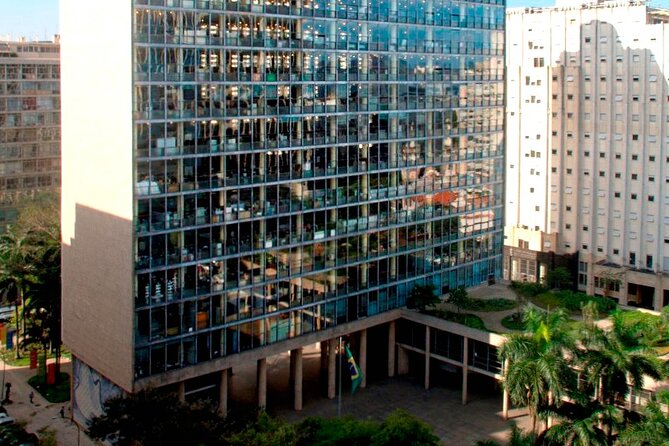
Palacio Capanema is a standout stop for design nerds, and it’s one reason this tour is worth your time even if you only care about architecture. The building incorporates Le Corbusier’s Five Points of a New Architecture, and you can see how those principles got translated into Brazil’s context.
The timeline is clear: the building was designed between 1935 and 1936 by a team of young architects, including Lucio Costa and Affonso Eduardo Reidy. There’s also a connection to Oscar Niemeyer, who became Brazil’s best-known architect later and was an intern in Costa’s office at the time.
This is another about 30 minutes stop, and that’s enough for you to understand why people treat Palacio Capanema as a turning point. You’re not just looking at a building, you’re looking at how an international design language landed in Rio and got reshaped.
No ticket is listed for this stop, so you spend time focused on observation rather than budgeting. If you’re the kind of person who likes architecture explanations, this is where the guide’s stories can really land.
A Modernist Detour: Edifício Austregésilo de Athayde Symbolism
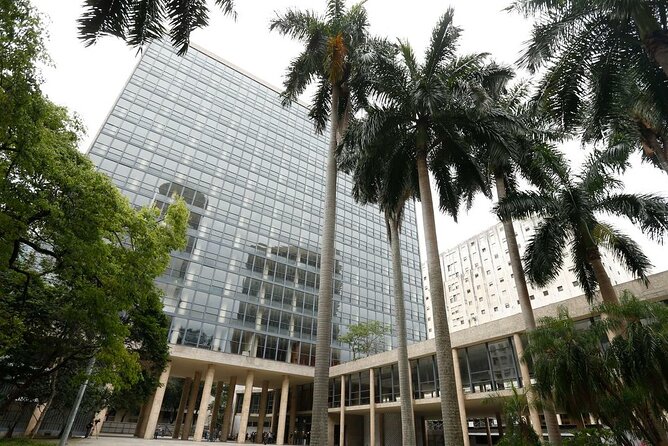
In the middle of the modernist stretch, you also visit a building inside Edifício Austregésilo de Athayde. The structure is described as a symbol for modernist architecture in Rio, which makes it a useful complement to Palacio Capanema.
Even if you’re not trying to memorize architectural terms, this stop helps you see a bigger pattern. Rio’s modernism is not just one famous landmark, it’s a cluster of ideas showing up repeatedly in different projects and public-facing buildings.
This part of the walk is a nice reset, because it keeps you moving but shifts your attention from one famous architect’s influence to how modernism became part of the city’s visual identity.
Stop 5: Museu de Arte Moderna, Brutalism Comes to Life
The final stop is Museu de Arte Moderna do Rio de Janeiro. The museum inaugurates the brutalism aesthetic in the city, which is a big deal if your goal is to understand how Rio adopted newer architectural moods after modernism had its turn.
There is an entrance ticket of 20 BRL per person here. The time is again around 30 minutes, so treat it like a design-focused orientation rather than a deep museum day.
If you’re expecting a perfectly guided museum-style walkthrough, you may need to balance what you see in the room with what the guide explains at the exterior and transitions. But that’s the point of this half-day format. You’re building a mental map of styles across the walk, and the museum is the closing visual argument.
One practical tip: if you’re sensitive to heat or humidity, plan your energy. You’ll likely spend some time outdoors before and after entering, so having water and a light cover can make the last stretch easier.
What You’ll Learn: From Colonial Faith to Modern Architecture Logic
This tour works because it frames architecture as a record of decisions. Religion shaped early spaces, civic life shaped downtown power centers, and later design movements brought new rules for how buildings should look and function.
That theme shows up in how the stops connect. Largo da Carioca begins the story, the Convent of St. Anthony anchors it in early 1600s Catholic construction, and then you walk forward into 20th-century experiments where European ideas are referenced and reworked.
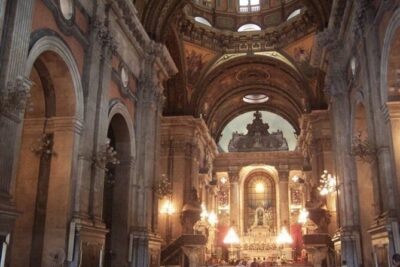
One of the most memorable ways a good guide can teach this is through small, hands-on attention cues. In at least one case, a guide used a practical trick to help you understand what you’re seeing inside an historic church space, making the visual effect easier to grasp than by description alone.
If your guide is Alberto, you may get that kind of storytelling too. The notable thing isn’t just knowledge, it’s how the guide responds to questions and keeps the focus on what you can observe in front of you.
Price and Value: Is $60 Worth It?
At $60 per person, this is not an impulse purchase unless architecture is high on your priority list. The good news is that a lot of the route is designed around free admission stops.
Here’s the realistic budgeting picture:
- Convent of St. Anthony: 10 BRL entrance
- Museu de Arte Moderna: 20 BRL entrance
- Other stops listed are free
So you’re mainly paying for two ticketed experiences, and the rest is guide-led viewing and interpretation. That makes the $60 feel more like payment for your walking time and architectural storytelling, rather than for a bundle of museum admissions.
On the “not included” side, roundtrip transfer is not part of the price, and lunch is not included either. If you plan to eat nearby after, build in a little buffer so you’re not sprinting for food.
Also check your own style preferences. If you want deeper museum immersion or long indoor time, a half-day format may leave you wanting more. If you want a fast, coherent architecture orientation, it’s a strong value.
Timing and Group Size, What It Means for Your Experience
The tour runs about four hours. Each stop is relatively tight, so you’ll be moving through the day like a guided highlights reel, not like a slow crawl where you can linger for hours in one place.
Group size is capped. The maximum is 15 travelers per tour guide, and the overall tour maximum is 100 travelers. In practice, this tends to keep the experience manageable while still allowing a lively downtown atmosphere around you.
Two start times let you choose what works. If you’re sensitive to crowds, consider the start time that gives you better control over when you hit each zone of downtown.
Confirmation comes at booking, and if requested you may need to present a copy of your ID. That’s easy to handle ahead of time, and it’s part of the typical check-in rhythm.
Who Should Book This Tour, and Who Might Skip It
This is a great fit if you’re:
- An architecture lover who wants a walking timeline in one morning or afternoon
- A history buff who likes how buildings connect to the city’s power shifts
- Someone who prefers street-level seeing over bouncing between far-flung sites
It may be less ideal if you:
- Want a museum-heavy agenda where the main draw is interior galleries for a long stretch
- Expect that every single stop will be dominated by Art Deco details
- Don’t enjoy walking in downtown, even though the experience is designed for most travelers
If your Rio plan includes neighborhoods like Copacabana or Ipanema plus major viewpoints, this tour gives you a different angle on the city. It helps you understand what downtown looks like when you focus on design, not just streets.
Tips to Make the Most of Your Walk
Wear shoes you can trust. Downtown sidewalks can be uneven, and four hours of steady walking adds up.
Bring Brazilian reais for the two ticketed stops. The convent and museum fees are listed in BRL, so having the right cash amount can save time on the day.
Go in with curiosity about style change. Ask yourself what’s consistent across the walk, and what shifts. You’ll notice how religious architecture, early civic influence, and later modernism all answer different needs.
Finally, don’t treat this as a trivia scavenger hunt. You’ll get more out of it if you watch how the guide ties each stop to a design idea, then returns you to the street so you can compare the next building.
Should You Book This Half-Day Architecture Walk?
Book it if you want a focused, guided way to see Rio’s architecture as a story. The value works well because you pay $60 for the walk and interpretation, and only two major stops are ticketed.
Skip it if you’re expecting a long, art-deco-only tour or a full museum day. This is a walk that moves through multiple styles quickly, and the payoff comes from the connections between those styles.
If you’re on the fence, here’s an easy decision rule. If architecture is one of your top interests and you like learning on foot, this is an efficient use of time. If you mostly want beaches and big skyline stops, you might save your energy for those and choose a different tour angle.
FAQ
How long is the Half-Day Architecture Walking Tour in Rio?
The tour runs for about 4 hours.
How much does the tour cost?
The price is $60.00 per person.
Are entrance fees included?
Some stops are free, but there are entrance tickets for the Convent of St. Anthony (10 BRL) and the Museu de Arte Moderna do Rio de Janeiro (20 BRL). Those two fees are not included in the tour price.
Which sites does the tour include?
The route includes Largo da Carioca, Convent of St. Anthony, Cinelandia, Palacio Capanema, a stop inside Edifício Austregésilo de Athayde, and Museu de Arte Moderna do Rio de Janeiro.
Is roundtrip transfer included?
No. Roundtrip transfer is not included.
Will I need to bring ID?
If requested, you must present a copy of your ID.
What happens if the weather is bad?
This experience requires good weather. If it is canceled due to poor weather, you’ll be offered a different date or a full refund.
Recently added around Rio




Walking Tours, compared.



3 Hour Rocinha Favela Walking Tour with a Local Guide
Read our review →
Favela Tour Rio de Janeiro – Vidigal Walking Tour by Russo Guide
Read our review →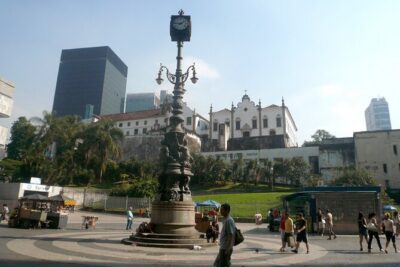

Private Walking and Cultural Tour Rocinha-Rio de Janeiro
Read our review →

Sunrise and Sunrise Walk Two Brothers with Local Guide
Read our review →More of this kind of Rio day