
Reviewed · GUIDED FAVELA TOURS
Guided Excursion: Get to Know Rocinha
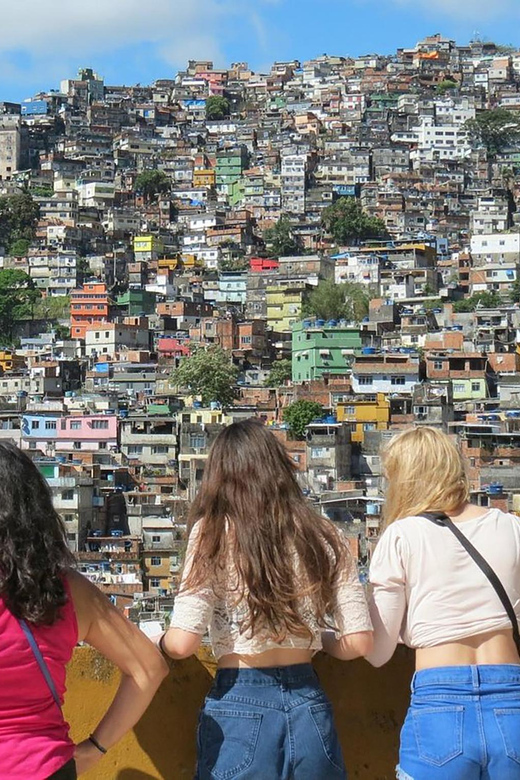
Favela views are the real headline. Starting at Rocinha’s highest point, you get Christ the Redeemer, Sugarloaf Mountain, and Ipanema Lagoon views, then a guided walk through terraces, colorful alleys, murals, and photo stops. I like the panoramic viewpoints and the cultural exchange with residents. One drawback to plan for: it is a shared tour and the route includes a motorbike climb that costs 15 reis.
From central Rio neighborhoods you’ll get hotel pickup, then return to nearby drop-off locations. The guide works in English, Spanish, and Portuguese, so you can actually follow the stories as you go, even if your Spanish or English is rusty.
In This Review
- Key things I’d circle before you go
- Rocinha From Above: Your 3 Hours Start With Iconic Rio Sights
- Terraces and Photo Stops: Where the View Becomes Personal
- Cultural Exchange With Residents: The Part You’ll Remember
- The Walk Itself: Murals, Graffiti, and Colorful Homes in Motion
- Pickup and Drop-Off: Straightforward Rio Neighborhood Logistics
- Price and Value: What 59 USD Really Buys You
- What to Bring and How to Prepare for a Hillside Walk
- Shared Tour Reality: Managing Expectations With a Bilingual Guide
- Who This Tour Fits Best (and Who Should Skip It)
- Book It or Pass: My Take
- FAQ
- How long is Get to Know Rocinha?
- What does it cost per person?
- Is pickup included, and where do they pick up from?
- Where does the tour drop you off?
- What languages does the guide speak?
- Are food and drinks included?
- Do I need to bring identification?
- Is the tour wheelchair accessible?
- Does the tour run in bad weather, and what about the motorbike climb?
Key things I’d circle before you go
- Start at Rocinha’s highest point for big skyline views and landmark photos
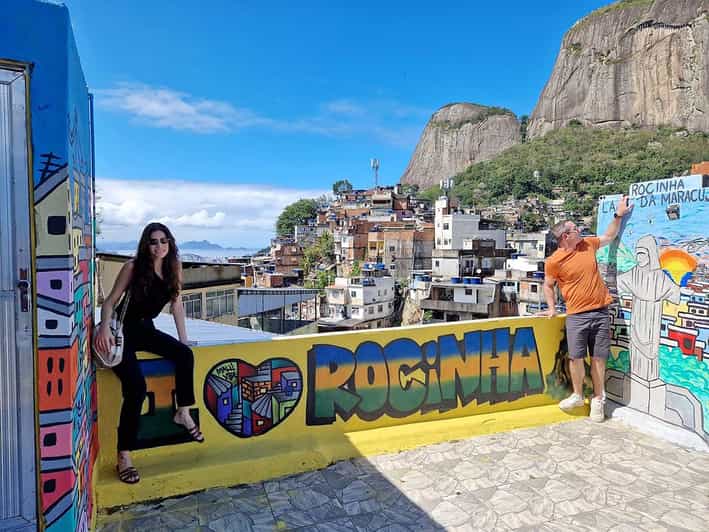
- Terrace photo stop gives you a closer look at the favela’s layered buildings
- Alley walk with murals and graffiti helps you understand daily life on the ground
- Cultural exchange with local residents keeps the experience human, not just sightseeing
- Shared format with bilingual guide means you’ll likely meet other visitors and go as a group
Other guided walks through the favelas:
- Rio de Janeiro: Rocinha Favela Walking Tour with Local Guide
★ 4.8 · 3,052 reviews - Rio De Janeiro: Half-Day Rocinha Favela Walking Tour
★ 4.7 · 2,272 reviews - 3 Hour Rocinha Favela Walking Tour with a Local Guide
★ 5.0 · 833 reviews - Favela Tours
★ 5.0 · 660 reviews
Rocinha From Above: Your 3 Hours Start With Iconic Rio Sights
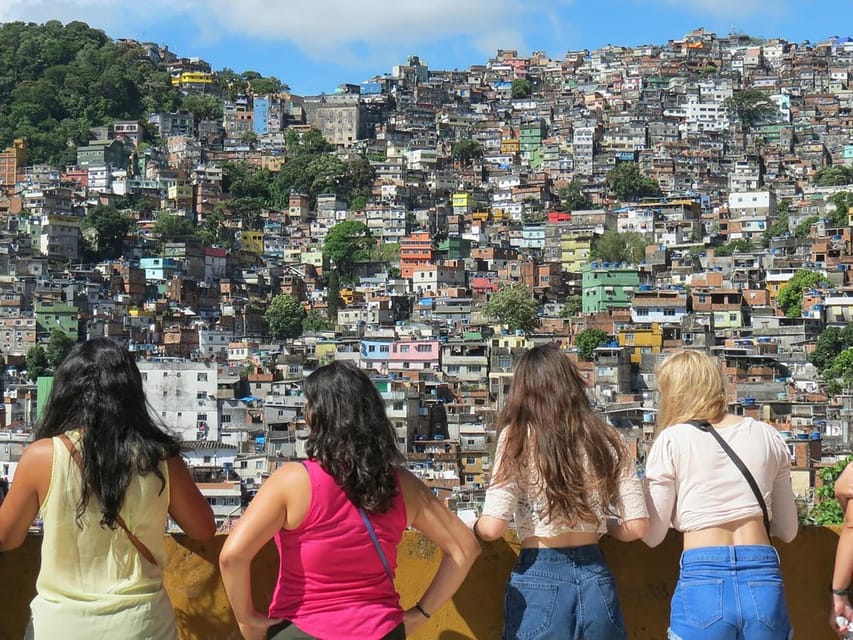
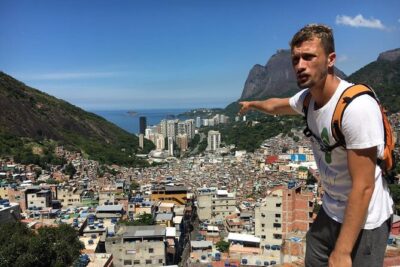
Rocinha is not a background. On this tour, it is the viewpoint. You begin at the favela’s highest point, where the city opens up in front of you. This is when you can photograph the skyline with real depth, not just a distant skyline shot.
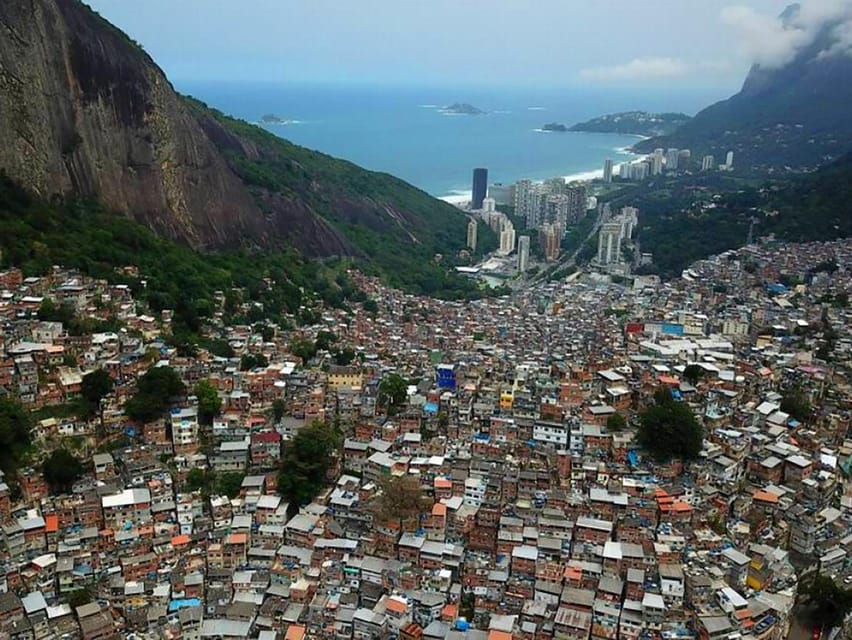
What makes the start especially good is that you’re looking for recognizable Rio landmarks, not trying to “figure out” what you’re seeing. From that high vantage, you’ll take in Christ the Redeemer, Sugarloaf Mountain, and the Ipanema Lagoon. Even if you have seen those places before, seeing them framed around Rocinha changes the perspective. You get the feeling that Rio is one interconnected system, not separate postcard neighborhoods.
I also like how the timing works. With a 3 hour total duration, the tour stays focused. You are not spending half your day traveling, and you’re not trapped in a long, slow loop where you lose energy. The payoff is front-loaded, then the walking and storytelling follows.
One more practical thing: you are starting higher up. That means the day is built around views first, walking second, and the descent is part of the design. So bring your camera ready from minute one.
Terraces and Photo Stops: Where the View Becomes Personal
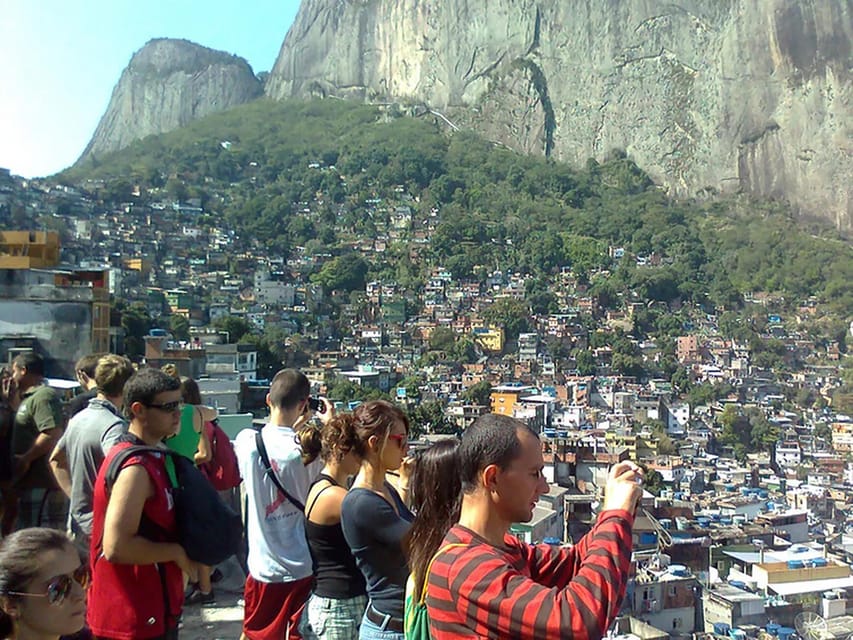
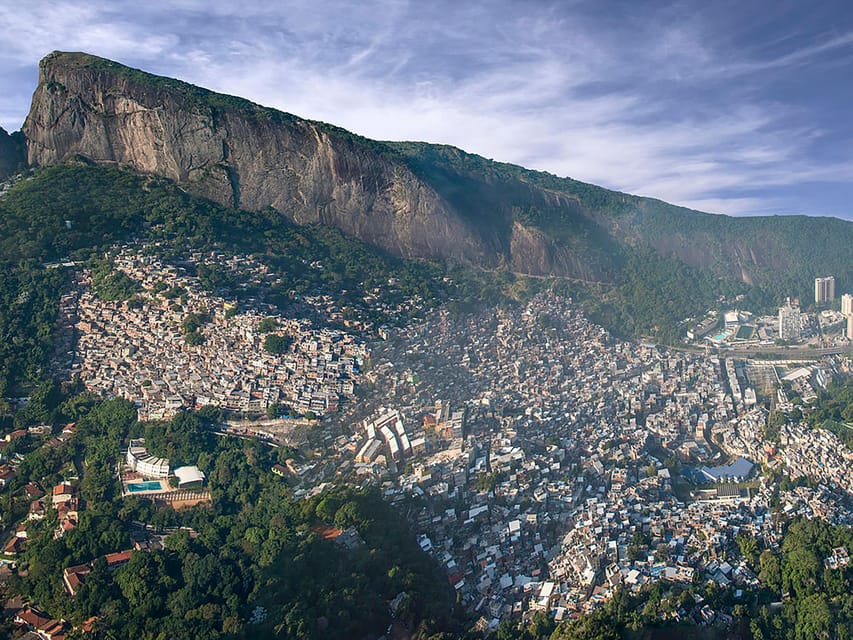
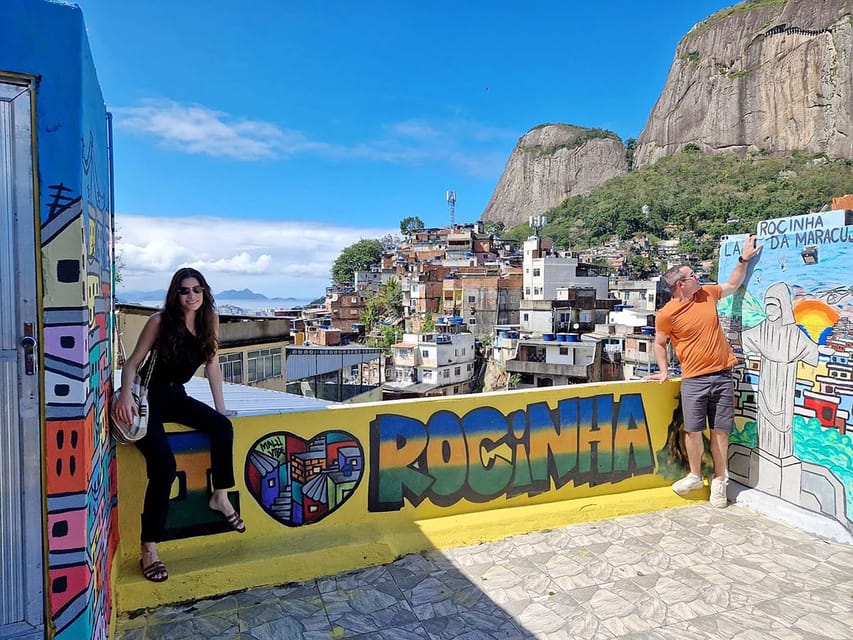
After the initial panorama, you head down toward one of Rocinha’s celebrated terraces. This is where you can stop, look around, and take photos that feel more like a portrait than a postcard. From terraces, you see the layers of the community. Buildings step up and down the hillside, and alleys feel like they connect the spaces rather than hide them.
This portion matters for two reasons. First, it gives you time to slow down. Many tours rush you through the “big sights” and leave you with one rushed photo. Here, the terrace stop is explicitly built for photos amid the favela’s grandeur.
Second, terraces create context. When you later walk winding alleys, you can mentally map where you are, because you have seen how the hillside folds. It helps you stop viewing Rocinha as a single street scene and start seeing it as a network of homes, community spaces, and routes.
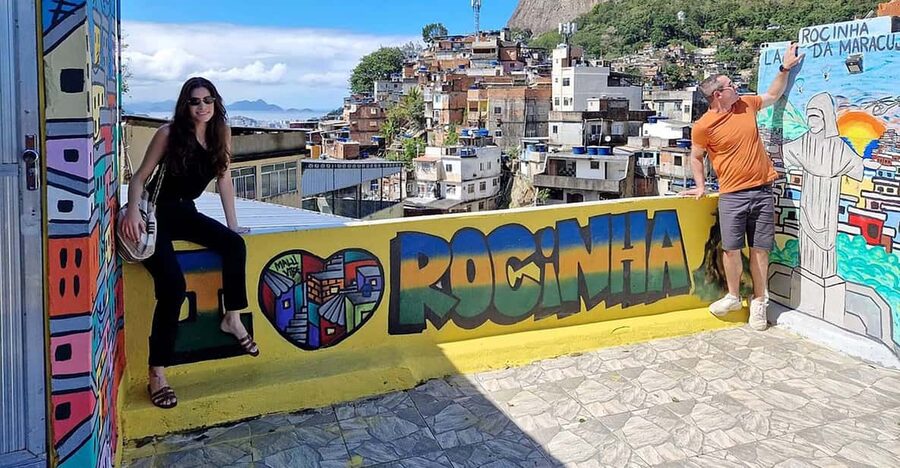
Then comes the alley phase. You’ll move through labyrinthine streets and see colorful, tucked-away homes. You may also spot murals and graffiti along the way. That mix is useful because it tells you the community communicates visually. It is not just walls. It is message, identity, and local expression in public space.
For photos, I’d plan to take more than you think you need. The best shots are often angles you don’t notice until you stop moving and let your eyes adjust to the slope.
Cultural Exchange With Residents: The Part You’ll Remember
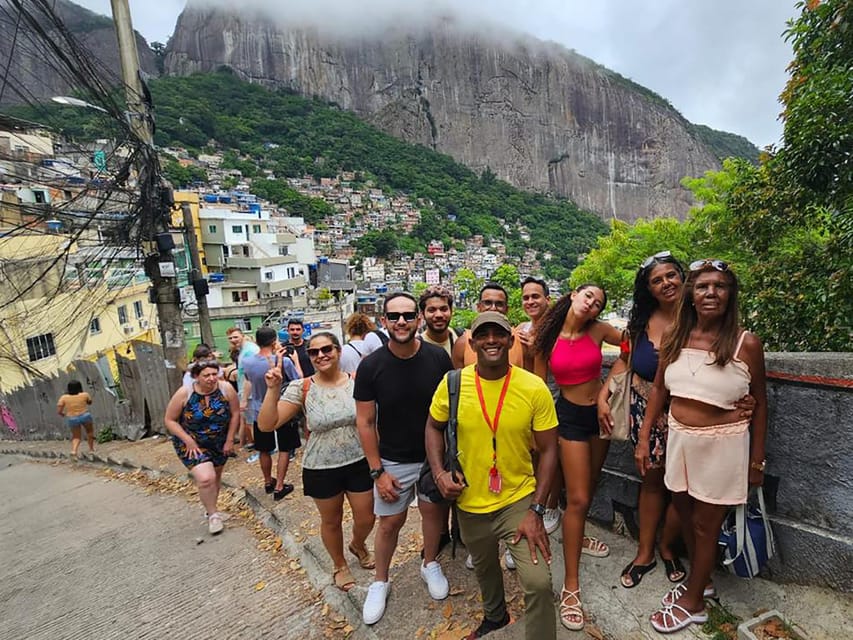
The tour is not only about what you see from a distance. A core highlight is a cultural exchange with local residents. That difference matters. You’re not just collecting photos. You’re hearing explanations from people who live the reality every day.
One of the standouts from the experience is how the guide explains life in the favela in a way that feels friendly and helpful. In the provided feedback, Giselle is named for being both approachable and clear about what day to day life looks like. That kind of guide skill changes the tone of the walk. You move through the same streets, but you understand what the details mean.
You should also expect a respectful, community-centered feel. The tour includes time for conversations and human moments as you pass homes and community features. That is why the alley portion is guided, not just a route.
If you’re worried about awkwardness, don’t. The structure is designed for exchange, not interrogation. Your job is to listen and ask what you genuinely want to know. Keep it simple. People connect through everyday topics faster than big political questions.
One small consideration: because the focus includes community interaction, you may not get the same “tourist-only” rhythm you’re used to in big museums. This is a lived place. The best mindset is curious and calm.
The Walk Itself: Murals, Graffiti, and Colorful Homes in Motion
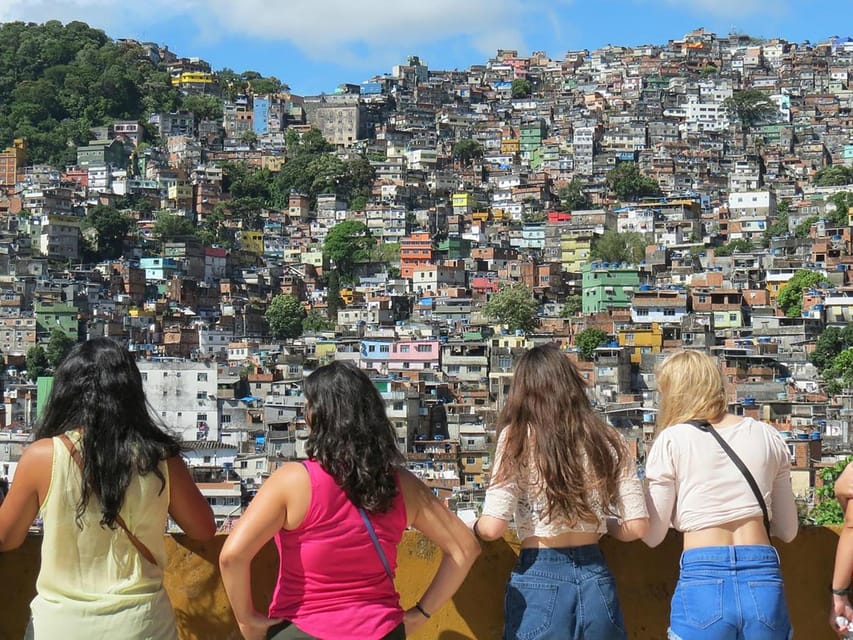
The alley portion is where your eyes do a lot of work. Rocinha’s winding paths can look chaotic if you go alone. On a guided tour, it turns into a story you can track. The guide helps you connect visuals, like murals and graffiti, to everyday context.
You’ll discover colorful homes tucked away in narrow turns. This is the part people often miss on quick drive-bys. From a bus or car window, you see rooftops. Walking gives you door level details, textures, and the way the community adapts to the hillside.
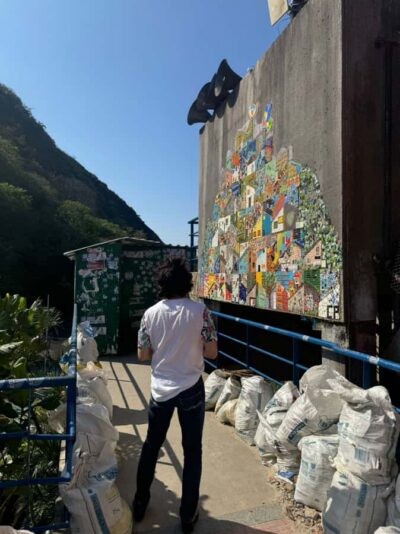
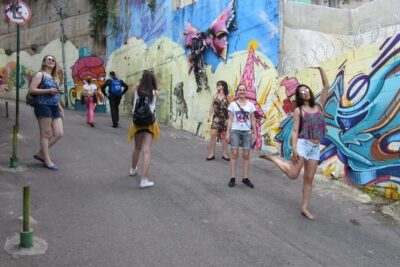
Murals and graffiti are not random. They are part of how people express themselves publicly. You’ll see art as part of the street scene, and the guide points out what to notice. That turns “interesting wall” into “understandable message.”
If you enjoy photography, this is where you’ll likely spend extra time. The best images often come from standing still for one minute while the flow of people and light shifts. It’s also where you may want to check your phone battery, because you’ll take more pictures than you expect.
Just remember you’re on a shared schedule. That means you can’t slow down too much on your own. Still, the guided pacing should give you enough stops to capture what you came for.
Pickup and Drop-Off: Straightforward Rio Neighborhood Logistics
This is a tour built for visitors staying in the central Rio zone. Pickup is included, with multiple pickup options in popular neighborhoods: Flamengo, Ipanema, Copacabana, Leblon, Botafogo, and Lapa. That makes it easy to plug into your day without adding another complicated transfer.
The drop-off covers a similar set of locations: Lapa, Ipanema, Copacabana, Botafogo, Leblon, and Flamengo. In other words, you typically end in the same general area you started, which matters when you’re planning dinner, sunset plans, or an evening beach walk.
Because you’re using transport as part of the included setup, it’s a good idea to be ready on time at your pickup point. Shared tours run on timing. If you are late, the group likely moves on.
Also, bring an ID. The tour data specifies passport or ID card. That’s easy to overlook when you’re only doing a short half-day. Don’t risk it. Keep the ID accessible, not buried under layers in your bag.
One more logistics note that’s not glamorous but real: the provider states they are not responsible for items lost on buses or vans. So keep your phone, wallet, and camera secured while you’re moving.
A few more Rio outings to weigh up
- Rio de Janeiro: Guided Jeep Tour through Tijuca Rainforest★ 4.3 · 740 reviews
- Jeep Adventure: Guided Tour through Tijuca Rain Forest★ 4.0 · 554 reviews
- Rio de Janeiro: Favela Santa Marta Top Tour with Local Guide★ 4.9 · 488 reviews
- Favela Tour Rio de Janeiro – Vidigal Walking Tour by Russo Guide★ 5.0 · 377 reviews
- Sunrise Mirante dona Marta Specialized Guide and Photos★ 5.0 · 246 reviews
Price and Value: What 59 USD Really Buys You
At $59 per person for a 3 hour guided excursion, you’re paying for three things: a bilingual professional tour guide, transport, and a structured route through Rocinha designed around views and community interaction.
Is it cheap? No. But for Rio, it can be good value when the guide is doing the work of interpretation and you’re not just paying for a driver. The panoramic start, terrace photo stop, and guided alley walk all rely on someone knowing how to guide you through the route and how to explain what you see.
You also need to plan for one extra cost tied to the climb. The tour notes that the climb is done by motorbike and costs 15 reis. So your total day cost is not just the $59. It’s $59 plus that motorbike climb fee when you get to that portion of the route.
At the same time, motorcycle taxis are specifically listed as not included. That sounds confusing until you read it as this: there is a required motorbike climb cost, and optional extra motorcycle taxi rides are not part of the package.
For your planning, I’d assume cash is helpful for small add-on fees like this. Even if your bank card works for everything in Rio, small local costs are easier with cash.
What to Bring and How to Prepare for a Hillside Walk
You’ll get the best experience if you plan for comfort and quick photo access.
Bring:
- Passport or ID card
- A camera or phone with enough battery for the view and terrace stops
Wear:
- Comfortable shoes for uneven ground and walking through winding alleys
- Layers, because weather can shift fast and the tour runs rain or shine
The tour is explicitly rain or shine. That means if your idea of a great day is a dry, perfect sky, you’ll still go out in real conditions. Bring a light rain layer or small umbrella if you like. Keep your electronics protected.
Also, since the climb involves a motorbike, you’ll want to keep your belongings secure and not loosely packed. If you are carrying a backpack, cinch it tight. If you’re using a crossbody bag, make sure it stays closed while moving.
Finally, because it is not private, you’ll be sharing the experience with other people. You’ll get more value from going with the attitude of a group outing. Listen to the guide, watch for cues when stopping for photos, and keep your movement steady.
Shared Tour Reality: Managing Expectations With a Bilingual Guide
This is a shared tour, not a private one. That impacts the flow. In practice, it means you might have a mix of visitors in the group, and the guide will likely balance explanations for everyone.
The guide is bilingual and speaks English, Spanish, and Portuguese. That’s a big deal. When you can switch languages easily, you spend less time guessing what you’re looking at. It also helps you ask questions without feeling boxed out.
The group format can also make the cultural exchange feel more grounded. You’re not spotlighting one person. You’re part of a shared curiosity that moves as a unit.
If you prefer one-on-one conversation or maximum flexibility with your pace, you might find a shared tour less comfortable. But for most visitors who want a meaningful, structured experience in a short window, the shared format is exactly why it works.
Who This Tour Fits Best (and Who Should Skip It)
This tour is a strong fit if you want a guided way to see Rocinha from the top and then experience the streets at walking level. It is also ideal if you like photography but want more than just pretty views. The emphasis on cultural exchange and mural and graffiti context makes it more than sightseeing.
It also helps if you want hotel pickup without adding a separate plan. Pickup and drop-off are covered in several central neighborhoods, so you can build the tour around your Rio itinerary.
Skip it, or at least think hard, if:
- You use a wheelchair. The tour is not suitable for wheelchair users.
- You hate motorbike climbs or tight timing. The climb is part of the structure, and motorcycle taxis are not included beyond that.
- You need full control over your pace. This is shared, and you’ll follow the guide’s rhythm.
If you can handle a guided walking day with a motorbike climb and you’re open to learning directly from local explanations, this tour is likely to feel worth it.
Book It or Pass: My Take
I’d book this tour if your goal is a short, well-guided experience that combines big Rio views with a real human walk through Rocinha. The strongest selling points are the high point panorama, the terrace photo moment, and the guided cultural exchange that adds meaning to what you see.
I’d pass if you want only panoramic sightseeing and prefer to avoid any motorbike involvement, or if mobility constraints limit your ability to walk and participate. Also, if weather anxiety runs your day, remember the tour happens rain or shine.
For the rest of you, this is one of those experiences where the route and guide matter. The payoff is not just images of Rocinha, it’s understanding how people and places connect on the hillside.
FAQ
How long is Get to Know Rocinha?
The tour lasts 3 hours. Starting times depend on availability.
What does it cost per person?
The price is $59 per person.
Is pickup included, and where do they pick up from?
Yes, pickup is included. You can be picked up from Flamengo, Ipanema, Copacabana, Leblon, Botafogo, and Lapa.
Where does the tour drop you off?
Drop-off locations include Lapa, Ipanema, Copacabana, Botafogo, Leblon, and Flamengo.
What languages does the guide speak?
The live guide speaks English, Spanish, and Portuguese.
Are food and drinks included?
No. Food and drinks are not included.
Do I need to bring identification?
Yes. Bring a passport or an ID card.
Is the tour wheelchair accessible?
No. The tour is not suitable for wheelchair users.
Does the tour run in bad weather, and what about the motorbike climb?
The tour operates rain or shine, and the climb is done by motorbike for 15 reis. Motorcycle taxis are not included.
Recently added around Rio



Guided Favela Tours, compared.

3 Hour Rocinha Favela Walking Tour with a Local Guide
Read our review →
Favela Tour Rio de Janeiro – Vidigal Walking Tour by Russo Guide
Read our review →
More of this kind of Rio day