
Reviewed · GUIDED FAVELA TOURS
Favela tour Santa Marta with local guide
Santa Marta can feel like another Rio entirely. This 2-hour favela tour keeps it small and personal, built around real neighborhoods instead of a checklist.
I love the way the guide approach works: short explanations, then room for your questions, so the story feels human, not scripted. I also like that the itinerary mixes a major Rio sight moment, the Plano Inclinado view, with day-to-day community stops like a crèche and a town square.
One thing to think about before you go: the tour involves steep stairs and uneven walking, and it is not recommended if you have limited mobility. Bring grippy shoes, plan for some discomfort, and listen closely to the guide on where to step.
In This Review
- Key highlights worth your attention
- Why Santa Marta, and why this tour does not feel like a show
- Meeting at R. São Clemente, then setting expectations for a 2-hour route
- Stop 1: the funicular start point, and what you should notice right away
- Stop 2: Plano Inclinado da Comunidade Santa Marta to Capela Santa Marta views
- Stop 3: Michael Jackson statue, artisan shops, and the Mundo Infantil crèche
- Stop 4: Praça Corumbá and the walk’s real ending
- The included House of Watches and the +Que Turismo Social Project
- Safety, ethics, and how to be a good guest in Santa Marta
- Price and value: what $29.40 buys you in the real world
- Who should book this, and who should skip it
- Should you book Favela Tour Santa Marta?
- FAQ
- How long is the Favela Tour Santa Marta?
- How many people are in a group?
- Where does the tour start?
- What’s included in the ticket price?
- What stops are on the route?
- Is the tour suitable for limited mobility?
- Do I need private transportation?
- Can I cancel for a full refund?
Key highlights worth your attention
- Local-guide pacing with Q&A, so you can ask what you really want to know
- Funicular ride plus church-and-view walk, with big skyline and Christ the Redeemer sightlines
- Michael Jackson statue stop paired with artisan shops and photo time
- Mundo Infantil crèche visit supporting roughly 80 children from the community
- Guide’s house and House of Watches (350+ timepieces), including resident collections and social-project context
Other guided walks through the favelas:
- Rio de Janeiro: Rocinha Favela Walking Tour with Local Guide
★ 4.8 · 3,052 reviews - Rio De Janeiro: Half-Day Rocinha Favela Walking Tour
★ 4.7 · 2,272 reviews - 3 Hour Rocinha Favela Walking Tour with a Local Guide
★ 5.0 · 833 reviews - Favela Tours
★ 5.0 · 660 reviews
Why Santa Marta, and why this tour does not feel like a show
Santa Marta sits on a hill in Rio, and the views are the kind that make you understand why people build up high. But what makes this tour interesting is the tone. Instead of arriving in a big bus and treating the neighborhood like a backdrop, you get a guide who lives the place every day, like Gilson, who is described as having lived in Santa Marta his whole life, or guides like Ronny and Maria Helena shown through the visits.
That matters because favela tourism can go wrong fast. You can feel it when the tour is built for outsiders to gawk, take photos first, and ask questions never. Here, the pacing is meant to slow down. You walk, you stop, you look, and you talk. Many people highlight that this feels more like a walk through the town than a drive-by photo sprint, which is exactly what I would want if I was trying to understand a place beyond headlines.
Still, keep your expectations practical. This is not a polished museum experience. You are moving through streets and communal spaces, with real life noise and real life routines around you.
Meeting at R. São Clemente, then setting expectations for a 2-hour route
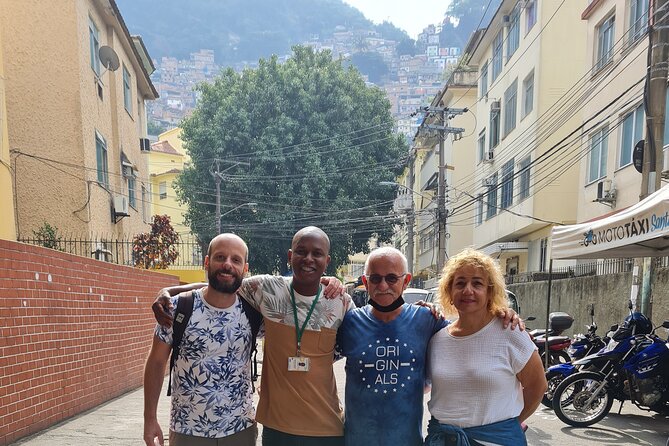
The tour meets at R. São Clemente, 320 in Botafogo, at the tourist information stand. The end point is back at the meeting area, so you are not left stranded on a hill.
Expect roughly 2 hours total, and a group size capped at 10 travelers. A small group changes everything. You can actually ask questions, and your guide can steer the conversation toward what you care about rather than rushing to hit stops.
One more practical note: private transportation is not included. You will need to get yourself to the meeting point using public transit, which the tour says is nearby. Also, this walk is not ideal for limited mobility due to steps and terrain.
If you want a smoother first minute, arrive a touch early. One review mentioned confusion when multiple guides were around near the meeting area. That is easy to fix with small habits: confirm the guide or provider name ahead of time and double-check you are joining the correct group before you start walking.
Stop 1: the funicular start point, and what you should notice right away

The first stop is at the tourist information stand at R. São Clemente, 320, where you get oriented for the route. This first moment is short, about 10 minutes, but it sets the rhythm.
I like this setup because it buys you a quick “okay, here’s how we’re doing this” moment before you hit the hill. Instead of scrambling to understand where to go, you get pointed in the right direction while you still have your energy.
Stop 2: Plano Inclinado da Comunidade Santa Marta to Capela Santa Marta views
This is the most physically demanding segment, and it is also where you get one of the biggest payoffs: the hilltop perspective.
Here is what happens. You walk to the Plano Inclinado da Comunidade Santa Marta, take the cable-car/funicular up, then continue with views from the top area, including sightlines around the city and toward the top of the Capela Santa Marta Church. After that, you start walking down stairs.
A few people call out the stairs specifically, including the steep descent. One review even mentioned no railings on the way down and encouraged people to protect their knees. Another review warned about mess from cats and dogs around the stairs, so expect occasional surprises and wear shoes you are comfortable getting dirty in.
Also, plan for variability. In a response about one out of service segment, the provider explained that part of the inclined plane was undergoing renovation after years of operation, and that sometimes the route may shift to reduce the impact on the visit, such as taking you up by cable for a portion and walking down the rest. So take the stairs as part of the deal, not as a rare exception.
If you are the type who loves views but hates climbing, this is the part you need to think through. If you are okay with a workout and you like seeing cities from real vantage points, you will likely feel rewarded fast.
Stop 3: Michael Jackson statue, artisan shops, and the Mundo Infantil crèche

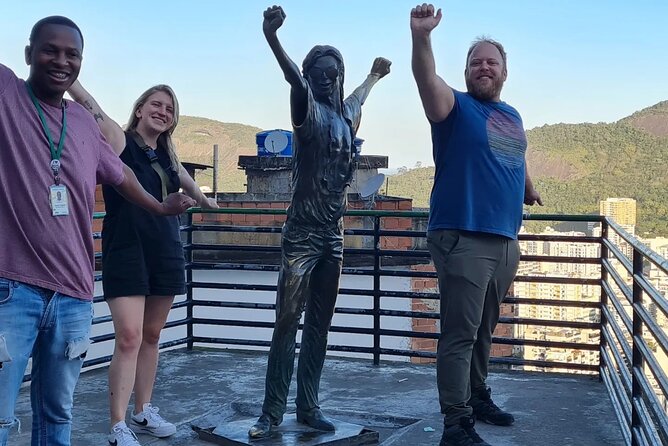
After the hill views, the tour shifts into community life. The next stop is the Michael Jackson statue area.
From there, you get time to look around and photograph the view. You also visit artisan souvenir shops linked to the area. This is not just a photo stop. It is a chance to see how visitors and local makers connect, and how the neighborhood turns attention into income without turning the place into a theme park.
Then comes one of the most meaningful segments: a visit to Mundo Infantil, described as a community crèche that serves around 80 children. The idea is straightforward. Your ticket supports the social side of the tour, and you get to see the human reason behind it, not just the buildings and views.
You then continue through a cultural corridor with photographs showing the development of the community. This is a smart contrast to the statue moment. Michael Jackson is a pop-culture landmark, and the photo corridor is the grounded story of people living there, changing over time, and keeping community identity visible.
One practical etiquette tip: when you take photos, keep it respectful and quiet. The tour’s goal is not to interfere with the neighborhood’s routine. Let your guide steer how and when to photograph.
A few more Rio outings to weigh up
- Rio de Janeiro: Guided Jeep Tour through Tijuca Rainforest★ 4.3 · 740 reviews
- Jeep Adventure: Guided Tour through Tijuca Rain Forest★ 4.0 · 554 reviews
- Rio de Janeiro: Favela Santa Marta Top Tour with Local Guide★ 4.9 · 488 reviews
- Favela Tour Rio de Janeiro – Vidigal Walking Tour by Russo Guide★ 5.0 · 377 reviews
- Sunrise Mirante dona Marta Specialized Guide and Photos★ 5.0 · 246 reviews
Stop 4: Praça Corumbá and the walk’s real ending
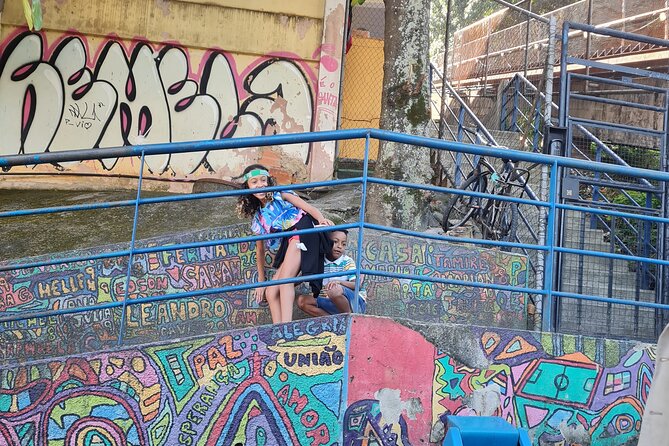
The tour ends at Praça Corumbá after about 5 minutes at that final stop. The guide then returns you back to the meeting point.
That short closing stop is useful because it helps you leave with a mental map. You have walked through the key movements on the hill, seen the main view anchors, and connected them to social spaces. When you head back, you are less likely to feel like you only collected snapshots.
The included House of Watches and the +Que Turismo Social Project
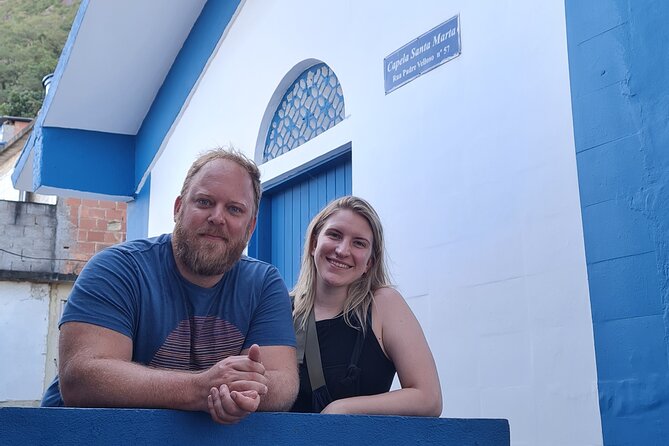
The real “insider” flavor often shows up not in a big sightseeing beat, but in the private stops. This tour includes a visit to the guide’s house and the +Que Turismo Social Project, plus a visit to the House of Watches.
The House of Watches is the standout detail. You meet a resident connected to the collection of more than 350 watches gathered from tourists and around the world. If you like small stories with big personality, this is the part that tends to stick. It gives the tour a human thread: a home space, a personal collection, and a reason the community wants visitors to understand what daily life looks like.
People also describe welcome and warmth during these household moments. One review mentioned celebration of a grandmother’s birthday, and another explained the watch collection had been built through gifts over time. Those are not the typical “tour souvenir shop” vibe. They are personal hospitality moments, which is why this tour can feel different from the more commercial versions of favela tours.
The social-project piece, +Que Turismo Social Project, helps explain where the money goes beyond the funicular and walking route. The provider also talks about community work such as mobilization around garbage disposal and cleaning campaigns. Even if you never see every program in action during your visit, you can see the tour is not only about access. It is built to support ongoing work.
Safety, ethics, and how to be a good guest in Santa Marta

A lot of visitors emphasize they felt safe with a local guide who knows the area. That is exactly what you want. When you have someone like Gilson guiding the walk, you get practical guidance on where to stand, where to look, and how to keep the visit respectful.
Still, be honest about reality. One review mentioned that weapons were present at times during the tour. That does not mean you should expect danger all the time, but it does mean you should keep a calm head and follow your guide’s directions without improvising.
Here is how to play it smart, and it applies whether you feel nervous or not:
- Keep close to the group and the guide at each stop.
- Pause for questions when your guide invites them, rather than breaking away for photos.
- Avoid acting like you are filming a reality TV scene. Small, respectful behavior is what makes a visit feel dignified.
Ethics is not a buzzword here. It is your behavior. A small group tour, local relationships, and social-project stops are the structure, and your respect is the finishing touch.
Price and value: what $29.40 buys you in the real world
At $29.40 per person for about 2 hours, this does not look expensive on paper. But the value comes from what is included.
You get entrance to the favela cable car, plus stops tied to the guide’s house and social-project work, and you get the visit to the House of Watches. Several admissions within the route are listed as free, and the major “included experience” is not just transport. It is the time and context the guide brings.
The best way to think about value is this: you are not paying for a generic city view only. You are paying for a structured walk through key places, including a social stop like Mundo Infantil and a personal storytelling stop like the watch collection. That is why many people highlight the tour as more than a sightseeing circuit.
Could you pay less for a walk somewhere else in Rio? Sure. But if you want the Santa Marta story explained through local relationships, and you want a visit shaped around community support rather than only photos, the price starts to make sense.
One caution: some reviews note the tour price could be lower, and one person described dissatisfaction about the cost. So think of this as a community-based experience. If that idea resonates with you, it feels fair. If you want a purely traditional sightseeing format, the “social visit” angle is part of why you are paying.
Who should book this, and who should skip it
This tour fits best if you want:
- A small-group walk with a local guide
- Hilltop views plus social stops like a crèche visit
- A more conversational tour style, with time for your questions
It is less suitable if you:
- Have limited mobility, due to stairs and steep walking
- Have knee issues that cannot handle steep descents
- Hate surprises, because the walking route can include mess around stairways and occasional changes if funicular sections are under renovation
If you are traveling with kids, there is no specific age limit stated. But do remember the route involves climbing and stairs, so your family’s comfort level matters.
Should you book Favela Tour Santa Marta?
I would book this if you want Santa Marta in a way that feels grounded, respectful, and supported by real community projects. The combination of the hill views, the Mundo Infantil crèche, and the House of Watches makes it more memorable than a typical quick-photo tour.
But book it with the right mindset. This is a walking experience with social context, not a theme-park visit. If you can handle steep steps and follow your guide, you will likely come away understanding daily life in Santa Marta better, not just seeing it.
If you are unsure about the physical side, message the provider before booking and ask how the funicular and stair portions will work on your day. The tour itself suggests it is not ideal for limited mobility, so be honest with your body and your expectations.
FAQ
How long is the Favela Tour Santa Marta?
The tour lasts about 2 hours.
How many people are in a group?
This experience has a maximum of 10 travelers.
Where does the tour start?
You meet at R. São Clemente, 320, at the tourist information stand in Botafogo, Rio de Janeiro.
What’s included in the ticket price?
The price includes entrance to the favela cable car, a visit to the +Que Turismo Social Project, a visit to the guide’s house, and a visit to the House of Watches.
What stops are on the route?
The tour includes the funicular area with views and the Capela Santa Marta area, the Michael Jackson statue area with artisan shops and photo time, a visit to the Mundo Infantil crèche and the cultural photo corridor, and it ends at Praça Corumbá.
Is the tour suitable for limited mobility?
It is not recommended for people with limited mobility because the route includes walking and stairs.
Do I need private transportation?
Private transportation is not included, but the meeting point is near public transportation.
Can I cancel for a full refund?
Yes. You can cancel up to 24 hours in advance for a full refund.
Recently added around Rio





Guided Favela Tours, compared.

3 Hour Rocinha Favela Walking Tour with a Local Guide
Read our review →
Favela Tour Rio de Janeiro – Vidigal Walking Tour by Russo Guide
Read our review →
More of this kind of Rio day