Reviewed · RIO DE JANEIRO
Explore the Women Behind the Monuments
Rio keeps secrets in plain sight. This Women Behind the Monuments walk in Rio’s Centro connects big landmarks to the women whose stories shaped the city. You’ll move through a tight route where literature, politics, public life, and the arts all get retold through real human experiences.
I love how Jessica (also seen as Jessika in reviews) brings the stops to life with clear, engaging explanations, and then stays open to questions and small course corrections. I also like the practical format: it’s an outdoors-first route with free admission tickets at each stop, so you spend your time learning, not hunting for doors and lines.
The main catch is simple: it’s an external visit tour. If you want to go inside every building, you’ll need to look for extra plans, and on rainy days you’ll still be walking.
In This Review
- Key highlights worth your attention
- Women Behind the Monuments in Rio’s Centro: A smart way to read the city
- Price and time: what you’re paying for at $29.57
- How the walk is laid out: your 10:00 am route, step by step
- Stop 1: Academia Brasileira de Letras and the first woman’s story
- Stop 2: Monumento a Floriano Peixoto and three different women
- Stop 3: Palácio Pedro Ernesto, Camara Municipal, and a tragic thread
- Stop 4: Theatro Municipal and the stories of three artistic women
- Stop 5: Largo da Carioca, the first water fountain, and a group of women
- Stop 6: Praça Quinze de Novembro and the final three women across three eras
- What makes the guide’s style matter (and how you can benefit)
- External visits only: good news and a clear limitation
- Who should book this Women Behind the Monuments tour
- Practical tips so you have a smoother walk
- Should you book this tour or skip it?
- FAQ
- Where does the tour start and end?
- How long is the Women Behind the Monuments walking tour?
- What is included in the tour?
- Are there any internal visits?
- Do I need to pay for admission tickets?
- How large is the group?
- Can I get a refund if I need to cancel?
Key highlights worth your attention

- A women-centered lens across Rio’s most recognizable Centro spots, from letters to theater
- Energetic, question-friendly guidance with room for your interests
- Six major stops tied to stories of individual women and groups
- External views only, paired with free entry tickets for what’s included
- Small group size (max 20), which keeps the pace human
- A route that ends where Brazil’s time periods stack up in the same square
Worth a look side by side. Others covering the same corner of Rio:
- Rio de Janeiro: 6-Stop Highlights of Rio with Lunch
★ 4.4 · 5,157 reviews - Christ the Redeemer Entry Ticket by Corcovado Train
★ 4.4 · 4,476 reviews - Rio’s City Tour – Tickets for Christ, Sugar Loaf & Lunch included
★ 5.0 · 4,389 reviews - Full Day: Christ Redeemer, Sugarloaf, City Tour & Barbecue Lunch
★ 4.5 · 3,142 reviews
Women Behind the Monuments in Rio’s Centro: A smart way to read the city
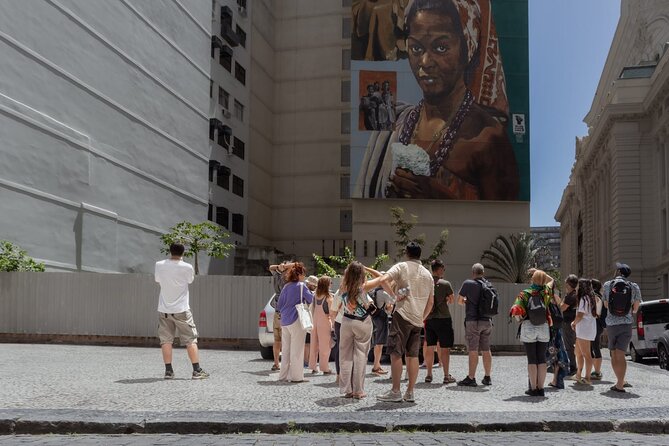
This tour is built for people who enjoy walking, looking up, and realizing that buildings are not just backdrops. In the heart of Rio, architecture becomes a clue. You’ll see landmarks that most first-time visitors pass quickly, but you’ll learn what they mean when you filter the story through women.
The format is also refreshing. You’re not stuck in a classroom. You’re outside, at street level, with stops that make you slow down. That matters in Rio, because the city’s rhythm is fast. A guided walk gives you a structure you can actually remember later, when you’re back at your hotel trying to place the sights.
And yes, the guide’s energy is a big part of why it works. People describe the experience as fun, animated, and still professional. The stories are not sugarcoated either. Some are about art and recognition. Some touch harder themes. That mix makes the tour feel honest rather than like a theme-park version of history.
Price and time: what you’re paying for at $29.57
At $29.57 per person for about 2 hours to 2 hours 30 minutes, you’re buying three things: time with a guide, a tight route across major Centro sites, and free admission tickets for the included stops.
What makes the price feel fair is how packed the itinerary is. You’re covering six stops tied to different parts of Rio life. You’re also getting value from the small group cap of 20 people, which keeps Q and A possible and helps the guide manage pacing without rushing everyone off to the next corner.
One more thing: the tour starts at 10:00 am, which is a smart slot in a city where the afternoons can get heavy. It also means you can still do something later the same day without feeling like you’ve lost half of your daylight.
How the walk is laid out: your 10:00 am route, step by step
The tour begins at Women in Rio Walking Tour, Av. Rio Branco – Centro, Rio de Janeiro – RJ, 20040-090, Brazil. You’ll finish at Praça Quinze de Novembro – Centro, Rio de Janeiro – RJ, 20010, Brazil. It’s a guided exterior sightseeing loop through Rio’s central district.
The itinerary is built around short stops, so you’re never waiting around too long. Expect about 15 to 20 minutes per site, then you’re moving again. That structure helps if you like your history delivered in manageable pieces, not long lectures.
You’ll also want to know what not to plan on: internal visits are not included. So you’re going to see the sights from the outside, while the guide supplies the context and the woman-centered story connected to each place.
Stop 1: Academia Brasileira de Letras and the first woman’s story
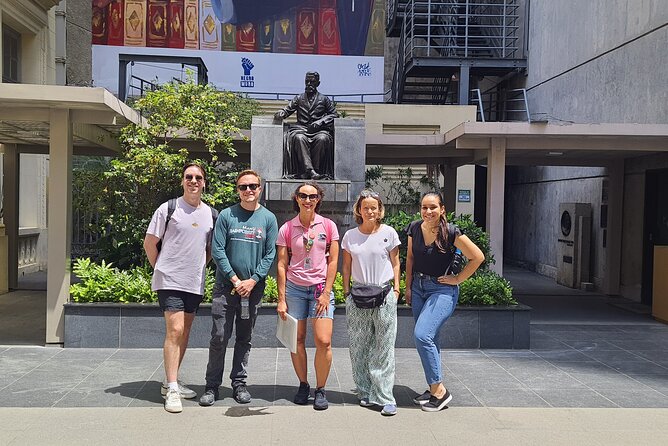
Your first stop is Academia Brasileira de Letras, the headquarters of the Brazilian Academy of Letters. The point here is not just the building. It’s what the academy represents, and how the guide uses that setting to introduce your first woman.
In practice, this start is useful because it sets the tone for the rest of the walk. You’re learning how to “read” institutions, not just monuments. A letters academy is one of those Rio sites that many visitors recognize by name but never really connect to the people behind the cultural output.
Because this is an external visit, you won’t be treating it like a museum inside. Instead, you’ll get a story tied to the place, plus enough context to make the building feel less abstract.
What to watch for: look at the mood of the facade, then let the guide’s background help you place it in Rio’s cultural timeline.
Stop 2: Monumento a Floriano Peixoto and three different women
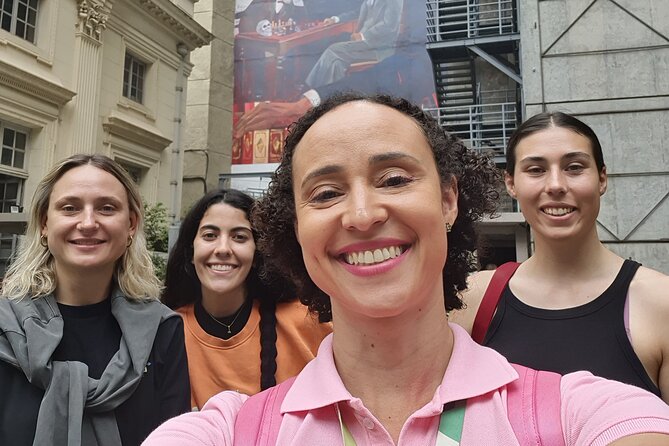
Next up is Monumento a Floriano Peixoto. This monument centers on the second Brazilian president, and it becomes a launching pad for the story of three different women.
That’s a clever move in the itinerary. Starting with a single woman at the letters academy, then shifting to three voices at a political monument, shows you how women’s stories can be braided through public life. The guide uses the political setting to frame women’s experiences around the making of a nation, not just personal biography.
The main payoff here is variety. You get more than one type of story, which keeps the tour from feeling repetitive. It also reinforces the theme behind the whole walk: women shaped Rio and Brazil in many different ways, not just one narrow slice.
Potential consideration: if you’re hoping for deep political history only, you may find the guide’s focus stays firmly on women and their consequences in the story, rather than on the president himself.
If this one is full, Rio has these as well:
- Rio de Janeiro: Rocinha Favela Walking Tour with Local Guide★ 4.8 · 3,052 reviews
- Rio’s Full Day: Selarón Steps, Christ & Sugarloaf – Tickets & Lunch Included★ 5.0 · 2,724 reviews
- Rio: Christ the Redeemer, Sugarloaf, Selaron & BBQ Lunch★ 4.5 · 2,428 reviews
- Rio De Janeiro: Half-Day Rocinha Favela Walking Tour★ 4.7 · 2,272 reviews
- Hang gliding Hang gliding Experience Rotorfly★ 5.0 · 2,009 reviews
Stop 3: Palácio Pedro Ernesto, Camara Municipal, and a tragic thread
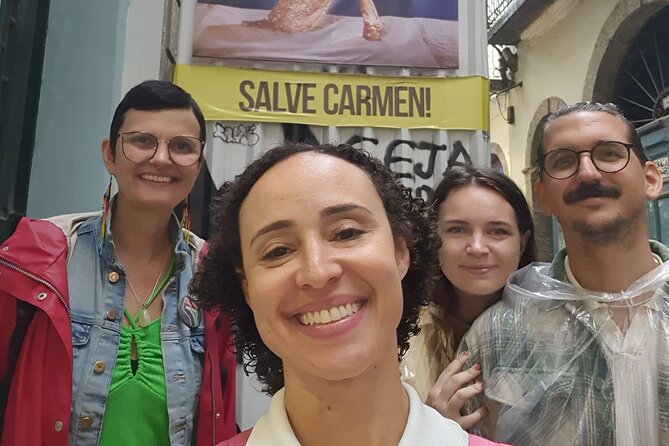
Your third stop is Palácio Pedro Ernesto, Câmara Municipal do Rio de Janeiro. The city council or municipal chamber becomes the stage for a tragic story of a woman.
This is where the tour turns more emotionally serious. A municipal building is where rules get made and public decisions get carried out. The guide uses that context to show what happens when women face limits, threats, or consequences that institutions can either ignore or amplify.
You’ll likely leave this stop with a stronger sense that “history” is not only dates and leaders. It’s also lived outcomes, and sometimes the outcome is cruel.
What I think you should do: keep an ear open for the guide’s links between the setting and the woman’s story. The most memorable parts usually come from these connections, not from the landmark name alone.
Stop 4: Theatro Municipal and the stories of three artistic women
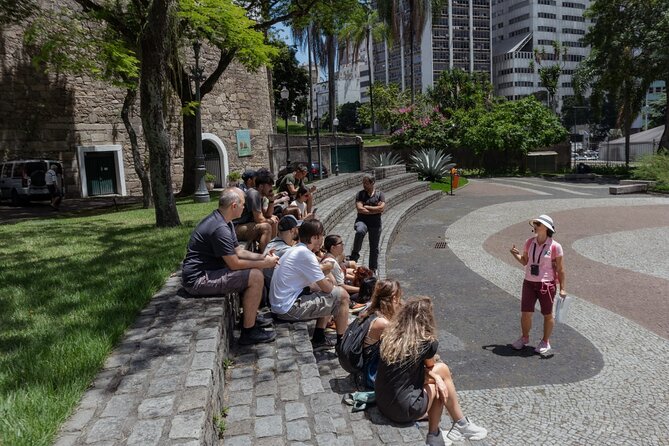
Then you hit one of Rio’s big visual icons, the Theatro Municipal do Rio de Janeiro. The guide describes it as the epitome of French eclectic style, and it’s also where you get the story of three artistic women.
This is one of the most appealing stops for people who love art, design, and performance. Even if you’re not an opera person, the theater is the kind of building you automatically feel in your bones. It tells you something about the city’s ambitions and tastes.
The women-centered framing matters here. Instead of treating the theater as a neutral cultural monument, you learn how artistic women fit into the cultural machine. The guide uses these stories to connect architecture to creative life, and to remind you that culture is made by people, often under pressure.
Good to know: since this is external, don’t expect a backstage tour. You’re there to see and understand, then let the guide do the heavy lifting with context.
Stop 5: Largo da Carioca, the first water fountain, and a group of women
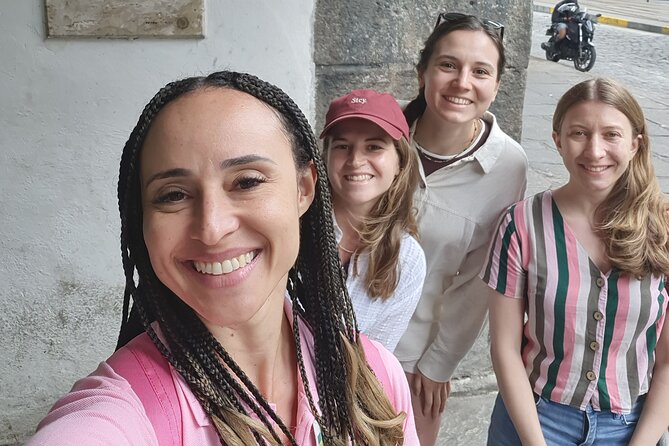
At Largo da Carioca, you step into a place linked to everyday city life, not just grand institutions. The guide points to it as the house of the first water fountain in Rio, and tells the story of a group of women tied to that setting.
This is a smart contrast stop. Earlier places are about letters, monuments, politics, and theater. Here, you’re reminded that urban life runs on basics like water access, routines, and public spaces.
When women are the lens, even a practical spot like a fountain square becomes more meaningful. You start thinking about who handled daily tasks, who had access, who had to walk and carry, and how public spaces shaped social life.
What to watch for: if the guide mentions the women as a group rather than individuals, pay attention. Group stories often reveal more about systems than biographies do.
Stop 6: Praça Quinze de Novembro and the final three women across three eras
The last stop is Praça Quinze de Novembro. This square represents colonial, imperial, and republican periods of Brazil. Here, you hear the stories of the last three women in the walk.
Ending at a place that compresses time periods is a strong choice. It gives you closure while also making the tour’s theme click. Rio’s center is full of layered meanings. The same streets can feel different depending on which era you’re focused on and which voices you’re listening to.
In terms of pacing, this final stop also makes sense. By the time you reach the square, you’ve already built context at earlier sites. Now you’re ready to absorb the broader pattern, instead of starting with it.
Practical tip: arrive in the square with your questions ready. This is often where the guide can connect themes across the whole route.
What makes the guide’s style matter (and how you can benefit)
The common thread in the best experiences is how the guide communicates. People describe Jessica as energetic, engaged, and genuinely passionate, with explanations that stay clear and easy to follow. That matters because the tour covers different themes, from art to politics to public life. Without a skilled guide, it could feel like a random list of pretty buildings.
Here, the guide also adjusts to your interests and answers questions. So if you have a specific angle you care about, bring it up. You might want more focus on women in the arts, or more on political institutions, or more on how everyday life intersects with these stories. The guide’s approach gives you a chance to steer.
There’s also a noticeable balance in the content. The stories include women connected to fighters and activism, women connected to art, and even darker material tied to an infamous criminal case. Some stories involve struggle and recognition, including representation of Black women and the idea of a double burden. That range is important, because it refuses a one-note version of women’s history.
If you’re sensitive to heavier topics: just know the tone can turn serious at certain stops. You’ll still walk out with a sense of learning, context, and clarity, not shock for shock’s sake.
External visits only: good news and a clear limitation
Because internal visits are not included, this tour is not for you if you want to wander room by room inside each landmark. You’ll be viewing the sites from outside while the guide handles the story, the interpretation, and the meaning.
But that limitation can also be an advantage. You can see several major Rio landmarks in a short time. You can also keep your schedule flexible for the rest of your day, since you’re not tied to longer entry times.
So here’s the honest tradeoff: fewer doors opened, more story understood.
Who should book this Women Behind the Monuments tour
This tour is a great fit if you:
- like walking tours that teach you how to interpret what you see
- want women’s stories connected to real places in Rio’s center
- enjoy architecture, but prefer it explained with human context
- want a guide who’s lively and willing to answer questions
It’s also a solid match for people who travel with a partner or small group. The limit of 20 people keeps the vibe controlled, and it helps you stay engaged instead of fading into the background.
If you have mobility limits, you’ll still be on your feet for a couple hours, so it helps to plan for walking at a steady pace. The good news is that the experience is near public transportation, and service animals are allowed.
Practical tips so you have a smoother walk
- Start with comfortable shoes. The schedule is tight, and you’ll be moving between six stops.
- Bring a light rain layer. One of the perks of this tour is the guide’s energy even when weather turns. Rain happens in Rio.
- Think about one question you want answered. The guide can connect stories to what you’re seeing in front of you.
- If you care about a specific theme, say it early. You’ll get more out of the tour when the guide knows what you want to focus on.
Should you book this tour or skip it?
I recommend booking if you want a guided route that takes Rio’s most famous Centro sights and gives you a fresh lens. For $29.57, the combination of a small group size, a 2 to 2.5 hour walk, and free admission tickets at each stop is strong value, especially if your goal is learning and seeing rather than doing paperwork and lines.
Skip it if your top priority is museum-style interiors and you need to go inside multiple buildings to feel satisfied. This is an outside-first experience, with stories doing the heavy lifting.
If you’re doing only one walking tour in Rio’s center, and you want something that feels personal, thoughtful, and genuinely focused on women, this is one of the best choices on the map.
FAQ
Where does the tour start and end?
The tour starts at Women in Rio Walking Tour, Av. Rio Branco – Centro, Rio de Janeiro – RJ, 20040-090, Brazil. It ends at Praça Quinze de Novembro – Centro, Rio de Janeiro – RJ, 20010, Brazil.
How long is the Women Behind the Monuments walking tour?
It runs for about 2 hours to 2 hours 30 minutes.
What is included in the tour?
The tour includes an external visit.
Are there any internal visits?
No. Internal visits are not included.
Do I need to pay for admission tickets?
Admission tickets are free at the listed stops, and the tour notes free admission for each site.
How large is the group?
The tour has a maximum of 20 travelers.
Can I get a refund if I need to cancel?
Yes, you can cancel for a full refund up to 24 hours in advance of the experience start time. Cancellation less than 24 hours before the start time is not refunded.