Reviewed · RIO DE JANEIRO
Discovering the Culinary Soul of Old Rio
Old Rio tastes better on foot. This 6-hour Rio de Janeiro walk mixes food stops with street-level history, from the oldest hills and monasteries in Centro to the story of Little Africa at Pedra do Sal.
Two things I really like: the small group size (up to 7 people) keeps things calm, and the food range is smart, not random, including Lebanese-style pastries and a moqueca lunch. One thing to consider, especially around Brazilian holidays, is that timing and meeting details can shift, so it pays to double-check those notes before you head out.
In This Review
- Key highlights
- Getting Oriented in Centro, from Carioca Clock to Avenida Rio Branco
- The Portuguese Library Stop That Turns a Walk into a Time Machine
- Saara and the Arab Diaspora: Food Culture You Can Taste
- Getulio Vargas Avenue and the Kind of Street Story You Actually Remember
- Pedra do Sal and Maua Square: Where Little Africa Meets the Waterfront
- What You’ll Eat, from Snacks to a Moqueca Lunch
- How the Guides Shape the Day: Marco and Juliana’s Style
- Price and Value for $135 in a 6-Hour Walk
- Who Should Book This Old Rio Food Walk (and Who Might Skip It)
- Should You Book It?
- FAQ
- How long is the tour?
- How much does it cost?
- Where does the tour start and end?
- What time does it start?
- What’s included in the price?
- Is private transportation included?
- How big is the group?
- Can I cancel for a full refund?
Key highlights
- Old Centro landmarks with real context, including the Franciscan Saint Anthony Monastery area near Carioca Clock
- Real Gabinete Portugues de Leitura, a Portuguese literature library outside Portugal, and consistently praised for beauty
- Saara food culture, where the Arab diaspora shows up in what you eat
- Pedra do Sal’s Little Africa story, connecting neighborhood history to the tastes on your plate
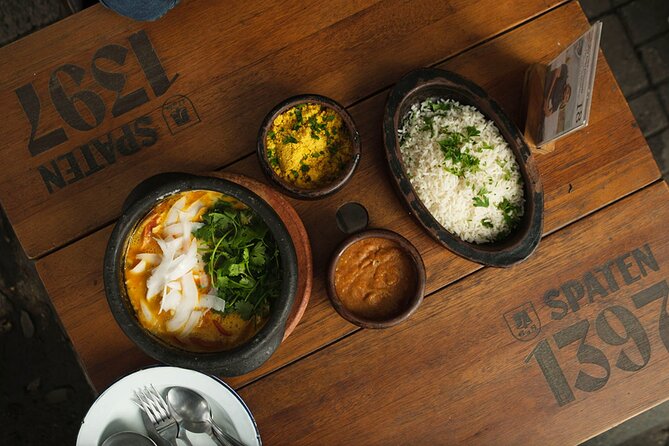
- A moqueca lunch with white fish plus onion, garlic, bell peppers, tomatoes, cilantro, and coconut milk
- Marco or Juliana energy, fun, story-led guiding with no awkward downtime
Worth a look side by side. Others covering the same corner of Rio:
- Rio de Janeiro: 6-Stop Highlights of Rio with Lunch
★ 4.4 · 5,157 reviews - Christ the Redeemer Entry Ticket by Corcovado Train
★ 4.4 · 4,476 reviews - Rio’s City Tour – Tickets for Christ, Sugar Loaf & Lunch included
★ 5.0 · 4,389 reviews - Full Day: Christ Redeemer, Sugarloaf, City Tour & Barbecue Lunch
★ 4.5 · 3,142 reviews
Getting Oriented in Centro, from Carioca Clock to Avenida Rio Branco
Your day starts at Carioca Clock, at Av. Nilo Peçanha in Centro. This is a good starting spot because it’s central and close to public transportation. It also sets the tone fast. Carioca Clock sits near one of Rio’s oldest hills, where the Franciscan Order built the Saint Anthony Monastery after Portuguese ships arrived in 1500.
Then you move onto Avenida Rio Branco, a busy historic avenue that helps you understand how Centro grew into its modern shape. You’ll get the sense that Rio’s food culture didn’t develop in a vacuum. It followed the city’s main lines of movement, commerce, and immigration. That matters because it explains why the flavors you try later on feel connected to the places you’re walking past now.
This is also where you learn an easy travel trick: start your food day with history, not after. When you know what you’re looking at, even a quick snack stops feeling like just a snack.
The Portuguese Library Stop That Turns a Walk into a Time Machine
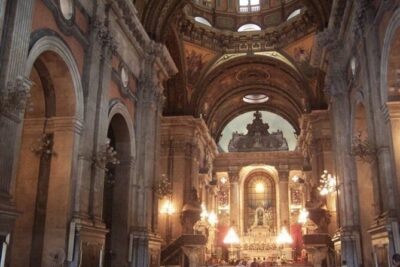
Real Gabinete Portugues de Leitura is one of those stops that changes your whole mood. The tour includes admission, and the payoff is huge: it’s the largest Portuguese literature archive outside Portugal and is regularly ranked among the most beautiful libraries in the world.
You don’t need a literature degree to enjoy it. The point is how a place like this anchors migration and identity in physical form. Rio became a magnet for people, but it also became a storage place for culture. Even if you only spend about 30 minutes inside, you’ll feel how the city’s Portuguese connections are more than a footnote.
This stop also breaks up the day nicely. Up to now, you’ve been moving through the urban rhythm of Centro. Here, you slow down and look closely. It makes the next food stops land better, because you’re not rushing through everything with the same energy level.
Saara and the Arab Diaspora: Food Culture You Can Taste
Saara is where the tour turns from European influences into a clearer view of Rio’s blended food world. The area is known for cultural blending and for restaurants linked to the Arab diaspora.
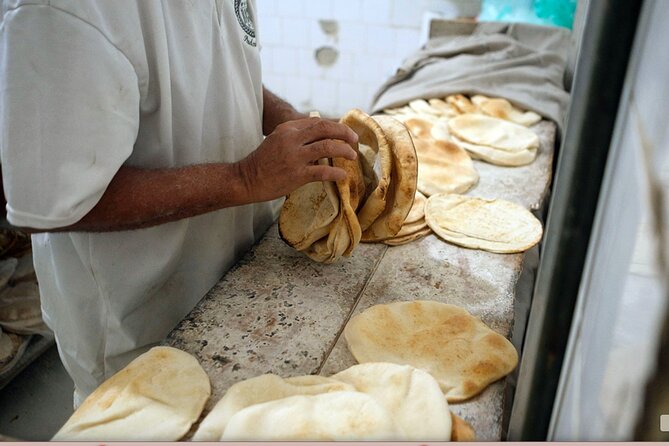
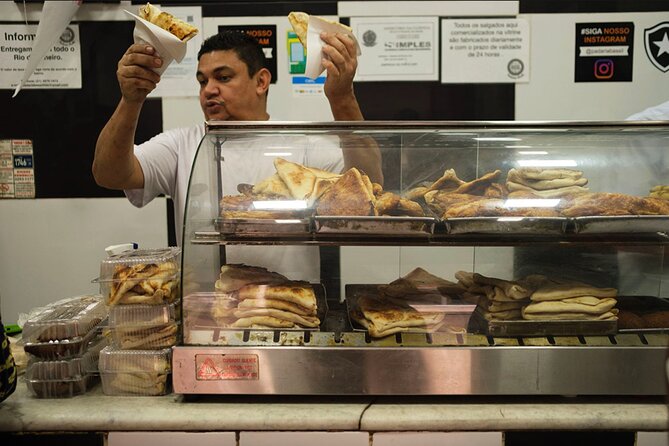
You’ll get a strong sense of how food travels. Pastries, small savory bites, and the way flavors are layered show up differently here than in more Portuguese-linked stops. One of the most praised moments on this tour is the Lebanese neighborhood feel, including pastries that hit the sweet and buttery spot without being heavy.
Practical tip: when you see a pastry case or a dessert option, don’t overthink it. This is a tour where you’re sampling across the day. Choose one thing you’d normally skip because you think it’s too indulgent. That’s often the highlight.
Also, Saara is a contrast stop in the best way. The streets here feel like a different Rio within the same city. That contrast is what makes a guided walking route worth the money.
Getulio Vargas Avenue and the Kind of Street Story You Actually Remember
Next you head toward Avenida Presidente Vargas, named for Getulio Vargas, who holds the record as the longest-serving president in Brazil’s history. It’s a quick stop, with no paid admission tied to it, but it’s the kind of historical anchor that sticks.
Why do I care? Because food culture is political and social. Leaders set directions, cities reorganize, and neighborhoods shift. You might not remember every date from a tour, but you’ll remember the way the city is arranged and why certain places gained importance.
This segment also keeps the pacing steady. It’s not all indoor stops, and it’s not all intense walking nonstop. The tour structure gives you frequent mental resets, so you don’t end the day feeling like you just survived a marathon.
Pedra do Sal and Maua Square: Where Little Africa Meets the Waterfront
Pedra do Sal is a standout stop for anyone who wants to understand Rio beyond postcards. The tour includes admission here, and the story centers on Pedra do Sal as part of the cultural hub of Little Africa.
This is where history stops being abstract. You connect place names to community memory. And you connect community memory to what people cooked, sold, celebrated, and passed down. Even if you don’t go deep into the details during the visit, you’ll still feel the importance of the area.
The walk finishes at Praça Mauá. Mauá Square is historic, and it gives you a satisfying bookend. You start in Centro with old hills and monastery ties, and you end closer to the waterfront zone, where Rio’s city energy tends to show up in full view.
If you’ve ever ended a food tour thinking, Okay, now I ate. This one tries to get you to think, Okay, I understand why the city tastes the way it does.
If this one is full, Rio has these as well:
- Rio de Janeiro: Rocinha Favela Walking Tour with Local Guide★ 4.8 · 3,052 reviews
- Rio’s Full Day: Selarón Steps, Christ & Sugarloaf – Tickets & Lunch Included★ 5.0 · 2,724 reviews
- Rio: Christ the Redeemer, Sugarloaf, Selaron & BBQ Lunch★ 4.5 · 2,428 reviews
- Rio De Janeiro: Half-Day Rocinha Favela Walking Tour★ 4.7 · 2,272 reviews
- Hang gliding Hang gliding Experience Rotorfly★ 5.0 · 2,009 reviews
What You’ll Eat, from Snacks to a Moqueca Lunch
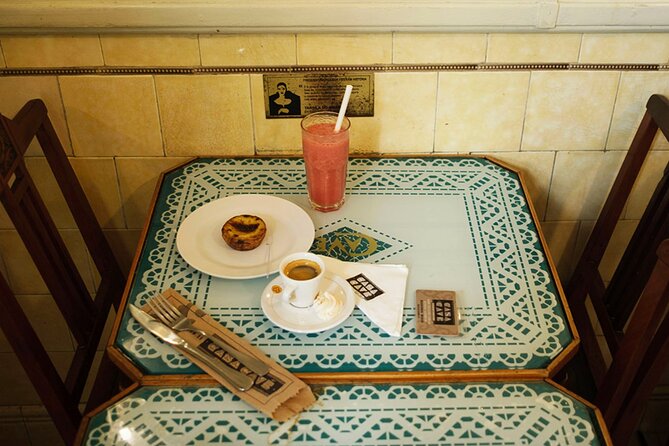
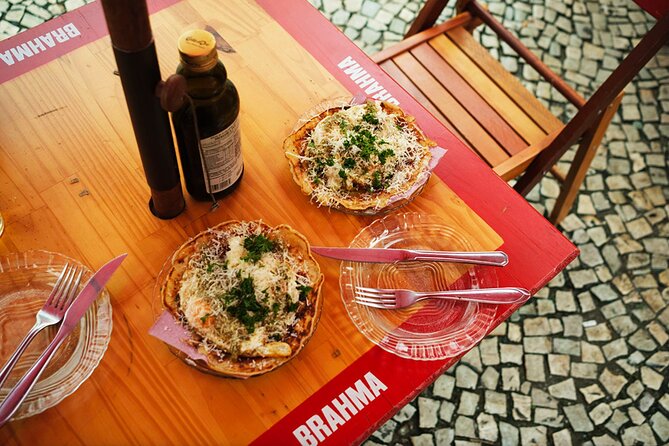
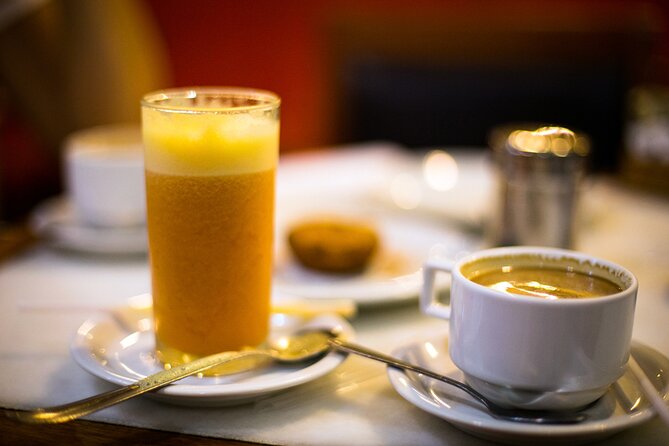
The tour includes snacks, lunch, and coffee and/or tea. That’s a big value point. Food tours can sometimes mean you nibble your way through the day. Here, lunch is part of the plan, not an optional bonus.
One of the best-known meal highlights is moqueca, served at the final stop. In the version described on the tour, it’s made with white fish plus onions, garlic, bell peppers, tomatoes, cilantro, and coconut milk.
That ingredient list matters because it shows you why this dish feels like comfort and celebration at the same time. It’s not just fish in a sauce. It’s aromatics, sweetness from peppers and tomatoes, and the coconut milk that ties it together into something soothing.
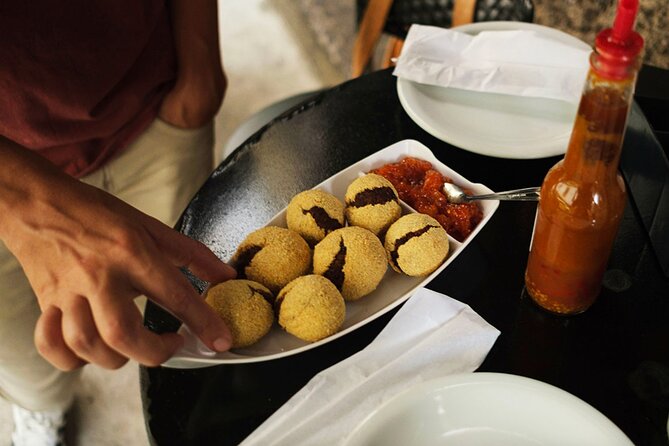
Along the way, you’ll also have a mix of bites that reflect different communities showing up in Rio’s food scene. Lebanese-style pastries are a repeated favorite, and they make sense in the Saara context. You’re sampling foods that belong to the neighborhoods you’re walking through, not just eating whatever is easiest to serve.
How the Guides Shape the Day: Marco and Juliana’s Style
The tour’s rating is extremely high for a reason: the guiding is the main event. Names that come up clearly are Marco and Juliana.
Marco is described as fun and flexible, with strong Rio-native insight and excellent English. He’s also credited with making the day feel like hanging out with a friend, not being dragged from stop to stop. Juliana gets praised for starting promptly and sharing lots of interesting information without turning it into a lecture.
Here’s what you should expect from a tour like this when the guide is that good: little story moments that connect a dish to a street, a street to a community, and a community to why Rio exists the way it does today. The best part is there’s usually no dead air. Even in transitions, you get something to think about while you’re walking.
Also, rain is not automatically a dealbreaker. One standout comment notes it was wonderful despite rain, with intermittent wet weather not ruining the flow. Since this is a walking tour, you’ll want to bring a light rain layer just in case, but you’re not stuck inside waiting for the weather to decide.
Price and Value for $135 in a 6-Hour Walk
At $135 per person for about 6 hours, the real question is value, not just cost. This tour includes snacks, lunch, and coffee or tea, and admission tickets are covered for several stops.
That matters because admissions add up fast in a city like Rio. Even though not every stop has a ticket, enough of them do that you feel like you’re paying for an experience, not only for walking with a guide.
You’re also getting a small group cap of up to 7 people. That tends to improve how the day feels. You get better attention, easier adjustments, and less time waiting around.
One more practical value signal: this type of tour is booked fairly far in advance on average, around 41 days. If your dates are fixed, book earlier rather than assuming you can grab it last minute.
Lastly, you should know private transportation is not included. That’s normal for a Centro walking route, but it means your day is designed around walking and public transport access.
Who Should Book This Old Rio Food Walk (and Who Might Skip It)
This is a great fit if you like food plus meaning. You’ll enjoy it if you want to understand how Portuguese roots, Arab-influenced neighborhoods, and the Little Africa legacy show up in daily life through places and dishes.
It’s also a strong first-day choice. Many people use this kind of tour to set their bearings fast, learn where to eat, and pick up practical restaurant and live music leads. Starting on day one can save you time later because you’ll know which parts of Rio’s center actually feel alive for dining.
You should consider skipping (or at least planning carefully) if your schedule is ultra tight or your dates fall on a Brazilian national holiday. One caution that comes up is that meeting points and start times may shift due to restaurant opening patterns. If you have other timed plans, you’ll want a little buffer.
And since it’s a 6-hour walking experience, pack for comfort. You don’t need hiking boots, but you do need shoes you can wear for a long, stop-and-go day.
Should You Book It?
I think you should book this tour if you want a high-impact day in central Rio that combines history with food you can actually taste. The moqueca lunch, the Saara and Lebanese pastry flavors, and the way the walk moves through meaningful landmarks make it more than a checklist.
Skip it if your priorities are purely scenic photography or purely beach time and you do not want to spend hours walking through streets and indoor stops. Also, if you’re traveling during a national holiday, make sure you confirm any schedule details early so your day stays compatible with your other plans.
If you want the kind of Rio experience where you leave with both full taste buds and a clearer sense of the city, this is an easy yes.
FAQ
How long is the tour?
The tour runs for about 6 hours.
How much does it cost?
It costs $135.00 per person.
Where does the tour start and end?
It starts at Carioca Clock, Av. Nilo Peçanha, 350-374 – Centro, Rio de Janeiro, and ends at Praça Mauá, Rio de Janeiro.
What time does it start?
The start time is 10:00 am.
What’s included in the price?
The tour includes snacks, lunch, and coffee and/or tea.
Is private transportation included?
No, private transportation is not included.
How big is the group?
The tour has a maximum of 7 travelers.
Can I cancel for a full refund?
Yes. You can cancel up to 24 hours in advance for a full refund. If you cancel less than 24 hours before the start time, the amount paid is not refunded.