
Reviewed · OLYMPIC BOULEVARD TOURS
Discover AquaRio & Olympic Boulevard: Marine Life and Art
AquaRio makes Rio’s marine world feel close. You get two big wins in one shared 4-hour outing: AquaRio’s enormous Oceanic Tank with sharks, and Eduardo Kobra’s Ethnicities graffiti mural on Olympic Boulevard. I also like the added behind-the-scenes angle, since AquaRio supports marine research in Brazil. The main drawback is it is a shared group, so you have less control over pace and timing, and the tour is not suitable for wheelchair users.
The good part is the structure. You start with a direct hotel transfer from Ipanema, Leblon, or Copacabana, then you split time between an aquarium that is built to show animal habitats and a street art stop that explains why Rio keeps public art in the spotlight. If you are short on time and want a guided hit of both ocean and urban culture, this is a solid value at $97 per person.
In This Review
- Key Highlights You Should Know Before You Go
- AquaRio in Rio’s Port Zone: Why This Aquarium Works for Real People
- The Oceanic Tank: Sharks, Scale, and That First Big Wow
- Walking the Underwater Tunnel: A Simple Trick That Feels Special
- What the Tour Adds Beyond Tickets: A Guided Route Through Habitats and Ideas
- Olympic Boulevard After the Aquarium: Eduardo Kobra’s Ethnicities Mural
- How the 4-Hour Schedule Feels on the Ground
- Value Check: Is $97 Reasonable for AquaRio Plus Olympic Boulevard?
- Who This Tour Fits Best (And Who Should Skip It)
- Should You Book This AquaRio and Olympic Boulevard Tour?
- FAQ
- How long is the tour?
- Where does pickup happen, and where do you get dropped off?
- Is transportation included?
- What’s included in the price?
- Is food included?
- What do I need to bring?
- Is the tour wheelchair accessible?
- What languages can the guide speak?
- What is the cancellation policy?
Key Highlights You Should Know Before You Go
- AquaRio is Latin America’s largest aquarium, with 8,000 marine animals across 350 species
- The Oceanic Tank is 3.3 million liters, with about seven meters of depth and shark viewing
- The underwater tunnel lets you walk under marine life swimming overhead
- Eduardo Kobra’s Ethnicities Mural is described as the world’s largest graffiti mural
- Bilingual guide support and multiple language options (Portuguese, English, Spanish, German, French, Italian)
- No-flash rule in AquaRio, so you can take photos without annoying the animals or other visitors
More time along Olympic Boulevard:
- Museum of Tomorrow, AquaRio & Olympic Boulevard in Rio de Janeiro
★ 4.5 · 69 reviews - Olympic Boulevard, Museum of Tomorrow & Historical Rio
★ 4.5 · 66 reviews - Rio: Olympic Boulevard, AquaRio and Museum of Tomorrow Tour
★ 4.5 · 54 reviews - Aqua Rio + Olympic Boulevard Tour – Rio de Janeiro by Pepe Rio Tours
★ 4.5 · 54 reviews
AquaRio in Rio’s Port Zone: Why This Aquarium Works for Real People
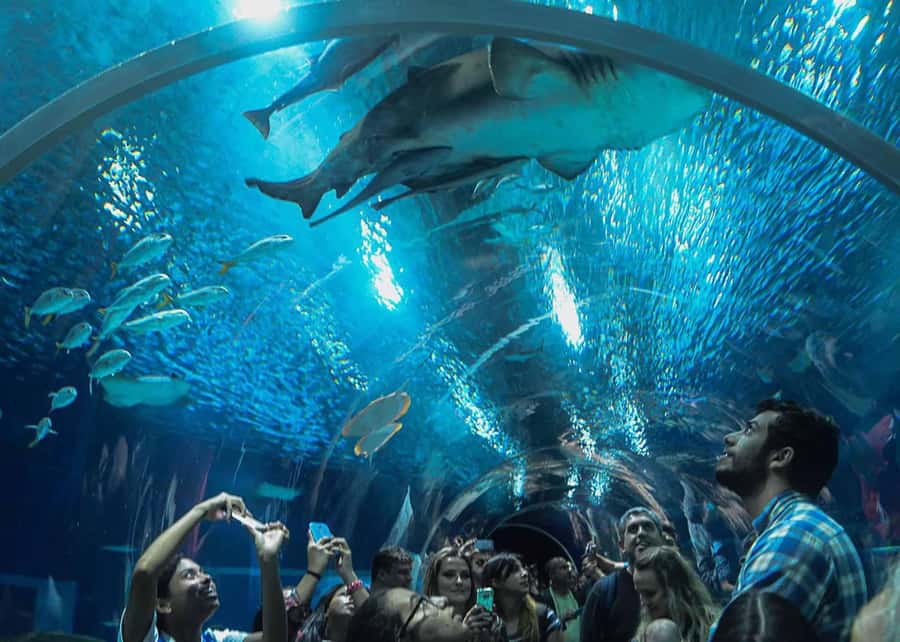
AquaRio is in Rio de Janeiro’s Port Zone, and that matters because it is a modern attraction in an older, working part of the city. The aquarium itself is in a converted refrigerated warehouse, spread over four floors plus a basement. That setup makes the visit feel like a mini walking tour, not one long hallway.
I like how they do the basics right. The exhibits are designed to reflect natural habitats, so even if you are not a marine expert, you can still track what you are seeing. The animal count is what pulls you in first: 8,000 marine animals representing 350 species.
If you care about impact, you will appreciate that AquaRio also supports research in Brazil, tied to marine biology, environmental conservation, and sustainability. Entry here is not just about photos. It is also tied to ongoing work that aims to protect oceans and marine life.
The Oceanic Tank: Sharks, Scale, and That First Big Wow
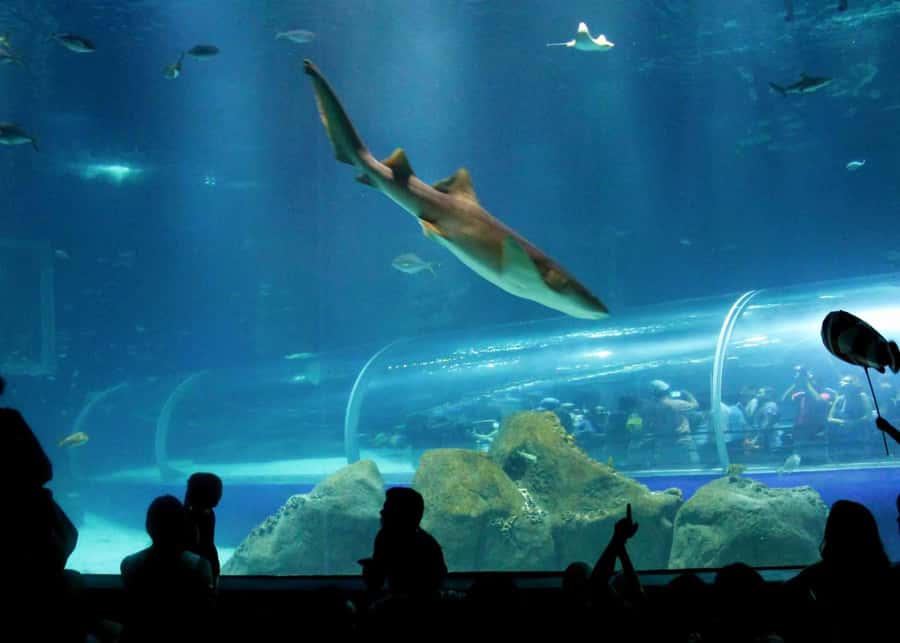
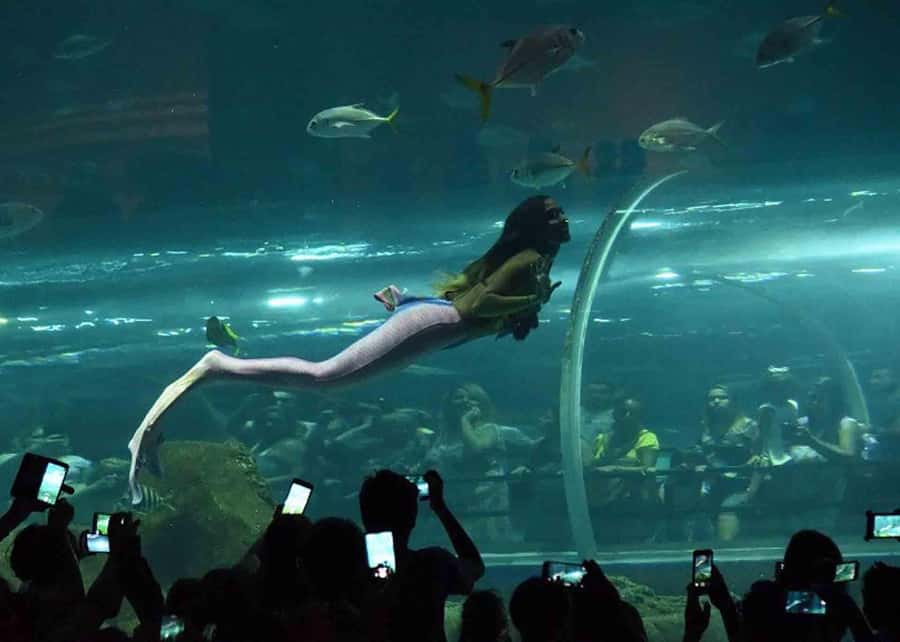
Your AquaRio visit centers on the Oceanic Tank, described as the aquarium’s largest tank at 3.3 million liters of water. It is about seven meters deep, which changes how the whole scene looks. You do not just see fish, you see layers, behavior, and motion in a big enclosed space.
This is also where the tour’s star moments tend to happen. You get the chance to view sharks here, plus rays and other marine animals. For me, the biggest lesson is scale. When a tank is that large, the animals look more like they are living in their environment, not performing for you.
Practical tip: follow the aquarium rule about photography, no flash. It is an easy way to stay on track and be considerate inside crowded viewing areas.
Walking the Underwater Tunnel: A Simple Trick That Feels Special
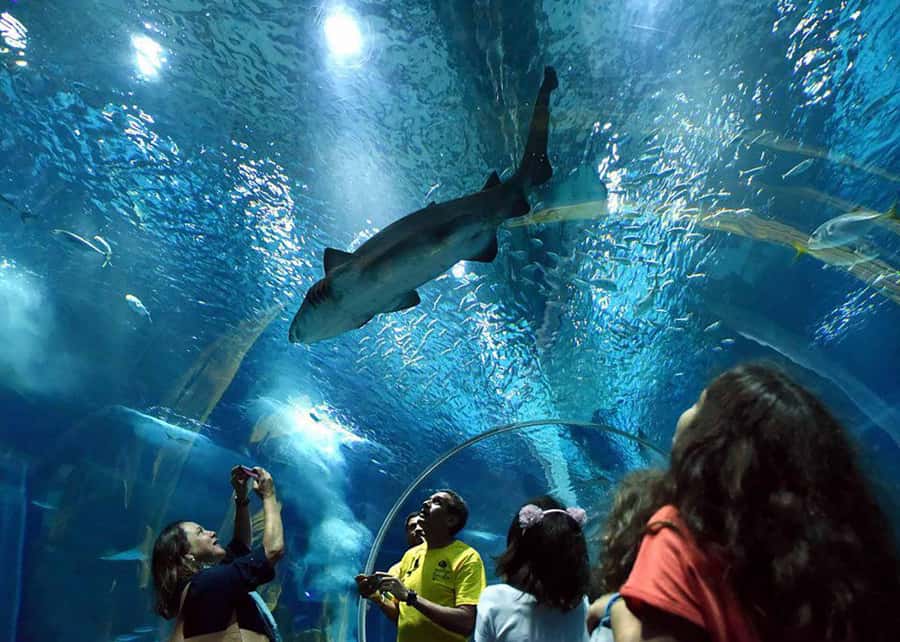
The underwater tunnel is the kind of attraction that works because of one smart idea: you walk under water, with marine creatures swimming above your head. It is hard to make a line like that sound exciting, but in person it changes your perspective fast.
Instead of watching from the side, you feel like you are in the water line. Even if you have already visited aquariums elsewhere, this layout is unusual enough to keep the experience fresh.
I also like that the tour presents it as a highlight, so you do not have to hunt for the best photo spots on your own. A guide helps you time the tunnel visit and directs your attention to what matters.
What the Tour Adds Beyond Tickets: A Guided Route Through Habitats and Ideas
AquaRio is big, so having a bilingual guide is more than a convenience. You get help connecting what you see with why it is displayed that way. The tour includes a guided visit, and the guide speaks Portuguese, English, Spanish, German, French, or Italian, depending on the group.
Because AquaRio mirrors natural habitats across exhibits, the guide can help you read the tanks like a story. You start with a broad overview, then you move through highlights like the Oceanic Tank and the tunnel, with context along the way.
One more value point: the tour is about education and experience, not just checklists. AquaRio’s research focus on marine biology and conservation gives the visit a purpose that goes beyond entertainment. If you like travel days that leave you thinking, this helps.
Olympic Boulevard After the Aquarium: Eduardo Kobra’s Ethnicities Mural
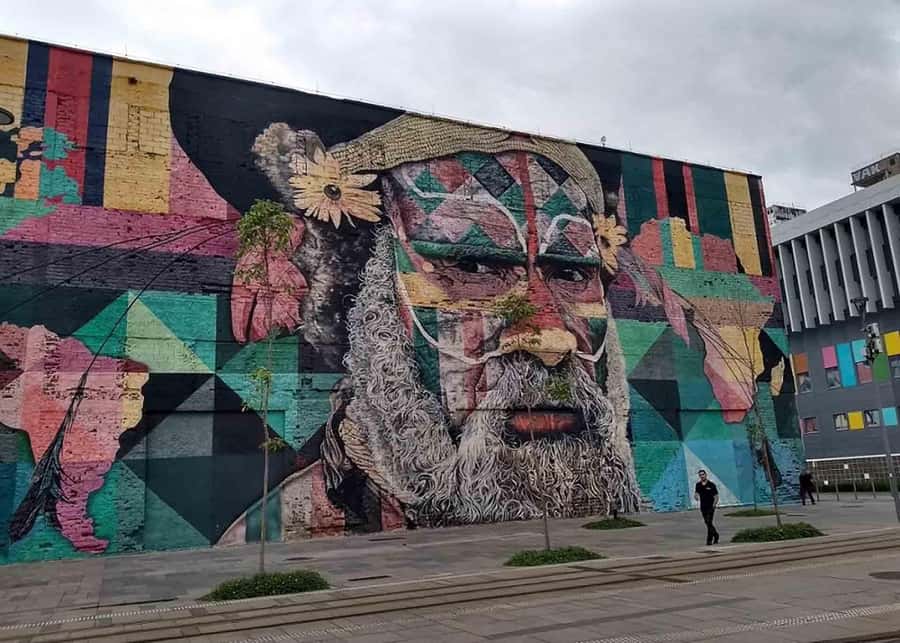
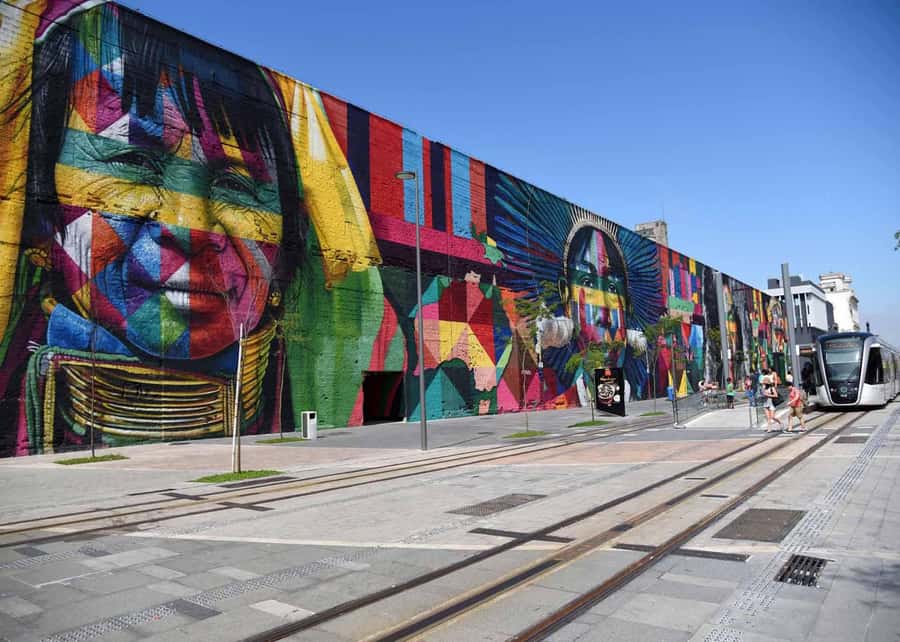
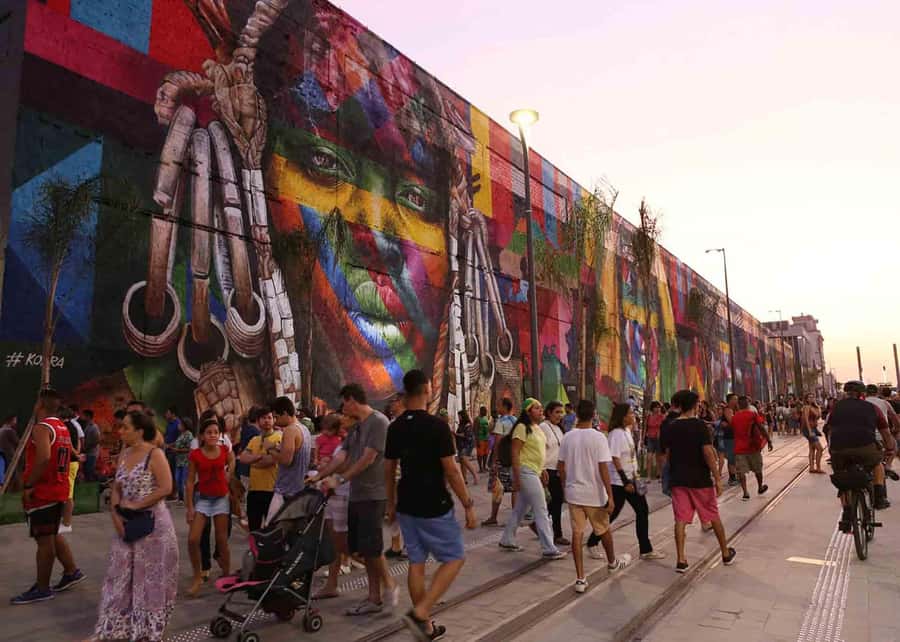
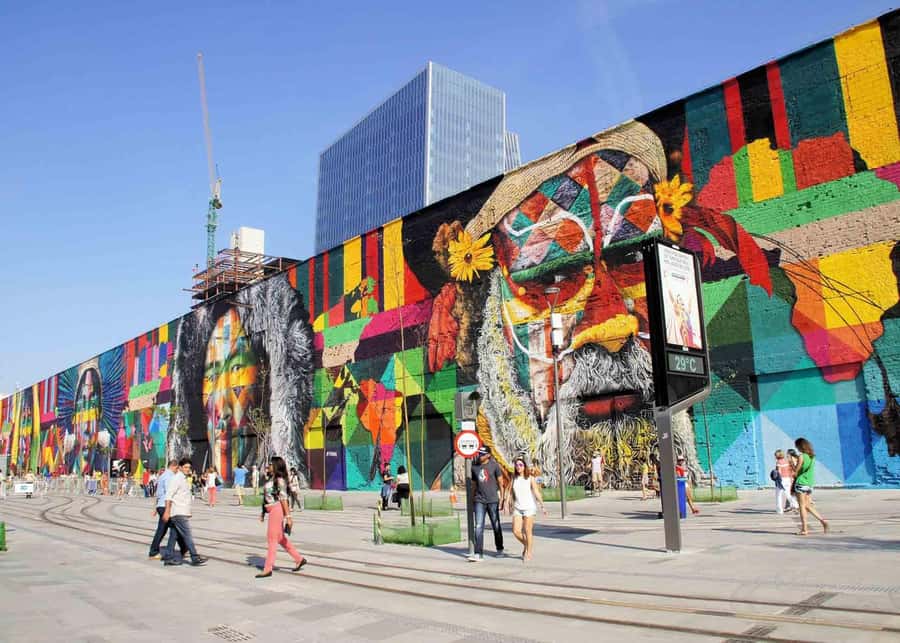
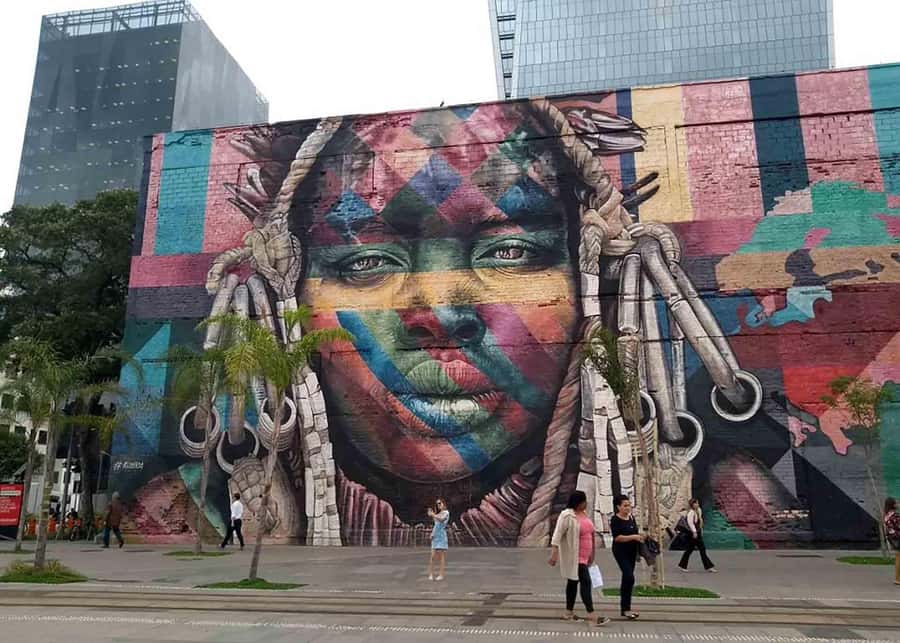
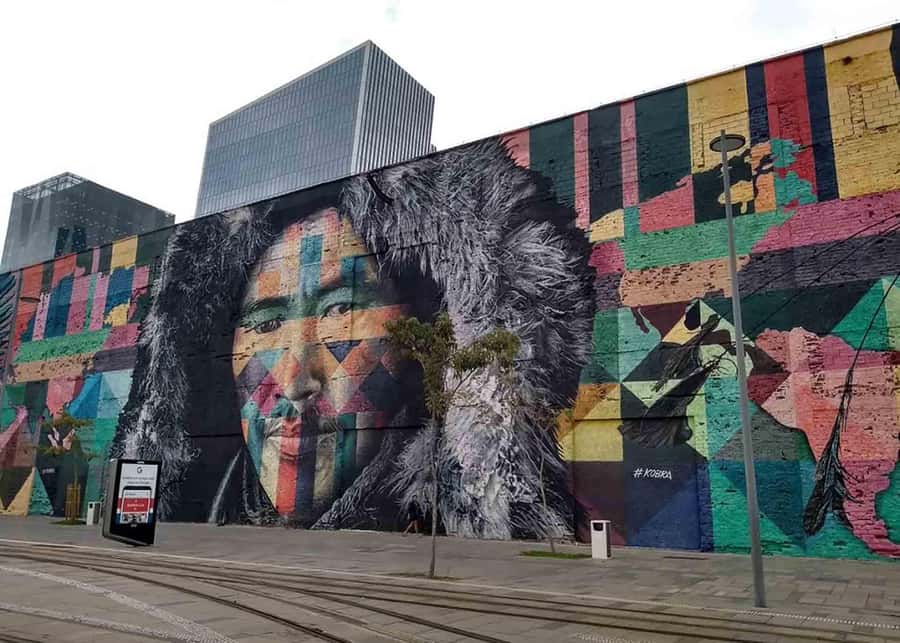
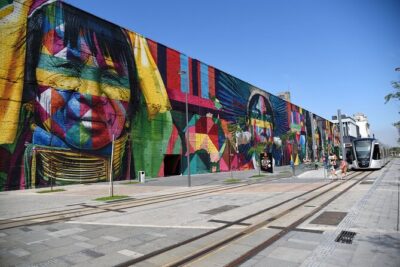
After AquaRio, the tour shifts to Olympic Boulevard, a cultural public space in Rio de Janeiro. Here, you will see Eduardo Kobra’s Ethnicities Mural. The mural is described as the world’s largest graffiti mural, and it is one of the most talked-about street art works in the city.
This stop is a nice contrast. At AquaRio, you are in a controlled space built around marine habitats. On Olympic Boulevard, you are walking in open air among large-scale artwork and the energy of public culture.
Kobra’s mural is a visual tribute to global diversity, with vibrant colors and intricate designs. It is not just a wall covering. It is meant to communicate something about unity through cultural variety.
Tip for your photos: bring your camera mindset, not only your selfie mindset. This kind of mural rewards stepping back, looking across the full composition, and then coming in for detail.
If this one is full, Rio has these as well:
- Rio de Janeiro: 6-Stop Highlights of Rio with Lunch★ 4.4 · 5,157 reviews
- Christ the Redeemer Entry Ticket by Corcovado Train★ 4.4 · 4,476 reviews
- Rio’s City Tour – Tickets for Christ, Sugar Loaf & Lunch included★ 5.0 · 4,389 reviews
- Full Day: Christ Redeemer, Sugarloaf, City Tour & Barbecue Lunch★ 4.5 · 3,142 reviews
- Rio de Janeiro: Rocinha Favela Walking Tour with Local Guide★ 4.8 · 3,052 reviews
How the 4-Hour Schedule Feels on the Ground
This experience is planned as a 4-hour outing, and the time split matters. You are not trying to do everything on your own, which is a plus if Rio feels like a lot to organize. The tour includes round-trip transport, so you spend less time figuring out routes and more time enjoying the two main blocks of the day.
Pickup options are Ipanema, Leblon, and Copacabana, and you return there for drop-off. That makes it easier for many visitors to fit into a short itinerary.
It is also a shared tour. That means you will move with other people, and you might not get the exact pace you want. If you hate waiting in lines, consider arriving at your stops ready to go with a calm attitude. A guide plus shared timing is still usually faster than going alone.
Value Check: Is $97 Reasonable for AquaRio Plus Olympic Boulevard?
At $97 per person for a 4-hour guided tour, you are paying for three things: round-trip transport, aquarium admission, and a bilingual guide. The aquarium alone is the expensive part in most cities, so bundling it with the Olympic Boulevard art stop is where you feel the value.
You are also not just getting access to exhibits. You are getting a guided flow through key highlights like the Oceanic Tank and the underwater tunnel, plus context for the mural by Eduardo Kobra.
If you are deciding between doing AquaRio solo and trying to add Olympic Boulevard on your own, the guided option often wins for time. You eliminate the guesswork of timing and help translating the experience through a guide who speaks multiple languages.
The only real reason this might not feel like a great deal is if you prefer total freedom, slow wandering, and you do not care much about a guided explanation.
Who This Tour Fits Best (And Who Should Skip It)
This tour fits best if you want a guided, time-friendly combination of ocean life and Rio street art. It is also a good choice if you are traveling in a language group that benefits from a multilingual guide.
If you are traveling with kids, aquariums and the underwater tunnel usually land well because it is visual and interactive in a simple way. If you care about conservation, you will appreciate that AquaRio supports marine research tied to conservation and sustainability.
Skip or rethink it if you are a wheelchair user, because the tour is not suitable for wheelchair users. Also reconsider if you are the type who needs private pace, because this is shared.
Should You Book This AquaRio and Olympic Boulevard Tour?
Yes, if you want a guided half-day that hits two major Rio experiences with less planning stress. AquaRio’s Oceanic Tank, the shark viewing, and the underwater tunnel are strong reasons on their own, and the Ethnicities mural adds a meaningful cultural stop without turning the day into a long commute marathon.
If you are very sensitive to group timing, and you want to linger or rush at your own speed, you might prefer to build your own schedule. But for most first-timers and time-limited visitors, this one feels like a smart, focused use of a few hours.
FAQ
How long is the tour?
The tour duration is 4 hours.
Where does pickup happen, and where do you get dropped off?
Pickup is available from Ipanema, Leblon, and Copacabana, and drop-off is also available in Ipanema, Copacabana, and Leblon.
Is transportation included?
Yes. Round-trip transport is included.
What’s included in the price?
You get transport (round trip), an AquaRio ticket, and a bilingual guide.
Is food included?
No. Food and drink are not included.
What do I need to bring?
Bring a passport or ID card.
Is the tour wheelchair accessible?
No. The tour is not suitable for wheelchair users.
What languages can the guide speak?
The guide can speak Portuguese, English, Spanish, German, French, and Italian.
What is the cancellation policy?
Free cancellation is available up to 24 hours in advance for a full refund.
Recently added around Rio

Olympic Boulevard Tours, compared.
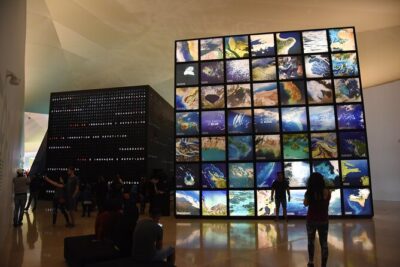
Museum of Tomorrow, AquaRio & Olympic Boulevard in Rio de Janeiro
Read our review →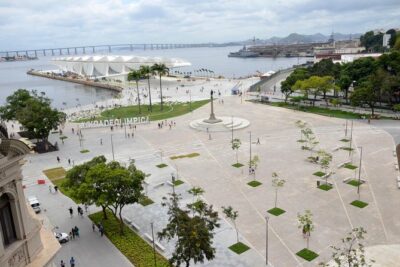
Olympic Boulevard, Museum of Tomorrow & Historical Rio
Read our review →
Olympic Boulevard, AquaRio and Museum of Tomorrow Tour
Read our review →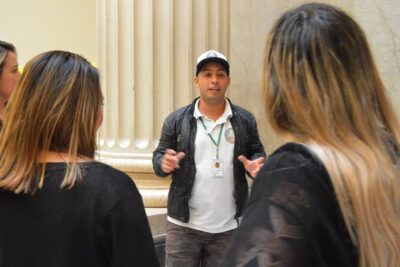
Aqua Rio + Olympic Boulevard Tour – Rio de Janeiro by Pepe Rio Tours
Read our review →
Olympic Boulevard, Museum of Tomorrow & History Tour
Read our review →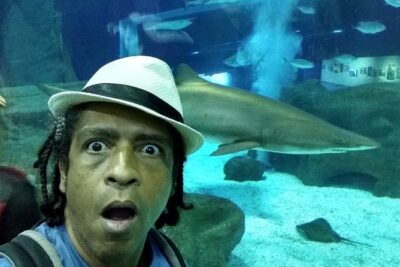

Museum of Tomorrow, Yup Star & Olympic Boulevard in Rio de Janeiro
Read our review →More of this kind of Rio day