

Reviewed · SUGARLOAF CABLE CAR TOURS
Climb to the Top of Sugarloaf Mountain
Sugarloaf feels different when you climb it. This 3-hour hike turns Rio’s most famous cable-car ride into a real challenge, with a small group size and hands-on guided climbing practice. The payoff is big views and a summit feeling you cannot get from a gondola, but there is one real consideration: the first part includes unroped scrambling with exposure, so if you freeze at heights, you’ll need to think carefully (and talk with your guide early).
I like that you go with a trained guide who keeps you moving at a pace you can handle, whether you’re brand new or just out of practice. In the reviews, guides like Mingo and Andrew come up again and again for patient instruction, clear safety cues, and supportive pacing, and that matters on a route that mixes steep hiking with a short, more technical rope section halfway up.
In This Review
- Key Points That Make This Climb Worth Your Time
- Why Climbing Sugarloaf Beats the Usual Cable Car Ride
- The Route: Scrambling First, a 15-Meter Rope Pitch, Then the Summit
- What the Guides Do Differently, and Why You’ll Care
- Views You Earn on Foot, Including Philosopher’s Stone
- Timing, Start Time, and How the 3 Hours Often Feels
- What’s Included vs. What You Need to Bring
- Included
- Not included
- Difficulty Level: Technically Simple, Mentally Real
- Getting Back Down: Cable Car to Morro da Urca and a Short Trail
- Value for $98.10: What You Pay For, and What You Actually Get
- Should You Book the Sugarloaf Climb?
- FAQ
- How long is the Sugarloaf Mountain climb?
- What is included in the price?
- Do I need to bring water or snacks?
- Where does the tour start, and when?
- How many people are in a group?
- What if the weather is bad or I need to cancel?
Key Points That Make This Climb Worth Your Time

- Small group, max six: You get more attention and safer decision-making on the steep, exposed parts.
- Halfway rope pitch (15 meters): You try the gear and technique without committing to something extreme.
- Summit views plus earned stops: You pause for viewpoints only the climbers reach, including a stop at Philosopher’s Stone.
- Cable car descent is included: You get the best of both worlds, climb up, then ride down to Morro da Urca.
- Strong fitness helps: This is not a casual walk, you’ll want solid legs and steady endurance.
More rides up Sugarloaf:
- Rio’s City Tour – Tickets for Christ, Sugar Loaf & Lunch included
★ 5.0 · 4,389 reviews - Full Day: Christ Redeemer, Sugarloaf, City Tour & Barbecue Lunch
★ 4.5 · 3,142 reviews - Rio’s Full Day: Selarón Steps, Christ & Sugarloaf – Tickets & Lunch Included
★ 5.0 · 2,724 reviews - Rio: Christ the Redeemer, Sugarloaf, Selaron & BBQ Lunch
★ 4.5 · 2,428 reviews
Why Climbing Sugarloaf Beats the Usual Cable Car Ride
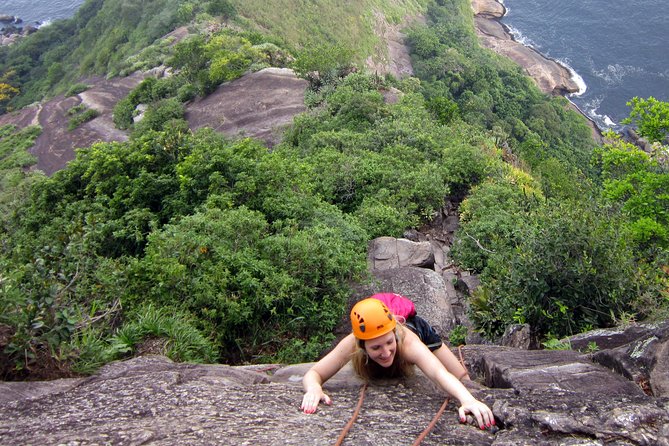
Sugarloaf Mountain is famous for a reason. From the cable car, the views are great and the experience is easy. Climbing it is the same iconic mountain, but with a different mood. You earn the lookout instead of buying it with a ticket.
What makes this climb feel worthwhile is the mix of terrain. You start at the base, work around the backside, then transition onto a steep, technically simple trail that still asks you to pay attention with where you place your feet. It is the kind of effort that makes Rio feel close in a new way, because you’re actively navigating the mountain as it gets steeper, rockier, and more exposed.
Also, the small-group format changes the experience. When you’re capped at six people, the guide can watch foot placement, check comfort with heights, and keep the group together. That matters on the sections where your brain wants to overreact, because you need calm, simple instruction more than you need bravado.
The Route: Scrambling First, a 15-Meter Rope Pitch, Then the Summit
Here’s what the climb really looks like from start to finish, and where the effort comes from.
First, you hike from the foot of Sugarloaf and swing around the backside. The route then leads into a steep ascent along a well-traveled trail. Even though it is described as technically simple, there are early sections that involve unroped scrambling. Think of it as a “use your hands sometimes” situation, not a long technical climb, but still with enough exposure that some people struggle mentally.
This early phase is where a good guide makes the biggest difference. The plan is safe, and you’re not left on your own, but you do need to be willing to follow directions. If you’re worried about heights, this is the part where you should speak up. The guide can talk you through handholds, foot options, and how to move without panic.
About halfway up, the route changes. You reach a short 15 meter pitch that is more technical than the scrambling sections. This is where the rope and safety harness come out. It is not meant to be a brutal challenge, but it is a genuine climbing moment. If you’ve ever wondered what rock climbing feels like, this is the practical chance to experience it without going too far beyond your comfort level.
After that pitch, you pack up equipment and continue your push to the summit. Along the way, you stop for views only climbers get. One highlighted spot is the Philosopher’s Stone, a famous viewpoint you can appreciate more when you’ve worked for the angle. By the time you reach the top, you’ll feel the difference between “seeing” Rio and “standing in the middle of it.”
What the Guides Do Differently, and Why You’ll Care
This tour lives or dies on instruction quality. And in the reviews, that’s exactly what people emphasize.
Guides like Mingo and Andrew are described as professional and personable, and that combination matters. Professional means they run safety checks, manage ropes and harnesses properly, and know when someone needs a pause before the climb gets harder. Personable means they keep your nerves steady with encouragement, clear cues, and a pace that feels human.
A few details from the feedback are especially useful:
- You are not forced to keep a single rigid pace. More than one review mentions that frequent breaks were taken when needed, and the guide worked with the group to finish and enjoy.
- The climb is not framed as a “challenging hike.” It’s a climb. One review calls out that you should be physically fit, because the terrain is tough for someone who’s been sedentary.
- English support comes up. One review specifically mentions fluent English, which helps a lot when you’re learning movement on real rock.
In short, the guide’s job here is to make the mountain feel navigable. That does not mean you will not work. It means you won’t guess.
Views You Earn on Foot, Including Philosopher’s Stone
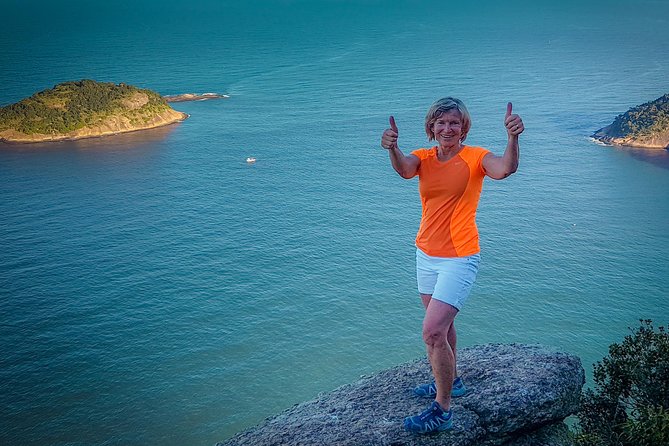
The summit of Sugarloaf is impressive on its own. But the best part of climbing is how the views arrive in pieces, not all at once.
As you move higher, you’ll stop to enjoy several viewpoints available only to climbers. These are the moments where the climb stops feeling like effort and starts feeling like progress. One featured stop is the Philosopher’s Stone, which is both a recognizable Rio highlight and a “you had to be here” viewpoint angle.
On breaks, you might also notice wildlife. One review mentions marmosets getting close during a rest, plus vultures joining briefly at one point. That’s not something you can count on, but it fits the vibe of moving quietly along a mountain route where the ecosystem is present and visible if you look up and around.
At the top, you get time for food and drinks. The specific items aren’t included, but the option is there. This matters because you’re likely to be sweaty and breathing hard by the time you reach the summit, so having a place to reset and refuel makes the experience feel complete.
Timing, Start Time, and How the 3 Hours Often Feels
The schedule is straightforward. The tour starts at 2:00 pm at Av. Pasteur, 520 in Urca, and it ends back at the same meeting point. Duration is listed as about 3 hours.
In practice, timing can shift depending on how quickly your group moves through scrambling and the rope section. One review says they reached the top in a little over 2 hours, which suggests some people can move efficiently if they’re comfortable with heights and are in good shape. If you need more breaks, that is normal here, and guides are prepared for it.
Also note the tour includes a cable car descent, so you’re not stuck hiking down for hours. The down part is built in: cable car from the summit to Morro da Urca, then a short 15 minute trail back to your starting point.
If this one is full, Rio has these as well:
- Rio de Janeiro: 6-Stop Highlights of Rio with Lunch★ 4.4 · 5,157 reviews
- Christ the Redeemer Entry Ticket by Corcovado Train★ 4.4 · 4,476 reviews
- Rio de Janeiro: Rocinha Favela Walking Tour with Local Guide★ 4.8 · 3,052 reviews
- Rio De Janeiro: Half-Day Rocinha Favela Walking Tour★ 4.7 · 2,272 reviews
- Hang gliding Hang gliding Experience Rotorfly★ 5.0 · 2,009 reviews
What’s Included vs. What You Need to Bring
This tour is reasonably priced for what you get, but it’s not a “pack and forget” experience. Here’s the clean split between included and not included.
Included
- All required safety equipment for the climbing portions.
- Cable car descent from the summit to Morro da Urca is not charged to climbers.
Not included
- Snacks and water. Bring both.
- Any purchases on the summit are on you.
- Transportation to and from the meeting is not included.
What you bring can make the climb more comfortable and safer. One review gives very practical clothing advice:
- Wear proper climbing clothes, like pants and a breathable shirt.
- Use hiking shoes with excellent traction. Running shoes were not recommended.
- Bring mosquito repellent, and bring plenty of water.
- A snack for energy can help, especially if you’re not naturally fast-paced.
Even if you’re an experienced hiker, these details matter because slick rock plus steep scrambling is not the time to gamble with footwear grip.
Difficulty Level: Technically Simple, Mentally Real
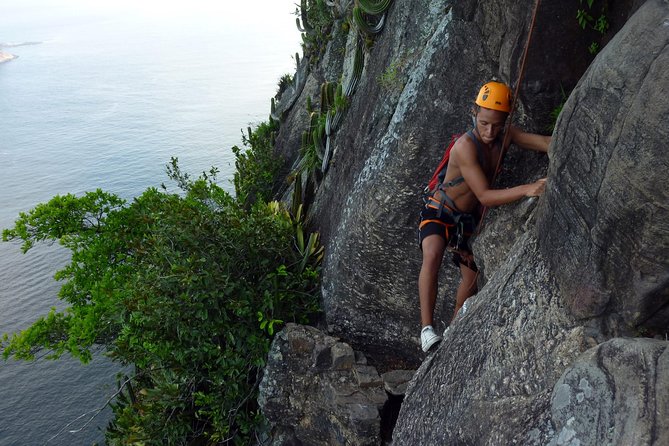
The route is described as technically simple, and that’s true in the sense that there is only one short, more technical rope pitch. But the climb is still physically demanding and mentally demanding.
The unroped scrambling sections early on are the big mental hurdle. You’ll have exposure, and if your body wants to lock up when you feel heights, you should plan to go with extra caution. The route is safe, and your guide will talk you through it, but your comfort level matters.
If you’re fit and can handle short sections of scrambling, this is a solid “try climbing for real” experience. One review mentions a father and 15 year old doing it with no prior climbing experience, and it working out well thanks to the guidance and safety support. Another review mentions a first-time climber who felt safe with the guide’s confidence-building coaching.
On the other hand, if you’re carrying significant anxiety about heights, you might find the early scrambling hard to enjoy. The good news is that you can often mitigate that with mindset and communication. Tell your guide what you feel, and move at the pace they set.
Getting Back Down: Cable Car to Morro da Urca and a Short Trail
Downhill is where a lot of climbs lose people. Here, you get a smart reset.
After you reach the summit and enjoy the views and time for food and drinks, you take the cable car down to Morro da Urca. That removes the hardest part of recovery, because you’re not doing a long steep descent with tired legs.
Then it’s a 15 minute trail walk back to your starting point. That final leg is short enough that most people can handle it, especially after the cable car does the heavy lifting.
Value for $98.10: What You Pay For, and What You Actually Get
At $98.10 per person, this is not a budget stroll. But you are paying for real guiding on real rock, plus safety gear, plus a cable car descent that otherwise would cost extra.
This price starts to make sense when you consider what the tour replaces:
- Instead of just visiting Sugarloaf, you’re doing a guided climb that gives you the parts of the mountain you cannot reach from the cable car platform.
- Instead of doing a DIY scramble, you have structured support, ropes where needed, and harness use during the 15 meter pitch.
- Instead of walking down for a long time, the cable car descent is covered.
Group size also supports the value. Max six means your guide is not splitting attention across a crowd, and that translates into a smoother experience, fewer mistakes, and better pacing.
If you’re the type who likes experiences with a clear “before and after,” this climb delivers. You come back tired, sweaty, and proud, with images and memories tied to effort, not just scenery.
Should You Book the Sugarloaf Climb?
Book it if you want Sugarloaf to feel personal. This tour is ideal for fit hikers who are curious about climbing and want a guided introduction that includes both scrambling and a rope section. It also suits couples or small groups who like the comfort of a max six setup, since it keeps the experience controlled and coach-focused.
Think twice before booking if heights make you panic. If that’s you, you may still manage it with the right mindset and open communication, but the early unroped scrambling sections are the toughest mental moment.
If you do book, plan smart: wear traction-first shoes, bring water, bring a snack, and consider mosquito repellent. Then show up ready to move steadily, listen carefully, and enjoy the stops along the way.
FAQ
How long is the Sugarloaf Mountain climb?
It’s listed at about 3 hours total.
What is included in the price?
You get all required safety equipment. The cable car descent from the summit to Morro da Urca is also not charged.
Do I need to bring water or snacks?
Yes. Snacks and water are not included, and you are encouraged to bring them.
Where does the tour start, and when?
The meeting point is Av. Pasteur, 520, Urca, Rio de Janeiro, RJ. The start time is 2:00 pm.
How many people are in a group?
The tour has a maximum of six travelers.
What if the weather is bad or I need to cancel?
The experience requires good weather. If it’s canceled due to poor weather, you’ll be offered a different date or a full refund. You can cancel up to 24 hours in advance for a full refund.
Recently added around Rio






Sugarloaf Cable Car Tours, compared.

Rio’s City Tour – Tickets for Christ, Sugar Loaf & Lunch included
Read our review →
Full Day: Christ Redeemer, Sugarloaf, City Tour & Barbecue Lunch
Read our review →
Rio’s Full Day: Selarón Steps, Christ & Sugarloaf – Tickets & Lunch Included
Read our review →
Christ the Redeemer, Sugarloaf, Selaron & BBQ Lunch
Read our review →
The Best Half Day in Rio with Christ Redeemer and Sugar Loaf Hill
Read our review →
Rio’s Best_Corcovado, Sugar Loaf, Selaron, Cathedral and more
Read our review →
Full Day in Rio: Christ by Train, Sugarloaf, Selarón & Barbecue
Read our review →
Half-Day Tour: Christ the Redeemer, Selarón & Sunset at Sugarloaf
Read our review →More of this kind of Rio day