
Reviewed · SANTA TERESA TOURS
Ancient Rio and Santa Teresa Tour with Hotel pick-up and drop-off
Rio teaches fast in old neighborhoods. This half-day style tour connects Santa Teresa with downtown Ancient Rio, using a sequence of landmarks that show how the city grew and how people moved. You spend a good chunk of time wandering, photographing, and learning what made these areas matter.
I especially love the focus on two contrasting Rio zones in one go, and how the stop locations tie together into a clear story of city life. Second, I like that the tour keeps many stops free to enjoy, so you are not constantly paying extra to keep moving.
One drawback to plan for: Santa Teresa streets can mean uneven cobblestones and more walking than you expect, so wear shoes with real grip and go easy if your feet or knees are touchy.
In This Review
- Key highlights worth your attention
- Santa Teresa and Ancient Rio, two neighborhoods in one loop
- Price and logistics: what $55 buys (and what it does not)
- Stop 1 in Santa Teresa: mansions, painters, and the 1897 tram presence
- Parque das Ruínas: Laurinda Santos Lobo’s art-support legacy
- Arcos da Lapa: from water transport to daily city movement
- Praça XV de Novembro: government landmarks and ferry connections
- Arco do Teles: old market streets and the bar-and-restaurant maze
- Cinelândia: picture-taking in the downtown landmark corridor
- Exteriors only, but the architecture is the point
- Museu Nacional de Belas Artes (from outside)
- Theatro Municipal do Rio de Janeiro (from outside)
- Biblioteca Nacional (from outside)
- Guide style and group size: where your experience rises or dips
- Walking reality: Santa Teresa cobblestones and shoe choice
- When shops are closed: why the vibe might shift
- Should you book this Ancient Rio and Santa Teresa tour?
- FAQ
- How long is the Ancient Rio and Santa Teresa tour?
- Where do I meet for hotel pickup?
- What does the tour include?
- Are museum entrances included?
- Will I ride the Santa Teresa tram during the tour?
- How many people are in the group?
- What should I wear or bring for the walking?
- What affects whether the tour runs?
Key highlights worth your attention
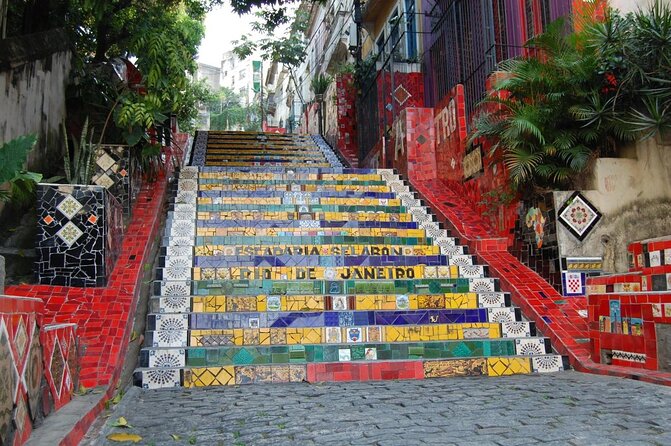
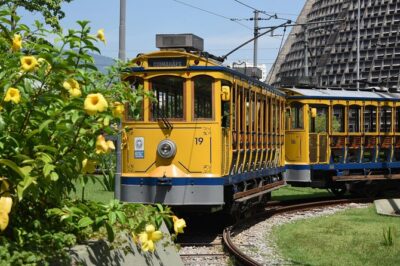
- Santa Teresa tram built in 1897, still part of the neighborhood’s character (no tram ride included)
- Parque das Ruínas and Laurinda Santos Lobo, tying Rio’s art scene to a real person
- Arcos da Lapa, an old water system repurposed into everyday movement
- Downtown Praça XV de Novembro, framed by major government buildings and a ferry hub
- Cinelândia and landmark exteriors, including Theatro Municipal and Biblioteca Nacional
- Small group feel possible, since the tour runs in a minivan with a limited headcount
Other wanders through Santa Teresa:
- Santa Teresa, Lapa, and Cinelândia with Tram Ride and Selarón Steps
★ 4.5 · 274 reviews - Rio de Janeiro: Historic Rio and Santa Teresa Half-Day Tour
★ 4.4 · 228 reviews - Walking tour of the bohemian neighborhoods of Santa Teresa and Lapa
★ 5.0 · 59 reviews - Centro Historico and Lapa – Santa Teresa Walking, Historical and Bohemian Tour
★ 5.0 · 44 reviews
Santa Teresa and Ancient Rio, two neighborhoods in one loop
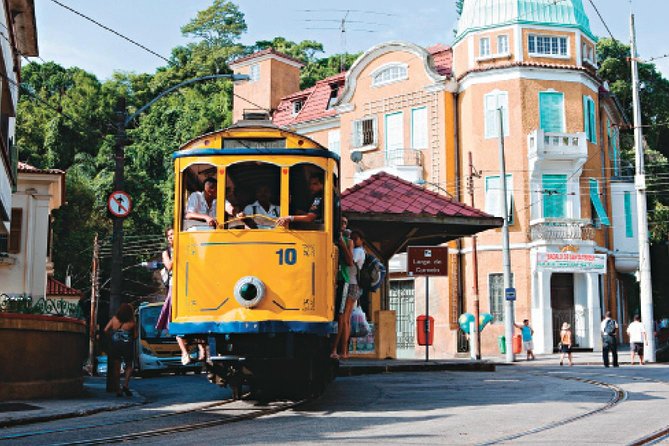
This is a great “first impressions” style tour, but it is more interesting than a basic photo circuit. Santa Teresa and downtown Ancient Rio feel like they belong to different cities, yet the history connects them. The result is that you start seeing Rio as a place with layers, not just postcards.
Santa Teresa gives you a slower, hillier vibe with mansion-lined streets and a neighborhood identity shaped by artists. Downtown gives you the scale of Rio’s civic and cultural ambition, where big institutions and grand architecture still dominate street corners.
And because the day is about both atmosphere and context, you walk away with better instincts for where to go next on your own.
Price and logistics: what $55 buys (and what it does not)
At $55 per person for about 4 hours, you are paying mainly for three things: reliable hotel pickup and drop-off, a comfortable air-conditioned vehicle, and a guide to connect the dots between stops.
The good news is that many of the key viewpoints and exterior areas are free. The not-so-good news is that the “big names” in downtown are mostly architecture stops without entering museums. So if your priority is stepping inside the library, theater, or fine arts museum, you should plan to do that separately.
This also means you should expect a pacing style that prioritizes seeing a lot over lingering long. If you like slow wandering, bring patience, and decide in advance which stop you want to photograph hardest.
Stop 1 in Santa Teresa: mansions, painters, and the 1897 tram presence
Santa Teresa is the charm engine of this tour. You get one hour to enjoy the neighborhood’s village-like feel on Rio’s hills, where you can still spot signs of the area’s long-running artistic draw.
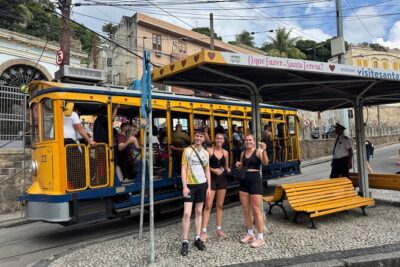
A standout is the tram built in 1897. You do not board it on this tour, but the neighborhood’s tram presence is part of why Santa Teresa feels distinct. You’ll also notice the early 1900s style you see in the mansions, which help explain why this area became a place people wanted to live.
Practical tip: Santa Teresa’s streets can be uneven, and the walking is real. Wear shoes that can handle cobbles and slopes, and keep water handy since Rio heat can be sneaky.
Parque das Ruínas: Laurinda Santos Lobo’s art-support legacy
After Santa Teresa, the tour moves into a cultural stop that feels more like a pause than a rush. At Parque das Ruínas, you spend about 20 minutes at a cultural center with deep roots in Rio’s art world.
This place matters because it connects the spotlight to a specific person: Laurinda Santos Lobo, described as a preeminent female art supporter. That detail changes how you see the site. It is not just a pretty space or a random stop, it is part of Rio’s history of patronage and how art got supported.
If you have any interest in how cultural ecosystems work, you will appreciate this moment. It gives you a human story behind the city’s artistic reputation.
Arcos da Lapa: from water transport to daily city movement
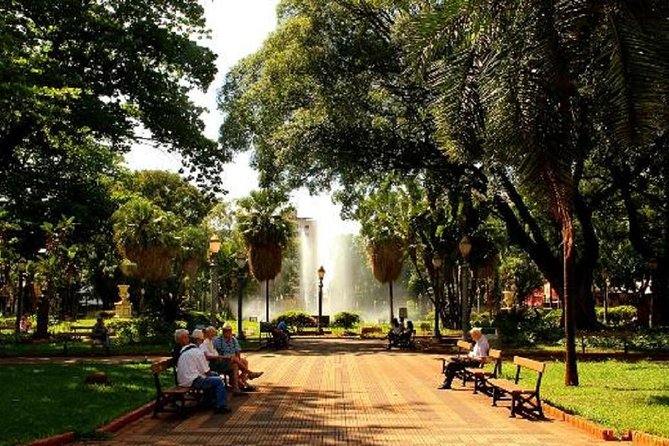
Then comes Arcos da Lapa, where history turns into infrastructure. The arches were built for water transport, and now they function in a new role, supporting movement for residents heading between areas like Santa Teresa and downtown.
You get about 30 minutes here, enough time to admire the structure from key angles and get a feel for why it is still used. This is one of those Rio sights where you can understand the city’s logic even if you miss some details from the guide.
Photo tip: the arches look great from multiple sides, so do a quick circuit rather than aiming from a single spot.
If this one is full, Rio has these as well:
- Rio de Janeiro: 6-Stop Highlights of Rio with Lunch★ 4.4 · 5,157 reviews
- Christ the Redeemer Entry Ticket by Corcovado Train★ 4.4 · 4,476 reviews
- Rio’s City Tour – Tickets for Christ, Sugar Loaf & Lunch included★ 5.0 · 4,389 reviews
- Full Day: Christ Redeemer, Sugarloaf, City Tour & Barbecue Lunch★ 4.5 · 3,142 reviews
- Rio de Janeiro: Rocinha Favela Walking Tour with Local Guide★ 4.8 · 3,052 reviews
Praça XV de Novembro: government landmarks and ferry connections
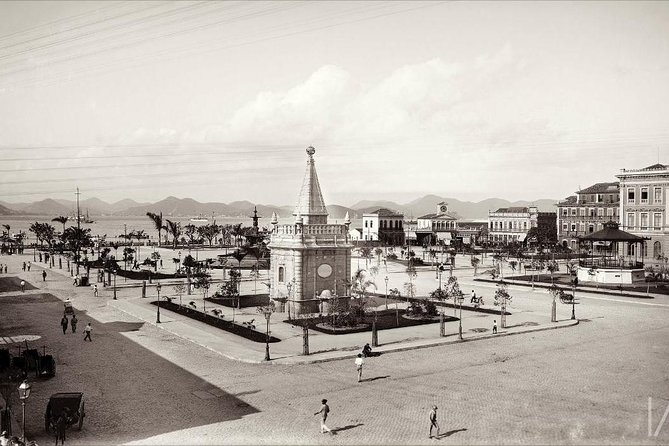
Next is Praça XV de Novembro, in Rio’s historical center, with about 30 minutes on the square. This is the kind of place that makes you realize how coastal cities run. People do not just stroll here, they also connect to transport.
The square sits near major buildings like Palácio Tiradentes, the Legislative Assembly of Rio de Janeiro, and the Paço Imperial. And close by is Praça XV Station, a ferry terminal with destinations in Rio de Janeiro and Niterói.
What I like about this stop is the contrast. You see old civic power, then you notice the working port energy of the ferry connection. It helps you understand how the city’s center has stayed functional, not just decorative.
Arco do Teles: old market streets and the bar-and-restaurant maze
If you want the “walkable snack streets” feeling, Arco do Teles is your stop. You get around 20 minutes in the area, which sits where a downtown market once existed.
Today, it is known for small streets and alleys filled with bars and small restaurants. It is not a long stop, but it is enough time to slow down, peek into the side lanes, and feel the mood of downtown after the big monuments.
This is also a good moment to ask your guide for food ideas nearby, since it is the kind of area where a local suggestion beats generic lists.
Cinelândia: picture-taking in the downtown landmark corridor
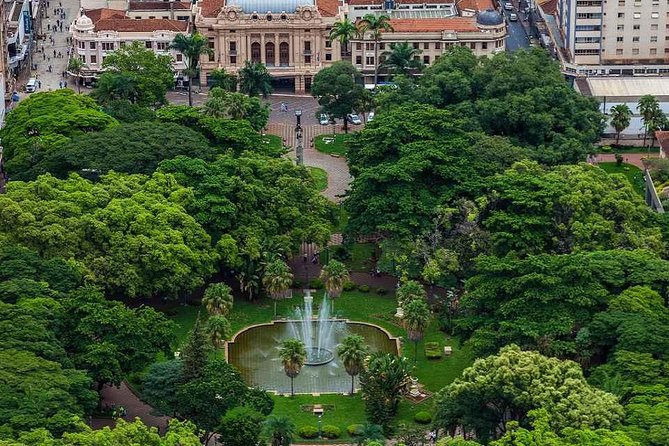
Cinelândia is a friendly landing zone in the middle of a fast schedule. You get about 30 minutes around the square, which is surrounded by historical buildings that are perfect for photos.
This stop also acts like a transition into the next theme of the day: grand public architecture. You start to notice repetition in the design language, and you learn how Rio’s downtown look came from major modernization efforts.
When the light is good, Cinelândia can turn into a very satisfying walk, even if you are just doing exterior sightseeing.
Exteriors only, but the architecture is the point
Some tours drop you at big buildings and expect you to stare. This one makes a strong choice: you do not enter, but you get context for what you are looking at.
Three downtown exteriors get attention:
Museu Nacional de Belas Artes (from outside)
You spend about 10 minutes here just appreciating the building. The structure was designed in 1908 by architect Adolfo Morales de los Rios, built to host the National School of Fine Arts, connected to the Imperial Academy of Fine Arts.
You also learn that it was built during the urban modernization period linked to mayor Pereira Passos in Rio’s era as the Federal Capital. Even from the sidewalk, that modernization context gives the facade meaning.
Theatro Municipal do Rio de Janeiro (from outside)
Next is the Theatro Municipal, also about 10 minutes and exterior viewing only. Inaugurated in 1909, it is one of the most important theaters in Brazil and Latin America.
Theatre lovers will care about the details: it attracted international artists and key Brazilian performers, and since the 1930s it has maintained artistic independence. It is also noted as the only Brazilian institution with its own choir, symphony orchestra, and ballet company.
Biblioteca Nacional (from outside)
Finally, you approach the Biblioteca Nacional exterior and take in its scale for about 10 minutes. This is the biggest library in Latin America, founded in 1810 by D. João VI of Portugal.
The numbers are huge: an archive of almost 9 million items, including rare books and manuscripts, original letters written by Princess Isabel, early newspapers printed in the country, and two copies of the Mainz Psalter Bible printed in 1492.
Even if you never step inside on this tour, learning what is housed behind the walls changes how you see the building.
Guide style and group size: where your experience rises or dips
The tour runs in a minivan with a maximum of 19 travelers, and that matters. A smaller group can feel easier, especially when you are hopping between viewpoints on a tight schedule. In some cases, people experienced even smaller groups, which made explanations feel more personal.
Guide quality seems to be the make-or-break factor. The reviews highlight names like Renato, Wagner, Dario, Roger, Monica, Wanessa, Romeu, and Jack Daniel, praised for energy, clear explanations, and local pride.
That said, timing can be a challenge. Some people felt the tour moved too fast for photos, and others said they did not get the walking time they hoped for. If you are the type who loves soaking in atmosphere at each stop, you might want to choose one or two locations as your priorities and let the rest be a visual scan.
Also, ask your guide early where they can slow down for you. It is easier when you request it at the start rather than trying mid-tour.
Walking reality: Santa Teresa cobblestones and shoe choice
Even with a guide, you are still moving on foot. Santa Teresa is the place most likely to test your legs because old streets can be uneven.
If you have any walking limitations, I strongly suggest you plan for extra time and pick grippy footwear. If you cannot comfortably handle cobblestones, this is not the day to push through. You’ll enjoy the architecture more when you are not constantly bracing your footing.
When shops are closed: why the vibe might shift
A tour like this often feels like it has two layers: sightseeing plus street life. But street life can change with the calendar. For example, some people reported that on New Year’s Day many shops in the city center and parts of Santa Teresa were closed, which reduced opportunities for browsing.
If your trip lines up with a major holiday or a day when local businesses might close, adjust your expectations. Focus on architecture, viewpoints, and the narrative your guide is building, rather than planning on shopping time.
Should you book this Ancient Rio and Santa Teresa tour?
Book it if you want a smart, 4-hour orientation to Rio that connects Santa Teresa and downtown Ancient Rio through real historical landmarks. The price-to-time ratio is strong, and the mix of free stops plus guided context makes it a good value for a short stay.
Skip it or rethink your expectations if you need museum entry or a full tram ride experience. This tour is built around exterior appreciation and story-telling, not long indoor visits or extra time at each location. Also, if uneven cobblestones are a deal-breaker for you, be cautious.
If you want your first day in Rio to feel like a guided map plus memorable sights, this is a solid pick. If you want a slow, sit-and-stare day with optional shopping, you may prefer a more flexible plan.
FAQ
How long is the Ancient Rio and Santa Teresa tour?
It lasts about 4 hours.
Where do I meet for hotel pickup?
Pickup starts at Hotel Rio Othon Palace, Av. Atlântica 3264, Copacabana.
What does the tour include?
It includes an air-conditioned vehicle and hotel pickup and drop-off back to the meeting point.
Are museum entrances included?
No. Entrance to museums is not included, and you do not enter the museums listed on the route.
Will I ride the Santa Teresa tram during the tour?
The tour description indicates you see the historic tram in Santa Teresa, but it does not say that you ride it.
How many people are in the group?
It can be up to 19 travelers per minivan.
What should I wear or bring for the walking?
Comfortable clothing and walking shoes are recommended.
What affects whether the tour runs?
It requires good weather, and a minimum number of travelers is required for the activity to take place.
Recently added around Rio


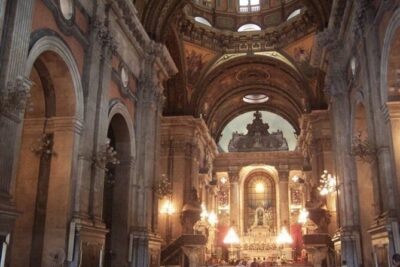

Santa Teresa Tours, compared.
Santa Teresa, Lapa, and Cinelândia with Tram Ride and Selarón Steps
Read our review →

Walking tour of the bohemian neighborhoods of Santa Teresa and Lapa
Read our review →
Centro Historico and Lapa – Santa Teresa Walking, Historical and Bohemian Tour
Read our review →
Rio Gay Tours: Christ Redeemer and Santa Teresa Artistry Area
Read our review →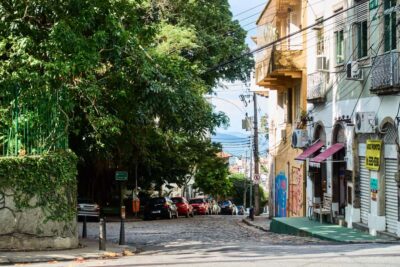
CityTour Rio de Janeiro -Christ Redemptor-Santa Teresa- Escadaria
Read our review →
Tour 1 ( 8 hours ) : Sugar Loaf , Corcovado , Old Downtown Lapa and Santa Teresa
Read our review →More of this kind of Rio day